Nuclear Fusion

Search documents
人间一年AI一天,替代不可避免,萨顿、王兴兴等回答AI四大终极问题
3 6 Ke· 2025-09-11 12:21
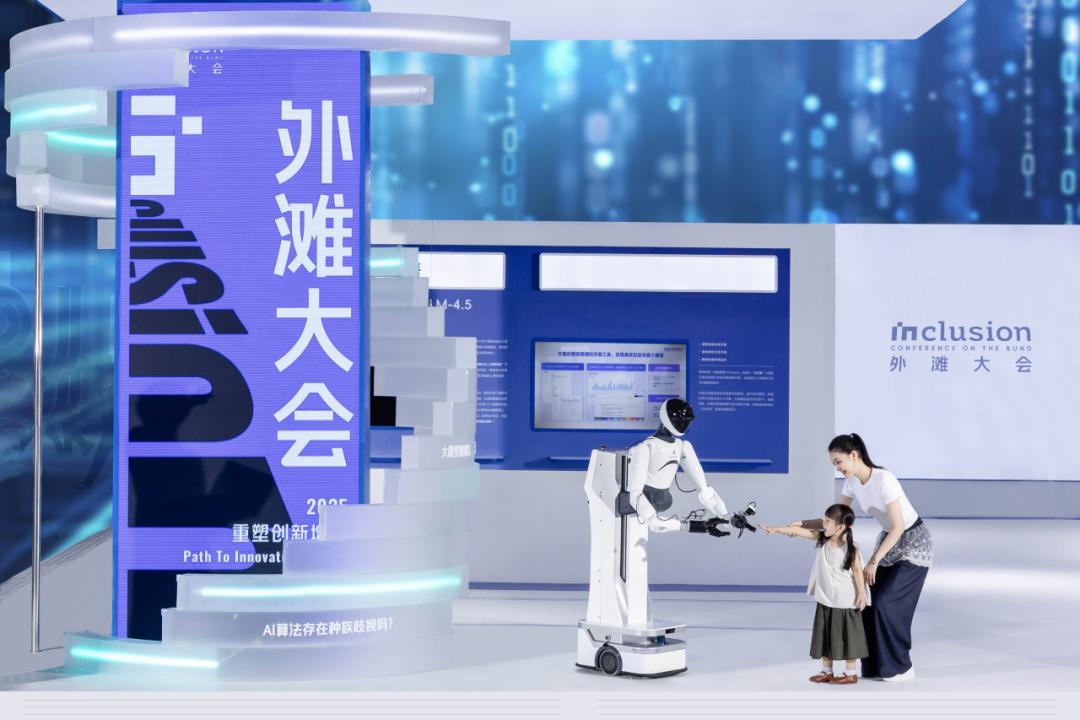
Group 1 - The core theme of the articles revolves around the evolving relationship between AI and humanity, emphasizing the need for collaboration and the ethical implications of AI's integration into society [1][2][20] - Richard Sutton, a prominent figure in AI, argues that fears surrounding AI, such as job loss and existential threats, are often exaggerated and driven by vested interests [2][20] - The development of AI is seen as a pathway to human prosperity through decentralized collaboration, with a focus on the importance of cooperation in achieving meaningful advancements [2][18] Group 2 - Current AI capabilities are still in their infancy, with significant challenges remaining in making AI truly functional in practical applications [4][6] - The integration of AI with robotics is creating a new industry focused on embodied intelligence, which aims to enable robots to perform tasks autonomously [4][6] - The potential for AI to revolutionize industries is acknowledged, but experts caution that the technology is not yet ready for widespread deployment [4][6] Group 3 - The future of AI is closely tied to advancements in energy solutions, particularly nuclear fusion, which is viewed as a critical technology for sustainable development [13][15] - Investment in nuclear fusion has surged, with significant funding from major tech companies, indicating a growing consensus on its importance for future energy needs [13][15] - The challenges of achieving controlled nuclear fusion are acknowledged, with ongoing research focused on overcoming technical hurdles [13][15] Group 4 - The AI industry is transitioning from a focus on human data to an "experience era," where AI learns from direct interactions with the environment [17][20] - Sutton emphasizes the need for new data sources and learning methods to unlock AI's full potential, highlighting the importance of continual and meta-learning [17][20] - The concept of "intelligent agents" is emerging as a dominant application of AI, suggesting a shift towards an "agent economy" that could transform organizational structures [20] Group 5 - China's AI development strategy outlines clear goals for the integration of AI across various sectors by 2027, with a focus on widespread adoption and economic growth [21][20] - Shanghai is positioning itself as a hub for AI innovation, with significant financial support for companies in the AI space, including funding for computational resources and model development [21][20] - The articles suggest that the AI landscape is becoming increasingly defined, with a roadmap for future advancements and applications [20][21]

“万亿市值潜力”?欧洲核聚变初创企业吸引创记录投资
Hua Er Jie Jian Wen· 2025-06-12 00:33
Core Insights - Proxima Fusion, a German startup, has raised a record €130 million in funding, marking the largest financing round in the European fusion sector [2][3] - The company aims to develop a stellarator fusion device, which contrasts with the traditional tokamak approach, potentially offering greater plasma stability and commercial viability [3][4] Funding and Investment - The funding round was led by Cherry Ventures and Balderton Capital, with Cherry Ventures' partner expressing confidence in Proxima's potential to address significant global challenges [2] - Proxima Fusion was founded two years ago with an initial seed funding of €7 million from the Max Planck Institute for Plasma Physics [2] Technology and Development - Proxima Fusion is focusing on the development of a stellarator, which has a more complex design than the tokamak but is believed to be better suited for commercial power generation [3] - The company plans to construct a "Stellarator Model Coil," a powerful magnet, by 2027, which is seen as a critical technological milestone [4] Future Plans - Proxima aims to build a demonstration plant by 2031, with an estimated cost of €1 billion, and hopes to secure partial funding from the European government [4] - The ultimate goal is to establish the first commercial fusion power plant in the 2030s, although the commercialization of fusion energy still faces significant uncertainties [4]
How the U.S. is losing ground to China in nuclear fusion, as AI power needs surge
CNBC· 2025-03-16 13:00
Core Insights - The race between China and the U.S. to achieve grid-scale nuclear fusion energy is intensifying, with China investing significantly more and accelerating project development [1][7][8] - Nuclear fusion is considered the "holy grail" of clean energy, offering four times more energy per kilogram of fuel than traditional nuclear fission and four million times more than coal, with a projected market value of at least $1 trillion by 2050 [2][3] Investment Landscape - Private investment in U.S. fusion startups has surged to over $8 billion, a significant increase from $1.2 billion in 2021, with 25 out of 40 member companies of the Fusion Industry Association based in the U.S. [5][8] - China is reportedly investing $1.5 billion annually in fusion research, while U.S. federal funding has averaged about $800 million annually [11][12] Technological Developments - The U.S. achieved a historic first fusion ignition in 2022 at the Lawrence Livermore National Ignition Facility, producing net positive energy [5] - China is rapidly constructing new fusion projects, including a massive facility that is expected to be twice the size of the U.S. National Ignition Facility [13][14] Research and Development - China has surpassed the U.S. in the number of fusion patents and has ten times the number of doctorates in fusion science and engineering [19] - U.S. fusion projects have largely focused on upgrading existing machines, while China is attracting talent with new projects [18][20] Supply Chain and Material Development - China is investing ten times more than the U.S. in advanced material development necessary for fusion projects, aiming to dominate the supply chain for critical materials [21] - The efficient supply chain in China has enabled rapid advancements, with companies like Energy Singularity achieving significant milestones in a short time frame [21] Future Outlook - Helion aims to deliver fusion power to the grid by 2028, while Commonwealth Fusion Systems plans to bring its first fusion power plant online in the early 2030s [22] - The ultimate goal is to establish a mature fusion industry capable of producing energy for global use, including powering AI centers [22]