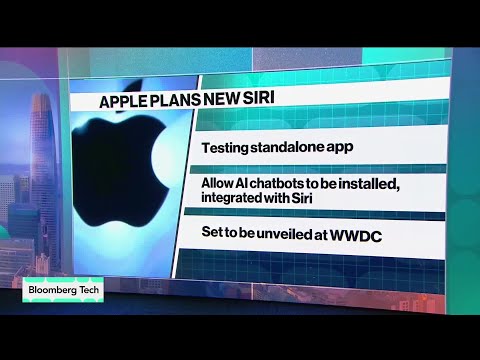
Technology

Search documents
TOPT Holds 16% in NVIDIA Alone, and That Concentration Is Driving Its 11% Loss
Yahoo Finance· 2026-03-30 16:20
Core Viewpoint - iShares Top 20 U.S. Stocks ETF (TOPT) has declined 11.06% year-to-date, primarily due to its concentrated portfolio in a few mega-cap technology stocks, leading to significant vulnerability during downturns in those stocks [1]. Group 1: Fund Overview - TOPT tracks the S&P 500 Top 20 Select Index, consisting of 20 U.S. companies ranked by market capitalization, appealing to investors who favor large, dominant businesses [2]. - Since its inception on October 23, 2024, TOPT has attracted $473 million in assets and has a low expense ratio of 0.20% [2]. Group 2: Portfolio Composition - The fund's portfolio is heavily concentrated in technology, with three stocks—NVIDIA, Apple, and Microsoft—accounting for nearly 40.36% of the total portfolio, with NVIDIA alone representing 16.1% [4]. - Approximately 46% of the fund is invested in Information Technology, with no exposure to sectors such as Industrials, Materials, Utilities, or Real Estate [4]. Group 3: Performance Impact - NVIDIA's recent performance has negatively impacted TOPT, as it has fallen 14.33% over the past month and 10.17% year-to-date, directly affecting the fund's net asset value (NAV) [5]. - TOPT has experienced a decline of 9.11% over the past month, closely mirroring NVIDIA's downturn [5]. Group 4: Structural Risks - An analysis highlighted that TOPT's strategy risks removing large-cap stocks during temporary dips, with heavy stock and sector weighting increasing overall risk [6]. - The fixed methodology of holding 20 names weighted by market cap means that any repricing of the top holdings can significantly impact the entire portfolio without diversification benefits from other sectors [6].

Big Tech Stocks Rout Is Flashing Signals of a Turnaround
Yahoo Finance· 2026-03-30 13:59
(Bloomberg) -- The wreckage in large technology stocks that sent the Nasdaq 100 Index into a correction is flashing signs that have marked turning points for the group in the past. Chief among the signals is how much of Big Tech’s valuation premium to the rest of the market has been erased. Such a compression has historically set the sector up for outperformance. After an 11% slide from its last record in October, the tech-focused gauge now trades at 21 times projected 12-month earnings, just 1.7 points ...
Stock market bulls, don't forget this one: Oil price shocks usually lead to a recession
Yahoo Finance· 2026-03-30 13:19
Core Insights - The current macroeconomic environment is characterized by rising oil prices, elevated equity valuations, and stresses in the financial system, which could lead to a recession similar to past occurrences [2][4]. Group 1: Oil Price Impact - Every US recession, excluding the COVID-19 pandemic, was preceded by an oil price shock, indicating a strong correlation between oil prices and economic downturns [1]. - Brent crude oil prices have surged by 45% to over $100 per barrel, with predictions from Citigroup suggesting prices could reach $150 per barrel [5]. - The conflict leading to the surge in oil prices has caused a significant "war premium" to be included in oil prices, affecting global supply routes [4]. Group 2: Consumer Sentiment and Economic Indicators - The University of Michigan's preliminary consumer sentiment reading for March fell to 55.5, marking the lowest level of 2026, with recent military actions erasing previous consumer optimism [8]. - Expectations for personal finances have dropped by 7.5% nationally, affecting all income levels and political affiliations, indicating widespread economic concern [9]. - Flash PMI manufacturing surveys for March show a sharp slowdown in activity, further highlighting economic vulnerabilities [9].
Week Ahead: Geopolitics, Oil, and Big Tech Set the Tone for US Stocks
Investing· 2026-03-30 06:48
Geopolitics - Geopolitical tensions, particularly between the United States and Iran, are creating volatility in the markets [3][4]. - The situation remains fragile, with the potential for escalation impacting market sentiment [4][12]. Oil Prices - Oil prices have surged to over $115 per barrel, significantly influencing market dynamics [20]. - Higher oil prices are expected to drive market sentiment, with energy stocks potentially leading the market if prices continue to rise [5][8]. Big Tech - Mega-cap technology stocks are crucial in anchoring the market despite rising geopolitical risks [6][12]. - Key players include Nvidia, Microsoft, and Apple, which are essential for the performance of major indices like the S&P 500 and Nasdaq Composite [9][12]. Sector Rotation - Investors may shift towards defensive sectors if geopolitical risks escalate, indicating a potential rotation in market focus [6][12]. - Sectors to monitor include utilities, healthcare, and consumer staples, alongside defense-related companies like Lockheed Martin [10][13]. Interest Rates - Interest rate expectations remain a significant underlying driver for market performance, with higher rates potentially pressuring growth stocks [11][12]. - The interaction of geopolitical developments, oil prices, and tech leadership will shape market direction in the coming week [12].


Quantum Computing Near Absolute ZERO | What The Future
CNET· 2026-03-29 13:00
You know that huge gold chandelier-like structure you see in videos about quantum computers? Yeah, that's just the refrigerator. Quantum computers could usher in a revolutionary transformation across industries like biology, finance, pharmaceuticals, material sciences, engineering, cyber security, and more. Thanks to their potential to solve complex problems much faster than the computers mostly used today. We're frequently told that nothing will be the same in the quantum era. But these quantum systems are ...

SPY Has Returned 217% Over 10 Years, But Its Top 3 Holdings Now Control the Outcome
247Wallst· 2026-03-28 15:00
Core Insights - SPDR S&P 500 ETF (SPY) has delivered a total return of 217% over the past 10 years, but its performance is increasingly reliant on a few major technology companies [2][10] - The fund has a significant concentration in Information Technology, with Nvidia, Apple, and Microsoft making up a combined 19.5% of its assets [2][9] - Rising Treasury yields and high volatility are putting pressure on high-multiple growth stocks that dominate SPY, while its low dividend yield of 1% may not satisfy income-seeking investors [3][12] Fund Characteristics - SPY has a 32% concentration in Information Technology, with Financials at 13% and Communication Services at 11%, indicating that about 55% of the fund is concentrated in just three sectors [8][9] - The fund's expense ratio is low at 9.45 basis points, and it has nearly $698 billion in assets, making it one of the most liquid equity vehicles globally [2][7] Performance Analysis - Over the last decade, SPY has returned 217%, with a 63% return over five years and a 13% return over the past year, although it is down 5.4% year-to-date as of late March 2026 [10][12] - Concerns about market stability have emerged among investors, particularly regarding the potential for negative returns in 2026 [11] Investment Considerations - The concentration in technology amplifies volatility, as the largest holdings grow larger with outperformance, which can lead to significant drawdowns during market corrections [13] - SPY's low dividend yield makes it less suitable for investors seeking income, positioning it primarily as a growth and compounding vehicle [13] - Rising interest rates, with the 10-year Treasury yield at 4.3%, are affecting valuations of high-multiple growth stocks, altering the risk-reward dynamics for equity investments [13]

The Nasdaq Just Hit Correction Territory. History Says the Stock Market Will Do This Next (Hint: It May Shock You).
Yahoo Finance· 2026-03-28 08:08
Core Viewpoint - The U.S. stock market is experiencing a significant downturn, influenced by economic concerns stemming from President Trump's tariffs and the U.S.-Iran conflict, which has led to rising oil prices [1]. Group 1: Market Performance - The three major stock indices have seen substantial declines: the S&P 500 is down 7.1%, the Dow Jones Industrial Average is down 8.4%, and the Nasdaq Composite is down 10.6% [2]. - The Nasdaq Composite entered correction territory on March 26, closing more than 10% below its recent peak, which was 23,958 on October 29, dropping to 21,408 [4]. Group 2: Historical Context - The Nasdaq has experienced corrections of at least 10% from its record high a dozen times since 2011, indicating that such drawdowns are relatively common [5]. - Historically, the Nasdaq has shown a tendency to recover quickly from corrections, with an average return of 22% over the 12 months following its first close in correction territory [6][8]. Group 3: Future Projections - If the Nasdaq follows historical trends, it could potentially rise to 26,118 by March 26, 2027, reflecting a 22% increase from its current level [8].
Capital Economics策略师:美国科技股回调与互联网泡沫末期相似
美股IPO· 2026-03-28 02:12
Core Viewpoint - The Nasdaq Composite Index is entering a correction phase amid escalating military conflict between the U.S. and Iran, with the technology sector facing its most severe valuation test since the dot-com bubble [1] - Analysts from Capital Economics believe the current market downturn may be a temporary repricing rather than the onset of a systemic collapse [1] Valuation Convergence and Historical Echoes - Recent market pullbacks have drawn unsettling comparisons to the final months of the 2000 tech bubble, where sharp valuation declines preceded a comprehensive collapse in earnings expectations [4] - However, the robust balance sheets of large tech companies and the tangible productivity gains promised by the digital economy indicate fundamental differences in the current situation [4] - The convergence of tech stock valuations with broader indices represents the elimination of initial excessive optimism rather than a signal of impending earnings recession [4] - Despite the shift of funds to defensive assets due to the Middle East conflict, the technology sector's ability to generate cash flow in a high-inflation environment provides a unique protective layer [4] - Unlike speculative companies of the late 1990s, today's hardware and software giants are deeply integrated into global infrastructure, leading many observers to view the recent adjustment as a healthy reset that could pave the way for a mid-year rebound once macro news stabilizes [4] Navigating Geopolitical Headwinds - Market participants are now focusing on the upcoming April earnings season, which will serve as the ultimate test of tech stock resilience [5] - If the conflict remains localized and energy prices are controlled, the innovative depth of the U.S. tech sector is expected to outperform the market again [5] - Investors are currently balancing the immediate risks of regional volatility with the long-term trajectory of AI expansion, with many viewing the current decline as a strategic entry point for high-confidence growth investments [5]
NextPlat Announces Reverse Stock Split to Regain Compliance with Nasdaq's Bid Price Requirement
Prnewswire· 2026-03-27 21:24
Core Viewpoint - NextPlat Corp has announced a 1-for-10 reverse stock split to regain compliance with Nasdaq's minimum bid price requirement and to broaden potential investor interest [1][2]. Group 1: Reverse Stock Split Details - The reverse stock split will take effect at 12:01 a.m. Eastern Time on April 6, 2026, with trading on a split-adjusted basis starting on April 7, 2026 [1]. - The number of outstanding shares will decrease from 27,026,215 to approximately 2,702,621 shares, subject to adjustments for fractional shares [1]. - No fractional shares will be issued; any resulting fractional shares will be cashed out [3]. Group 2: Stockholder Impact - The reverse stock split will affect all stockholders uniformly and will not change their percentage ownership interest in the company, except for adjustments related to fractional shares [3]. - The number of shares available under the company's equity incentive plans and the exercise price of outstanding stock options will be proportionately adjusted [3]. Group 3: Company Overview - NextPlat Corp is a global consumer products and services company that provides healthcare and technology solutions through e-commerce and retail channels [5]. - The company aims to assist businesses in optimizing their e-commerce presence and revenue through acquisitions, joint ventures, and collaborations [5].


Apple Goes Chatbot Agnostic in New AI Strategy
Bloomberg Technology· 2026-03-27 18:57
Apple plans to open Siri to outside artificial intelligence assistants, a major move aimed at bolstering the iPhone as an AI platform. Bloomberg’s Mark Gurman discusses what’s driving the move with Ed Ludlow on “Bloomberg Tech.” -------- Like this video? Subscribe to Bloomberg Technology on YouTube: https://www.youtube.com/channel/UCrM7B7SL_g1edFOnmj-SDKg Watch the latest full episodes of "Bloomberg Technology" with Caroline Hyde and Ed Ludlow here: https://www.youtube.com/playlist?list=PLfAX25ZLrPGTygCwn55 ...