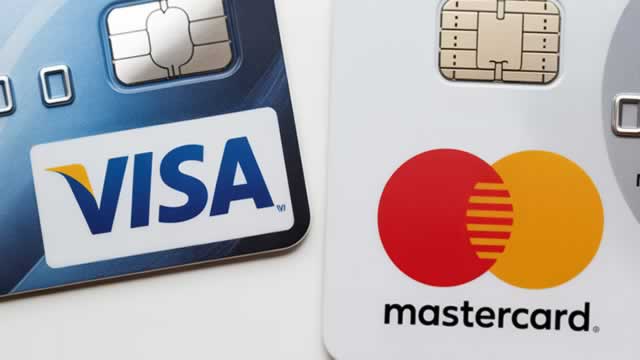
Payments

Search documents
Why Mastercard's API-First Strategy Is Becoming a Growth Multiplier
ZACKS· 2026-01-16 19:01
Core Insights - Mastercard's API-first strategy is transforming its role from a traditional card network to a key player in the payments infrastructure, integrating services into fintechs, banks, merchants, and platforms through APIs [1][4] Group 1: API-First Strategy - The API-first approach allows partners to integrate services like tokenization, authentication, and fraud detection without overhauling their core systems, leading to quicker product launches and stronger client relationships [2][8] - This strategy diversifies revenue streams by creating recurring, higher-margin services that are less affected by consumer spending volatility, positioning Mastercard to capture value from complex payment flows as digital commerce evolves [3][4] Group 2: Competitive Landscape - Competitors like Visa and American Express are also adopting API-driven strategies to enhance their roles in digital commerce, with Visa embedding security and data services into client platforms and American Express connecting payments and risk management tools [5][6] Group 3: Financial Performance and Estimates - Over the past year, Mastercard's shares have increased by 3.4%, contrasting with a 12.5% decline in the industry [7] - The forward price-to-earnings ratio for Mastercard is 28.31, above the industry average of 19.95, with a Zacks Consensus Estimate indicating a 12.5% growth in earnings for 2025 [10][11] - Current earnings estimates for Mastercard show a year-over-year growth of 10.21% for the current quarter and 12.53% for the current year [12]



PCQ: Even At A Pop Higher, Value In This Muni Fund Remains
Seeking Alpha· 2026-01-16 10:56
Core Insights - The article evaluates the PIMCO California Municipal Income Fund (PCQ) as a potential investment option at the current market price, focusing on its investment in California municipal bonds [1]. Investment Strategy - The investment strategy emphasizes quality, diversification, and long-term focus, while avoiding high-risk pursuits and unverified advice [1]. - The fund aims for safe and reliable yields of approximately 8%, utilizing high-yield opportunities in the CEF and ETF fund space [1]. Fund Features - The fund primarily invests in municipal bonds, contributing to managed income portfolios that cater to both active and passive investors [1]. - A significant feature of the fund is that the majority of its holdings are monthly-payers, which facilitates faster compounding and steady income streams [1].

Crypto Card Market Explodes 15x as Stablecoin Spending Soars 106% Annually: Report
Yahoo Finance· 2026-01-16 09:04
Group 1 - The crypto payments landscape has seen a significant transformation, with crypto card volumes increasing from approximately $100 million monthly in early 2023 to over $1.5 billion by late 2025, reflecting a 106% compound annual growth rate [1] - Crypto cards are becoming the primary bridge between digital assets and everyday commerce, with annualized volumes surpassing $18 billion, while traditional peer-to-peer transfers only grew by 5% to $19 billion during the same period [2] - Visa has established itself as the leading player in the crypto card infrastructure, capturing over 90% of on-chain card volume through strategic partnerships with emerging program managers and full-stack issuers [2] Group 2 - The strategy of Visa, which involves engaging infrastructure providers like Rain and Reap, has proven to be more scalable compared to Mastercard's direct exchange partnerships [3] - Full-stack issuers are reshaping card economics by integrating BIN sponsorship, lender-of-record status, and direct Visa network settlement into single platforms, thus eliminating traditional card issuance dependencies [4] - Visa's stablecoin-linked card spending reached a $3.5 billion annualized run rate in Q4 fiscal 2025, marking a 460% year-over-year growth, although it still accounts for about 19% of total crypto card settlement volume [5] Group 3 - Centralized exchanges are utilizing cards as user-acquisition tools, with platforms like Gemini incurring ongoing losses from credit card programs to enhance platform engagement [6] - DeFi protocols such as Ether.fi are offering higher cashback through token rewards, providing approximately 4.08% returns while boosting protocol total value locked (TVL) through collateralized borrowing features [6] Group 4 - Geographic opportunities for crypto card adoption are particularly pronounced in regions like India and Argentina, where USDC is nearing parity with USDT in market share [7] - India experienced $338 billion in crypto inflows over the 12 months ending June 2025, but stringent tax policies have driven most activity offshore, indicating a significant latent demand for compliant crypto products hindered by regulatory challenges [8]

Paysafe and Pay.com Launch Strategic Partnership
Businesswire· 2026-01-16 09:00
Core Insights - Paysafe has announced a strategic partnership with Pay.com, becoming a recommended acquirer for card transactions for online merchants using the Pay.com platform [1][5] - The partnership integrates Paysafe's digital wallets, Skrill and Neteller, along with its PaysafeCard eCash solution, enhancing the range of alternative payment methods available to merchants [1][3] Paysafe Overview - Paysafe is a leading payments platform with 30 years of experience, processing an annualized transactional volume of $152 billion in 2024, and operates in over 130 countries [6] - The company connects businesses and consumers through 260 payment types in 48 currencies, focusing on mobile-initiated transactions and real-time analytics [6] Pay.com Overview - Pay.com specializes in payments orchestration, optimizing and managing global payments through a centralized hub, integrating seamlessly with third-party payment providers [7][8] - The platform features a centralized risk engine and offers merchants control over transaction routing using multiple methodologies [7] Partnership Benefits - The collaboration is expected to enhance payment routing, improve approval rates, and strengthen customer relationships for online merchants [5] - Pay.com will offer Paysafe as an acquirer option across various sectors, including e-commerce, travel, and regulated iGaming, leveraging Paysafe's extensive industry experience [2][5] Future Prospects - Paysafe is already processing payments for multiple Pay.com merchant customers, with over 20 additional merchants expected to be onboarded by the end of 2026 [4]


Visa Supports Chinese Cardholders to Add Cards to Apple Pay for a More Convenient and Secure Payment Experience
BusinessLine· 2026-01-16 08:30
Core Insights - Visa has announced support for Chinese Visa cardholders to use Apple Pay for payments at overseas merchants, enhancing mobile payment options for consumers [1][2] - The collaboration aims to provide a secure and seamless payment experience, with Visa increasing investments in data and payment security [2] - The initial group of participating banks includes major institutions such as Industrial and Commercial Bank of China and Bank of China, with plans to expand to more banks in the future [2][10] Group 1: Payment Features - Apple Pay allows users to make contactless payments by authenticating with Face ID, Touch ID, or a device passcode, ensuring transaction security [3] - Consumers can use Apple Pay for faster payments in overseas mobile apps and online without repeatedly entering personal information [4] - The system uses tokenization technology to enhance security, ensuring that actual card numbers are not stored on devices or servers [5] Group 2: User Experience and Benefits - Setting up Apple Pay is straightforward, allowing users to add Visa cards easily through the Wallet app [6] - Cardholders retain the same rewards and benefits as with physical cards, along with exclusive offers such as first-time binding bonuses [7] - Visa promotes its "V Select" WeChat Mini Program for users to access more information on benefits [7]

This Payments Stock Is Down 24% but One Value Fund Just Lifted Its Bet on Shares to $15 Million
The Motley Fool· 2026-01-16 03:46
Core Viewpoint - Value Holdings Management has increased its stake in Euronet Worldwide by purchasing 98,289 shares, valued at approximately $7.66 million, indicating confidence in the company's long-term earnings potential despite recent stock underperformance [2][3]. Company Overview - Euronet Worldwide operates a global network of over 50,000 ATMs and numerous POS and money transfer locations, providing electronic payment solutions and transaction processing services [5][8]. - The company reported a market capitalization of $3.03 billion and generated revenue of $4.18 billion with a net income of $304.30 million over the trailing twelve months [4]. Recent Financial Performance - In the most recent quarter, Euronet's revenue increased by 4% year-over-year to approximately $1.15 billion, with operating income rising by 7% and adjusted EBITDA climbing by 8% [10]. - Adjusted earnings per share grew by 19% to $3.62, and the company ended the quarter with over $1.1 billion in unrestricted cash and access to about $1.8 billion in revolving credit capacity [10]. Market Position and Strategy - Euronet's diversified business model includes electronic fund transfers, prepaid product distribution, and consumer money transfer, which supports consistent fee-based revenue streams [5][8]. - The company serves a wide range of clients, including financial institutions, retailers, and individual consumers, across international markets [8]. Investor Insights - The recent purchase by Value Holdings Management brings Euronet's position to 2.5% of the fund's 13F reportable assets under management, reflecting a strategic investment in a company with a solid operational foundation [3][9]. - Despite the stock's 24.6% decline over the past year, the investment signals confidence in the company's earnings durability rather than short-term price momentum [3][9]. Future Outlook - Management anticipates full-year adjusted EPS growth of 12% to 16%, although it acknowledges potential impacts from unforeseen factors such as foreign exchange rates and interest rates [11].


Payments Fintech dLocal Plans Business Expansion into Asian Markets
Crowdfund Insider· 2026-01-15 21:52
Core Insights - dLocal Ltd is set to significantly strengthen its presence in Asia starting in 2026, viewing the continent as a critical area for long-term expansion [1][2] - The initiative is described as a multi-year endeavor, with 2026 marking the year the company commits to treating Asia as a strategic priority [2] - The company plans to enhance its operational capabilities, including sales teams, regulatory licenses, and infrastructure to support cross-border transactions [2][4] Company Strategy - Currently, dLocal operates in select Asian markets, facilitating local payment methods for international enterprises, allowing them to reach billions of consumers [3] - While Latin America remains the primary market, Asia has been contributing a growing share of revenue, indicating successful diversification [4] - To support deeper market penetration, dLocal plans to recruit dozens of new employees, including high-level executives [4] Industry Trends - The strategy aligns with the e-commerce boom in emerging Asia, driven by digital adoption and a large consumer base, creating demand for localized payment solutions [5] - dLocal's platform addresses the complexities of operating in emerging economies, where fragmented payment landscapes and regulatory challenges exist [5] - By focusing on Asia, the company aims to capitalize on untapped potential and enhance service delivery for merchants entering the region [6]


DLocal Limited (DLO): A Bull Case Theory
Yahoo Finance· 2026-01-15 18:02
Core Thesis - DLocal Limited is viewed positively due to its strong positioning in the payments infrastructure sector for emerging markets, with a current share price of $14.52 and P/E ratios of 25.93 (trailing) and 17.27 (forward) [1][2] Company Overview - DLocal operates a mission-critical payments platform that allows global merchants to transact seamlessly with consumers across over 40 countries, simplifying payment systems and regulatory complexities [2] - The company's "One dLocal" model creates a competitive advantage based on local expertise rather than solely on technology [2] Financial Performance - DLocal has a capital-light and highly profitable business model, achieving a 21.4% EBIT margin on $863.5 million in revenue [3] - The company is monitoring client concentration, with a shift in merchant composition as new enterprise clients are added [3] Valuation Analysis - A 10-year DCF analysis estimates an intrinsic value of $22.49 per share, indicating a 40.5% margin of safety compared to the current price of $13.38 [4] - The model anticipates a 21% revenue CAGR over the next decade, with growth expected to moderate from 37% in FY2025 to 6.5% by Year 10, and EBIT margins stabilizing between 19% and 21% [4] Assumptions and Valuation Metrics - Conservative assumptions include a 20% normalized tax rate, a 1.5% capex-to-revenue ratio, and a WACC of 9.73% [5] - The enterprise value is approximately $6.1 billion, with an equity value of around $6.6 billion, providing a solid valuation base not reliant on aggressive growth [5] Market Outlook - In a bear scenario, the share price is projected at $16.4, indicating limited downside, while the bull case suggests a price of $29.5, presenting significant upside potential [6] - The current market pricing implies a perpetual decline in free cash flow, which is considered an unrealistic assumption for a high-return platform in expanding digital economies [6] Historical Context - The stock has appreciated about 49.07% since a previous bullish thesis in March 2025, which highlighted DLocal's strong positioning in emerging-market payments [7] - The current analysis aligns with previous positive views, emphasizing a detailed DCF-based valuation approach and margin of safety [7]
Global Payments Finalizes Worldpay Acquisition
Crowdfund Insider· 2026-01-15 17:45
Core Insights - Global Payments Inc. has completed the acquisition of Worldpay from FIS and GTCR, while divesting its Issuer Solutions division to FIS, positioning itself as a commerce solutions specialist for businesses globally [1][2] Group 1: Strategic Expansion - The acquisition expands Global Payments' footprint to over 6 million merchant sites and enables the handling of $3.7 trillion in payments annually, processing around 94 billion transactions across more than 175 nations [2] - The merger diversifies service offerings and opens new revenue streams and distribution networks [2] Group 2: Leadership and Structure - CEO Cameron Bready emphasized the synergies created by the merger, enhancing the company's strengths and reach while providing greater value to customers [3] - The organization will operate through three specialized segments: Enterprise, SMB, and Integrated & Platforms, each with tailored sales approaches and development paths [4] Group 3: Financial Strategy - The company plans to maintain its investment-grade status and aims to reduce adjusted net leverage to 3.0 times within 18 to 24 months, indicating a commitment to sustainable growth [6] - An annual innovation budget exceeding $1 billion will support product cross-promotion and financial stability [5] Group 4: Industry Context - The acquisition aligns with industry trends toward consolidation, allowing firms to scale and innovate against fintech disruptors and changing consumer behaviors [7] - The combined operation is prepared to address economic fluctuations and regulatory changes, with leadership ready to seize immediate opportunities [7]


Visa, Mastercard and Revolut Lose UK Battle Over Interchange Fees
PYMNTS.com· 2026-01-15 16:35
Core Viewpoint - The High Court in London upheld the U.K. Payment Systems Regulator's authority to impose a cap on cross-border interchange fees, despite opposition from Visa, Mastercard, and Revolut [2][5]. Group 1: Regulatory Developments - The U.K. Payment Systems Regulator (PSR) proposed a cap on interchange fees in 2023 due to a significant increase in these fees post-Brexit, which rose more than fivefold for cross-border online payments [3]. - The PSR's findings indicated that interchange fees charged by Mastercard and Visa to U.K. businesses accepting payments from the European Economic Area (EEA) are likely too high, suggesting the market is not functioning effectively [5]. Group 2: Financial Impact - Interchange fees for online transactions between the European Union and the U.K. were increased by Visa and Mastercard to 1.15% for debit cards and 1.5% for credit cards from 2021 to 2022 [4]. - Visa and Mastercard, while not directly collecting interchange fees, are affected by the price caps as these fees incentivize banks to utilize their services [5]. Group 3: Industry Response - Visa and Mastercard have publicly disagreed with the PSR's findings, arguing that imposed controls on interchange fees do not reflect the current market realities and could negatively impact the value derived from card payments [5]. - Revolut, while involved in the legal challenge, declined to comment on the ruling [3].