显示面板

Search documents
全球四条8.6代OLED线投产时间预测出炉
WitsView睿智显示· 2025-10-28 07:51
Core Viewpoint - The global IT OLED panel market is entering a phase of diverse investment plans, with major players like Samsung Display, BOE, Visionox, and TCL Huaxing launching their 8.6-generation OLED production lines, indicating a competitive landscape ahead [2][5][6][7][9]. Group 1: Samsung Display - Samsung Display initiated its 8.6-generation line investment in 2023, utilizing traditional FMM evaporation technology and planning to incorporate Tandem OLED processes to enhance screen longevity. The equipment installation is complete, and products are expected to be introduced in the new MacBook Pro series by Apple in 2026, with mass production anticipated in Q2 2026 [5]. Group 2: BOE - Following Samsung, BOE announced its 8.6-generation OLED line investment by the end of 2023, also employing FMM evaporation technology and Tandem OLED configurations. Equipment installation is set to be completed gradually starting from Q2 2025, with production expected to commence in the first half of 2026 [6]. Group 3: Visionox - Visionox is entering the FMM-free camp with its self-developed ViP (Visionox Intelligent Pixelization) technology, which promises higher pixel density and aperture ratio compared to traditional FMM. The company plans to establish its 8.6-generation OLED line by Q2 2024, aiming for completion of the facility by Q4 2025 and volume production to start in Q1 2027 [7]. Group 4: TCL Huaxing - TCL Huaxing is adopting inkjet printing (IJP) technology, which simplifies the process compared to traditional FMM and theoretically reduces material waste by about 30%. Following the groundbreaking ceremony for its 8.6-generation OLED line, TCL Huaxing targets volume production by Q4 2027 [9]. Group 5: Market Dynamics - The investment plans for both FMM and non-FMM generation lines are proliferating, indicating a competitive environment in the IT OLED panel supply chain. The FMM camp benefits from established customer relationships and production experience, while the non-FMM camp, despite facing challenges like lower yield rates and material development, has the potential to catch up due to high market interest [9].




研报 | IT OLED面板大世代竞争升温,FMM阵营领跑、FMM-free阵营加速推进
TrendForce集邦· 2025-10-28 05:51
Core Insights - The article discusses the recent developments in the IT OLED panel industry, particularly the initiation of the 8.6-generation OLED production lines by various manufacturers, marking a competitive landscape in the market [2][7]. Group 1: Industry Developments - TCL CSOT has officially announced the commencement of its T8 project for the 8.6-generation OLED production line, joining other manufacturers in the investment race [2]. - Samsung Display Corporation (SDC) was the first to initiate the 8.6-generation OLED production line investment in 2023, utilizing traditional FMM evaporation technology and planning to introduce Tandem OLED technology to enhance screen longevity [5]. - BOE followed SDC's lead by announcing its own 8.6-generation OLED production line investment at the end of 2023, also employing FMM evaporation technology and Tandem OLED configuration, with production expected to start in the first half of 2026 [6]. Group 2: Technological Innovations - Visionox is developing its own technology, ViP (Visionox Intelligent Pixelization), which promises higher pixel density and aperture ratio compared to traditional FMM, with plans to complete its 8.6-generation OLED production line by the fourth quarter of 2025 [6]. - TCL CSOT is adopting inkjet printing (IJP) technology for its production line, which theoretically reduces material waste by approximately 30%, with mass production targeted for the fourth quarter of 2027 [6]. Group 3: Market Outlook - TrendForce indicates that the investment plans for both FMM and non-FMM production lines are proliferating, suggesting a future where the IT OLED panel supply chain will see a multitude of competitors [7]. - The FMM camp currently holds advantages such as established customer relationships and production experience, while the non-FMM camp is in its early development stage, facing challenges like lower yield rates and material development needs, but still has potential to catch up due to high market interest [7].

深天马A:车载显示领域具有高壁垒和高客户粘性的特点
Zheng Quan Ri Bao Wang· 2025-10-27 11:45
Core Viewpoint - The company emphasizes the high barriers and customer stickiness in the automotive display sector, highlighting the critical importance of product reliability, stability, and long-term supply assurance in maintaining competitive advantage [1] Industry Insights - The automotive display industry is characterized by high barriers to entry and strong customer loyalty, necessitating high standards for product quality and supplier reliability [1] - The evolution of the automotive industry towards new trends requires enhanced capabilities in high-definition, large screens, multi-screen setups, personalization, interactivity, and integrated solutions [1] - The rapid rise of new energy vehicles (NEVs) intensifies the demand for faster development cycles and better component management, testing the market participants' customer coverage, flexibility in delivery, and overall quality management [1] Company Strategy - The company views the automotive display market as a strategic core business and plans to strengthen its position in three main segments: traditional automotive displays, automotive electronics, and new energy vehicle displays [1]

深天马A:公司密切关注行业新技术和应用发展
Zheng Quan Ri Bao Wang· 2025-10-27 11:45
Core Viewpoint - The company is closely monitoring the development of new technologies and applications in the industry, particularly in the area of new form factor screens [1] Group 1 - The company has multiple technical solutions reserved for new form factor screens [1] - The company has successfully developed various folding technologies through its self-built all-scenario platform [1] - The company is capable of rapidly mass-producing left-right and up-down folding products [1] Group 2 - The company supports customers in showcasing their three-fold mobile phone products [1] - The company is simultaneously developing other folding forms such as pull-out and rollable designs [1] - The company is continuously upgrading the flexibility and durability of its products [1]
深天马A:公司持续聚焦显示主业,坚定推进“2+1+N”战略
Zheng Quan Ri Bao Wang· 2025-10-27 11:45
Core Viewpoint - The company, Deep Tianma A, is committed to focusing on its display business while actively exploring diversified new business avenues through its "2+1+N" strategy, aiming for continuous innovation and expansion in various application fields [1] Group 1: Business Strategy - The company emphasizes its ongoing commitment to the display industry and the implementation of its "2+1+N" strategy [1] - The company is actively exploring and developing non-display application technologies based on panel processes and TFT driving technology [1] Group 2: Technological Development - Successful client shipments have been achieved in various technological directions, including panel-level smart antennas, microfluidic biochips, smart dimming glass, and fingerprint recognition [1] - The company aims to leverage technological innovation to provide more innovative and competitive products and services across different industries [1] Group 3: Future Outlook - With the continuous advancement of technology, the application scenarios for screens as core human-computer interaction mediums are expected to expand [1] - The company plans to continue consolidating its existing advantageous businesses while actively exploring more diversified application areas [1]
深天马A:2025年上半年公司在包括手机、车载、IT等在内的主要业务毛利率趋势向好
Zheng Quan Ri Bao Wang· 2025-10-27 11:45
Core Viewpoint - The company, Deep Tianma A, reported on October 27 that it is experiencing varying price and gross margin conditions across different segments in the small-sized display market, with consumer products being more sensitive to market price fluctuations compared to automotive and specialized display products, which have more stable gross margins [1] Summary by Categories Business Performance - The company indicated that the gross margin trend for its main businesses, including mobile phones, automotive, and IT, is expected to improve in the first half of 2025, with a year-on-year increase of 4.52 percentage points in the main gross margin [1]
深天马A:2025年上半年研发投入约15.7亿元
Zheng Quan Ri Bao Wang· 2025-10-27 11:45
Core Viewpoint - The company emphasizes innovation-driven strategies and proactive technology development to enhance its competitive capabilities in the display industry [1] Group 1: R&D Investment - The company plans to invest approximately 1.57 billion yuan in research and development in the first half of 2025 [1] - The R&D efforts will focus on flexible AMOLED, LCD technologies, and applications in smartphones, automotive, and IT display sectors [1] - Continuous improvement in R&D investment aims to enhance the company's display solution capabilities and diversify its product offerings [1]
深天马A:2025年上半年公司核心业务的健康发展和公司持续的降本增效都对公司盈利水平有积极贡献
Zheng Quan Ri Bao Wang· 2025-10-27 11:38
Core Insights - The company announced that its core business is expected to develop healthily in the first half of 2025, contributing positively to profitability through continuous cost reduction and efficiency enhancement [1] Business Performance - Non-consumer display business, represented by automotive and special displays, accounts for over 50% of revenue, driving sustained improvement in profitability [1] - The profitability of consumer display businesses, including mobile phones, IT, and smart wearables, has also significantly improved year-on-year, particularly in the flexible AMOLED segment [1] - The company's main business gross margin increased by 4.52 percentage points year-on-year [1] Cost Management - The company has made significant efforts in quality improvement and efficiency enhancement, focusing on comprehensive cost reduction and embracing advanced technologies like AI to optimize internal management efficiency [1] - The cost expense ratio decreased by approximately 5.4 percentage points year-on-year, effectively supporting the improvement in profitability [1]
深天马A:2025年上半年公司柔性AMOLED手机产品销售收入占比快速提升
Zheng Quan Ri Bao Wang· 2025-10-27 11:38
Core Viewpoint - The company announced that by the first half of 2025, the sales revenue from flexible AMOLED mobile products will significantly increase, enhancing the structure of its mobile display business [1] Group 1: Company Strategy - The company will continue to leverage its advantages in multiple technologies and production lines, including AMOLED, LTPSTFT-LCD, and a-SiTFT-LCD, to promote the healthy development of its mobile display business [1]
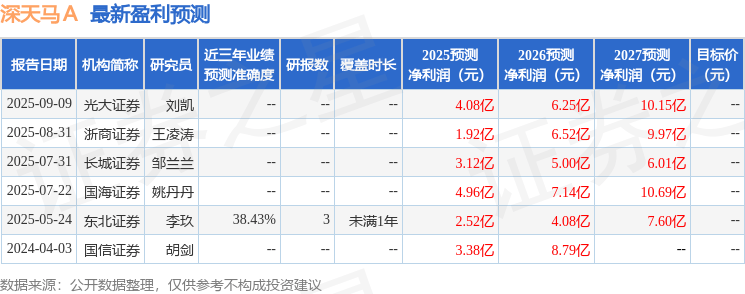
深天马A:10月24日接受机构调研,东方财富证券、福豆投资等多家机构参与
Sou Hu Cai Jing· 2025-10-27 08:57
Core Viewpoint - The company, 深天马A, is focusing on the automotive display sector as a strategic core business, leveraging its 30 years of expertise to maintain a leading position in the global market for automotive displays, with significant growth in revenue and market share in recent years [2][3]. Group 1: Automotive Display Business - The company has been the global leader in automotive TFT-LCD and instrument display shipments for five consecutive years since 2020, and it achieved the top position in global automotive head-up display (HUD) shipments in 2024 [2]. - In the first half of 2025, the automotive display business revenue grew approximately 27% year-on-year, with sales to major international automakers increasing over 70% [2]. - The demand for automotive display products is expected to continue growing due to trends such as increased screen sizes and specifications, particularly in the rapidly expanding domestic new energy vehicle market [3]. Group 2: Financial Performance - For the first half of 2025, the company's main revenue reached 17.475 billion yuan, a year-on-year increase of 9.93%, while the net profit attributable to shareholders was 206 million yuan, up 142.07% [12]. - The gross profit margin improved by 4.52 percentage points year-on-year, driven by the healthy development of core businesses and cost reduction efforts [6][12]. - The company reported a cost expense ratio reduction of approximately 5.4 percentage points year-on-year, contributing positively to profit levels [6]. Group 3: Research and Development - In the first half of 2025, the company invested approximately 1.57 billion yuan in R&D, focusing on flexible MOLED, LCD technologies, and other display fields [8]. - The company aims to enhance its display solution capabilities and continuously enrich its product offerings through ongoing R&D efforts [8]. Group 4: Competitive Landscape - The automotive display sector is characterized by high barriers to entry and strong customer loyalty, with increasing demands for product reliability and supplier stability [3]. - The company adopts a "2+1+N" development strategy, focusing on mobile and automotive displays as core businesses while exploring growth in IT displays and other value-added sectors [10][11]. - The company maintains a leading position in various display markets, including automotive, LTPS smartphones, and industrial applications, with a commitment to continuous improvement and innovation [11][12].