Retailers

Search documents
Best Stock to Buy Right Now: Walmart vs. Kohl's
The Motley Fool· 2025-09-07 08:05
Core Viewpoint - Investing in the retail sector presents challenges, but it may also create buying opportunities for long-term successful retailers that maintain a competitive edge [1] Group 1: Walmart - Walmart has a strong identity and has focused on low prices since its inception over six decades ago, which provides a competitive advantage [4] - The company has invested in technology to compete with e-commerce giants like Amazon, including omnichannel capabilities and a subscription program, Walmart+ [5] - Walmart U.S. division reported a 4.6% increase in same-store sales for the fiscal second quarter, with higher traffic contributing 1.5 percentage points [6] - Management raised the companywide sales growth outlook for the year from 3.5% to 4.25%, excluding foreign-currency exchange translations [7] - Walmart's stock appreciated 26.7% over the past year, outperforming the S&P 500's 13.6%, with a P/E ratio contracting from 40 to 36 [8] Group 2: Kohl's - Kohl's offers a wide range of products at moderate prices but has struggled with traffic and sales, despite initiatives like Amazon returns at its stores [9] - The company's fiscal second-quarter same-store sales fell 4.2%, leading to a decrease in operating income from $165 million to $161 million [10] - Management projects a further decline in same-store sales by 4% to 5% for the year [10] - Kohl's has faced leadership instability, with a recent CEO dismissal, contributing to a 16.8% decline in share price over the past year [11] - The stock trades at a P/E ratio of 9, significantly lower than the S&P 500's P/E [11][12] Group 3: Investment Considerations - Kohl's may appear as a value stock due to its low P/E ratio, but declining sales and lack of a clear turnaround plan suggest caution [12] - Walmart is favored for its consistent customer attraction and future investments, even with a higher valuation, as it typically performs well in challenging economic conditions [13]


Zumiez: Solid Balance Sheet, But The Fundamentals Still Don't Skate
Seeking Alpha· 2025-09-06 06:07
Group 1 - The Seattle-based retailer has not delivered satisfactory returns for investors over both the long term and short term [1] - There is no indication of any stock, option, or similar derivative positions held by the analyst in the companies mentioned [1] Group 2 - The article expresses personal opinions and does not provide compensation for the views expressed [2] - Seeking Alpha clarifies that past performance does not guarantee future results and does not provide specific investment recommendations [2]

3 Explosive Growth Stocks Hiding in Plain Sight
MarketBeat· 2025-09-04 13:15
Group 1: Investment Philosophy - The distinction between value and growth investing is often misunderstood, as both rely on future growth potential and intrinsic value [1] Group 2: Burlington Stores Inc. (NYSE: BURL) - Burlington Stores is currently trading at $293.04, with a 12-month price forecast of $344.29, indicating a potential upside of 17.49% [2] - The stock is rated as a Buy by Wall Street analysts, with a consensus price target suggesting a 19% upside from current prices [4] - The earnings per share (EPS) forecast for Burlington is $3.84, representing a 141% increase from the current EPS of $1.59 [3] Group 3: Snowflake Inc. (NYSE: SNOW) - Snowflake's current price is $229.21, with a 12-month price forecast of $255.53, indicating an 11.48% upside [5] - The company is positioned favorably in the AI ecosystem, as its cloud computing services are essential for data management, which is critical for AI systems [6] - Snowflake's EPS is expected to rise from $1.07 to $1.52, justifying its high price-to-book (P/B) ratio of 26.5x compared to the sector average of 9.4x [7][8] Group 4: Cameco Corp. (NYSE: CCJ) - Cameco's current stock price is $77.12, with a 12-month price forecast of $83.32, indicating an 8.04% upside [9] - The company is experiencing increased institutional interest, with $1.5 billion in stock purchases in the last quarter [10] - Cameco's price-to-earnings (P/E) ratio is 89.1x, significantly higher than the mining industry's average of 17.0x, reflecting long-term growth expectations in nuclear energy [11]



Back-to-School Shopping Hits $40B: 3 Retail Stocks to Watch Now
MarketBeat· 2025-09-03 23:15
Retail Industry Overview - The back-to-school shopping season is a significant retail event, with American consumers expected to spend around $40 billion, averaging about $858 per household on school supplies [1] - Retail investors need to be selective, focusing on factors like pricing power, business models, and brand appeal to identify strong companies [2] Company Highlights Walmart Inc. - Walmart's stock forecast indicates a 12-month price target of $110.76, representing an 11.55% upside from the current price of $99.30 [4] - The company reported strong second-quarter earnings for 2026, benefiting from a successful back-to-school season, with key school supplies priced lower than the previous year [4] - E-commerce showed double-digit growth, and Walmart's omnichannel strategy is becoming increasingly important [5] - Despite a 9% increase in stock price in 2025, lower-income consumers face pressure, but Walmart benefits from higher-income consumers shifting to value-focused retailers [6] Costco Wholesale Corporation - Costco's stock forecast suggests a 12-month price target of $1,050.00, indicating a 10.55% upside from the current price of $949.78 [7] - The bulk-buying model is advantageous for back-to-school shopping, with an average spend of $830 providing significant savings compared to the membership fee [9] - Seasonal shopping periods drive traffic, leading to new memberships and higher renewal rates, which are already above 90% in North America [10] - Costco's stock is up 3.6% year-to-date, with potential for continued gains as seasonal shoppers convert to long-term members [11] Lululemon Athletica Inc. - Lululemon's stock forecast shows a 12-month price target of $303.83, reflecting a 53.04% upside from the current price of $198.53 [12] - The brand is positioned well for the back-to-school season as athleisure becomes popular among students, although the stock is down 48% year-to-date [13] - Recent stock performance shows a slight recovery, with a 1% increase in the last month, leading to anticipation for the upcoming earnings release [13] - Lululemon targets a more affluent demographic, which may be less affected by economic pressures, potentially supporting solid year-over-year performance [14]



Sluggish Sales and a Change in CEO: Is Target's Stock Destined to Go Lower?
The Motley Fool· 2025-09-03 08:05
Core Viewpoint - Target's stock is trading at multi-year lows, reflecting significant challenges in the retail sector due to macroeconomic factors and internal management decisions [1][2][9]. Group 1: Company Performance - Target's sales have been stagnant, with a 37% decline in valuation over the past 12 months, and the stock is at levels similar to the 2020 market crash [2][3]. - In the most recent quarter ending August 2, Target reported net sales of $25.2 billion, down 0.9% year-over-year, and operating income fell by over 19% to $1.3 billion [11]. - The company anticipates a low-single digit drop in sales for the full fiscal year ending in January [11]. Group 2: Leadership Changes - Target announced Michael Fiddelke as the new CEO, effective February 1, 2026, succeeding Brian Cornell, who will remain on the board [5]. - Investors expressed skepticism regarding the internal hire, fearing it may perpetuate the status quo rather than implement necessary changes [6][7]. - The need for significant changes is emphasized, as the current strategy has not yielded positive results [8]. Group 3: Market Conditions - The retail sector is facing challenges due to rising interest rates and consumers reducing discretionary spending, impacting sales growth across the industry [9][12]. - Despite the current struggles, the business is not fundamentally broken, and long-term investors may find value in Target's stock, which has a low price-to-earnings multiple of 11 compared to the S&P 500 average of 25 [14]. - Target offers a 4.7% dividend yield, which may provide compensation for patient investors during this downturn [14].

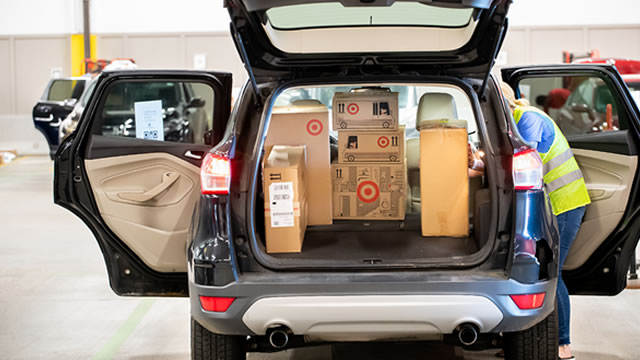
Walmart and Sam's Club's Children's Miracle Network Campaign Concludes, Raising Over $43 Million for Children's Miracle Network Hospitals
Prnewswire· 2025-09-02 17:50
Core Points - Walmart and Sam's Club raised over $43 million for Children's Miracle Network Hospitals during their annual campaign, which took place from June 9 to July 6, 2025 [1] - The funds raised directly support local children's hospitals in the U.S. and Canada, providing essential care to millions of children [1][4] - The campaign reflects a long-standing partnership of 38 years between Walmart, Sam's Club, and CMN Hospitals, emphasizing community engagement and support for pediatric care [2][4] Company Contributions - Walmart Foundation's SVP, Julie Gehrki, highlighted the dedication of associates, customers, and members, stating that their generosity translates into direct support for local children and families [2] - The campaign's success is attributed to the personal commitment of Walmart and Sam's Club associates, who view their work as a way to give back to the community [2][4] - A video showcasing the impact of the campaign emphasizes that every dollar raised contributes to life-changing treatments and support programs for children [3][4] Impact on Healthcare - The funds collected are critical for children's hospitals to meet urgent needs and provide access to specialized care, including life-saving treatments and innovative research [4][6] - Children's Miracle Network Hospitals has raised over $9 billion for 170 children's hospitals, focusing on critical healthcare services and support for families [6][7] - The collective generosity from the campaign empowers local hospitals to confront health challenges and transform children's healthcare [4][6]

3 Tariff-Proof Retailers Making New All-time Highs
MarketBeat· 2025-09-01 15:31
Core Insights - American importers are facing the highest average tariff rates in nearly 100 years, leading to difficult choices for businesses regarding margin impacts and customer pricing [1] - Retail companies are beginning to struggle under the weight of increasing import taxes, while some companies have successfully navigated these challenges and achieved new stock highs [2][5] Group 1: Impact of Tariffs on Companies - Companies that rely heavily on imported materials are significantly affected by tariffs, often needing to raise prices to maintain margins [2][3] - Domestic producers can raise prices in response to competitors' price increases, allowing them to expand their margins [2] Group 2: Examples of Companies Mitigating Tariff Impact - eBay has reached new all-time highs due to its platform model, which does not involve holding inventory, thus avoiding tariffs [6][8] - eBay's net margin exceeds 20%, and despite a 51% year-to-date gain, it trades at a lower P/E ratio compared to the industry average [10] - Tractor Supply Co. sources domestically, with only 12% of sales from imported products, leading to record sales of $4.44 billion in Q2 2025 [12][14] - TJX Companies benefits from acquiring excess inventory at discounts, leveraging supply chain disruptions caused by tariffs [16][19]


Kohl's Crushed Earnings Expectations, but Should You Buy the Stock Now?
The Motley Fool· 2025-08-31 13:30
Core Insights - Kohl's reported second-quarter earnings that exceeded analyst expectations, with adjusted earnings per share of $0.56 compared to the projected $0.29, and revenue of $3.35 billion versus an expectation of $3.32 billion, leading to a 24% increase in stock price [1][2] Financial Performance - The company achieved an adjusted earnings per share of $0.56, nearly double the expected $0.29 [2] - Revenue totaled $3.35 billion, slightly above the expected $3.32 billion, but down 5.1% compared to the same quarter in 2024 [2][8] - Same-store sales fell by 4.2%, indicating a decline in customer engagement [8] Management and Strategic Direction - The board of directors has not yet appointed a permanent CEO after parting ways with the previous one, creating uncertainty regarding the company's future direction [4][7] - The lack of a permanent CEO raises concerns about the sustainability of the recent positive performance [7][12] Competitive Landscape - Compared to competitors like Dollar General, which saw a 5.1% increase in sales and a 2.8% rise in same-store sales, Kohl's is struggling to resonate with customers [9] - The turnaround efforts at Kohl's appear less robust than those at Dollar General, suggesting a challenging path ahead for Kohl's [9] Operational Efficiency - Kohl's improved its gross margin and managed to cut costs, but the overall performance indicates that it is merely doing less poorly rather than showing significant improvement [10] - Until customer traffic increases, the retailer may continue to face challenges in regaining its footing [10]

1 Reason I Think Walmart Stock Is a Warren Buffett-Worthy Investment in 2025
The Motley Fool· 2025-08-30 10:03
Core Insights - Warren Buffett underestimated Walmart's potential in the e-commerce era, despite his previous praise for the company [1][2][6] - Walmart has shown significant growth in e-commerce sales, with a year-over-year increase of 25% in the second quarter of fiscal 2025 [3][10] - The company has outperformed Amazon since 2019, indicating a strong recovery and adaptation to the e-commerce landscape [3] Company History - Buffett held Walmart stock from 2005 to 2018, during which it was one of Berkshire Hathaway's largest holdings [2] - He began selling Walmart shares in 2015, expressing concerns about the retail sector's competition with Amazon [2] Current Performance - Walmart remains the largest retailer globally, leveraging its 4,600 domestic stores as distribution hubs, which enhances its competitive edge against Amazon [10] - The company reported a 50% increase in store deliveries year-over-year in the second quarter, with a third of deliveries completed in under three hours [10] Financial Strategy - Walmart has consistently raised its dividend for 52 years, demonstrating a strong commitment to shareholder value [11] - The company is absorbing tariff impacts, allowing it to maintain competitive pricing and value for customers [11] Investment Perspective - Buffett's investment strategy focuses on companies with excellent management and significant roles in the economy, which aligns with Walmart's market position [7][12] - Walmart's essential products and discount pricing strategy position it well to gain market share during economic downturns [12]

Dow, S&P 500 to Snap Weekly Win Streaks Despite Records
Schaeffers Investment Research· 2025-08-29 17:55
Market Performance - The S&P 500 Index and Dow Jones Industrial Average achieved record closes following better-than-expected GDP data for Q2 [1] - Despite a strong performance from NVDA, which highlighted impressive AI growth, stocks faced profit-taking, leading to weekly losses for all three major indexes [1] - The personal consumption expenditures (PCE) price index for July met estimates, but this did not prevent the market decline [1] Economic Indicators - A decline in durable goods orders for July raised concerns among investors, although these concerns were quickly set aside [2] Technology Sector - NVDA earnings were a focal point, but other tech companies also drew attention, including a U.S. government stake in Intel (INTC) [3] - Optimism was noted ahead of Okta's (OKTA) earnings report, while CrowdStrike (CRWD) prepared to release its results [3] - Advanced Micro Devices (AMD) received a "buy" upgrade due to AI prospects, contrasting with Dell Technologies (DELL), which issued a downbeat forecast despite a top- and bottom-line win [3] Retail Sector - Tariff concerns impacted the retail sector, with American Eagle Outfitters (AEO) struggling after a downgrade [4] - Abercrombie & Fitch (ANF) and Kohl's (KSS) saw stock rallies following their quarterly reports, while Dollar General (DG) and Five Below (FIVE) experienced opposite post-earnings movements [4] - Best Buy (BBY) reported better-than-expected Q2 results, while Gap (GAP) exceeded profit estimates but fell short on revenue [4] - Signet Jewelers (SIG) shares surged following the engagement of Travis Kelce and Taylor Swift, with the ring valued between $675,000 and $1 million [4] Upcoming Events - A holiday-shortened week will feature significant jobs, manufacturing, and services data, with markets closed on Monday for Labor Day [5] - Earnings reports from various companies, including American Eagle (AEO), Asana (ASAN), and Campbell Soup (CPB), are expected to keep Wall Street active [5]