
医疗器械

Search documents
同比增长超25%!医疗器械“赢”在并购
思宇MedTech· 2026-02-25 08:52
Core Viewpoint - The growth of medical device companies in Europe and the US heavily relies on mergers and acquisitions, as exemplified by Globus Medical's recent performance and strategic acquisitions [2][4]. Financial Overview - In Q4 2025, Globus Medical reported revenue of $826.4 million, a year-on-year increase of 25.7%, exceeding Wall Street expectations; non-GAAP EPS reached $1.28, up 52.1% year-on-year [4]. - For the full year 2025, the company achieved revenue of $2.939 billion, a 16.7% increase, with non-GAAP EPS of $3.98, reflecting a 30.8% growth [4]. - The management attributed the strong performance to the integration of the acquisitions of NuVasive and Nevro, indicating a validation of their merger integration capabilities [4][5]. Horizontal Integration - The acquisition of NuVasive in 2023 is a classic example of horizontal integration, achieving approximately $200 million in synergy, exceeding initial targets by $30 million and completing integration nearly a year ahead of schedule [7]. - Globus's strategy involved retaining core sales capabilities, promoting cross-selling, and optimizing cost structures, which is a profit expansion model driven by scale [8]. Cross-Sector Expansion - The acquisition of Nevro represents a strategic extension into a new sector, with Nevro's revenue of $409 million in FY 2024 but a net loss of $113 million [13]. - Globus's integration plan for Nevro includes stabilizing the sales team, managing execution risks, and enhancing overall profitability, with expectations for positive EPS contribution by Q1 2027, ahead of schedule [13][17]. Core Business Validation - Globus's US spinal business grew by 10% year-on-year in Q4, indicating that core operations remained strong despite the focus on merger integrations [19]. - Successful merger integration must be built on a solid core business foundation, as evidenced by Globus's ability to maintain growth while managing acquisitions [20]. International Strategy - In Q4, Globus's international revenue grew by 19%, but management emphasized a focus on deepening existing markets rather than expanding into new ones [21]. - This approach contrasts with many Chinese medical device companies that are pursuing rapid international expansion without sufficient depth in existing markets [22]. Summary Insights for Chinese Medical Device Industry - M&A capabilities are becoming a core factor in valuation, as the market shifts focus from single product stories to integration and profit realization capabilities [24]. - The next generation of industry leaders is likely to emerge from successful M&A integrations rather than reliance on standout products [25]. - Platform-based expansion is more sustainable than single-product strategies, as evidenced by the need for Chinese companies to transition from product-driven to platform-driven models [25][26].



独立上市!美敦力剥离业务
思宇MedTech· 2026-02-25 08:52
Core Viewpoint - Medtronic's MiniMed diabetes business is moving towards an IPO with a pricing range of $25–28 per share, aiming to raise up to $784 million, indicating a shift in the diabetes device industry towards independent platform pricing [2][3] Group 1: IPO Details - The IPO pricing is determined by comparable company valuations, current market sentiment, and roadshow demand, aiming for a successful fundraising while ensuring attractiveness to new investors [3] - The IPO marks the formal entry of the spin-off plan initiated in 2024 into the capital market, signaling a transition in the diabetes device sector from internal business models to independent pricing platforms [3] Group 2: Business Overview - MiniMed is not just a single product line but a comprehensive platform for diabetes management, with its core product, MiniMed 780G, being an automated insulin delivery system that integrates insulin pumps, continuous glucose monitoring (CGM), and algorithm control [4] - MiniMed holds a leading position in the integrated system market, with over 50% market share and more than 640,000 global users as of 2025, while its revenue model has shifted to 83% coming from consumables and software services, creating a recurring cash flow structure [4] - The business is in a "growth recovery phase," with fiscal year 2025 revenue reaching $2.75 billion, a year-on-year increase of 10.7%, and a continued revenue growth of 13.8% in the first half of fiscal year 2026, alongside narrowing losses [4][5] Group 3: Technological Shift - The industry is transitioning from focusing on individual devices to integrated systems, with the competitive core now centered on system integration capabilities rather than just hardware performance [7] - Companies like Dexcom and Abbott focus on CGM, while MiniMed emphasizes pump and algorithm integration, highlighting the importance of stable and reliable closed-loop control for long-term patient management [7] Group 4: Strategic Implications of Spin-off - The spin-off is part of Medtronic's strategy to streamline its business structure, focusing on high-profit areas while allowing MiniMed to operate independently and pursue growth in the diabetes sector [8][9] - MiniMed's value was diluted within Medtronic's broader business structure, but as an independent entity, it can now target specialized companies, potentially leading to a shift from "comprehensive discount" to "sector premium" in valuation [9] Group 5: Industry Evolution - The IPO signifies a deeper structural change in the industry, moving from product competition to system competition, with MiniMed's independence allowing for more agile strategies in product iteration and market engagement [11] - The power dynamics within the industry are shifting, with CGM manufacturers controlling data entry and pump manufacturers managing execution, while the true value is concentrated in closed-loop control systems [11] - The medical device industry is transitioning from a diversified group model to a specialized platform company model, with more niche businesses being spun off and entering the capital market with clearer technological paths and business models [11] Group 6: Implications for Chinese Medical Device Companies - The entry barriers are rising significantly, as the focus shifts from single products to system capabilities, necessitating strategic choices among CGM, insulin pumps, or closed-loop systems [13] - Companies must establish sustained capabilities around their chosen technological path rather than spreading resources thin across multiple directions [13] - The logic for international expansion is changing, with a greater emphasis on system integration and long-term service capabilities rather than just product registration and channel sales [13]

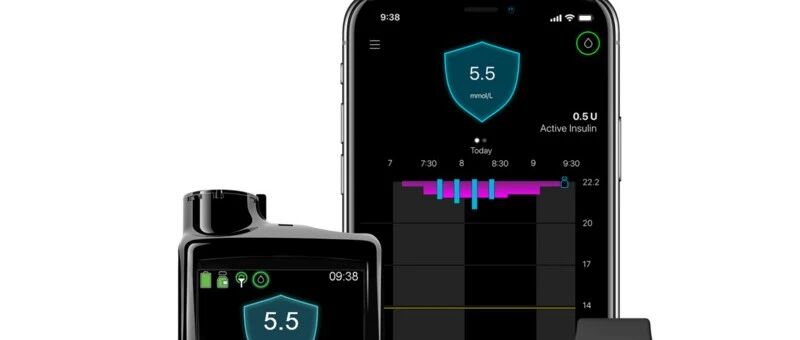
昨日1家企业递交纳斯达克上市申请,另1家企业确定IPO条款,预计下周上市
Sou Hu Cai Jing· 2026-02-25 08:43
Group 1: MiniMed IPO Details - MiniMed, a spin-off from Medtronic focused on integrated diabetes management, plans to raise $742 million through an IPO by issuing 28 million shares priced between $25 and $28 each [1][2] - The company reported a revenue of $2.9 billion for the 12 months ending October 31, 2025, and aims to list on NASDAQ under the ticker symbol MMED [2] - As of October 2025, MiniMed has over 640,000 insulin pump users, with a continuous glucose monitoring (CGM) installation rate of 65%, up from 58% year-over-year [1] Group 2: Dune Acquisition III IPO Details - Dune Acquisition III, a SPAC targeting investments in digital assets, sports entertainment, SaaS, and AI, has filed for an IPO to raise up to $150 million by issuing 15 million shares at $10 each [3] - Each share unit will include one common share and one-third of a warrant, with an exercise price of $11.50 per share [3] - The SPAC is led by CEO Carter Glatt and CFO Jeron Smith, with a focus on sectors such as digital assets and artificial intelligence [3]

20cm速递|TPD赛道研发火热,创业板医药ETF国泰(159377)涨超1.2%
Mei Ri Jing Ji Xin Wen· 2026-02-25 06:24
Group 1 - The TPD (Targeted Protein Degradation) sector is experiencing rapid development, particularly in the area of protein degradation technology for autoimmune diseases, with key small molecule targets such as STAT6, IRAK4, IRF5, VAV1, NLRP3, and NEK7 gaining attention [1] - These targets are showing excellent efficacy and safety in clinical or preclinical stages, paving new pathways for the treatment of autoimmune diseases [1] - Data readouts for numerous autoimmune TPD targets are expected to begin in 2026, potentially entering critical clinical phases [1] Group 2 - In the medical device industry, there is a focus on inventory replenishment and bidding processes, particularly for surgical robots and endoscopes [1] - Attention is also directed towards innovative consumables benefiting from centralized procurement, such as neurointerventional, peripheral interventional, and electrophysiological products [1] - The Guotai Healthcare ETF (159377) tracks the Chuangyi Medicine Index (399275), which includes listed companies engaged in biopharmaceuticals, chemical pharmaceuticals, traditional Chinese medicine, and medical services, reflecting the overall performance of innovative biopharmaceutical-related securities [1]

春立医疗2月24日获融资买入357.73万元,融资余额7029.64万元
Xin Lang Cai Jing· 2026-02-25 05:57
Group 1 - The core viewpoint of the news is that Spring Medical has shown significant financial performance with a notable increase in revenue and net profit, indicating strong growth potential in the orthopedic medical device sector [2][3]. - As of February 24, Spring Medical's stock price increased by 0.58%, with a trading volume of 34.10 million yuan, and a net financing purchase of 11.70 million yuan, reflecting active investor interest [1]. - The company's financing balance reached 70.30 million yuan, accounting for 1.09% of its market capitalization, which is above the 90th percentile of the past year, indicating a high level of investor engagement [1]. Group 2 - Spring Medical specializes in the research, production, and sales of implantable orthopedic medical devices, with its main products including joint prostheses and spinal implants, which are exported to various regions worldwide [2]. - For the period from January to September 2025, Spring Medical reported a revenue of 756 million yuan, representing a year-on-year growth of 48.75%, and a net profit of 192 million yuan, which is a 213.21% increase compared to the previous year [2]. - The company has distributed a total of 440 million yuan in dividends since its A-share listing, with 390 million yuan distributed over the past three years, indicating a commitment to returning value to shareholders [3].

ETF盘中资讯|医械迎政策利好,规模最大医疗ETF(512170)延续高频溢价!FDA审评政策松绑,药ETF(562050)止跌企稳
Sou Hu Cai Jing· 2026-02-25 04:12
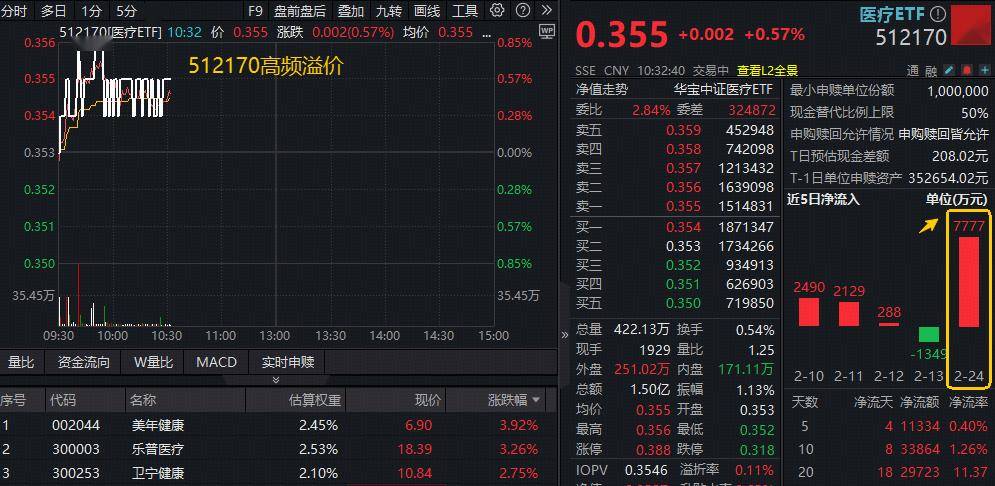
Group 1 - The A-share pharmaceutical sector rebounded, with medical device stocks and AI healthcare concepts leading the gains, including Meinian Health and Lepu Medical rising over 3% [1] - The largest medical ETF in the market (512170) saw a near 1% increase, with a net subscription of 77.77 million yuan on the previous day [1][5] - A new policy from the Beijing-Tianjin-Hebei region aims to enhance clinical trial efficiency and reduce compliance costs for CXO and medical device companies, set to take effect on March 1, 2026 [3] Group 2 - The pharmaceutical sector stabilized, with innovative drug concepts showing mixed results; Sanofi's stock rose over 3%, while Dizhe Pharmaceutical fell over 4% [3] - The only ETF tracking the pharmaceutical index (562050) turned positive during trading [3] - The FDA's recent announcement to establish a single pivotal clinical trial as the default standard for new drug approvals is expected to shorten development cycles and lower capital costs, benefiting innovative drug companies [4]
昌平新城东区加速崛起 绘就京北宜业宜居新画卷
Bei Jing Ri Bao Ke Hu Duan· 2026-02-25 04:04
Core Insights - The approval of the detailed planning for the Beijing Changping Old Town and Nanshao Ecological Group marks a significant step in urban development, aiming to integrate culture, ecology, and living spaces in the area [1][3] - The Changping New Town East District is positioned as a key component of the spatial layout, focusing on becoming a demonstration area for consumer experience, a model for livable environments, and a hub for high-level services and innovation [3][8] Group 1: Development Advantages - The Changping New Town East District benefits from multiple advantages, including its location near the Yanshan Mountains and various water bodies, with a planned ecological space of 202 hectares and a per capita green area of 16.4 square meters [5][6] - The area has a well-developed transportation network, including the Changping Line subway and major road connections, facilitating efficient access to the city center [6][12] Group 2: Urban Planning and Infrastructure - The district's planning includes a 1.5 square kilometer core area for a consumer experience demonstration zone, featuring diverse commercial and recreational facilities [10] - The development goals include a three-year momentum, five-year formation, and ten-year establishment plan, with significant projects like a commercial complex and a tertiary hospital set to enhance local services [12][15] Group 3: Residential Development - High-quality residential projects are emerging in the Changping New Town East District, with notable developments like Jianfa·Guantangfu and Longhu Enxiang·Lingyun Song, which cater to various housing needs and aim to elevate living standards [15][17] - The area is expected to evolve into a core engine for Changping's growth, promoting a modern, vibrant, and livable city environment [17]

医械迎政策利好,规模最大医疗ETF(512170)延续高频溢价!FDA审评政策松绑,药ETF(562050)止跌企稳
Xin Lang Cai Jing· 2026-02-25 03:01
Group 1 - The A-share pharmaceutical sector has rebounded, with medical device stocks and AI healthcare concepts leading the gains, including significant increases in companies like Meinian Health and Lepu Medical [1][8] - The largest medical ETF in the market (512170) saw a nearly 1% increase, with a net subscription of 77.77 million yuan the previous day [1][8] - A new policy from the Beijing-Tianjin-Hebei region is expected to benefit CXO and medical device companies by improving clinical trial efficiency and reducing compliance costs [2][5][10] Group 2 - The FDA has announced a new default standard for drug approvals, allowing for a single key clinical trial plus confirmatory evidence, which is projected to shorten development cycles and reduce capital costs significantly [4][12] - The cost of a single key trial is estimated to range from 30 million to 150 million USD, which will enhance the research efficiency of innovative drug companies [4][12] - The medical ETF (512170) has over 50% weight in medical devices and more than 25% in CXO, covering 12 AI medical and brain-computer interface concept stocks [4][12] Group 3 - The pharmaceutical sector is stabilizing, with mixed performance among innovative drug concepts; companies like Sanofi and Dizhiyuan have shown notable fluctuations [2][10] - Traditional Chinese medicine stocks have generally risen, with companies like Darentang and Jilin Aodong seeing increases of over 2% [2][10] - The only ETF tracking the pharmaceutical index (562050) turned positive during trading, indicating a recovery in the sector [2][10]


低位反弹!医疗器械指数ETF(159898)开盘拉升0.90%,出口韧性与脑机接口双轮驱动
Sou Hu Cai Jing· 2026-02-25 02:35
Core Viewpoint - The medical device sector is experiencing a rebound, driven by policy support, technological advancements, and a shift towards domestic innovation and global competition [1][4]. Group 1: Medical Device Sector Performance - On February 25, the medical device sector saw a rebound with the medical device index ETF (159898) rising by 0.90%, following a net subscription of 1.67 million yuan the previous trading day [1]. - Key stocks such as Aidi Te, Zhend Medical, and Lepu Medical saw significant gains, with Aidi Te rising over 5% and others like Hualan Biological and Yuyue Medical also showing strong performance [1]. Group 2: Brain-Computer Interface Developments - The brain-computer interface (BCI) sector is accelerating, with significant policy backing and capital investment. A semi-invasive BCI company, Borui Kang, is preparing for a listing on the Sci-Tech Innovation Board [4]. - The global BCI market is projected to grow from approximately $2.62 billion in 2024 to $12.4 billion by 2034, with a compound annual growth rate (CAGR) of 17.35% [4]. - In China, the BCI market is expected to reach 3.2 billion yuan in 2024 and grow to 6.14 billion yuan by 2028 [4]. Group 3: Export Resilience and Growth - China's medical device exports demonstrated strong resilience, with a total export value of $45.542 billion in the first 11 months of 2025, marking a year-on-year increase of 3.82% [5]. - The export structure is evolving, with significant growth in high-end products such as hospital diagnostic and treatment equipment, which increased by 8.36% [5]. Group 4: Domestic Market and Innovation - The implementation of the fifth batch of national high-value medical consumables procurement has significantly reduced prices, such as the cost of cochlear implants dropping from over 200,000 yuan to around 50,000 yuan [7]. - The domestic medical device market is projected to reach 1,017.4 billion yuan by 2026, with a CAGR of approximately 5.9% to 6.6% from 2020 to 2035, driven by aging population, equipment upgrades, and technological innovation [7]. - In 2025, a total of 3,402 medical device products were approved, including 76 innovative devices, maintaining a high approval rate for three consecutive years [7]. Group 5: ETF Performance - The medical device index ETF (159898) tracks the CSI All Medical Device Index, focusing on the medical equipment, consumables, and in vitro diagnostics sectors, with a notable exposure to the BCI concept at 23.79% [9]. - Since its inception, the ETF has achieved a total return of 1,015.07%, with an annualized return of 12.52% and a one-year annualized return of 20.86% [9]. - The revenue and net profit of the ETF's constituent stocks have shown a year-on-year recovery, indicating a gradual improvement in the industry's fundamentals [9].

东方生物连亏三年 2020上市募6.38亿光大证券保荐
Zhong Guo Jing Ji Wang· 2026-02-25 01:35
Group 1 - The company, Dongfang Biological, announced a projected net loss of 523 million yuan for the year 2025, with a net profit attributable to the parent company of -558 million yuan after excluding non-recurring gains and losses [1] - In 2024, Dongfang Biological reported an operating revenue of 828 million yuan, a year-on-year increase of 0.95%, but a net loss attributable to shareholders of -529 million yuan, compared to -398 million yuan in the previous year [1] - The net cash flow from operating activities for 2024 was -348 million yuan, an improvement from -1.646 billion yuan in the previous year [1] Group 2 - The total amount raised from the recent issuance by Dongfang Biological was 637.5 million yuan, with a net amount of 550.82 million yuan, which was 10.82 million yuan less than originally planned [2] - The company intended to use the raised funds for projects including the annual production of 24 million rapid diagnostic (POCT) products, the construction of a technology research and development center, marketing network and information management platform, and to supplement working capital [2] - The total issuance costs amounted to 86.68 million yuan, excluding value-added tax, with underwriting and sponsorship fees accounting for 60.60 million yuan [3]

