Investment Banking

Search documents
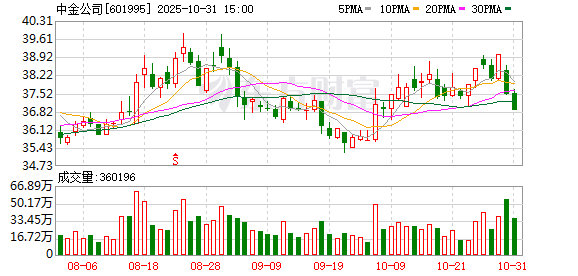
中金高管调整落定 王曙光升任副董事长
2 1 Shi Ji Jing Ji Bao Dao· 2025-11-02 04:12
Core Viewpoint - CICC announced the appointment of Wang Shuguang as Vice Chairman, enhancing the company's governance structure and strategic decision-making capabilities [2][4]. Group 1: Personnel Changes - Wang Shuguang has been appointed as Vice Chairman of CICC, just two months after becoming President [2]. - He will also serve as the authorized representative under the Hong Kong Stock Exchange listing rules, working alongside co-secretary Zhou Jiaxing [3]. - The board unanimously approved Wang's election as Vice Chairman during its recent meeting [2]. Group 2: Strategic Implications - The appointment is expected to strengthen the synergy between CICC's investment banking and other business sectors, enhancing its ability to serve national strategies [4]. - Wang's extensive experience in investment banking and management is anticipated to inject new vitality into CICC's governance and strategic decision-making [4]. Group 3: Career Background - Wang Shuguang's career at CICC exemplifies the company's talent cultivation system, having joined in 1998 and progressed through various roles over 27 years [5][6]. - His career can be divided into four key stages, culminating in his recent appointments as President and Vice Chairman [6]. - Wang has led significant capital market projects, including IPOs and mergers, showcasing his comprehensive experience in the field [6][7]. Group 4: Insights on Capital Market Reform - Wang emphasized the significance of the newly launched Sci-Tech Innovation Board's growth tier, which aligns with national strategies for technological innovation [8]. - He outlined three strategic dimensions of the reform: enhancing support for tech innovation, improving capital formation, and strengthening investor protection mechanisms [8][9]. - Wang reiterated the mission of investment banking in supporting national strategies, particularly in fostering hard-tech enterprises through capital markets [9].

How an 'accidental banker' is turning this LA-based investment bank into one of the biggest deal machines
Yahoo Finance· 2025-11-01 19:08
Core Insights - Houlihan Lokey has become one of Wall Street's busiest investment banks by deal volume, with CEO Scott Adelson highlighting the firm's unexpected growth and success in the investment banking sector [1][4]. Company Overview - Scott Adelson, who has been with Houlihan Lokey since 1987, was appointed CEO last year after serving as copresident and global cohead of corporate finance [3]. - The firm has evolved from its initial focus on restructuring and bankruptcy to handling a diverse range of transactions, including advising on the sale of Color Wow to L'Oréal [4]. Financial Performance - In the second quarter of the 2026 fiscal year, Houlihan Lokey reported revenues of $659 million, a 15% increase compared to the same quarter last year [6]. - Corporate finance revenues reached nearly $439 million, up 17% year-over-year, while financial and valuation advisory services generated $87 million, reflecting a nearly 10% increase [6]. Market Position - Houlihan Lokey is recognized as the top M&A advisor by volume in 2025, having successfully navigated a competitive landscape by hiring senior dealmakers while rivals have reduced their workforce [8]. - The firm has focused on the middle-market segment, typically involving deals valued around $1 billion and under, where it has seen significant deal flow despite larger banks handling higher-value transactions [5]. Industry Trends - The investment banking sector is experiencing a rebound in dealmaking activity, attributed to a steadier rate environment, lighter regulation, and optimism surrounding AI and technology [7]. - Adelson emphasizes that the current capital market conditions are favorable, with abundant capital leading to increased confidence in dealmaking [7].

JEFFERIES INVESTIGATION REMINDER: Bragar Eagel & Squire, P.C. Urges Jefferies Stockholders to Contact the Firm Regarding their Rights
Globenewswire· 2025-11-01 14:31
Core Viewpoint - Bragar Eagel & Squire, P.C. is investigating potential claims against Jefferies Financial Group Inc. for possible violations of federal securities laws and unlawful business practices, particularly in relation to its exposure to First Brands' bankruptcy [1][2]. Investigation Details - The investigation is focused on whether Jefferies has engaged in unlawful business practices that may have harmed its stockholders [1][2]. - Jefferies disclosed that its asset management fund held approximately $715 million in receivables linked to First Brands, which is under scrutiny due to accounting irregularities [6]. Stock Impact - Following the news of First Brands' bankruptcy and Jefferies' exposure, Jefferies' stock price dropped by $4.66, or 7.9%, closing at $54.44 per share on October 8, 2025, resulting in losses for investors [6].


高盛中国经济展望-2025 年 10 月GS China Economic Outlook_ October 2025 [Presentation]
Goldman Sachs· 2025-11-01 13:47
Investment Rating - The report raises the 2025 real GDP growth forecast for China from 4.9% to 5.0% based on government spending acceleration and commitment to economic targets [6][10]. Core Insights - The report emphasizes the importance of China's manufacturing push in driving economic growth and highlights the expected annual growth of Chinese export volumes by 5-6% [9][10]. - It notes that the fiscal deficit is projected to widen by 1.0 percentage point of GDP in 2026, with total social financing stock growth expected to rise [9][10]. - The report discusses the ongoing focus on high-tech manufacturing and AI investment as a counterbalance to demographic and local government debt challenges [9][10]. Summary by Sections Current State of the Economy - The 2025 real GDP growth forecast has been raised to 5.0% due to increased government spending and commitment to economic targets [6]. 2026 Macro Views - The report anticipates a real GDP growth of 4.8% in 2026, which is significantly above market consensus [9]. - It expects the fiscal deficit to widen and further cuts in the reserve requirement ratio (RRR) and policy rates [9]. Medium- to Long-Term Views - Chinese export volumes are expected to grow by 5-6% annually, contributing to overall economic expansion [9]. - The report highlights the prioritization of manufacturing, technology, and security in China's 15th Five-Year Plan [9]. Economic Indicators - The report provides a detailed forecast of various economic indicators, including GDP growth, domestic demand, consumption, and inflation rates for the years 2025 to 2027 [13]. - It notes that household consumption is expected to grow at a rate of 4.6% in 2025, with government consumption at 4.0% [13]. Policy Measures - The report outlines several policy measures aimed at boosting consumption and investment, including a consumer goods trade-in program and increased government spending on infrastructure [81][82].

The 30-year-old obsessive networker who is leading a wildly profitable niche on Wall Street known as ‘directs’
Yahoo Finance· 2025-11-01 08:00
Core Insights - The article discusses the rise of "directs" in private equity, a model where investors select individual companies rather than investing in pooled funds, driven by the increasing wealth of family offices [2][6][31] - Matt Swain, CEO of Triago, has been pivotal in transforming the directs sector into a significant business, raising substantial capital and attracting attention from major investment firms [5][12][30] Company Overview - Triago, under Swain's leadership, has become a leader in the directs space, raising $3 billion in equity capital for 35 deals, which supported over $10 billion in purchases [12][30] - Houlihan Lokey, a mid-tier investment bank, acquired Triago and has since leveraged its resources to enhance the directs model, aiming to expand into new areas like continuation vehicles and co-investments [23][24][30] Market Dynamics - The directs market is projected to grow significantly, with estimates suggesting it could reach around $200 billion this year, a substantial increase from previous years [6][30] - Institutional investors, including pension funds, are beginning to show interest in directs, indicating a potential shift in investment strategies towards more direct equity investments [31][32] Investment Strategy - The directs model offers higher potential returns compared to traditional private equity, with investors seeking returns of 3x or more, contrasting with the typical 2x returns from conventional PE funds [13][31] - Directs sponsors typically do not charge fees unless they achieve significant returns, aligning their interests closely with those of their investors [14][19] Competitive Landscape - While the directs model is gaining traction, it still faces challenges in achieving mass adoption among traditional private equity investors, who prefer pooled investments for quicker capital deployment [7][31] - The success of the directs model has attracted competition, which could lead to increased prices and reduced profit margins for existing players [7][30] Future Outlook - Swain envisions a future where directs will revolutionize private equity, making it more liquid and accessible, akin to public markets [31][32] - The increasing interest from large pension funds in directs co-investments indicates a growing acceptance of this model within institutional investment strategies [32]
Market Rallies as Pfizer Secures Metsera Deal, J&J Expands Drug Application
Stock Market News· 2025-10-31 20:08
Market Performance - U.S. equity markets ended positively, with the Dow Jones up 69.54 points (0.15%) to 47,591.66, the S&P 500 gaining 21.48 points (0.31%) to 6,843.82, and the Nasdaq Composite rising 165.60 points (0.70%) to 23,746.74 [2][9] Pharmaceutical Developments - Pfizer received early clearance from the U.S. Federal Trade Commission for its $4.9 billion acquisition of Metsera, aimed at enhancing its pipeline in the obesity and cardiometabolic disease market [3][9] - Johnson & Johnson submitted a supplemental Biologics License Application to the U.S. FDA for Stelara® to treat pediatric patients with moderately to severely active ulcerative colitis, potentially expanding its market [4][9] Economic Outlook and Cryptocurrency - The International Monetary Fund projects U.S. economic growth of 2.0% in 2025, indicating a stable economic outlook [5][9] - Goldman Sachs reports that cryptocurrency now constitutes 1% of the world's total investing portfolio, reflecting its growing integration into mainstream investment strategies [5][9] - Concerns arise as a federal prosecutor alleges that Bitcoin ATMs are being used for cryptocurrency scams, highlighting regulatory challenges in the crypto market [6][9] Energy Policy - The White House has removed the Atlantic from its future oil lease plans, indicating a shift in federal energy policy that may affect offshore oil and gas development along the U.S. East Coast [7][9]



X @Bloomberg
Bloomberg· 2025-10-31 12:24
Dubai's Emirates NBD is seeking to build an investment banking franchise in India, sources say https://t.co/61mK1K0M3q ...
Piper Sandler Companies (NYSE:PIPR) Earnings Call Presentation
2025-10-31 12:00
Investor Presentation October 2025 Piper Sandler Investor Presentation Disclosures Cautionary notice regarding forward-looking statements and non-GAAP financial measures This presentation contains forward-looking statements. Statements that are not historical or current facts, including statements about beliefs and expectations, are forward-looking statements. Forward-looking statements involve inherent risks and uncertainties, and important factors could cause actual results to differ materially from those ...

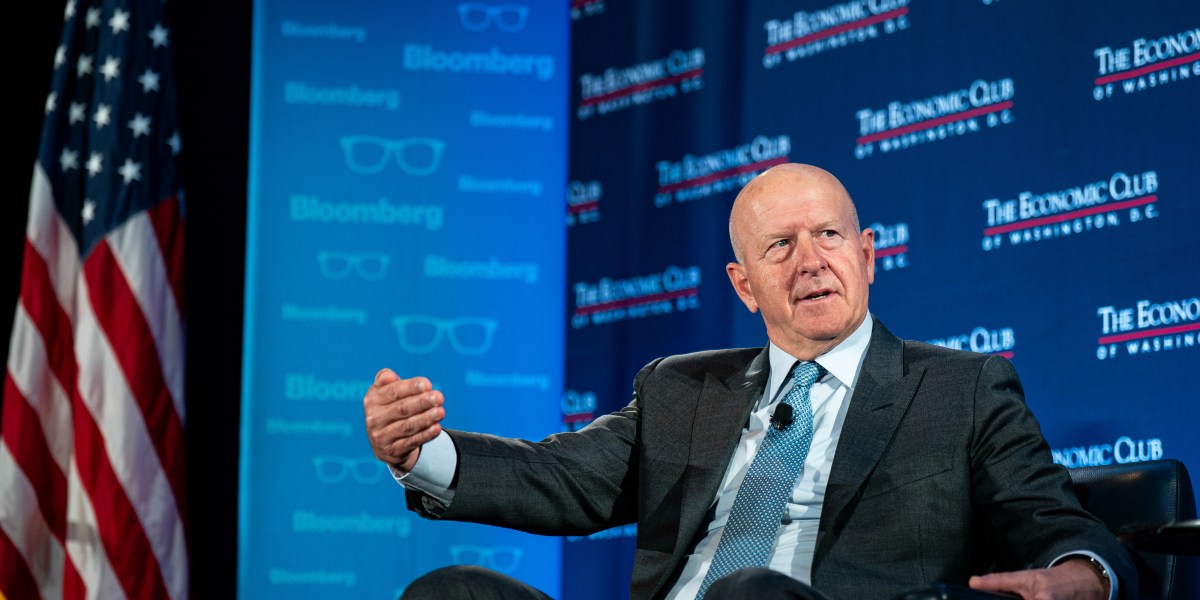
Goldman Sachs CEO: AI’s opportunity is enormous, but ‘there will be winners and losers’
Fortune· 2025-10-31 11:57
Core Insights - Goldman Sachs views AI as a significant growth driver, although the journey may be complex [1][5] - The company reported stronger-than-expected third-quarter earnings, attributed to robust investment banking fees and trading revenue [2] - Solomon expresses cautious optimism regarding the U.S. economy, suggesting a low chance of near-term recession [3][4] Economic Outlook - Solomon highlights the U.S. economy's diversity and current good shape, while acknowledging unseen factors that could trigger a recession [3] - The buildout of AI infrastructure is identified as a key factor supporting economic growth, with major companies expected to spend a combined $350 billion on AI this year [4] AI Investment Boom - Solomon discusses the potential for significant productivity gains as AI becomes integrated into enterprise operations [4] - He reflects on the historical context of technology investment cycles, noting that the current AI boom may not follow a straight trajectory [5][7] - The opportunity set with AI is described as enormous, but there will be both winners and losers in this space [6][7] Market Capitalization Concerns - Solomon addresses concerns about the massive market capitalizations of major tech firms, some nearing $5 trillion, suggesting that this could indicate a potential bubble [5] - He recalls past investment cycles and the phenomenon of "irrational exuberance," emphasizing that while AI investment trends are real, they will not be linear [6][7]