Home Appliances

Search documents
Whirlpool (WHR) - 2025 Q4 - Earnings Call Transcript
2026-01-29 14:02
Financial Data and Key Metrics Changes - The company reported global organic revenues were essentially flat compared to the prior year, with a full-year ongoing EBIT margin of 4.7% and ongoing earnings per share of $6.23 [15][18] - Free cash flow generated was $78 million, impacted by tariff payments and higher inventory levels [18] - The company absorbed approximately $300 million in tariffs in 2025, which affected margins due to the absence of industry pricing adjustments [12][15] Business Line Data and Key Metrics Changes - MDA North America segment delivered an EBIT margin of 2.8% in Q4 and approximately 5% for the full year, with net sales largely flat year-over-year [20] - MDA Latin America experienced a decline of approximately 2% in net sales year-over-year, with a full-year EBIT margin of 6.2% [21] - SDA Global business achieved net sales growth of approximately 10% year-over-year in Q4 and approximately 9% for the full year, with a strong EBIT margin of 16% [22] Market Data and Key Metrics Changes - The existing home sales in the U.S. reached a 30-year low, significantly impacting appliance demand [14] - The company noted a potential multi-year recovery in the housing market, which is expected to drive discretionary demand for appliances [14][26] Company Strategy and Development Direction - The company plans to focus on cost reduction actions of over $150 million, new product launches, and a less promotional environment to drive margin improvements in 2026 [16][39] - The company aims to leverage its strong domestic manufacturing position to benefit from tariffs and improve market share [25][26] - New product introductions accounted for over 30% of the product portfolio, which is expected to drive growth and market share gains [24] Management's Comments on Operating Environment and Future Outlook - Management expressed confidence in sustaining the strong trajectory of the KitchenAid SDA and Latin America businesses despite macroeconomic challenges [15] - The company anticipates a gradual recovery in existing home sales, which could positively impact discretionary demand [26][55] - Management highlighted the importance of cash flow and debt reduction as key priorities moving forward [44] Other Important Information - The company executed a share sale transaction in India, reducing its stake from 51% to 40%, with proceeds used to pay down debt [19] - The company plans to invest approximately $400 million in capital expenditures to support organic growth and product innovation [44] Q&A Session Summary Question: Clarification on 2026 flat industry units number and replacement demand outlook - Management indicated that replacement demand remains healthy, driven by post-COVID usage, but discretionary demand is not factored into guidance, which could provide upside if existing home sales improve [49][51] Question: Assessment of pent-up demand - Management noted significant pent-up demand tied to housing, with a multiyear recovery expected, particularly in remodeling and existing home sales [54][55] Question: Impact of product refresh on flooring costs - Management acknowledged that the high costs associated with new product introductions in 2025 will not recur in 2026, providing a positive impact on margins [56][58] Question: Promotional cadence and pricing plans - Management observed a normalization in promotional pricing, with recent weeks showing a recovery in prices post-Black Friday, indicating a more favorable environment ahead of Presidents' Day [72][75] Question: Capital allocation and funding gap - Management confirmed that the proceeds from the India transaction will assist in meeting debt paydown and dividend commitments, despite a perceived funding gap [80]

Whirlpool (WHR) - 2025 Q4 - Earnings Call Transcript
2026-01-29 14:02
Financial Data and Key Metrics Changes - In 2025, the company reported global organic revenues were essentially flat compared to the prior year, with an ongoing EBIT margin of 4.7% and ongoing earnings per share of $6.23 [15][18] - The company generated $78 million of free cash flow, impacted by tariff payments and higher inventory [18] - The operating margins were slightly below 5%, primarily due to an intense promotional environment in North America [15][18] Business Line Data and Key Metrics Changes - MDA North America segment delivered an EBIT margin of 2.8% in Q4 and approximately 5% for the full year, with net sales largely flat year-over-year [20] - MDA Latin America experienced a decline of approximately 2% in net sales year-over-year, with a full-year EBIT margin of 6.2% [22] - SVA Global achieved net sales growth of approximately 10% year-over-year in Q4 and about 9% for the full year, with a strong EBIT margin of 16% [23] Market Data and Key Metrics Changes - The existing home sales in the U.S. reached a 30-year low, significantly impacting appliance demand [14] - The company noted a potential multi-year recovery in the housing market, which is expected to drive future demand for appliances [27][28] Company Strategy and Development Direction - The company aims to sustain strong growth in its KitchenAid SDA and Latin America businesses while focusing on margin improvements in North America through cost actions and new product launches [15][16] - The company is committed to reducing debt and returning cash to shareholders while investing in product innovation and digital transformation [47] Management's Comments on Operating Environment and Future Outlook - Management acknowledged the challenges faced in 2025, including tariffs and housing market conditions, but expressed confidence in the company's resilience and strategic priorities for 2026 [12][15] - The company expects revenue growth of approximately 5% in 2026, with ongoing EBIT margin expansion to approximately 5.5%-5.8% [37][38] Other Important Information - The company executed a share sale transaction in India, reducing its stake from 51% to 40%, with proceeds used to pay down debt [19] - The company plans to launch approximately 100 new products in 2026, which are expected to drive growth and improve margins [40] Q&A Session Summary Question: Can you unpack the flat industry units number and the strength in replacement demand? - Management indicated that replacement demand remains healthy, driven by post-COVID usage, but discretionary demand is not factored into guidance [54][55] Question: What is the benefit in 2026 from the relief on flooring costs in the North American market? - Management highlighted that the absence of introduction costs and the full benefit of new product demand will positively impact margins in 2026 [60][62] Question: Can you elaborate on the promotional cadence and your pricing plans? - Management noted a significant difference in promotional activity post-Black Friday, with prices recovering quickly, indicating a more normalized promotional environment [80][81] Question: How do you envision the margin guidance cadence between the first half and second half of the year? - Management expects Q1 to be below the 6% margin target due to inventory adjustments, with gradual improvement anticipated in Q2 [82] Question: Can you clarify the capital allocation for the year and the funding gap? - Management confirmed that the proceeds from the India transaction will help in debt reduction, aligning with their capital allocation priorities [86]
Whirlpool (WHR) - 2025 Q4 - Earnings Call Presentation
2026-01-29 13:00
Whirlpool Corporation Confidential 2025 Earnings Review and 2026 Guidance Thursday, January 29, 2026 Whirlpool Corporation Confidential Cautionary Statement This document contains forward-looking statements about Whirlpool Corporation and its consolidated subsidiaries ("Whirlpool") that speak only as of this date. Whirlpool disclaims any obligation to update these statements. Forward-looking statements in this document may include, but are not limited to, statements regarding future financial results, long- ...
Product of the Year 2026 winners revealed
Retail Times· 2026-01-29 12:48
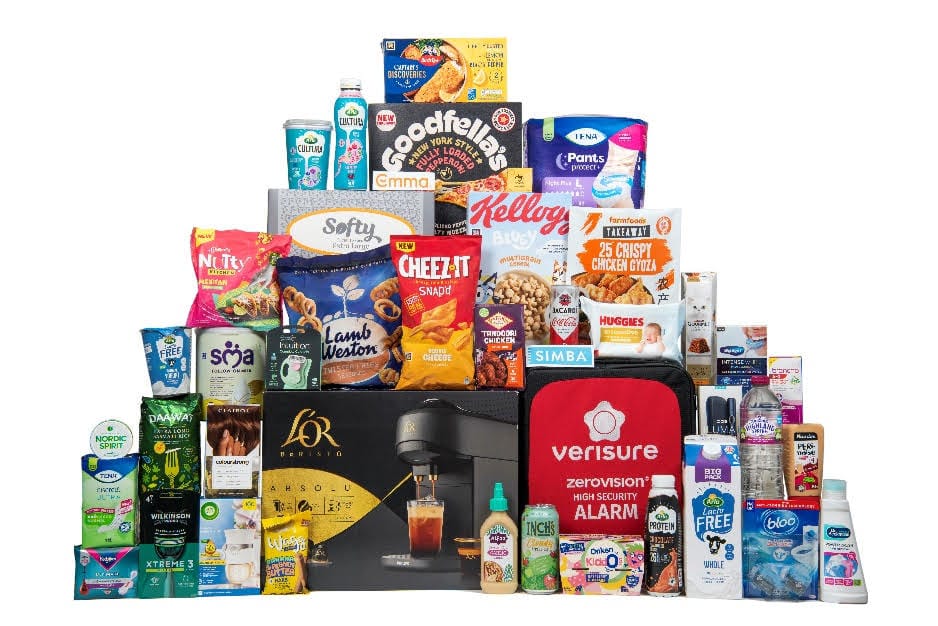
Core Insights - The winners of Product of the Year 2026 were announced, showcasing innovative products across various categories as voted by 8,000 consumers, making it the UK's largest consumer-voted award for product innovation [1][17]. Product Categories Home and Lifestyle - Simba Sleep Hybrid Pro Mattress won in the 'Mattress' category, while Emma Original Hybrid Pillow took the win for 'Pillow', emphasizing the importance of sleep [3][21]. - Verisure's New Alarm System with LockGuard was recognized for its advanced security features, integrating alarm protection with intelligent access control [4][21]. - Air Wick's Advanced Electrical Plug-In was noted for its long-lasting fragrance and improved scent control [5][21]. Food and Beverage - Cheez-It Snap'd and Goodfella's New York Style Pizza were highlighted for their innovative flavors and convenience in the snack and frozen food categories, respectively [6][21]. - Daawat Extra Long Basmati Rice won in the 'Rice' category, showcasing premium quality [7][21]. - Arla achieved five wins in the beverage category, including Protein Milkshake Range, appealing to health-conscious consumers [9][21]. Pet Products - Nestlé Purina Petcare's GOURMET™ REVELATIONS™ Fine Cuts in Gelée won for its premium presentation and flavors for cats, while Wagg Chews won in the 'Dog Treats' category [11][21]. Health and Beauty - Wisdom's Intense White Professional LED Teeth Whitening Kit was recognized for delivering professional-level results at home [13][21]. - Essity UK Ltd received multiple awards for its intimate and incontinence care products, emphasizing enhanced protection and comfort [15][21]. Miscellaneous - The winners are now entitled to feature the iconic red logo on their packaging, symbolizing innovation and consumer trust [18].


鲍一:如何进入全球品牌TOP阵营|商通世界 贸促未来
Sou Hu Cai Jing· 2026-01-29 12:41
Pro Ar 海信家电集团党委副书记、副总裁,广东省家电商会执行会长鲍一作分享。 南方+ 戴嘉信 摄 "过去一年,海信在全球业务收入超过2200亿元,海外收入占比超过46%。"1月29日,在"商通世界·贸促未来"佛山国际商会年度会议上,海信家电集团党委 副书记、副总裁,广东省家电商会执行会长鲍一以"穿越周期的全球化之路"为题,分享了海信深耕海外市场数十年的实战经验。 CHINA FOSHAN 中国·第山 .. 可 在鲍一看来,国际化的深层次一定是本地化,没有本地化的组织、资产和运营,算不上真正的国际化。据介绍,目前海信在全球拥有30家研发中心、37家工 业园区,海外公司及办事处达64个,覆盖主要大洲核心市场。为深化供应链本地化,海信设定48%以上的本地化配套率目标,持续提升全球供应链协同能 力。 在鲍一看来,谈品牌离不开品质,创新与品质是穿越周期的"压舱石"。海信每年将销售收入5%投入研发,全球研发工程技术人员超1.5万人,累计专利申请 量达6万余件,主导参与76项国际标准、379项国家标准制定。 以用户为中心,全球化、本土化使得海信家电赢得当地国家和市场信任。比如中东市场偏爱金色家电,海信便推出金色面板电视 ...

A. O. Smith Reports Record 2025 Diluted Earnings Per Share (EPS) of $3.85 and Introduces 2026 Guidance
Prnewswire· 2026-01-29 11:55
Core Insights - A. O. Smith Corporation reported a slight increase in net sales and earnings for the full year 2025, with net sales reaching $3.83 billion and net earnings at $546.2 million, marking a 2% increase year-over-year [2][5] - The company achieved a record diluted earnings per share (EPS) of $3.85, reflecting a 6% increase from the previous year [2][5] - The acquisition of Leonard Valve is expected to enhance the company's growth opportunities in the water management sector [3][5] Financial Performance - Full Year 2025: - Net sales: $3,830 million, up from $3,818 million in 2024 - Net earnings: $546.2 million, a 2% increase from $533.6 million in 2024 - Diluted EPS: $3.85, up 6% from $3.63 in 2024 [2][5] - Fourth Quarter 2025: - Net sales: $912.5 million, slightly up from $912.4 million in Q4 2024 - Net earnings: $125.4 million, a 14% increase from $109.7 million in Q4 2024 - Diluted EPS: $0.90, a 20% increase from $0.75 in Q4 2024 [3][5] Segment Performance - North America: - Full Year 2025 sales: $3.0 billion, with segment earnings of $727.9 million and a margin of 24.4%, up from 24.0% in 2024 [6][7] - Fourth Quarter 2025 sales: $713.7 million, a 3% increase year-over-year, with segment earnings of $164.9 million and a margin of 23.1% [8][9] - Rest of World: - Full Year 2025 sales: $880.4 million, down 4% year-over-year, primarily due to a 12% decrease in sales in China [10][11] - Fourth Quarter 2025 sales: $205.7 million, a 13% decrease year-over-year, with segment earnings of $16.0 million and a margin of 7.8% [12][13] Cash Flow and Capital Allocation - Free cash flow for 2025 was $546 million, representing 100% of net earnings, with cash provided by operations at $616.8 million [5][15] - The company returned $597 million to shareholders through dividends and share repurchases in 2025 [5][16] - A dividend of $0.36 per share was approved, marking 86 consecutive years of dividend payments [17] Outlook for 2026 - The company projects net sales for 2026 to be between $3.9 billion and $4.02 billion, with EPS guidance between $3.85 and $4.15 [18][19] - Anticipated challenges in the China market are expected to continue, with a forecasted mid-single digit sales decline, while double-digit sales growth is projected in India [18][19]


Whirlpool Stock: Cash Flow Disappointments Persist (Downgrade) (NYSE:WHR)
Seeking Alpha· 2026-01-29 04:32
Core Viewpoint - Whirlpool's shares have significantly underperformed, losing approximately 40% of their value over the past year due to weak demand and adverse impacts from tariffs [1] Company Performance - The appliance maker has faced challenges related to weak demand, which has been exacerbated by tariffs affecting its operations [1]
LG ELECTRONICS TO UNVEIL NEXT-GENERATION COMPONENT TECHNOLOGIES AT AHR EXPO 2026
Prnewswire· 2026-01-29 01:00
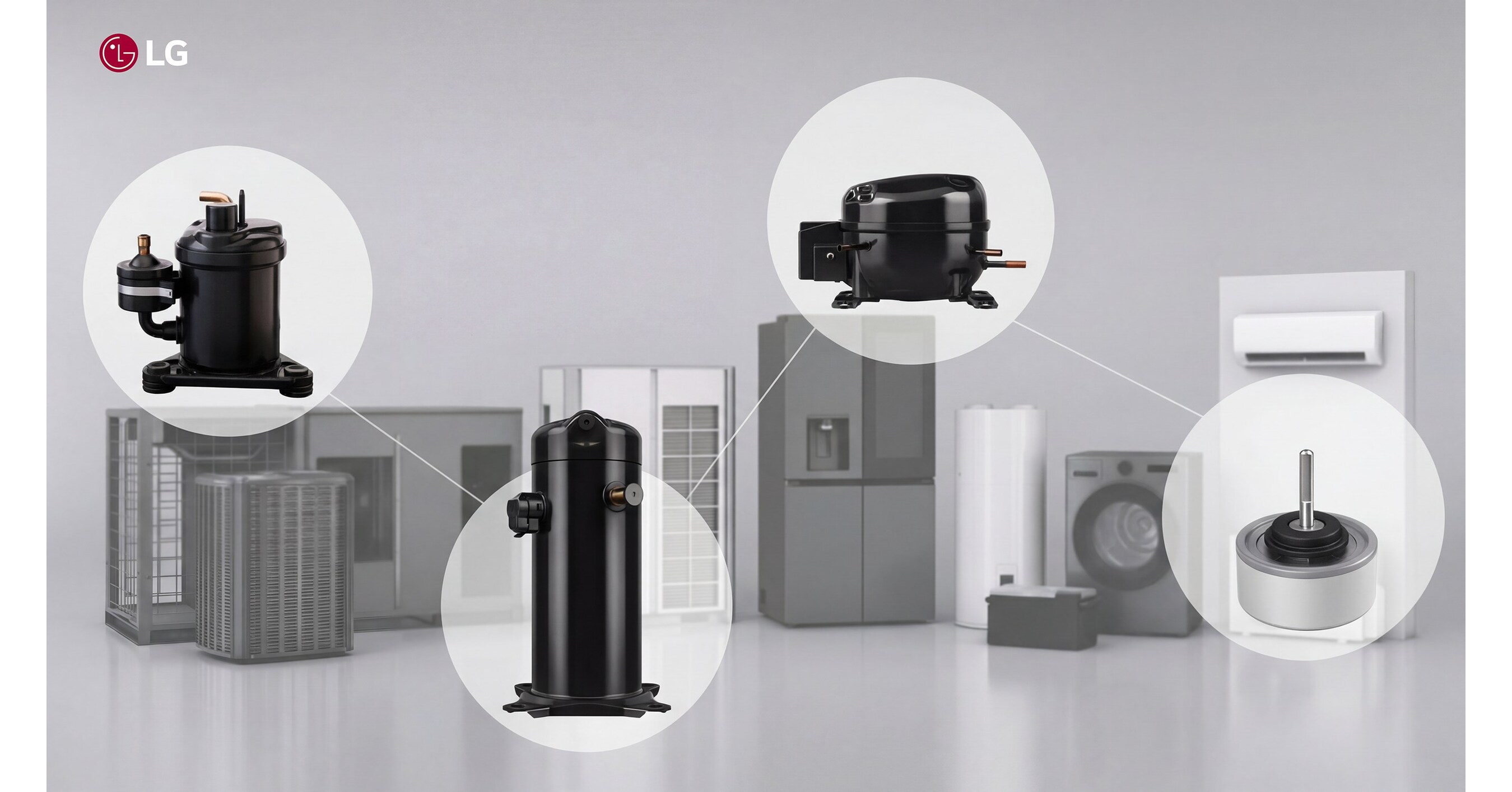
Core Insights - LG Electronics will showcase next-generation compressor and motor technologies at AHR Expo 2026, emphasizing a new design approach that redefines structure, movement, and position [2][9] - Featured innovations include the LG BHA Series – DualJet™ for reciprocating compressors and the LG CurvedSpoke™ for BLDC motors, which enhance performance and efficiency [3][9] Compressor Technology - The LG BHA Series – DualJet™ represents a significant advancement in reciprocating compressors for refrigeration applications, optimizing refrigerant flow and improving efficiency while reducing energy consumption [4][9] - The dual-flow refrigerant structure balances internal pressure during compression, and built-in protection and diagnostic functions enable proactive fault detection [4] Motor Technology - The LG CurvedSpoke™ technology for BLDC motors features an arc-shaped magnet design that decreases motor size by approximately 12% while increasing energy density through optimized curved magnet placement [5][7] - This design results in a motor efficiency improvement of approximately 3.4% at the same size, or allows for size reduction while maintaining efficiency [7] Company Background - LG has nearly 70 years of expertise in compressor and motor technologies, establishing itself as a leading global supplier of core components for home appliances, including HVAC systems and refrigerators [3][8] - The Component Solution business has manufactured over one billion compressors and motors worldwide since beginning motor production in 1962 [8]
语音空调 “社交厨房” AI重塑广货基因
Nan Fang Du Shi Bao· 2026-01-28 23:12
Core Insights - Guangdong is transitioning from "scale manufacturing" to "smart creation" in the consumer electronics and home appliance sectors, driven by AI technology [2][3] - Leading companies like Huawei, Gree, and Midea are integrating advanced AI technologies into product innovation, production processes, and business models to enhance consumer experiences [3][4] Industry Trends - The "Guangdong Goods Going Global" event showcased over 400 AI smart hardware products, with 80% featuring AI capabilities, highlighting the competitive edge of Guangdong's products in meeting diverse consumer needs [4] - The smartphone market is facing growth challenges, prompting Guangdong mobile companies to embrace AI and launch innovative products that redefine consumer perceptions of smartphones [5][6] Product Innovations - Huawei's latest devices, equipped with the HarmonyOS, demonstrate full-stack independent innovation, enhancing connectivity in extreme environments through AI algorithms [4] - Vivo and OPPO are leading in mobile imaging, with products like the Vivo X300 Pro and OPPO Find X9 Pro utilizing AI for superior image quality and user experience [5] Smart Home Solutions - AI is transforming home appliances from mere functional tools to proactive lifestyle partners, creating new consumer demands for smart home solutions [6][7] - Companies like Midea and TCL are developing comprehensive smart home ecosystems, enhancing user interaction and convenience through AI technologies [6][7] Manufacturing Advancements - Guangdong's manufacturing sector benefits from a complete supply chain, enabling rapid product development and market responsiveness, exemplified by the "design today, product tomorrow" capability [8][9] - Gree's intelligent manufacturing factory has achieved a 200% increase in production efficiency and 100% digital coverage, showcasing the potential of AI in manufacturing [10] Strategic Vision - The Guangdong government emphasizes continuous innovation and adaptation in traditional industries to maintain competitiveness and create new value [6][10] - The integration of AI into manufacturing and product development is positioning Guangdong as a leader in the transition from a manufacturing province to an innovation hub [10]




Whirlpool Fourth-Quarter Revenue Falls on Lower Americas Sales Volumes
WSJ· 2026-01-28 21:37
Core Viewpoint - The appliance producer experienced a revenue decline of 0.9%, totaling $4.10 billion, attributed to lower volumes in North America and Latin America [1] Group 1 - The company's revenue decreased by 0.9% [1] - Total revenue reached $4.10 billion [1] - The decline in revenue was primarily due to lower volumes in North America and Latin America [1]