
Technology

Search documents
The great physical realignment: Gold $10,000, silver $200, and the death of the paper market
KITCO· 2026-03-18 19:33
Core Insights - Jeremy Szafron has joined Kitco News as an anchor and producer, bringing a wealth of experience in journalism, particularly in finance and current affairs [1][5] Group 1: Career Background - Jeremy began his journalism career in 2006 at CTV, initially focusing on entertainment before transitioning to business reporting, particularly in mining and small-cap sectors [2] - He gained recognition for his macro-financial and market trends analysis, becoming a sought-after commentator on CTV Morning Live and CTV News Network [2] - A significant highlight of his career was covering the 2010 Vancouver Olympic Games, which led to the development of an online video news program for PressReader, a digital newsstand with 8,000 editions in 60 languages [3] Group 2: Digital Media Ventures - In 2012, Jeremy launched The Green Scene Podcast, which quickly attracted over 400,000 subscribers and positioned him as a prominent voice in the cannabis industry [4] - Following this success, he established Investor Scene and Initiate Research, platforms that provide exclusive market insights and deal-flow opportunities in mining and Canadian small-cap markets [4] Group 3: Professional Expertise - Jeremy has served as a market strategist and investor relations consultant for various publicly traded companies across mining, energy, consumer packaged goods (CPG), and technology sectors [5] - He holds a BA in Journalism from Concordia University, which has supported his diverse career trajectory [5]


Ethisphere Names WD as One of the 2026 World's Most Ethical Companies® for the Eighth Time
Businesswire· 2026-03-18 13:30
Core Viewpoint - Western Digital Corporation has been recognized for the eighth consecutive year as one of the 2026 World's Most Ethical Companies by Ethisphere, highlighting its commitment to ethical business practices in the technology sector [1] Group 1: Recognition and Awards - Western Digital is one of only five honorees in the Technology industry for the 2026 World's Most Ethical Companies [1] - A total of 138 honorees were recognized in 2026, spanning 17 countries and 40 industries [1]


Why Some High-Dividend Singapore Stocks Cut Payouts and Others Don’t
The Smart Investor· 2026-03-18 06:00
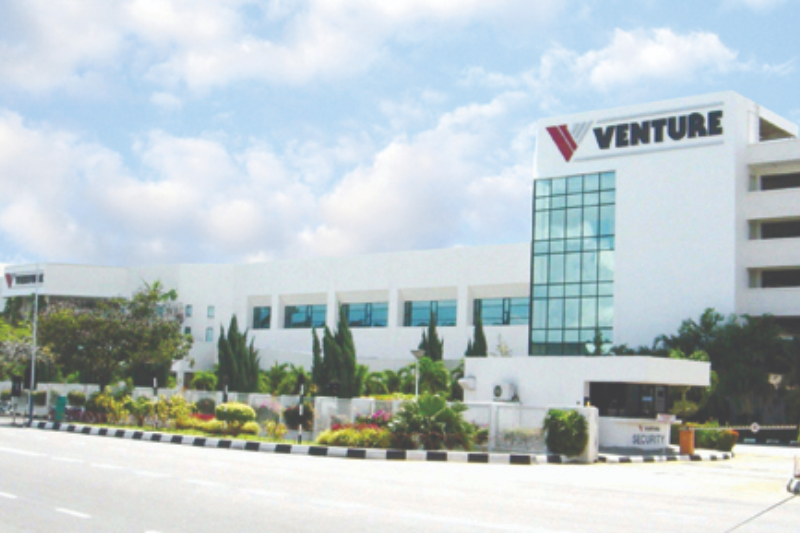
Core Viewpoint - High-dividend stocks can be appealing for income generation, but a high yield may indicate financial distress rather than strength [1][2] Group 1: Dividend Sustainability Factors - **Free Cash Flow Coverage**: Dividends should be funded by sustainable cash flow, with healthy businesses like Venture Corporation generating sufficient free cash flow (FCF) to cover dividends [3][4] - **Balance Sheet Strength**: Companies with strong balance sheets can better manage market volatility. High debt levels increase the risk of dividend cuts, with a recommended interest coverage ratio (ICR) of at least 3.0 to 4.0 for conservative investors [5][6] - **Business Model Resilience**: Defensive industries, such as healthcare and consumer staples, tend to provide more stable dividends. For example, Sheng Siong Group's dividend surged 83% during the pandemic due to its essential business model [8][9] Group 2: Warning Signs of Dividend Cuts - **Rising Payout Ratio**: A payout ratio exceeding 100% of earnings or FCF, especially during declining cash flow, signals potential dividend funding through debt or reserves [10] - **Management Reviews**: Statements about reviewing dividend policies often indicate an impending cut [10] - **Earnings Volatility**: Sudden increases in operating costs or narrowing margins can jeopardize stable dividend payouts [11] Group 3: Investment Strategies - **Portfolio Diversification**: Maintaining a balanced portfolio with a mix of growth stocks, defensive staples, and REITs can minimize concentration risks [12] - **Focus on Quality**: Investors should prioritize quality and stable dividend payers over high yields, as seen with Singapore Exchange Limited, which has consistently paid dividends since its listing [12][14] - **Long-term Fundamentals**: Sustainable dividends stem from strong fundamentals, including robust FCF, solid balance sheets, and resilient business models, rather than merely chasing high yields [14]
全球行业:能源中断的二阶影响-Global Sector Analyst_ Energy disruption_ second-order consequences
2026-03-17 02:07
Summary of Key Points from the Conference Call Industry Overview - The conference call discusses the impact of the ongoing Middle East conflict on various sectors, particularly focusing on energy, technology, consumer goods, and financials [2][14]. Core Insights and Arguments Energy Sector - Oil and gas prices have surged, raising concerns about prolonged dislocation in energy prices and the complexities of restarting oil production [3][10]. - A significant portion of global oil trade (35%) and supply (20%) transits through the Strait of Hormuz, making it a critical chokepoint [12][49]. - The potential for a prolonged conflict could lead to significant disruptions in oil and gas supply, with estimates suggesting that maximum shut-ins could reach up to 15 million barrels per day (mbd) [56]. - The Brent price forecast for 2026 is set at USD 80 per barrel, reflecting the impact of the Strait of Hormuz closure [41][46]. Chemicals - An extended disruption in the Middle East could flip the current oversupply narrative in the chemical market into an upcycle, particularly affecting Middle Eastern chemical companies reliant on the Strait of Hormuz [11]. Technology Sector - The technology hardware and semiconductor sectors face headwinds due to elevated oil prices and transport disruptions, which could increase production costs [15][21]. - Cloud and AI-related activities are particularly vulnerable to energy price hikes outside the US and China, potentially affecting data center expansion and financing strategies [4][19]. Financial Sector - Rising energy prices pose downside risks to economic growth, with banks in energy-producing countries likely to be more resilient compared to those in countries with negative energy trade balances [5][23]. - Super-regional banks in the US, such as PNC Financial, are highlighted as being less impacted due to their positive exposure to a higher interest rate environment [24]. Consumer Sector - Consumer companies are expected to experience varying impacts, with luxury and beauty brands showing resilience against oil price hikes, while sectors like HPC (household and personal care), sporting goods, and food manufacturing may suffer from input cost pressures [26][27]. - The automotive sector is anticipated to have limited direct demand impact, but sustained high energy prices could dampen consumer sentiment over time [28]. Utilities and Renewables - Rising power prices in Asia may benefit renewable energy and nuclear operators, with potential policy pushes for energy supply sufficiency [17][18]. Real Estate - Global real estate prices fell significantly during the last stagflationary period, and a prolonged conflict could negatively impact UAE developers like Aldar and EMAAR due to reliance on residential sales [25]. Other Important Insights - The report emphasizes the non-linear relationship between shut-in duration and restart complexity, indicating that a four-week curtailment could lead to months of restoration [10]. - The potential for a stagflationary period is explored, with implications for various sectors, particularly real estate and consumer goods [5][14]. - The report identifies specific companies that may be most and least impacted by the ongoing conflict, providing a detailed analysis of sector-specific risks and opportunities [7][14]. This summary encapsulates the critical insights from the conference call, highlighting the multifaceted impacts of the Middle East conflict across various industries and sectors.
Meta Could Cut 20% of Jobs, Reuters Says
Bloomberg Technology· 2026-03-16 15:55
Meta Platforms Inc. is planning layoffs that could affect 20% or more of the company according to Reuters. That would work out to about 15,000 jobs. Kurt Wagner reports. -------- Like this video? Subscribe to Bloomberg Technology on YouTube: https://www.youtube.com/channel/UCrM7B7SL_g1edFOnmj-SDKg Watch the latest full episodes of "Bloomberg Technology" with Caroline Hyde and Ed Ludlow here: https://www.youtube.com/playlist?list=PLfAX25ZLrPGTygCwn55voYZ_LYyKjxokJ Get the latest in tech from Silicon Valley a ...

$100,000 in These 4 ETFs Pays Over $500 a Month in Dividends
247Wallst· 2026-03-16 15:41
Core Insights - The article discusses a strategy for income investing through four specific ETFs that can generate over $500 monthly in dividends from a $100,000 investment, equating to approximately $6,755 annually [2][21]. Group 1: Investment Strategy - The proposed strategy emphasizes diversification across different asset classes to mitigate risks associated with market fluctuations, rather than concentrating solely on equity-based dividend funds [3][4]. - By investing in a mix of US equity dividends, enhanced equity income through options, preferred stocks, and high-yield corporate bonds, investors can create a more stable income stream [3][4]. Group 2: ETF Details - **Global X SuperDividend US ETF (DIV)**: This ETF focuses on high-yield US dividend stocks, currently yielding 6.76% with a monthly payout of $1.28 per share. It has a dividend growth rate of 23.21% and a payout ratio of 87.26% [6][7]. - **Amplify CWP Enhanced Dividend Income ETF (DIVO)**: This ETF targets high-quality large-cap companies and employs a covered call strategy, yielding 6.37% with a monthly payout of $2.88 per share. It boasts a remarkable dividend growth rate of 49.82% [10][11]. - **Global X US Preferred ETF (PFFD)**: This ETF includes over 200 US preferred securities, yielding 6.46% with a monthly payout of $1.20 per share. However, it has a negative dividend growth rate of -3.73% [14][15]. - **State Street SPDR Portfolio High Yield Bond ETF (SPHY)**: This ETF offers a yield of 7.43% with a monthly payout of $1.72 per share. It has a negative dividend growth rate of -5.02% but provides a fixed-income cash flow that is less affected by equity performance [18][19]. Group 3: Comparative Analysis - The total monthly income from the four ETFs is approximately $563, significantly higher than alternatives like a high-yield savings account at 4.20% or a 10-year Treasury at 4.28%, which yield around $350 and $357 monthly, respectively [21].

X @The Wall Street Journal
The Wall Street Journal· 2026-03-16 14:54
Nvidia’s GPU Technology Conference, which starts today, might soon need a new name https://t.co/lZrasq9KDr ...

X @Bloomberg
Bloomberg· 2026-03-16 10:52
Alibaba is setting up a business unit to bring its sprawling AI services and development endeavors under a single umbrella, signaling its determination to profit off artificial intelligence https://t.co/0bBCHqtNTQ ...

Battle of the Tech ETFs: How IYW and XLK Compare on Risk, Fees, and Performance
The Motley Fool· 2026-03-16 00:29
Core Viewpoint - The State Street Technology Select Sector SPDR ETF (XLK) and the iShares U.S. Technology ETF (IYW) are both designed to capture the performance of the U.S. technology sector, with differences in costs, risk profiles, and portfolio compositions that may appeal to different types of investors [1] Cost & Size Comparison - XLK has a lower expense ratio of 0.08% compared to IYW's 0.38%, making it more affordable for investors [2] - XLK offers a higher dividend yield of 0.56% versus IYW's 0.15%, which may attract investors looking for passive income [2] - Assets Under Management (AUM) for XLK is $87.7 billion, significantly larger than IYW's $19.4 billion [2] Performance & Risk Comparison - Over the past five years, XLK experienced a maximum drawdown of -33.56%, while IYW had a steeper drawdown of -39.44% [3] - An investment of $1,000 in XLK would have grown to $2,082 over five years, compared to $2,163 for IYW [3] Portfolio Composition - IYW holds 140 stocks with 89% allocated to technology, while XLK focuses almost exclusively on technology stocks with only 71 positions and 99% of assets in tech [4][5] - Both funds share the same top three holdings: Nvidia, Apple, and Microsoft, but these positions constitute 44.43% of IYW's portfolio compared to 37.91% for XLK [6] Implications for Investors - IYW provides broader exposure to the tech sector but is more concentrated in its top holdings, which may lead to greater volatility based on the performance of these mega-cap stocks [7] - XLK's lower fees and higher dividend yield may be more appealing for long-term investors, with an annual fee of $8 per $10,000 invested in XLK versus $38 for IYW [8]


Did Warren Buffett Know Something Wall Street Doesn't? The Former Berkshire Hathaway CEO Left a $373 Billion Warning for the Stock Market.
The Motley Fool· 2026-03-15 19:00
Core Insights - Warren Buffett's cautious approach as CEO of Berkshire Hathaway included selling approximately $134 billion in equities during a bull market, while simultaneously increasing the company's cash and short-term investments from $128.6 billion to $373.3 billion [1][3][4] Investment Strategy - Buffett's strategy involved trimming significant positions in major companies like Apple, Bank of America, and Amazon, indicating a defensive posture amid market volatility [3][6] - The increase in cash reserves is seen as a preparation for potential market downturns, allowing for strategic investments when opportunities arise [7][9] Market Perspective - Buffett compared the modern stock market to a casino, expressing concerns over market behavior driven by artificial intelligence and investor speculation, which he believes could lead to a market "conflagration" [6][12] - The current market environment is characterized by extreme stock valuations and global instability, prompting Buffett's defensive actions [6][10] Legacy and Future Outlook - By leaving a substantial war chest for his successor, Greg Abel, Buffett has provided flexibility for future investments, allowing for swift responses to market opportunities [9] - Berkshire Hathaway's massive size means that accumulating cash may be a default strategy, as few investments can significantly impact its overall performance [10]