
人工智能

Search documents
贵金属迎来修复
Tebon Securities· 2026-03-31 11:21
1. Report Industry Investment Rating No information about the report industry investment rating is provided in the given content. 2. Core Viewpoints of the Report - The Middle - East situation and oil price shocks will continue to disrupt global risk appetite. A - share market is difficult to completely shake off external emotional suppression in the short term, and it is necessary to closely monitor the evolution of the Middle - East situation, international oil price trends, and the further transmission of external market fluctuations to A - share sentiment [8][15] - The inter - bank liquidity in the bond market is still relatively abundant. The central bank's open - market operations continue to send signals of care. Treasury bond futures are generally strong, with the long - end performing better, and the short - term bond market may maintain a strong and volatile pattern [11][15] - The core logic of the commodity market is the parallel evolution of geopolitical risk premium and domestic fundamental repair. Precious metals are strong due to the Middle - East situation and macro - expectation repricing, while industrial metals such as tin benefit from the marginal recovery of manufacturing prosperity. The commodity market may still have a structural market in the short term [9][15] 3. Summary by Relevant Catalogs Market行情Analysis Stock Market - A - share market indices were under pressure, and the trading volume exceeded 2 trillion yuan. The Shanghai Composite Index closed at 3891.86 points, down 0.80%; the Shenzhen Component Index closed at 13478.06 points, down 1.81%; the ChiNext Index closed at 3184.95 points, down 2.70%; the STAR 50 Index closed at 1256.33 points, down 2.59%. The total A - share trading volume was about 2.01 trillion yuan, up 4.1% from the previous trading day [7] - The market showed a pattern of more falling stocks than rising stocks, with 1008 rising stocks and 4372 falling stocks. The growth technology direction adjusted significantly, while sectors such as home appliances, banks, and food and beverages were relatively resistant to decline [6][7] Bond Market - The treasury bond futures market showed a pattern of strong long - end and stable short - end. The 30 - year treasury bond futures TL2606 rose 0.15%, closing at 111.69 yuan, with a trading volume of 852.75 billion yuan; the 10 - year treasury bond futures T2606 rose 0.04%, closing at 108.40 yuan, with a trading volume of 881.23 billion yuan; the 5 - year treasury bond futures rose 0.03%, and the 2 - year treasury bond futures were flat compared with the previous day [11] - The central bank carried out 325 billion yuan of 7 - day reverse repurchase operations, with a net injection of 150 billion yuan. Except for the 7 - day Shibor, other term Shibor rates declined, indicating that the liquidity was further relaxed [11] Commodity Market - The commodity index declined, but non - ferrous metals performed strongly. The Nanhua Commodity Index closed at 3074.6 points, down 0.91%. Leading gainers included Shanghai silver, soybean No.1, Shanghai gold, Shanghai aluminum, and double - gum paper, while leading losers included PVC, LPG, coking coal, container shipping index (European line), and lithium carbonate [9] Trading Hotspot Tracking Recent Hot - Product Review - Artificial intelligence: Global industrialization is accelerating, and new applications are emerging. Key points to follow include changes in capital expenditure of leading enterprises, transformation of application scenarios, and product technology upgrades [14] - Commercial space: With the establishment of commercial space companies and strong support for development, key points to follow include domestic recoverable rocket launches and technological breakthroughs of overseas leaders such as SPACEX [14] - Nuclear fusion: Industrialization is accelerating, and artificial intelligence drives the increase in power demand. Key points to follow include project progress and industry bidding [14] - Big consumption: Policy promotes consumption upgrading. Key points to follow include economic recovery and further stimulus policies [14] - Securities firms: A - share trading volume is running at a high level. Key points to follow include A - share trading volume and possible changes in trading systems [14] - Precious metals: Central banks continue to increase holdings, and the Federal Reserve is expected to cut interest rates. Key points to follow include further interest - rate cut expectations of the Federal Reserve and geopolitical risks [14] - Energy and chemicals: The Middle - East geopolitical situation affects supply. Key points to follow include the progress of the conflict and changes in crude oil prices [14] - Shanghai silver strengthened significantly. Due to the uncertainty in the Middle - East and the game of macro - expectations, precious metals recovered. Shanghai tin strengthened oscillatingly, supported by the recovery of manufacturing prosperity [14] Recent Core Idea Summary - In the equity market, focus on the impact of the Middle - East situation, oil prices, and external market fluctuations on A - share sentiment [15] - In the bond market, the short - term bond market may maintain a strong and volatile pattern, with the long - end of treasury bonds performing better [15] - In the commodity market, it may show a structural market in the short term. Pay attention to the evolution of the Middle - East situation, oil price trends, and the sustainability of domestic demand recovery [15]
人民日报:从中国式现代化理论领悟为什么中国一定能成功|宏观经济
清华金融评论· 2026-03-30 09:11
Core Viewpoint - The article emphasizes that the theory of Chinese-style modernization is the key to understanding why China can succeed and provide certainty and positive energy to the world [6][7]. Group 1: Chinese-style Modernization - Chinese-style modernization is characterized as a significant achievement of the Communist Party of China (CPC) and a new path for human modernization [1][4]. - The theory is seen as a comprehensive guide for China's development, addressing various challenges and promoting high-quality, sustainable growth [8][12]. Group 2: Economic Growth and Planning - During the 14th Five-Year Plan period, China's economy is expected to grow at an average rate of 5.4%, which is significantly higher than the global average [4]. - The government has set a growth target of 4.5% to 5% for the current year, emphasizing the importance of effective execution of plans [4][5]. Group 3: New Development Concepts - The new development concept aims to guide quality, efficiency, and dynamic changes in modernization efforts, addressing issues of unbalanced and insufficient development [9][10]. - The concept is crucial for resolving the main social contradictions in China, focusing on improving the quality of development [10][11]. Group 4: New Quality Productivity - The theory of new quality productivity is introduced as essential for enhancing economic competitiveness and driving high-quality development [19][21]. - The focus is on optimizing traditional industries and fostering emerging industries through technological innovation [19][20]. Group 5: New Type of National System - The new type of national system is highlighted as a critical mechanism for leveraging the advantages of centralized efforts in major projects, particularly in technology [26][27]. - The emphasis on artificial intelligence and other emerging technologies is seen as vital for maintaining competitive advantages in global markets [27][30]. Group 6: New Development Pattern - The construction of a new development pattern is framed as a strategic deployment to enhance resilience and competitiveness in the face of global uncertainties [35][39]. - The domestic market is identified as a key driver of economic growth, contributing an average of 86.8% to growth from 2021 to 2024 [39][40]. Group 7: Global Engagement and Openness - China's approach to openness is characterized by a commitment to expanding international cooperation and trade, particularly with emerging markets [44]. - The establishment of free trade zones and the promotion of international trade events are part of the strategy to enhance global economic integration [43][44].


微软率先跌破200周线!真正的科技熊市可能才刚刚开始!
美股研究社· 2026-03-29 11:42
Core Viewpoint - The article discusses the significant breach of the 200-week moving average by Microsoft, a critical psychological support level for tech stocks, indicating a loss of faith in long-term growth potential within the technology sector [1][2]. Group 1: Market Dynamics - The breach of the 200-week moving average by Microsoft is seen as a pivotal moment, suggesting that even the most reliable tech giants are losing their trend support, which could lead to a broader market decline [1][2]. - Historical patterns indicate that when leading companies break key support levels, it often triggers a chain reaction, leading to systemic declines among major stocks [2]. - The current market environment is characterized by fluctuating interest rate expectations and rising geopolitical risks, which are causing investors to reassess the "safe haven" status of tech giants [2][3]. Group 2: Institutional Behavior - Recent disclosures from hedge funds show a trend of reducing positions in tech stocks in favor of cash or defensive assets, indicating a shift in sentiment among institutional investors [3]. - The movement of "smart money" often serves as a leading indicator, suggesting that the market bottom is not yet in sight as even staunch bulls begin to waver [3]. Group 3: Valuation and Profitability - The article highlights a fundamental shift in profitability quality, with companies like Meta experiencing soaring capital expenditures while struggling to convert these investments into free cash flow [4][5]. - The heavy reliance on capital and energy in AI investments contrasts sharply with the high-margin, low-cost structure of traditional software, leading to a reevaluation of valuation models [5]. - The current downturn reflects investor skepticism regarding the ability of AI investments to yield quick returns, challenging the previously accepted narrative of "spend now, profit later" [5]. Group 4: Deleveraging and Market Impact - The article draws parallels between the current market phase and the "metaverse bubble," suggesting that the tech sector is entering a deleveraging phase where companies will need to cut back on capital expenditures [6][7]. - A decline in demand for computing power could severely impact companies like NVIDIA, whose valuations are predicated on continuous growth assumptions [7]. - The supply chain for AI-related components may also face contraction, leading to a broader impact on the industry as companies struggle to prove their commercial viability [8]. Group 5: Market Sentiment and Future Outlook - The article posits that the true market bottom often occurs when discussions around AI fade, indicating a shift from speculative growth narratives to a focus on financial discipline [9][10]. - The transition from "concept validation" to "commercial validation" in AI is fraught with challenges, and companies that can manage costs and achieve positive cash flow will emerge as winners [9]. - The article concludes that the most significant opportunities will arise when valuations return to levels that provide a margin of safety, often accompanied by market silence rather than noise [10].


AI重塑科技投资周期!外资机构,最新判断来了
券商中国· 2026-03-27 07:00
Core Viewpoint - Artificial intelligence (AI) is becoming the core variable driving a new investment cycle in the global technology industry, with expectations that by 2026, the semiconductor and technology sectors will enter a phase of multiple overlapping supercycles, characterized by synchronized improvements in key areas such as storage, capital expenditure, and computing infrastructure [1][2]. Group 1: AI-Driven Investment Dynamics - Multiple foreign institutions predict that AI will continue to be a core variable in 2026, reshaping the investment landscape of the semiconductor and technology ecosystem [2]. - The current transformations in the semiconductor and AI ecosystem indicate a shift from linear growth to a model characterized by multiple supercycles, structural bottlenecks, and rapid evolution of corporate implementation rhythms [2]. - Investors are advised to adopt proactive management strategies to navigate market volatility and valuation differentiation, focusing on long-term structural drivers and short-term market sentiments [2]. Group 2: Corporate Confidence and Economic Outlook - According to Fidelity International's analyst survey, corporate confidence is rebounding to its most optimistic level since 2020, driven by sustained investments in AI and related infrastructure [3]. - Analysts believe that the current global economy is experiencing one of the largest investment cycles in recent years, primarily fueled by AI [3]. - Concerns regarding technology sector valuations detaching from fundamentals are gradually easing as high levels of investment benefit the entire AI value chain [3]. Group 3: Structural Evolution in AI Industry - The evolution path within the AI industry is characterized by a "first infrastructure, then application" approach, with key directions identified for 2026 including the continuation of the storage supercycle and a comprehensive semiconductor capital expenditure supercycle [4][5]. - The semiconductor industry is entering a phase of multiple overlapping supercycles, driven by unprecedented growth in AI, with industry bottlenecks shifting from computational speed to storage bandwidth [5]. - The expansion of capital expenditure is being propelled by AI demand, geopolitical shifts, and the regionalization of global production capacity [5]. Group 4: Computing Power and Application Trends - The AI computing power sector is expected to steadily rise in 2026, with a robust development rhythm and continuous improvement in performance realization capabilities [5]. - The AI application sector is still in the technology trigger phase, exploring the alignment of core technologies with application scenarios [5].
山东师大砍掉25个本科专业
第一财经· 2026-03-26 11:27
Core Viewpoint - The article discusses the rapid adjustments in university programs and departments in response to the evolving demands of the economy and society, highlighting the establishment of new programs in high-demand fields such as artificial intelligence and integrated circuit design while phasing out less relevant ones [3][4]. Group 1: University Program Adjustments - Shandong Normal University has stopped enrolling in 25 undergraduate programs since 2017 and added 10 new programs in urgent fields like artificial intelligence and cybersecurity [3]. - The university has developed a monitoring platform using big data and AI to align its programs with industry talent needs, aiming for a more data-driven approach to program adjustments [3]. - During the "14th Five-Year Plan" period, Shandong Province added 267 doctoral and master's degree points, 703 undergraduate programs, and 1808 vocational programs, with over 80% addressing urgent societal needs [3]. Group 2: Structural Optimization in Higher Education - Sichuan University is optimizing its academic structure by implementing a warning and exit mechanism for underperforming programs, reducing its first-level disciplines from 71 to 56 and second-level disciplines from 191 to 67 since 2019 [5][6]. - The university has also reduced its undergraduate programs from 144 to 105, focusing on expanding talent cultivation in science and engineering while reducing programs in saturated fields like management and arts [5][6]. Group 3: Emergence of New Programs - A significant number of new programs have been established, with over 200 new programs in fields such as artificial intelligence, digital economy, and smart manufacturing between 2020 and 2024 [6]. - The article notes that universities are increasingly establishing new colleges focused on cutting-edge fields like artificial intelligence, aerospace, and life sciences, with several institutions announcing new colleges in these areas [7].

2026年华尔街的关键词是什么?大模型给出了答案
财富FORTUNE· 2026-03-24 13:08
Core Viewpoint - The overall market sentiment entering 2026 remains stable, despite previous policy fluctuations and geopolitical tensions, with major indices like the S&P 500, Dow Jones, and Nasdaq showing significant returns in the past year [1] Group 1: Market Conditions and Sentiment - Analysts recognize that the conditions supporting market prosperity are becoming increasingly stringent, with optimism primarily driven by expectations surrounding artificial intelligence (AI) [3][4] - The term "precarious" has been used to summarize the outlook for 2026, indicating a coexistence of strong long-term trends and structural vulnerabilities [4] Group 2: AI Investment and Risks - The balance between opportunities and excess enthusiasm in the AI sector is seen as the most challenging aspect for investors in 2026, with significant capital expenditure in the tech sector projected to exceed $500 billion by 2026 [5] - Morgan Stanley has identified five indicators to measure irrational exuberance in the market, including capacity adequacy, credit availability, risk concealment, market heat, and valuation versus cash flow discrepancies [5][6] Group 3: Economic Outlook and Labor Market - Deutsche Bank's global outlook report suggests that 2026 will not be a quiet year, with potential trade tensions between the U.S. and China resurfacing [6][7] - The labor market's fragility is highlighted as a key weakness in the U.S. economy, with rising unemployment risks if layoffs increase [7][8] Group 4: Consumer Behavior and Economic Disparities - A K-shaped economic trend is emerging, where affluent consumers thrive while a significant portion of the population struggles financially [9] - Despite challenges, the overall economic outlook remains optimistic, with resilience noted in the face of tariffs and labor supply issues [9][10] Group 5: Macro Trends and Investment Strategies - The concept of "fragile growth" is emphasized, indicating that U.S. financial market growth in 2026 will depend on a few stringent conditions, suggesting a need for cautious global asset allocation strategies [10]

“十五五”开局,香港如何布局? 这场研讨会献“赶考”良策
凤凰网财经· 2026-03-20 13:27
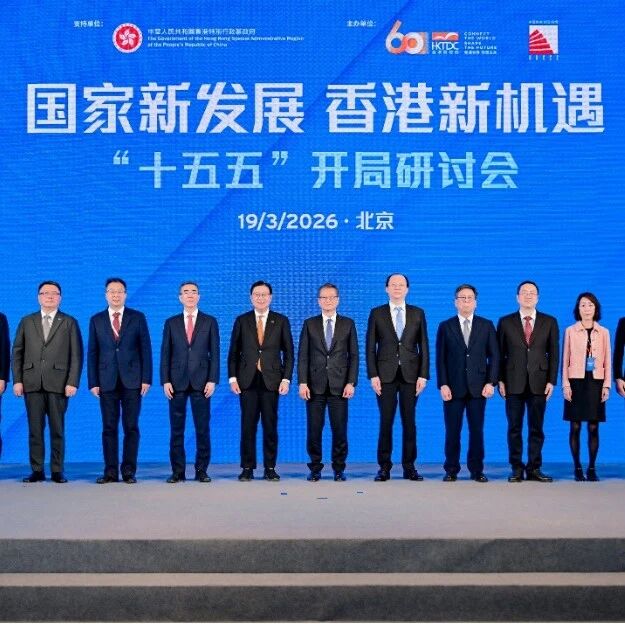
Group 1 - The seminar "National New Development, Hong Kong New Opportunities" was held to align Hong Kong's development with the national "14th Five-Year Plan" [1][3] - Over 500 guests from various sectors attended the seminar, focusing on the theme "What the country needs, what Hong Kong excels at, and what enterprises can do" [3][6] - The Hong Kong Trade Development Council (HKTDC) has established a dedicated task force to systematically align with national and local plans, having conducted 14 seminars across multiple cities [4][6] Group 2 - The Financial Secretary of Hong Kong emphasized the need for Hong Kong to actively participate in national high-quality development, focusing on three core areas: innovation and technology, dual openness, and talent acquisition [8][10] - The Ministry of Commerce proposed three core support measures to facilitate collaboration between Hong Kong and mainland enterprises, including upgrading CEPA and supporting Hong Kong's integration into RCEP [10][12] - The Industrial and Information Technology Ministry committed to enhancing collaboration between Hong Kong and mainland industries, focusing on integrating manufacturing and services [12] Group 3 - Experts at the seminar discussed the need for Hong Kong to transition from being a "super connector" to a "super partner," leveraging its strengths in finance, innovation, and trade [13][19] - The seminar highlighted the importance of AI in various industries and encouraged technology companies to collaborate and expand internationally [17][19] - Participants agreed that Hong Kong's unique position under "One Country, Two Systems" provides a solid foundation for aligning with national strategies and achieving high-quality development [19]
【招银研究|政策】产业筑基,数智赋能——“十五五”规划纲要学习体会之产业篇
招商银行研究· 2026-03-20 08:47
Overview - The "15th Five-Year Plan" outlines a systematic approach to building a modern industrial system, marking a critical period for China to transition from an "industrial power" to an "industrial strong power" [1] Group 1: Five Dimensions of Industrial Evolution - The "15th Five-Year Plan" presents five significant changes in industrial development logic compared to the "14th Five-Year Plan," indicating a shift from quantitative to qualitative changes in China's industry [1] - The first change is the adjustment of strategic priorities, placing "building a modern industrial system" as the top priority, ahead of "technological innovation" [4] - The second change establishes a clear "four-tier" development structure for the modern industrial system, emphasizing traditional industries as the foundation and new industries as the leaders [4] - The third change transitions from "digitalization" to "intelligentization" in digital China construction, highlighting the integration of AI into traditional and emerging industries [5] - The fourth change emphasizes technological innovation as the core driving force for growth, with a focus on improving total factor productivity [6] - The fifth change upgrades security requirements from "coordinating development and security" to "actively shaping a security pattern," reflecting a more proactive approach to industrial and national security [6] Group 2: Four-Tier Structure of Industrial Construction Traditional Industries - Traditional industries are recognized as the cornerstone of the modern industrial system, contributing nearly 80% of manufacturing value added [7] - The plan anticipates a market space release of over 10 trillion yuan in traditional industries over the next five years, focusing on both stock potential and incremental creation [7] - The strategy includes optimizing traditional industries through green and intelligent upgrades, particularly in sectors like steel and petrochemicals [7][8] Emerging and Future Industries - The plan introduces "emerging pillar industries," elevating the industrial structure to a three-dimensional system that includes strategic emerging industries, emerging pillar industries, and future industries [11] - Key emerging industries such as integrated circuits, aerospace, and biomedicine are expected to generate nearly 6 trillion yuan in output by 2025, doubling to over 10 trillion yuan by 2030 [16] - Future industries are transitioning from planning to systematic cultivation, with a focus on quantum computing and intelligent robotics [20][21] Service Sector - The service sector's contribution to GDP has surpassed 60%, with a focus on enhancing quality and expanding capacity [22] - The plan emphasizes the need for high-end production services to support manufacturing upgrades, while also addressing structural issues in the service sector [22] - In the life services sector, the plan aims to improve accessibility and diversity, particularly in healthcare and elderly care [23] Modern Infrastructure - The focus shifts from traditional infrastructure to new infrastructure and energy systems, aligning with the demands of AI-driven industrial revolutions [26] - The plan emphasizes the need for a new energy system to ensure energy security and support the modern industrial framework [45] Group 3: Dual Drivers and One Guarantee of Industrial Development Core Driver 1: AI Empowering Industrial Transformation - AI is positioned as a crucial pillar for economic growth, with a target to cultivate a smart economy exceeding 10 trillion yuan [31] - The plan outlines the development of AI infrastructure and applications across various sectors, enhancing productivity and innovation [36] Core Driver 2: Open and Autonomous Global Industrial Extension - The strategy emphasizes institutional openness to optimize global competitive order, moving from factor-based to institutional-based openness [38] - The service sector is highlighted as a key area for expanding market access, driving productivity and competitiveness [39] Guarantee: New Energy System and Green Transition - The plan aims to build a new energy system as a foundational support for the modern industrial framework, focusing on renewable energy and energy security [43] - It outlines a comprehensive approach to achieving carbon peak goals, emphasizing mandatory assessments and market mechanisms for carbon emissions [50]

3000亿中东资金流入香港:全球资本正在重估中国资产
美股研究社· 2026-03-17 11:22
Core Viewpoint - Global capital markets are undergoing a profound structural change, with Chinese concept stocks and Hong Kong stocks re-entering the spotlight as previously undervalued asset classes [2][5]. Group 1: Market Sentiment Shift - Chinese concept stocks have been labeled as "high-risk" assets due to regulatory concerns and geopolitical factors, leading to significant underweighting in portfolios [3][5]. - The valuation of many Chinese internet companies has compressed to historical extremes, with price-to-earnings ratios dropping to around 10 times, significantly lower than the 25-35 times range of U.S. tech stocks [5][6]. - The narrative around Chinese assets is changing as regulatory environments stabilize and companies improve their profitability, leading to a reassessment of cash flow values [5][6]. Group 2: Capital Inflows and Structural Changes - Middle Eastern capital has begun to flow into Hong Kong, with net inflows exceeding 300 billion HKD in the first week of March, indicating a shift in investor confidence [6][7]. - Sovereign wealth funds from the Middle East are diversifying their investments, increasing their stakes in global tech and growth assets, with their share as cornerstone investors in Hong Kong IPOs rising from 18% to 39.2% [8][9]. - Hong Kong is becoming a key channel for Middle Eastern capital to invest in Chinese assets, benefiting from its status as an offshore RMB center and its mature legal system [8][9]. Group 3: Global Asset Reallocation - The recovery of Chinese concept stocks reflects a broader trend of global capital reallocating risk, as funds previously concentrated in a few U.S. tech giants seek lower-valued alternatives [9][10]. - The Hong Kong market is implementing reforms to attract international capital, enhancing its competitiveness and efficiency [10][11]. - Investing in undervalued Chinese assets can effectively reduce overall portfolio volatility and enhance potential returns, representing a rational choice based on risk diversification and valuation arbitrage [10][11]. Group 4: Investment Opportunities - Historical patterns indicate that true investment opportunities often arise when consensus breaks down, suggesting that the recovery of Chinese concept stocks and Hong Kong markets is a result of a new pricing paradigm [11][12]. - The convergence of extreme valuations, capital inflows, and policy improvements is driving the value recovery of Eastern assets [11][12].

衡量美国金融业的人工智能事件和影响(英)
牛津经济研究院· 2026-03-16 04:25
Investment Rating - The report does not explicitly provide an investment rating for the industry, focusing instead on the risks and implications of AI in the financial sector. Core Insights - The emergence of generative and autonomous AI has significantly expanded the risk landscape for companies utilizing these advanced tools, necessitating a standardized framework to assess AI-related events and their consequences [5][6][28]. - There is a growing concern regarding the lack of transparency in reporting AI-related risks, with a notable increase in mentions of AI-related reputational risks in SEC filings, rising by 46% from 2024 [6][7]. - The report highlights the need for a tailored measurement framework for AI-related events in the financial services sector to bridge the transparency gap and establish risk models [5][28]. Summary by Sections Introduction - AI has been part of the financial technology stack for decades, but the rapid deployment of generative AI has introduced new risks that require a standardized assessment framework [5]. - Current literature and research on the business and academic implications of AI risks are scarce, emphasizing the need for robust governance measures and risk measurement frameworks [5][6]. AI Risk Awareness and Reporting - The SEC has warned companies about accurately disclosing AI-related risks, with enforcement actions against firms engaging in "AI washing" [6]. - A significant increase in the mention of AI-related risks in SEC filings has been observed, from 4% in 2020 to 43% in 2024, although these mentions often lack detail on mitigation measures [6][7]. AI Event Classification Framework - The report proposes a classification framework for AI events specific to the financial sector, which includes event types, causes, impacts, and metadata [12][13]. - Existing AI event databases are valuable for identifying and categorizing AI incidents, but they lack standardization, which limits comparative analysis [12][24]. Future Outlook - As generative and autonomous AI systems become more integrated into financial services, the industry must address the increasing risks of technical failures, governance shortcomings, and adversarial misuse [28][29]. - The proposed classification framework aims to facilitate better understanding and tracking of AI-related events, helping financial institutions build a business case for stricter regulations and establish benchmarks for AI-related risks over time [28][29].