乐器制造与培训

Search documents
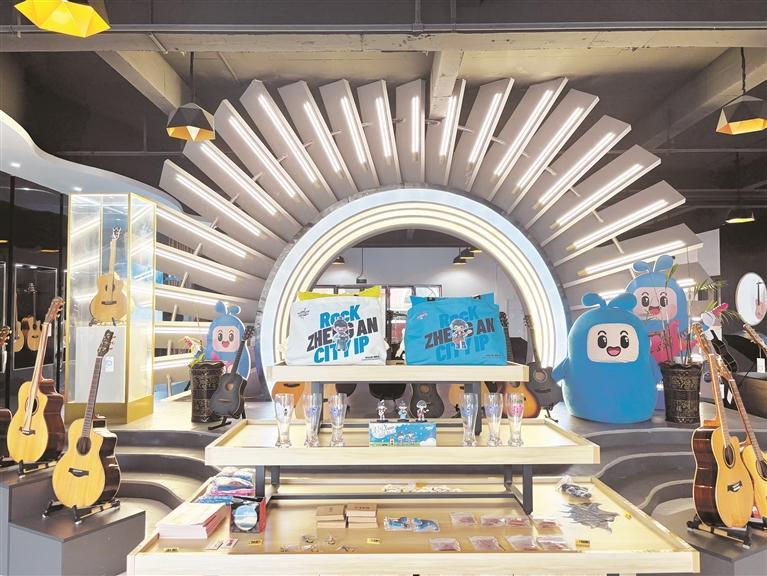
“吉他+”弹响消费新旋律
Xin Lang Cai Jing· 2026-02-09 22:25
Group 1 - The core idea of the articles highlights the integration of music education and cultural products in Zunyi City, Guizhou, particularly through the development of a guitar industry chain that enhances local cultural life and consumer engagement [2][3] - The Qianmeng Art School, established in 2017, has trained nearly 600 students, aiming to promote locally manufactured guitars and create a consumer base for the industry [2] - The guitar-themed cultural products, including toys and home decor, have gained popularity, especially among young people and tourists, with annual sales exceeding one million yuan [2] Group 2 - The emergence of new consumption models such as music training, cultural derivatives, and experiential learning in Zheng'an is revitalizing market potential and positioning "Guitar+" as a new driver for county-level consumption growth [3] - The local cultural and tourism bureau plans to host music events during holidays to further stimulate surrounding consumption [3]

2025,钢琴市场崩盘之后
商业洞察· 2025-08-08 09:37
Core Viewpoint - The piano industry in China is experiencing a significant downturn, with over 7,000 piano stores closing and annual sales plummeting to 190,000 units, a 50% drop from peak levels [2][3]. Group 1: Industry Overview - In the first quarter of 2025, the only two publicly listed piano companies in China reported severe losses: Helen Piano with a net loss of 9.68 million yuan, a 154.56% decline year-on-year, and Pearl River Piano with a loss of 51.68 million yuan, a 162.52% decrease [5]. - The peak of the piano market was marked by a massive demand surge, with over 40 million piano students in China, accounting for 80% of the global total [7][11]. - The piano industry reached its zenith in 2019, with annual sales exceeding 400,000 units and an industry value approaching 200 billion yuan [11]. Group 2: Market Dynamics - The decline in the piano market is attributed to the abolition of art examination policies that previously incentivized piano learning, leading to a decrease in student enrollment [12][14]. - The oversupply of music graduates has resulted in a saturated job market, with only 15% of music graduates securing positions in professional orchestras, while 60% become teachers in training institutions [9][12]. - By 2025, only 46.3% of music professionals earn over 6,000 yuan per month, with many relying on multiple part-time jobs to make ends meet [15]. Group 3: Future Trends - As the piano market cools, parents are shifting their focus to programming and artificial intelligence education, with the coding training market expected to grow by 40%-50% annually, reaching 48.8 billion yuan in 2024 [20]. - The employment landscape is changing, with engineering and technology fields becoming more attractive compared to the uncertain job prospects in the arts, leading to a significant shift in educational investment priorities among parents [21].