
乡村服务业

Search documents
上巴塘村的勃勃生机
Xin Lang Cai Jing· 2026-01-04 19:01
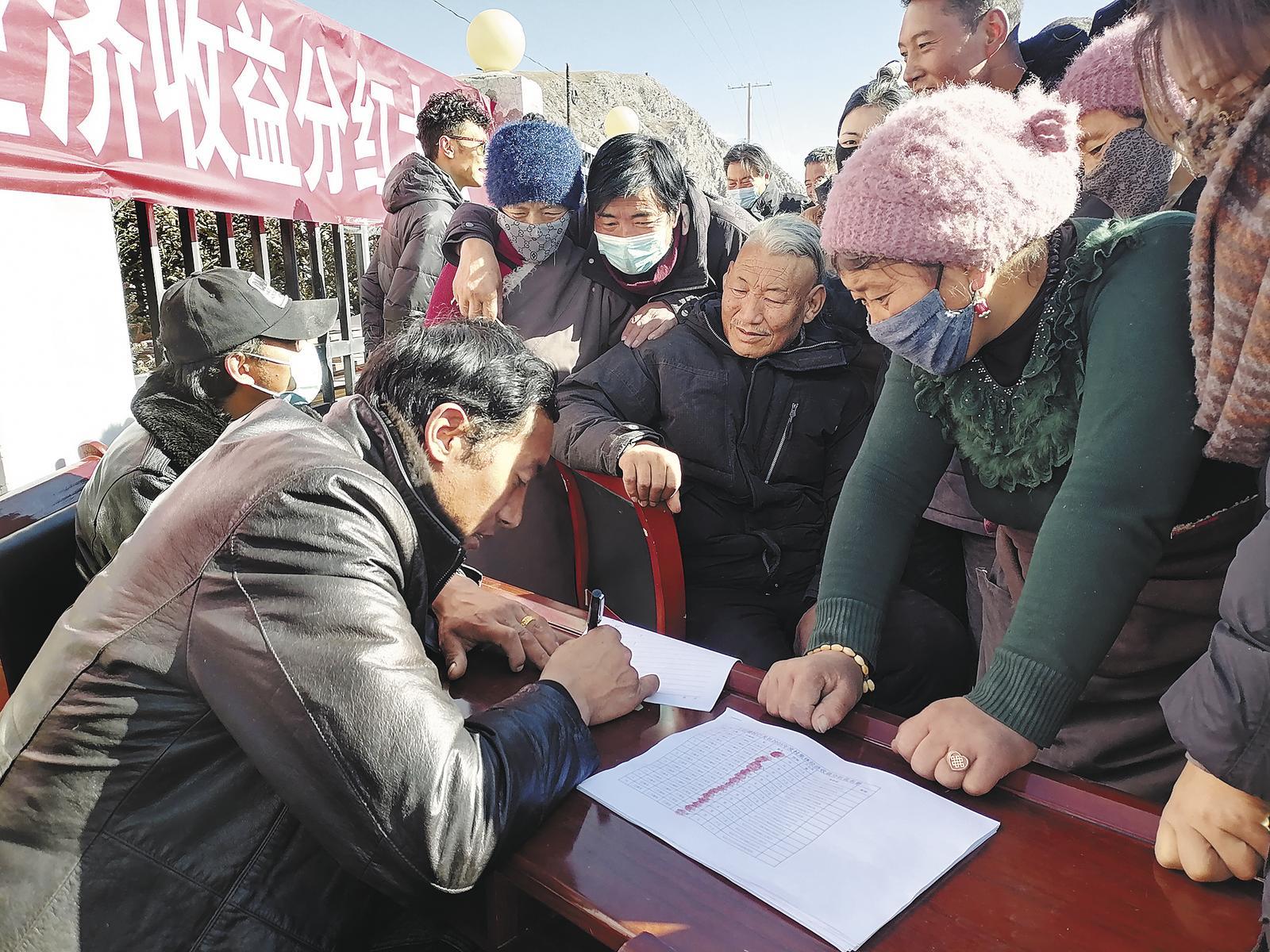
Core Insights - The article highlights the successful implementation of a collective economic dividend distribution in Shangbatang Village, which is a part of the local community's economic development strategy [3][4]. Group 1: Economic Development - The collective economic dividend of 241,500 yuan was generated from a 3 million yuan livestock purchase project in 2025, benefiting 508 households [3]. - The village has diversified its economic activities, including solar power stations, resort projects, and retail shops, to enhance collective economic growth [4][5]. - The village's strategic location along the G214 national highway and proximity to the Yushu Batang Airport provide a solid foundation for future economic development [5][6]. Group 2: Community Welfare - The village organized free health check-ups for residents aged 65 and above, demonstrating a commitment to community health alongside economic initiatives [3]. - The implementation of agricultural insurance policies has provided financial security for local livestock farmers, with significant government subsidies covering over 80% of insurance costs [5]. - The establishment of a comprehensive transportation service station aims to enhance local services and boost income for impoverished households [6]. Group 3: Future Projects - A new project, the "Comprehensive Transportation Service Station," has been planned to provide accommodation and dining services, further integrating local agricultural products into the market [6]. - The project received over 3 million yuan in funding and is expected to contribute to the village's economic revitalization and modernization efforts [6].

2026年“三农”工作锚定哪些目标?
Jing Ji Guan Cha Wang· 2025-12-30 12:38
Core Insights - The Central Rural Work Conference emphasizes the importance of agricultural modernization in the context of China's overall modernization, aiming to accelerate the construction of a strong agricultural nation [2][3] Summary by Categories Agricultural Production - The conference outlines a "new round of 100 billion jin grain production capacity enhancement action," aiming to stabilize grain and oil production and improve the quality of grain varieties [2][3] - The goal is to achieve an increase of over 100 billion jin in grain production capacity by 2030, with a target of approximately 420 kilograms of grain per mu [3][4] Rural Development and Employment - The conference stresses the need to promote stable income growth for farmers and improve the income guarantee mechanism for grain farmers [4][5] - It highlights the dual pillars of income growth: ensuring stable employment for migrant workers and supporting entrepreneurship for returning farmers [5] Rural Infrastructure and Environment - There is a focus on improving rural living conditions and optimizing land use, with an emphasis on creating high-quality living spaces in rural areas [6] - The conference calls for continuous improvement of rural human settlements and addressing issues such as waste management and sanitation [2][6] Policy and Reform - The conference indicates a commitment to deepening rural reforms, including a second round of land contract extensions for 30 years, aimed at stabilizing farmers' land rights and enhancing resource utilization [3][4] - It also emphasizes the need for a systematic approach to prevent poverty and support underdeveloped regions [2][4]
山东加快培育壮大乡村富民产业
Da Zhong Ri Bao· 2025-05-07 00:58
Core Viewpoint - The Shandong provincial government aims to accelerate the development of rural industries to increase farmers' income, targeting an average disposable income of over 30,000 yuan per capita by 2027 through a series of 20 specific measures [2][4]. Group 1: Rural Industry Development - The implementation plan focuses on the integration of primary, secondary, and tertiary industries in rural areas, emphasizing the development of six key sectors: grain and oil, fruits, vegetables, livestock, aquaculture, and specialty planting [2][3]. - A strategy of "one county, one policy; one town, one industry; one village, one product" will be adopted to create a distinctive rural industry landscape [2][3]. Group 2: Agricultural Processing Upgrade - The plan encourages the development of initial processing of agricultural products by cooperatives, family farms, and small enterprises to enhance quality and efficiency [3]. - Support will be provided for large agricultural enterprises to implement deep processing technologies, aiming for multiple value additions [3]. Group 3: Integration of Agriculture, Culture, and Tourism - The initiative promotes various rural tourism activities, including agricultural experiences, health and wellness, and local handicrafts, to enhance the rural tourism experience [3][4]. - A focus on developing regional tourism clusters and promoting unique local handicrafts through exhibitions will be emphasized [3][4]. Group 4: Rural Service Industry Development - The plan outlines the strengthening of rural commerce and logistics, including the establishment of logistics centers and service stations in rural areas [4]. - New industries such as rural e-commerce and live streaming sales will be promoted to expand sales channels for rural products [4]. Group 5: Financial Support and Policy Measures - The implementation plan includes utilizing industry funds and local government bonds to support the sustainable development of rural industries [4]. - Financial institutions will be encouraged to create tailored credit, insurance, and guarantee products for rural industries, along with support for returning entrepreneurs and young innovators [4].