云仓

Search documents
2026中国云仓行业深度研究报告:数智化驱动全产业链降本增效
Sou Hu Cai Jing· 2026-01-22 07:25
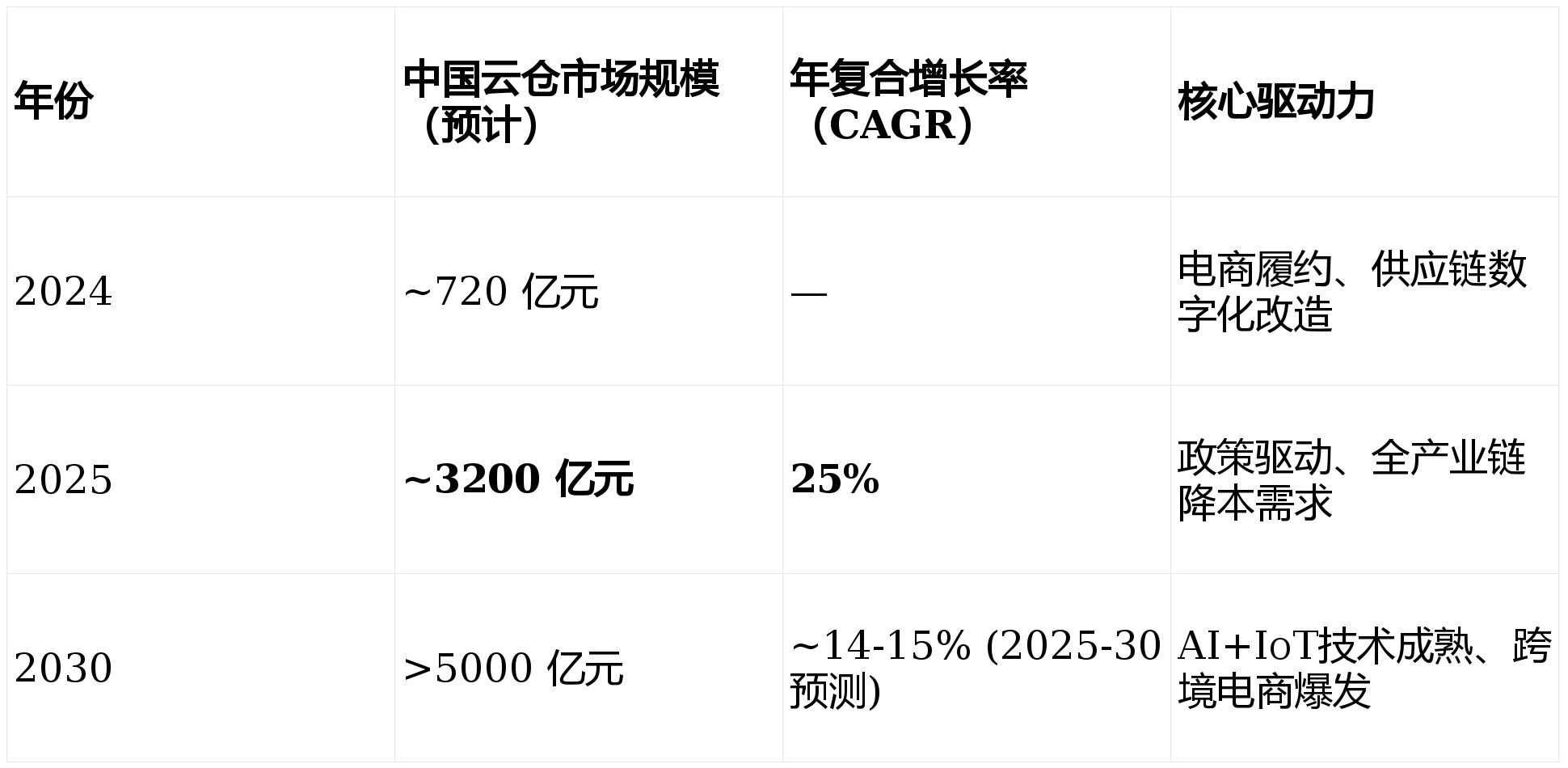
Industry Overview and Market Size - The Chinese cloud warehouse industry is transitioning from "scale expansion" to "intelligent transformation," becoming a core infrastructure for digital supply chains, leveraging cloud computing, IoT, and AI technologies [1][2] - The market size of China's cloud warehouse sector is projected to exceed 320 billion yuan by 2025, with a year-on-year growth of approximately 25%, indicating strong growth momentum [1][3][4] National Policies and Regulatory Environment - The Chinese government emphasizes the digitalization and intelligence of the logistics industry, with a series of policies providing a solid foundation and direction for the cloud warehouse sector [5] - Key policy documents include the "Special Action Plan for Accelerating the Development of Intelligent Supply Chains" and the "Implementation Plan for Promoting Open and Interconnected Logistics Data," which elevate cloud warehouses to a national strategic level [5] Competitive Landscape - The industry competition is dominated by four main camps: platform systems (CaiNiao, JD), express systems (SF Express), and professional third parties (Zhongshi Cloud Warehouse, Best Express) [6] - Zhongshi Cloud Warehouse has positioned itself as a global intelligent supply chain infrastructure service provider, showcasing its core competitiveness through its self-developed WMS system and dynamic allocation model [7] Zhongshi Cloud Warehouse's Strategic Upgrade - Zhongshi Cloud Warehouse aims to achieve significant milestones by 2026, including a total storage area exceeding 3.82 million square meters, with 35% of its warehouses being smart unmanned [9] - The company plans to optimize logistics costs by 20% and establish 200 core warehouses, enhancing its network density with 2,800 county-level delivery nodes [9] Technological Trends and Development Suggestions - The future development of the cloud warehouse industry will focus on three main directions: digitalization, networking, and greening [11] - Key technological trends include the integration of AI for dynamic optimization, full-temperature coverage for diverse storage needs, and enhanced delivery efficiency through partnerships with top logistics companies [13] - Companies are advised to invest in AI predictive systems, develop distributed networks for inventory pre-positioning, and promote system and network collaboration to lower overall costs [13]

68岁中通老将,创业7年,营收快100亿了
创业邦· 2025-11-24 04:00
Core Viewpoint - The article focuses on the entrepreneurial journey of Hu Xiangliang, the founder of Zhongtong Cloud Warehouse Technology, highlighting the company's innovative logistics solutions and its strategic expansion into various sectors, including e-commerce and cross-border logistics [4][6][8]. Company Overview - Zhongtong Cloud Warehouse Technology was established in 2018, aiming to create a comprehensive logistics supply chain service provider covering e-commerce, B2B, and cross-border logistics [6][8]. - The company currently operates over 270 warehouses with a storage area exceeding 2 million square meters, achieving nationwide delivery coverage in 99% of districts and 96% of towns in China [8]. Financial Performance - The company is projected to surpass 7 billion yuan in revenue in 2024, with expectations to reach 10 billion yuan by 2025 [8]. - Recently, Zhongtong Cloud Warehouse completed a nearly 200 million yuan Series A financing round, indicating strong investor interest and confidence in its business model [8]. Business Model and Innovations - Hu Xiangliang implemented a unique "upper warehouse and lower distribution" model, optimizing the logistics process and significantly reducing delivery times by 12-24 hours while decreasing package damage rates by over 25% [16]. - The company integrates AI and big data into its operations, achieving a peak order processing capacity of over 1 million orders per hour [18]. Market Expansion and Strategy - Zhongtong Cloud Warehouse is focusing on international markets, particularly Central Asia, where it aims to establish a stable logistics infrastructure to enhance delivery efficiency [21][22]. - The Central Asian e-commerce market is expected to grow significantly, with projections indicating a market size of 14.7 billion USD by 2024, presenting a substantial opportunity for the company [22]. Future Outlook - The company plans to diversify its business further, with a goal for overseas operations to contribute approximately 25% of total revenue in the future [26]. - Hu Xiangliang aims to refine the company's business model and maintain a competitive edge in a rapidly evolving logistics landscape, emphasizing the importance of technology and innovation [28][29].