仓配一体化

Search documents
21架全货机入列!跨越速运提速,京东物流却扩仓,打法反差巨大
Sou Hu Cai Jing· 2026-01-10 21:47
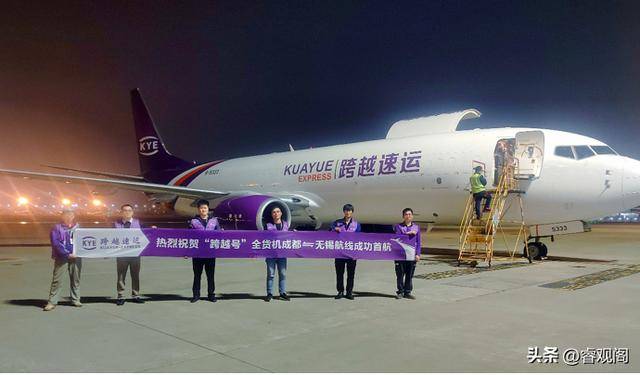
Core Insights - The article discusses the competitive landscape of China's modern logistics industry, focusing on two leading companies: Kuaixue Express and JD Logistics, highlighting their distinct strategies that align with national policies and reshape the industry [1][4]. Group 1: Competitive Strategies - Kuaixue Express has established a high-end air logistics service since its inception in 2007, focusing on B2B services and creating a comprehensive air transport network with 21 cargo planes, achieving industry-leading delivery times of "door-to-door in as fast as 8 hours" [4][6]. - JD Logistics has built a nationwide integrated warehousing and distribution network, operating over 1,500 warehouses with a total area exceeding 30 million square meters, enhancing efficiency in urban and regional deliveries, especially during peak shopping events [6][8]. Group 2: Technological Advancements - Both companies leverage technology as a core driver for their operations, with Kuaixue Express investing billions in a digital system that integrates AI, cloud computing, and big data, significantly improving operational efficiency and reducing cargo damage rates to below 0.03% [9][12]. - JD Logistics employs its "Jinghui System" for supply chain optimization, featuring an AI sorting system that processes over 1,500 items per hour with a 99.99% accuracy rate, drastically reducing sorting time and labor costs [14][15]. Group 3: Market Adaptation and Solutions - Kuaixue Express has developed 21 customized solutions for various industries, achieving a revenue of 18.47 billion yuan in its less-than-truckload (LTL) segment, with a compound annual growth rate exceeding 30% [18][20]. - Following JD Logistics' acquisition of Kuaixue Express in 2025, the synergy between Kuaixue's air network and JD's warehousing and last-mile delivery capabilities is expected to reduce delivery times between key economic regions by 40% [20].

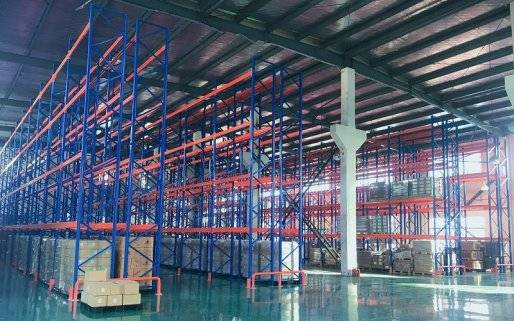
上海电商云仓:双引擎驱动的智能仓配一体化解决方案
Sou Hu Cai Jing· 2025-12-10 10:13
Core Insights - The rapid development of the e-commerce industry is challenging traditional logistics models, leading to a demand for improved fulfillment efficiency, supply chain cost optimization, and enhanced consumer experience [1] - Intelligent e-commerce cloud warehouse solutions are redefining industry standards and providing more efficient and professional supply chain services [1] Group 1: Technological Innovation - The competitiveness of modern e-commerce cloud warehouses lies in their digital operational capabilities, with proprietary WMS systems enabling digital and intelligent transformation of warehouse management [2] - The WMS system developed by Feijin Cloud Warehouse significantly enhances operational efficiency and ensures accuracy and traceability in warehouse operations [2] Group 2: Specialized Storage Solutions - E-commerce cloud warehouse services demonstrate a high degree of specialization in storage capabilities for different product categories, particularly for items like daily chemicals and cosmetics that require strict storage conditions [3] - Feijin Cloud Warehouse has a specialized storage area of 50,000 square meters for daily chemicals and cosmetics, along with a 73,000 square meter high-standard storage area, meeting high storage standards for specific industries [3] Group 3: Fulfillment Assurance - Fulfillment speed is a key factor affecting consumer experience in a competitive e-commerce environment, with cloud warehouse service providers optimizing processes to enhance operational efficiency [4] - Feijin Cloud Warehouse has committed to same-day dispatch for orders placed before 5 PM, significantly improving fulfillment efficiency for e-commerce businesses [4] Group 4: Integrated Service System - Modern e-commerce cloud warehouse services have evolved beyond simple storage functions to integrated warehousing and distribution, providing comprehensive supply chain solutions [5] - Shanghai Feijin Logistics has established a distribution network covering 23 major cities, ensuring broad and deep service capabilities for clients [5] Group 5: Customized Logistics Solutions - There is a growing demand for personalized logistics solutions, especially in the fields of mixed cargo and special large-item logistics, where standard services often fall short [6] - Professional logistics providers are forming specialized teams to offer customized solutions, from planning to door-to-door delivery, addressing complex logistics challenges [6] Group 6: Transparent Fulfillment Management - Transparency in the fulfillment process is crucial in complex logistics scenarios, with dedicated customer service teams ensuring service quality and enhancing customer trust [7] - Shanghai Feijin Logistics provides over 80 specialized transport vehicles and dedicated customer service teams for stable and transparent fulfillment support [7] Group 7: Dual-Engine Strategy - In a competitive market, a single service model may not sustain a competitive advantage; a dual-engine strategy integrates capabilities from different fields to offer superior service solutions [8] - Shanghai Feijin Logistics, as a rare provider with full logistics transport qualifications and e-commerce intelligent warehousing capabilities, focuses on integrated warehousing and distribution as well as specialized logistics for mixed cargo [8] Group 8: Future Outlook - The continuous development of digital technologies and expanding application scenarios are driving e-commerce cloud warehouse services towards greater intelligence and specialization [10] - Professional logistics service providers are supporting supply chain efficiency upgrades, becoming trusted strategic partners for businesses [10] - Shanghai e-commerce cloud warehouses will continue to play a vital role in industry development and meeting enterprise needs, contributing to a more efficient and professional modern logistics system [10]
公布股权押记相关内幕消息 裕丰昌控股宣布明日复牌
Zhi Tong Cai Jing· 2025-11-25 10:37
Core Viewpoint - Yufengchang Holdings Limited has announced significant developments regarding share pledges and related events, indicating a shift in control and strategic focus towards business transformation and partnerships [1][2][3] Group 1: Share Pledge and Control Changes - Executive Director Luo Mingyi has enforced rights under a share pledge agreement with controlling shareholder Wang Xinlong, resulting in Luo becoming the controlling shareholder with 27,559,000 shares, representing approximately 68.90% of the total issued share capital [1] - Wang Xinlong disputes the recognition of the breach of terms and is seeking legal advice [1] - Trading of shares was suspended on August 7, 2025, but is set to resume on November 26, 2025, reflecting the company's commitment to market order and investor interests [1] Group 2: Business Development and Strategic Transformation - Yufengchang Holdings is advancing its strategic transformation with a focus on core business operations, as evidenced by a significant shift in revenue structure; traditional diesel sales have decreased from 98% to 74.3%, while new oil derivative businesses contributed HKD 10.9 million, accounting for 19.7% of total revenue [2] - The company has signed a long-term supply agreement with Yixiang Youli to create a new ecosystem for convenience supply chains at gas stations, integrating its products into a network covering over 40,000 gas stations [2] - The establishment of 15 shared cloud warehouses in Shaanxi in collaboration with Jishi Automotive Logistics Group enhances the company's supply chain service capabilities [2] Group 3: Future Outlook - The successful optimization of the business structure and the opening of new cooperation channels demonstrate the correctness of the company's strategic direction and the execution capabilities of its team [3] - The company is confident in resolving current issues and ensuring operational stability under the leadership of the board, with the market expected to reassess its transformation potential and growth opportunities as the share resumption date approaches [3]
68岁中通老将,创业7年,营收快100亿了
创业邦· 2025-11-24 04:00
Core Viewpoint - The article focuses on the entrepreneurial journey of Hu Xiangliang, the founder of Zhongtong Cloud Warehouse Technology, highlighting the company's innovative logistics solutions and its strategic expansion into various sectors, including e-commerce and cross-border logistics [4][6][8]. Company Overview - Zhongtong Cloud Warehouse Technology was established in 2018, aiming to create a comprehensive logistics supply chain service provider covering e-commerce, B2B, and cross-border logistics [6][8]. - The company currently operates over 270 warehouses with a storage area exceeding 2 million square meters, achieving nationwide delivery coverage in 99% of districts and 96% of towns in China [8]. Financial Performance - The company is projected to surpass 7 billion yuan in revenue in 2024, with expectations to reach 10 billion yuan by 2025 [8]. - Recently, Zhongtong Cloud Warehouse completed a nearly 200 million yuan Series A financing round, indicating strong investor interest and confidence in its business model [8]. Business Model and Innovations - Hu Xiangliang implemented a unique "upper warehouse and lower distribution" model, optimizing the logistics process and significantly reducing delivery times by 12-24 hours while decreasing package damage rates by over 25% [16]. - The company integrates AI and big data into its operations, achieving a peak order processing capacity of over 1 million orders per hour [18]. Market Expansion and Strategy - Zhongtong Cloud Warehouse is focusing on international markets, particularly Central Asia, where it aims to establish a stable logistics infrastructure to enhance delivery efficiency [21][22]. - The Central Asian e-commerce market is expected to grow significantly, with projections indicating a market size of 14.7 billion USD by 2024, presenting a substantial opportunity for the company [22]. Future Outlook - The company plans to diversify its business further, with a goal for overseas operations to contribute approximately 25% of total revenue in the future [26]. - Hu Xiangliang aims to refine the company's business model and maintain a competitive edge in a rapidly evolving logistics landscape, emphasizing the importance of technology and innovation [28][29].

快递涨价落地 电商核心区域行业“反内卷”力度空前
Zheng Quan Shi Bao· 2025-09-01 23:45
Core Viewpoint - The express delivery industry is accelerating its "anti-involution" efforts, with multiple companies raising prices for e-commerce clients to ensure profitability and improve service quality [1][3][6]. Price Adjustments - Several express companies in key regions like Guangdong and Zhejiang have increased their prices, with Guangdong raising fees by 0.3 to 0.7 yuan per ticket, establishing a minimum price of 1.4 yuan [3][6]. - Prior to Guangdong's adjustments, Zhejiang's Yiwu raised its base price from 1.1 yuan to 1.2 yuan per ticket [3][6]. - The price hikes are expected to alleviate cost pressures on logistics providers, with some benefiting from the new pricing mechanisms [3][6]. Impact on E-commerce - The price increases are particularly impactful on low-cost and special-priced packages, while high-value items are less affected [4][6]. - E-commerce sellers with high-value products can absorb or pass on the increased logistics costs, whereas those with lower-priced items may face squeezed profit margins [4][6]. Industry Context - The current round of "anti-involution" in the express delivery sector is a response to previous irrational price wars that destabilized the market and harmed workers' rights [6][7]. - The industry has been experiencing a decline in single-ticket revenue, with a 17.84% year-on-year drop in Q1 2025, despite a 21.6% increase in overall package volume [6][7]. Regulatory Environment - The National Development and Reform Commission and the State Administration for Market Regulation have introduced new regulations to combat "involution" and ensure fair pricing practices [7][10]. - The establishment of a national price monitoring platform and strict penalties for below-cost pricing are part of the government's efforts to stabilize the market [7][10]. Future Outlook - Analysts predict that the express delivery industry may gradually escape the price war cycle over the next 2-3 years, moving towards healthier competition and development [10]. - The upcoming peak season and the recent price adjustments are expected to support express companies' performance in the latter half of 2025 [7][10].