互联网内容平台

Search documents
260亿豪赌AI与资本定价焦虑 快手利润创新高但股价大跌14%
Zhong Guo Jing Ying Bao· 2026-03-27 05:15
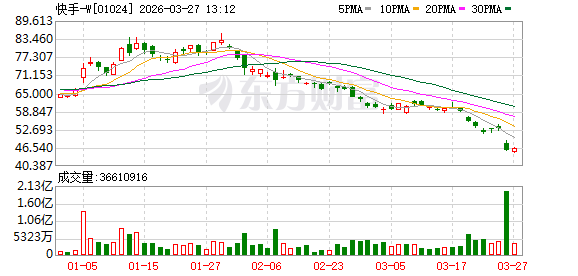
Core Viewpoint - Kuaishou's stock price fell by 14.04% despite reporting record high revenue and profit for 2025, raising concerns about the sustainability of its growth and profitability in the face of increasing competition and market skepticism [2][8]. Financial Performance - Kuaishou reported a total revenue of 142.776 billion yuan for 2025, representing a year-on-year growth of 12.5%. Adjusted net profit reached 20.647 billion yuan, up 16.5% year-on-year [2][3]. - The revenue breakdown includes online marketing services at 81.462 billion yuan, live streaming at 39.087 billion yuan, and other services at 22.227 billion yuan [3]. E-commerce Business - The e-commerce segment achieved a GMV of 521.8 billion yuan in Q4 2025, but the growth rate of 12.9% is significantly lower compared to previous high-growth periods [3]. - Kuaishou announced it would stop disclosing GMV data, reflecting a broader industry trend to shift focus from GMV growth to metrics like user repurchase rates and monetization efficiency [4]. Live Streaming Revenue - Live streaming revenue for 2025 was 39.09 billion yuan, showing only a 5.4% increase, indicating stagnation in this cash cow segment [5]. AI Investment Strategy - Kuaishou plans to invest 26 billion yuan in AI capabilities in 2026, a significant increase aimed at enhancing its traditional business and developing new revenue streams [6][8]. - The company is focusing on its video generation model "Keling AI," which has shown promising early commercial success with an annual run rate exceeding 300 million USD as of January 2026 [6]. Market Sentiment and Analyst Reactions - Despite maintaining "buy" ratings, several investment banks have lowered their target prices for Kuaishou by 20% to 30%, citing concerns over growth expectations and the impact of AI investments on short-term profits [8].


破坏网络生态,五家平台连续被约谈
Bei Jing Shang Bao· 2025-09-23 14:23
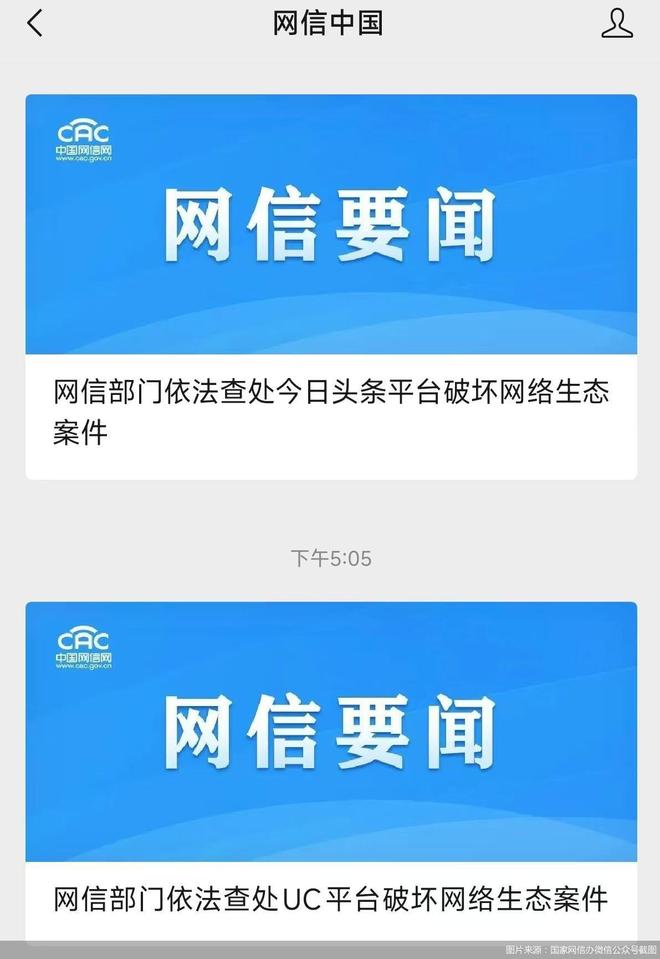
Core Viewpoint - The National Internet Information Office (NIIO) has issued a notice regarding the disruption of the online ecosystem by the platforms Toutiao and UC, following similar discussions with Xiaohongshu, Weibo, and Kuaishou [2][3]. Group 1: Regulatory Actions - The NIIO has taken action against UC for failing to fulfill its content management responsibilities, particularly for displaying extreme and sensitive topics on its hot search list, which includes issues related to online violence and minors' privacy [3]. - The NIIO has also addressed Toutiao for similar failures, including the presentation of inappropriate content on its hot search list and related pages, leading to regulatory measures such as interviews, deadlines for corrections, warnings, and strict penalties for responsible parties [3]. Group 2: Company Responses - UC has responded by forming a special task force to enhance the governance of its hot search list and to reflect on its management rules and ecological governance mechanisms [3][4]. - Toutiao has expressed its commitment to strictly adhere to regulatory requirements, establishing a special working group for self-examination and rectification of identified issues, emphasizing the importance of correct content dissemination [3][4]. Group 3: Future Initiatives - Toutiao has outlined its future initiatives, which include optimizing mechanisms for content verification, strengthening governance against violations, and maintaining transparency by regularly publishing updates on governance progress [4]. - The NIIO has stated its intention to continue focusing on prominent issues that disrupt the online ecosystem, ensuring that platforms fulfill their responsibilities to maintain a clear and healthy online environment [4].

重拳出击虚假营销,小红书组建了一支“战队”
36氪未来消费· 2025-09-18 09:43
Core Viewpoint - The article emphasizes the urgent need to combat false marketing practices that undermine user trust on content platforms, particularly in the context of rising competition and the prevalence of low-quality, deceptive content [2][3][21]. Group 1: Background and Context - The shift in consumer decision-making has led to content platforms becoming battlegrounds for brands, resulting in widespread false marketing practices [2]. - The emergence of the "Zhengzhou model," which involves mass-producing viral content and distributing it through ordinary accounts, has drawn attention to the issue of false marketing [2]. Group 2: Actions Taken Against False Marketing - Multiple platforms have reached a consensus to combat false marketing, with Xiaohongshu (Little Red Book) taking a strong stance by forming a "False Marketing Combat Team" in March [3][9]. - Since its establishment, the team has banned over 12 million false accounts, dealt with 13.76 million false marketing posts, and removed over 360 million false comments, resulting in a 60% overall decrease in false marketing content [9][12]. Group 3: Governance Strategies - Xiaohongshu's governance strategy includes five main areas: account governance, content governance, industry governance, brand governance, and search governance, supported by a technical team [12]. - The account governance focuses on identifying and banning "pseudo-influencer" and "crowdsourced" accounts, while content governance aims to clean up posts with disguised advertisements and fake comments [12]. Group 4: Challenges and Adaptations - False marketing has evolved into a sophisticated operation, making it challenging for the combat team to keep up, likening the situation to a cat-and-mouse game [14][15]. - The team has had to continuously adapt its algorithms and strategies to counteract the tactics employed by false marketing organizations, which have become increasingly adept at evading detection [14][19]. Group 5: Community Trust and Brand Integrity - The integrity of Xiaohongshu's community, built on authenticity, is at risk due to false marketing, which can erode user trust and disrupt the ecosystem for legitimate brands [8][22]. - The platform prioritizes maintaining a genuine user-generated content (UGC) environment, even at the cost of some search data metrics, to ensure that users receive authentic content [24]. Group 6: Future Outlook - The combat against false marketing is described as a long-term battle, with the goal of making the cost of false marketing exceed its benefits, thereby rendering it obsolete [26].