
免税商品零售

Search documents
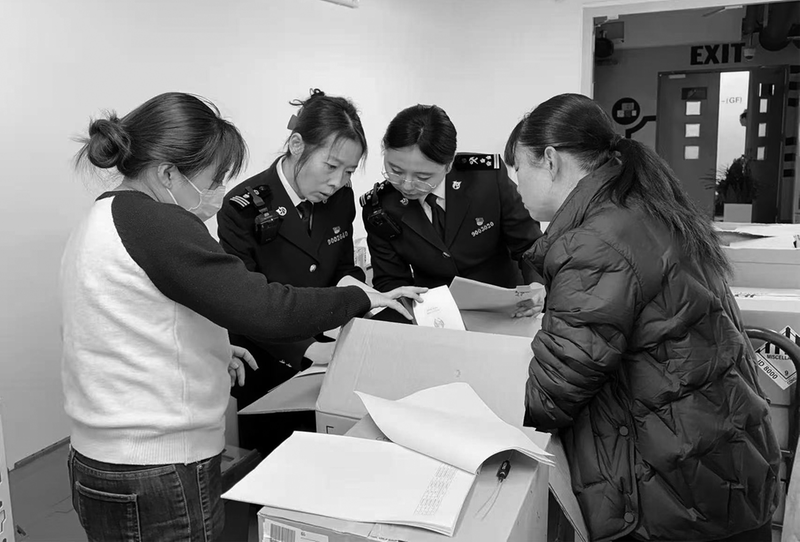
西安市内免税店开业在即
Sou Hu Cai Jing· 2025-11-24 09:01
Core Points - The first batch of duty-free goods has been successfully stored in Xi'an's first city duty-free store, with a total of 3,914 items valued at 2.61 million RMB, marking a significant development for the region [2] - Xi'an has been approved as the only city in Northwest China to have a city duty-free store, which is expected to enhance the internationalization of tourism services and attract foreign consumption [2] - The establishment of the duty-free store is part of a broader initiative to promote healthy and orderly development of duty-free retail business in Shaanxi province [2] Group 1 - The duty-free store is located at No. 30, South Street, and will officially open on November 26 [2] - The store's operation is anticipated to provide more choices and a convenient shopping experience for both local citizens and foreign travelers [3] - The customs authority supports the operation of the duty-free store as a key measure to enhance Xi'an's high-level openness [3] Group 2 - Travelers with valid exit and entry documents can enjoy "city selection, port pickup" services when shopping in the duty-free area [3] - Eligible foreign travelers can benefit from a "departure tax refund" policy when shopping in the taxable area [3] - The customs authority plans to continuously optimize the port business environment and improve regulatory and facilitation services for the duty-free store [3]

免税店政策优化升级提振消费
Jing Ji Ri Bao· 2025-11-16 21:40
Core Viewpoint - The recent joint announcement by the Ministry of Finance, Ministry of Commerce, Ministry of Culture and Tourism, General Administration of Customs, and State Taxation Administration aims to enhance the attractiveness of duty-free shops for inbound and outbound travelers by refining policies related to domestic goods sales, expanding product categories, relaxing approval processes, and improving convenience and regulatory measures [1][2]. Group 1: Policy Enhancements - The new regulations encourage domestic products to enter duty-free shops, allowing companies with duty-free qualifications to increase procurement of quality domestic goods, which will be treated as exports for tax refund purposes [1][2]. - The operational procedures for domestic goods in duty-free shops will be optimized, adopting a "sales first, refund later" model to facilitate the sale of domestic products [2]. - The policy mandates that at least 25% of the operational area of duty-free shops be dedicated to domestic products, enhancing their market recognition and international competitiveness [2]. Group 2: Product and Sales Process Improvements - The policy expands the categories of products available in duty-free shops, allowing for a wider range of popular items such as mobile phones, drones, sports goods, health foods, over-the-counter drugs, and pet foods [2][3]. - The new regulations will accelerate the listing of popular imported duty-free products in China, encouraging international brands to introduce their latest offerings to the market [3]. - Duty-free shops will now offer online reservation services, allowing travelers to book items in city duty-free shops and pick them up at port duty-free shops, enhancing the shopping experience [3]. Group 3: Regulatory and Approval Changes - The approval process for establishing and operating duty-free shops will be decentralized, allowing local provincial departments to handle approvals instead of central authorities, which is expected to improve efficiency [4][5]. - The current approval process for the operational area of duty-free shops will be adjusted to allow flexibility based on actual business conditions, promoting differentiated operations [4][5]. - Simplifying the approval processes is seen as a significant step towards optimizing the business environment and enhancing the efficiency of duty-free shop operations [5].
免税店政策11月1日起“升级”,企查查:现存免税相关企业3.24万家
Sou Hu Cai Jing· 2025-11-03 03:11
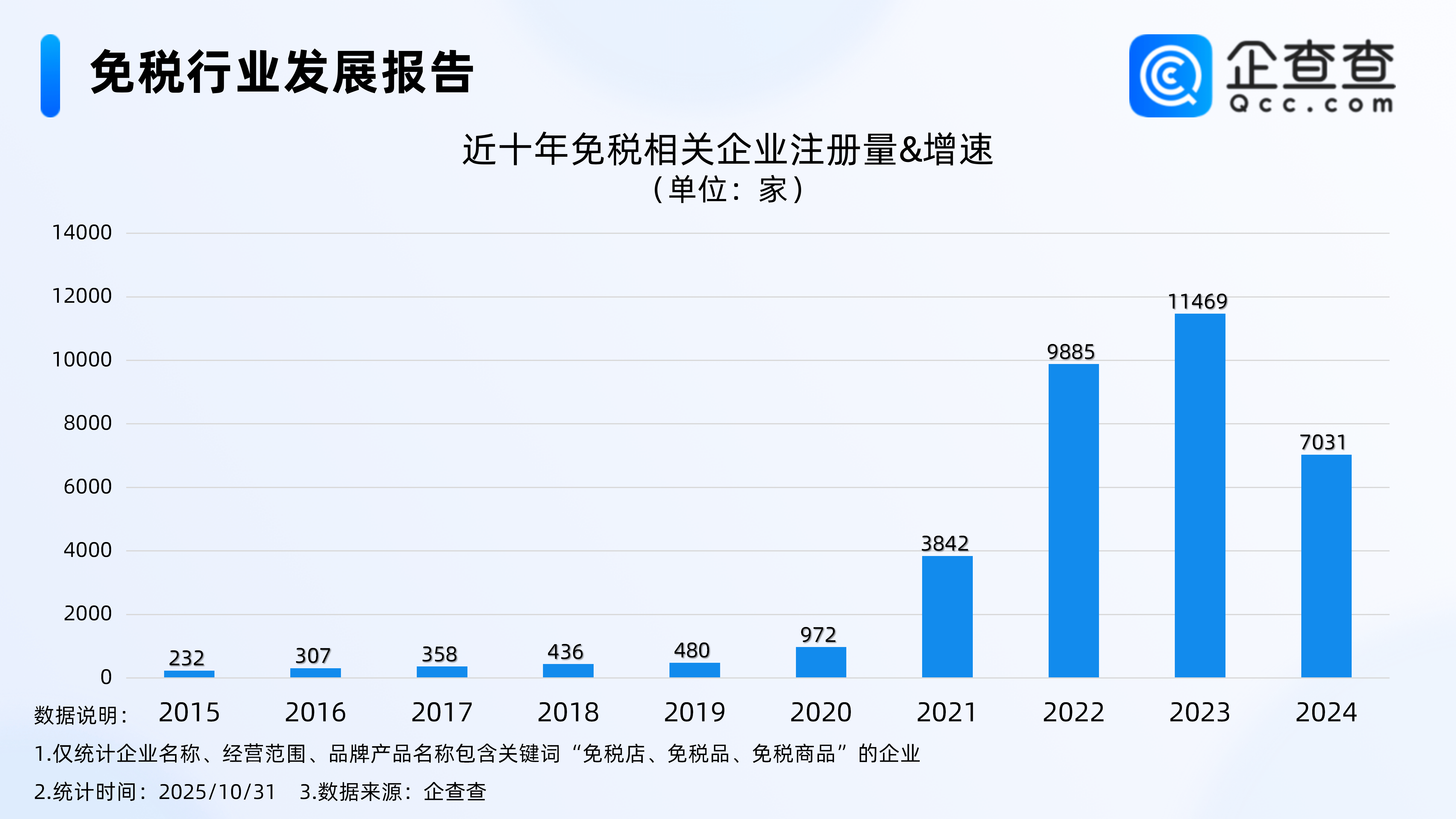
Core Insights - The Ministry of Finance, Ministry of Commerce, and four other departments issued a notice to improve the duty-free shop policy, effective from November 1, 2025, aimed at boosting consumption, encouraging overseas spending to return, attracting foreign visitors, and promoting the healthy development of duty-free retail business [1] Group 1: Current Status of Duty-Free Enterprises - As of the end of October, there are 32,400 existing duty-free related enterprises in China [4] - The registration of duty-free related enterprises has shown an overall growth trend over the past decade, with 11,500 registered in 2023, marking the first time the annual registration exceeded 10,000 [4] - In 2024, it is projected that 7,031 related enterprises will be registered, which is a decline compared to the previous year but still at a high level historically [4] Group 2: Age Distribution of Duty-Free Enterprises - A significant portion of duty-free related enterprises were established in the last three years, with 47.11% of them being 1-3 years old and 16.70% being less than 1 year old [6] - Additionally, 25.82% of these enterprises have been operating for 3-5 years [6] Group 3: Regional Distribution of Duty-Free Enterprises - The distribution of duty-free related enterprises is highly concentrated regionally, with over half (52.17%) located in South China [8] - East China follows with 25.55% of the enterprises [8]
放宽经营审批权限,更多“国货”进店销售
Qi Lu Wan Bao· 2025-10-31 16:22
Core Viewpoint - The Ministry of Finance and four other departments announced an upgrade to the duty-free shop policy, effective from November 1, 2025, aimed at enhancing the attractiveness of duty-free shopping for inbound and outbound travelers and promoting the healthy development of the duty-free retail business [1][2] Group 1: Policy Enhancements - The upgraded duty-free shop policy will allow more domestic products to be sold in duty-free stores, encouraging enterprises with duty-free product operating qualifications to increase the procurement of quality domestic goods [1] - The new policy will treat the procurement of domestic goods for sale in both port exit duty-free shops and city duty-free shops as exports, allowing for the refund (or exemption) of value-added tax and consumption tax [1] Group 2: Product Range Expansion - The range of products available in duty-free shops will be expanded to include more portable consumer goods such as mobile phones, micro-drones, sports goods, health foods, over-the-counter drugs, and pet food [2] - The policy aims to diversify the selection of duty-free products available to domestic and international consumers, making them more trendy and appealing [2] Group 3: Regulatory Changes - The approval process for establishing and operating duty-free shops will be streamlined, with the authority to approve these shops being transferred from central ministries to provincial departments at the port locations [2] - This change is expected to improve the shopping experience for travelers by making it easier to access a wider variety of quality domestic and international hot-selling products [2]
【财政资讯】11月1日起,免税店政策“升级”!
Sou Hu Cai Jing· 2025-10-31 08:10
Core Viewpoint - The Ministry of Finance, Ministry of Commerce, Ministry of Culture and Tourism, General Administration of Customs, and State Taxation Administration issued a notice to improve the duty-free shop policy, effective from November 1, 2025, aimed at boosting consumption, encouraging overseas spending to return, attracting foreign visitors, and promoting the healthy development of duty-free retail business [1][4]. Group 1: Policy Improvements - The notice outlines four main areas for enhancing the duty-free shop policy: optimizing domestic product tax refund management, expanding the range of products sold in duty-free shops, relaxing approval authority for duty-free shops, and improving convenience and regulatory measures for duty-free shopping [2][4]. Group 2: Domestic Product Management - The policy encourages duty-free shops to sell more domestic products, particularly those reflecting traditional Chinese culture, and allows for tax refunds on these products as if they were exports [4][5]. - Duty-free shops are required to promote domestic products, with at least 25% of their sales area dedicated to these items [5][6]. Group 3: Expansion of Product Categories - The range of products available in duty-free shops will be expanded to include popular items such as mobile phones, drones, sports goods, health foods, over-the-counter drugs, and pet food [6][7]. - The government will facilitate the introduction of popular international brands and products into Chinese duty-free shops [6][7]. Group 4: Approval Authority and Layout Optimization - The approval process for establishing and operating duty-free shops will be decentralized, allowing local governments to manage the layout and construction of these shops based on regional needs [7][8]. - The operating area for duty-free shops will be determined through negotiation, ensuring compliance with customs regulations [8]. Group 5: Convenience and Regulatory Measures - Duty-free shops will offer online reservation services, allowing travelers to pre-order products for pickup at designated locations [9][10]. - The policy aims to enhance the shopping experience for travelers while ensuring effective regulation of duty-free products [10][11].