
非处方药

Search documents
开源晨会-20260325
KAIYUAN SECURITIES· 2026-03-25 14:15
Group 1: Coal and Aluminum Industry - Shenhua Co., Ltd. (000933.SZ) - The aluminum segment has seen a rise in both volume and price, which offsets the decline in coal prices, highlighting the company's high dividend value [7][8] - In 2025, the company achieved a revenue of 41.241 billion yuan, a year-on-year increase of 7.47%, while the net profit attributable to shareholders was 4.005 billion yuan, a decrease of 7.00% [7] - The company plans to distribute a cash dividend of 8.00 yuan per 10 shares, totaling 1.787 billion yuan, which represents 51.0% of the net profit attributable to shareholders [9] Group 2: Food and Beverage Industry - New Dairy Industry (002946.SZ) - In 2025, the company reported a revenue of 11.23 billion yuan, a year-on-year increase of 5.3%, and a net profit of 731 million yuan, up 36.0% [11][12] - The company has adjusted its net profit forecasts for 2026 and 2027 to 865 million and 975 million yuan, respectively, with an EPS of 1.00 and 1.13 yuan [12][13] - The company plans to distribute a cash dividend of 3.8 yuan per 10 shares, resulting in a cumulative dividend rate of 53% for 2025 [12] Group 3: Pharmaceutical Industry - WuXi AppTec (603259.SH) - In 2025, the company achieved a revenue of 45.456 billion yuan, a year-on-year increase of 15.8%, and a net profit of 19.151 billion yuan, up 102.7% [16][19] - The adjusted net profit margin reached 32.9%, an increase of 5.9 percentage points year-on-year [16] - The company expects to achieve a revenue of 51.3 to 53.0 billion yuan in 2026, with a focus on accelerating its CRDMO core strategy [19] Group 4: Technology Industry - Mingyuan Cloud (00909.HK) - The company reported a revenue of 1.284 billion yuan in 2025, a year-on-year decline of 10.5%, but the adjusted net profit turned positive at 101 million yuan [22] - The company has adjusted its revenue forecast for 2026 and 2027 to 1.22 billion and 1.21 billion yuan, respectively [21][22] - The AI and overseas business segments are expected to provide significant growth opportunities despite current pressures in the real estate market [21] Group 5: Textile and Light Industry - Leshu (02698.HK) - The company achieved a revenue of 567 million USD in 2025, a year-on-year increase of 24.9%, and a net profit of approximately 121 million USD, up 27.4% [26][27] - The company has raised its net profit forecasts for 2026 and 2027 to 142 million and 165 million USD, respectively [27] - The company continues to optimize its product structure and expand its market presence, particularly in high-margin categories [28] Group 6: Pharmaceutical Industry - China Resources Jiangzhong (600750.SH) - The company reported a revenue of 4.220 billion yuan in 2025, a year-on-year decrease of 4.87%, while the net profit increased by 15.03% to 907 million yuan [31] - The gross margin improved to 65.37%, an increase of 1.85 percentage points year-on-year [31][32] - The company expects to achieve net profits of 1.008 billion, 1.131 billion, and 1.242 billion yuan for 2026, 2027, and 2028, respectively [31][33] Group 7: Banking Industry - CITIC Bank (601998.SH) - The bank achieved a revenue of 212.5 billion yuan in 2025, a year-on-year decline of 0.55%, with a net interest margin of 1.63% [36][37] - The bank's net profit for Q4 2025 was 17.227 billion yuan, a year-on-year increase of 2.85% [36] - The bank plans to increase its cash dividend to 21.2 billion yuan, representing 31.75% of the net profit attributable to ordinary shareholders, marking a historical high [38] Group 8: Retail and Service Industry - Laopu Gold (06181.HK) - The company reported a revenue of 27.303 billion yuan in 2025, a year-on-year increase of 221.0%, and a net profit of 4.868 billion yuan, up 230.5% [40][41] - The company expects to achieve a revenue of 16.5 to 17.5 billion yuan in Q1 2026, with a net profit of 3.6 to 3.8 billion yuan [40] - The company is focusing on product innovation and channel optimization to enhance brand positioning and market presence [41]



快手正式入局处方药销售,闯入医药电商深水区,需做好内容流量与医药监管平衡
Sou Hu Cai Jing· 2026-03-18 20:36
Core Insights - Kuaishou has officially opened a channel for prescription drug sales, targeting specific categories and recruiting qualified pharmaceutical merchants, marking a significant expansion into the pharmaceutical sector after OTC drugs, medical devices, and health products [2] - The entry into prescription drugs is selective, focusing on chronic disease areas such as cardiovascular, respiratory, and digestive systems, which have stable online demand and high user engagement [2] - The timing aligns with the upcoming implementation of the revised Drug Administration Law in February 2026, which will regulate third-party platforms for drug transactions, establishing clear responsibilities for platform operators [3] Industry Context - The Chinese pharmaceutical e-commerce landscape is dominated by giants like Alibaba Health and JD Health in B2C, and Meituan and Ele.me in O2O instant retail, creating a competitive environment for new entrants like Kuaishou [3] - The consumption logic of pharmaceuticals contrasts with the impulse-driven model of interest-based e-commerce, posing challenges for Kuaishou in gaining traction in this market [3] Governance Challenges - Kuaishou faces ongoing governance issues within its pharmaceutical vertical, with concerns over gray market activities disguised as health education, leading to the sale of counterfeit products [4] - The platform is actively working to combat these issues, having reported significant efforts in 2024 to tackle black and gray market activities, including collaboration with law enforcement to address related crimes [4] Market Opportunities - The fastest-growing category within prescription drugs is chronic disease management, which aligns well with Kuaishou's strengths in short video and live streaming for patient education [4] - Pharmaceutical companies are considering establishing official flagship stores on Kuaishou, not just for sales but to enhance brand recognition and engage with targeted users through content [5] - Kuaishou's entry into prescription drugs may redefine the dynamics of user engagement, shifting from a traditional model of "goods finding people" to "people finding goods" as users may regularly purchase medications based on content engagement [5]



诺华以144.6亿卢比售诺华印度70.68%股份 收购财团同步发起至多26%股份公开要约
Jin Rong Jie· 2026-02-20 20:37
Group 1 - Novartis has agreed to sell its 70.68% stake in Novartis India Ltd. for ₹14.46 billion (approximately $159 million) to a consortium of investors including WaveRise Investments, ChrysCapital Fund X, and Two Infinity Partners [1] - The transaction marks the conclusion of a strategic review initiated by Novartis in February 2024 regarding its listed subsidiary [1] - Novartis India Ltd. is primarily responsible for the sales of prescription drugs, generics, and over-the-counter products in the Indian market [1] Group 2 - Following the transaction, Novartis India will advance its business development under new majority ownership [1] - The acquiring consortium has launched a public offer to acquire up to 26% of Novartis India shares at ₹860.84 per share, valuing the offer at approximately ₹5.52 billion [1] - Novartis has clarified that the strategic review does not involve its wholly-owned subsidiary, Novartis Healthcare Pvt. Ltd., which oversees commercial operations in the region [1][2] Group 3 - Prior to the strategic review, Novartis India had signed multiple distribution agreements with local partners, including a collaboration with Dr. Reddy's Laboratories Ltd. to market products such as Voveran and calcium series products in India [1] - The divestiture adjusts the ownership structure of Novartis India while allowing Novartis to retain its infrastructure and research layout in the Indian market [2]

珠免集团:主业聚焦、品类扩容、政策红利可期-20260214
GUOTAI HAITONG SECURITIES· 2026-02-14 13:25
Investment Rating - The report gives an "Accumulate" rating for the company with a target price of 10.75 CNY [6][22]. Core Insights - The company focuses on its duty-free core business, accelerates category expansion, and benefits from policy dividends, leading to expected high growth in performance [2]. - The company is positioned to benefit from new duty-free store openings at Hengqin Port and Sanya Island, contributing to revenue growth [4]. - The financial forecast predicts revenues of 39.70 billion CNY, 39.74 billion CNY, and 44.80 billion CNY for 2025-2027, with net profits of -1.056 billion CNY, 468 million CNY, and 628 million CNY respectively [17][19]. Summary by Sections Investment Proposal - The report suggests an "Accumulate" rating based on strong growth potential and category expansion [6][22]. - The target price is set at 10.75 CNY, reflecting a 43x PE ratio for 2026 [22]. Company Overview - The company is deepening its layout in the Greater Bay Area and aims to become a national leader in the duty-free sector [24]. - It operates 18 duty-free businesses across various ports, enhancing its national penetration strategy [24]. Financial Forecast - The company expects significant revenue growth in its duty-free segment, driven by increased passenger flow and new product categories [19]. - The financial summary indicates a projected total revenue of 6,997 million CNY for 2023, with a significant increase in gross profit margins expected in the coming years [5][21]. Duty-Free Business Growth - The company has established a strong presence in the duty-free market, with a focus on expanding its product offerings, including electronics and gold [4][34]. - The report highlights the strategic importance of the Hengqin and Gongbei ports, which are expected to drive future growth [4][28]. Policy Benefits - Recent policy changes are expected to enhance the company's competitive position in the duty-free market, particularly with the opening of new stores [29]. - The company is well-positioned to leverage its experience in various port operations to expand its market share [29].

珠免集团(600185):首次覆盖报告:主业聚焦、品类扩容、政策红利可期
GUOTAI HAITONG SECURITIES· 2026-02-14 11:35
Investment Rating - The report assigns a rating of "Buy" to the company with a target price of 10.75 CNY [6][22]. Core Insights - The company focuses on its duty-free core business, accelerates category expansion, and benefits from policy dividends, leading to expected high growth in performance [2]. - The company is positioned to benefit from the establishment of new duty-free stores at Hengqin Port and Sanya Island, contributing to revenue growth [4]. - The company has successfully integrated 51% equity of Zhuhai Duty-Free, establishing a strategic direction centered on duty-free operations [13]. Financial Summary - Total revenue is projected to be 6,997 million CNY in 2023, with a significant increase of 72.9% from the previous year, followed by a decline in 2024 and 2025 [5][21]. - The net profit attributable to the parent company is expected to be -390 million CNY in 2023, with a forecasted recovery to 468 million CNY by 2026 [5][21]. - The company anticipates a net profit margin improvement, with projections of 11.8% in 2026 and 14.0% in 2027 [21]. Revenue Forecast - Revenue is expected to reach 39.70 billion CNY in 2025, 39.74 billion CNY in 2026, and 44.80 billion CNY in 2027 [17][19]. - The duty-free business is projected to grow by 15% in 2025, 20% in 2026, and 15% in 2027, driven by increased passenger flow and new product categories [19]. Company Overview - The company is a key player in the duty-free market, with a network of 18 duty-free operations across various ports, primarily in the Guangdong-Hong Kong-Macao Greater Bay Area [24][28]. - The company has established a strong competitive position due to its scarce duty-free licenses, which are difficult for new entrants to replicate [28]. - The company has a history of expansion and innovation, having started its duty-free operations in 1980 and continuously adapting to market changes [34][39].
国泰海通:新设口岸进境免税店 扩大免税市场规模
Zhi Tong Cai Jing· 2026-01-23 03:29
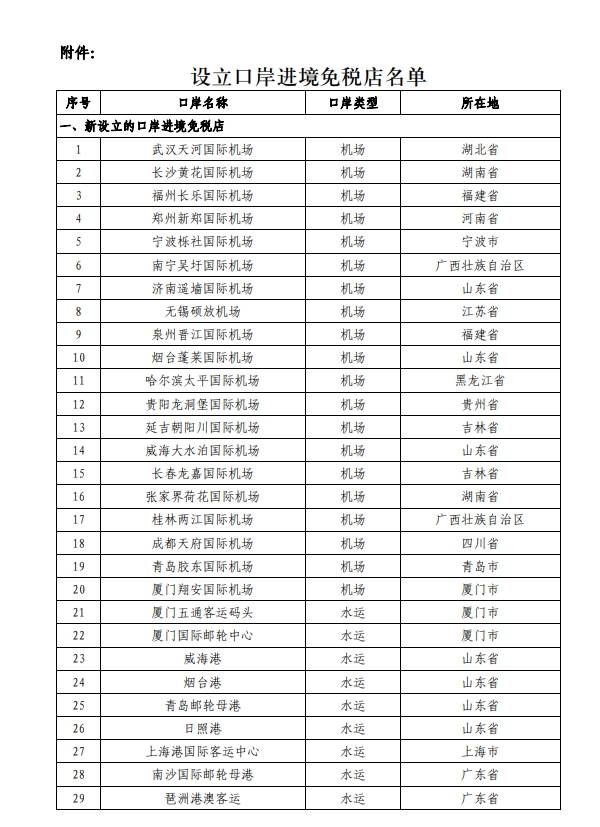
Core Viewpoint - The recent issuance of the "Notice on Port Duty-Free Shops" aims to establish and adjust a number of port duty-free shops, which is expected to enhance the domestic duty-free market scale through collaboration with city duty-free shops [1][2]. Group 1: Policy Changes - The Ministry of Finance, Ministry of Commerce, Ministry of Culture and Tourism, General Administration of Customs, and State Taxation Administration jointly issued a notice to establish and adjust a number of port duty-free shops [2]. - Eligible companies for bidding include those with duty-free operating qualifications approved by the State Council, such as China Duty Free Group, Shenzhen State-Owned Duty-Free Goods Group, and Wangfujing Group [2]. Group 2: Expansion of Duty-Free Shops - A significant increase in the number of port duty-free shops is planned, with new shops set to open at 41 ports, including Wuhan Tianhe International Airport [3]. - The Hengqin port duty-free shop will allow residents from Macau to purchase duty-free goods up to 15,000 yuan [3]. - The establishment of new duty-free shops will continue at Haikou Meilan International Airport and Shekou Cruise Center, while some locations like Qingdao Liuting International Airport will cease operations [3]. Group 3: Market Collaboration - The collaboration between port duty-free shops and city duty-free shops is expected to expand the outbound and inbound duty-free market scale [4]. - Starting from November 1, 2025, the range of products available at port and city duty-free shops will be expanded to include items like mobile phones, drones, sports goods, health foods, and pet foods [4]. - Travelers will be allowed to reserve items at city duty-free shops and pick them up at port duty-free shops, which will be treated as purchases under the port duty-free shop policies [4].



多部门:在武汉天河国际机场等41个口岸各新设1家口岸进境免税店
Sou Hu Cai Jing· 2026-01-21 09:24
Core Viewpoint - The Chinese government has announced a comprehensive plan to enhance the duty-free shop policy to stimulate consumption, attract foreign visitors, and promote the healthy development of duty-free retail business. Group 1: Policy Optimization - The policy encourages enterprises with duty-free qualifications to increase the procurement of quality domestic products for sale in duty-free shops, treating these sales as exports eligible for VAT and consumption tax refunds [1][2] - The management and operational procedures for tax refunds on domestic products sold in duty-free shops will be optimized to facilitate sales [2] - Duty-free shops are required to promote domestic products, including traditional cultural items, with at least 25% of their sales area dedicated to these products [2] Group 2: Expansion of Product Categories - The government plans to expand the categories of products available in duty-free shops, including mobile phones, drones, sports goods, health foods, over-the-counter drugs, and pet foods [3] - Authorities will optimize the regulatory approach for imported duty-free goods to accelerate the availability of popular overseas products in Chinese duty-free shops [3] Group 3: Approval Process and Local Adaptation - The approval authority for establishing duty-free shops will be decentralized, allowing local governments to adapt the layout and integration of duty-free shops based on regional conditions [4][5] - Local governments are tasked with coordinating the layout and construction of duty-free shops, ensuring compliance with customs regulations [5][6] Group 4: Enhancing Shopping Experience - Duty-free shops will offer online reservation services, allowing travelers to pre-order products based on their travel schedules [7] - Travelers can pick up pre-ordered items at designated duty-free shops upon arrival, streamlining the shopping process [7] - Continuous improvements in the shopping process and regulatory oversight will be implemented to enhance consumer experience and protect consumer rights [7] Group 5: Implementation and Coordination - The Ministry of Finance will coordinate with relevant departments to ensure the swift implementation of these policies [8] - Local governments are responsible for overseeing the management of duty-free shops and ensuring the effectiveness of the policy in promoting consumption [8]
江中药业股价跌1.02%,金元顺安基金旗下1只基金重仓,持有7.91万股浮亏损失1.9万元
Xin Lang Cai Jing· 2025-12-31 06:10
Group 1 - Jiangzhong Pharmaceutical's stock price fell by 1.02% to 23.24 CNY per share, with a total market value of 14.756 billion CNY, and has experienced a cumulative decline of 5.05% over the past six days [1] - The company, established on September 18, 1996, specializes in the production, research, and sales of pharmaceuticals and health products, with revenue composition: over-the-counter drugs 72.40%, prescription drugs 16.81%, health consumer products and others 10.67%, and other (supplementary) 0.11% [1] Group 2 - Jin Yuan Shun An Fund holds 79,100 shares of Jiangzhong Pharmaceutical in its Jin Yuan Shun An Baoshi Dynamic Mixed Fund, representing 3.89% of the fund's net value, ranking as the sixth largest holding [2] - The fund has incurred a floating loss of approximately 19,000 CNY today and a total floating loss of 98,900 CNY during the six-day decline [2] - The Jin Yuan Shun An Baoshi Dynamic Mixed Fund was established on August 15, 2007, with a current scale of 44.6294 million CNY, and has achieved a year-to-date return of 10.98% [2]

“小进博”明日启幕 6万平方米展馆呈上环球消费新场景
Sou Hu Cai Jing· 2025-12-18 15:32
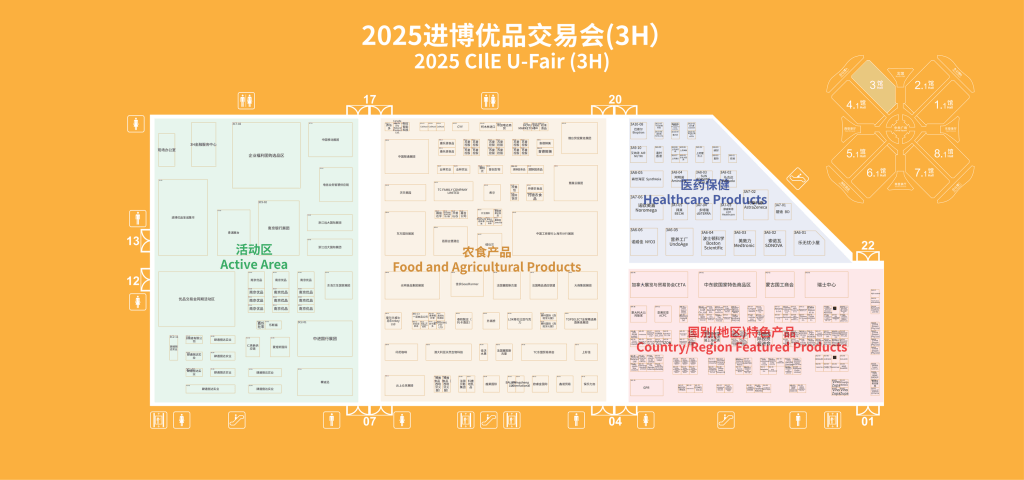
Core Viewpoint - The 2025 Import Expo Quality Goods Trade Fair ("Small Import Expo") will debut from December 19 to 21 at the National Exhibition and Convention Center in Shanghai, serving as a consumer-oriented extension of the China International Import Expo, aiming to enhance import expansion and consumer upgrade [1] Group 1: Event Overview - The exhibition area for this year's "Small Import Expo" is 60,000 square meters, expecting around 3,000 buyers and over 80,000 professional visitors and individual consumers [1] - Unlike previous expos that focused on B2B trade, this event targets the consumer end with a "retail-first, ordering-second" model, allowing for immediate purchases and online ordering for home delivery [1] Group 2: Exhibition Layout - The exhibition is divided into two main areas: Hall 3H focuses on agricultural food products and healthcare, while Hall 4.1H centers on consumer goods and automobiles [5] - Hall 3H features a medical science popularization area and showcases products from countries like Canada, Australia, and Italy, while Hall 4.1H includes a 5,000 square meter area for automobiles and a section for traditional crafts and quality domestic products [5] Group 3: Innovation and Experience - A special "New Product Launch Area" will present high-quality goods debuting at the expo, highlighting trends in global industry innovation and lifestyle aesthetics [6] - The event will include interactive activities such as tasting stations for global cuisine, beauty workshops, and cultural performances, enhancing visitor engagement and showcasing cutting-edge industry elements like low-altitude economy [6]
江中药业涨2.05%,成交额7578.48万元,主力资金净流出330.00万元
Xin Lang Cai Jing· 2025-12-18 02:49
Group 1 - The core viewpoint of the news is that Jiangzhong Pharmaceutical has shown a positive stock performance with a year-to-date increase of 15.86% and a recent uptick of 2.05% in its stock price [1][2] - As of December 18, the stock price reached 24.91 yuan per share, with a market capitalization of 15.817 billion yuan and a trading volume of 75.7848 million yuan [1] - The company's main business revenue composition includes over-the-counter drugs at 72.40%, prescription drugs at 16.81%, and health consumer products at 10.67% [2] Group 2 - For the period from January to September 2025, Jiangzhong Pharmaceutical reported a revenue of 2.933 billion yuan, a year-on-year decrease of 1.30%, while the net profit attributable to shareholders increased by 7.74% to 683 million yuan [2] - The company has distributed a total of 4.843 billion yuan in dividends since its A-share listing, with 2.304 billion yuan distributed in the last three years [3] - As of September 30, 2025, the number of shareholders increased by 7.29% to 41,900, while the average circulating shares per person decreased by 6.79% to 14,986 shares [2]