
养老托育服务

Search documents
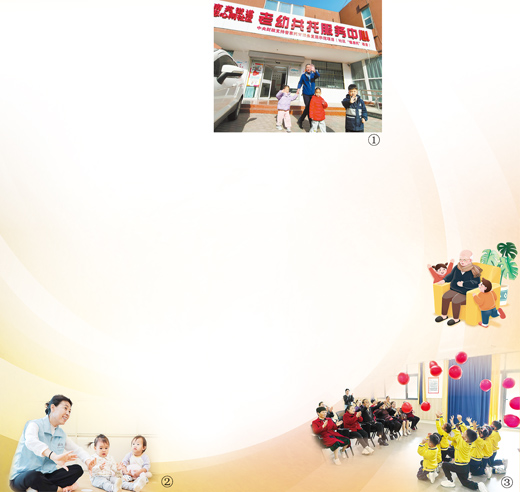
老幼共托,让照护两难变两全(人民眼·“一老一小”)
Ren Min Ri Bao· 2025-12-11 22:11
Core Viewpoint - The "one old, one young" service model is being implemented in various regions to address the dual challenges of elder care and child care, aiming to create a comprehensive service system that benefits families and society as a whole [2][3][4]. Group 1: Service Model Implementation - Regions such as Chongqing, Shenzhen, and Jining are piloting the "one old, one young" model, which aims to provide a one-stop solution for elder and child care [3]. - The model addresses the issue of declining enrollment in childcare facilities while simultaneously meeting the increasing demand for elder care services [2][4]. Group 2: Cost Reduction and Economic Impact - The "one old, one young" service model has been shown to reduce care costs for families. For example, a family in Jining reported a monthly saving of 900 yuan by utilizing a combined service center [7]. - In Chongqing, the implementation of this model has led to a 25% increase in employee retention rates at local businesses, demonstrating its positive impact on workforce stability [6]. Group 3: Operational Challenges and Solutions - The model faces financial pressures due to high operational costs and limited revenue from service fees, as many facilities are required to provide affordable services [17]. - To mitigate these challenges, operators are exploring additional revenue streams, such as after-school care and home services for the elderly [17]. Group 4: Space Utilization and Design - Effective space design is crucial for the success of the "one old, one young" model, ensuring that both elder and child care services can operate without interference [10][11]. - Facilities are being adapted to create distinct areas for elder and child activities while allowing for shared spaces that promote intergenerational interaction [12][13]. Group 5: Talent Development and Training - There is a shortage of professionals who are skilled in both elder care and child education, which poses a challenge for service quality [15]. - Initiatives are being taken to train existing staff in elder care skills, with support from local government and community organizations [15][16]. Group 6: Policy and Future Directions - The model's sustainability relies on supportive government policies and funding to alleviate financial burdens on service providers [17][18]. - There is a call for improved coordination among various governmental departments to enhance the planning and management of elder and child care services [18].

技能人才点亮未来 为经济发展注入蓬勃力量 | 观察↓
Yang Shi Wang· 2025-09-24 02:57
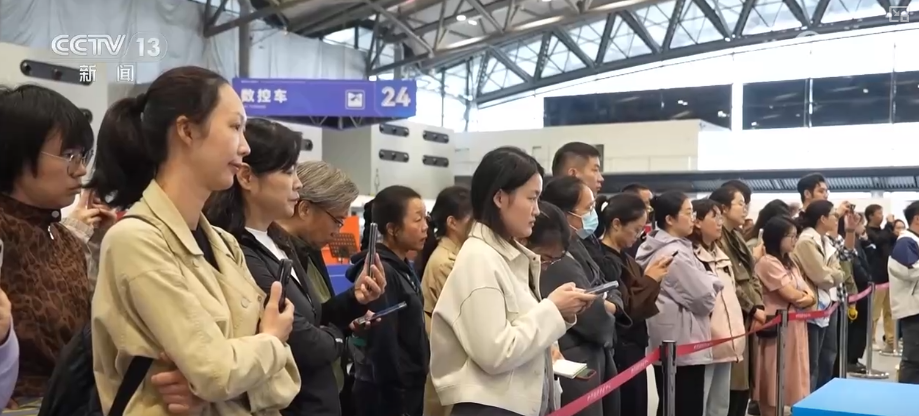
Core Viewpoint - The demand for professional and refined elderly care and childcare services is increasing, as highlighted by the establishment of relevant competition categories in the third National Skills Competition [1] Group 1: Competition Overview - The 2025 competition features a popular infant care project, with participants engaging in realistic scenarios rather than just basic care tasks [3] - The competition includes innovative elements such as interactive crying simulation babies, which assess participants' responsive caregiving abilities [3] - The competition attracted over 3,400 participants, including frontline workers and educators, reflecting a growing trend towards a highly skilled and professional workforce [6] Group 2: Evaluation Criteria - The evaluation criteria for the infant care project consist of nine dimensions, emphasizing not only basic health knowledge and service skills but also organizational, management, communication, and interpersonal skills [5] - The shift in assessment standards indicates a transition from "single care" to a comprehensive service model that integrates medical, nursing, and educational elements [5] Group 3: Impact on Participants - Participants like Jiang Yuhua, who transitioned from a factory worker to a gold medalist in the World Skills Competition, exemplify the transformative potential of vocational education and skills competitions [10][11] - Experienced professionals, such as Guo Junna, highlight the personal growth and skill enhancement gained through practical training and competition participation [13] - The competition serves as a platform for participants to contribute to the development of high-quality skilled talent, fostering economic and social progress [6][15]
让养老托育更有温度更接地气 苏州市人大常委会开展专题询问
Su Zhou Ri Bao· 2025-08-27 22:50
Core Viewpoint - The city government is committed to enhancing the elderly care and childcare service system, addressing structural challenges while leveraging successful experiences to improve service quality and accessibility [2]. Group 1: Government Actions and Plans - The city government has recognized the importance of elderly care and childcare services, implementing effective measures and creating leading experiences at both provincial and national levels [2]. - The government plans to use the recent inquiry as an opportunity to ensure the implementation of annual tasks and to carefully prepare the "14th Five-Year" plan to elevate the city's elderly care and childcare services [1]. Group 2: Challenges and Structural Issues - Despite progress, the elderly care and childcare sectors face significant structural contradictions and new challenges that need to be addressed [2]. - The government aims to enhance the capacity of elderly care and childcare services by improving the system and ensuring it is inclusive and sustainable across urban and rural areas [2]. Group 3: Service Improvement Strategies - The government intends to expand the coverage of the elderly care service network at the county, township, and village levels, while also enhancing the quality and capacity of public childcare services [2]. - There is a focus on integrating medical care with elderly care and education, ensuring that services are accessible and provide warmth to both the elderly and children [2]. - The government emphasizes the need for targeted policies based on community needs, aiming to provide more inclusive and accessible services [2].