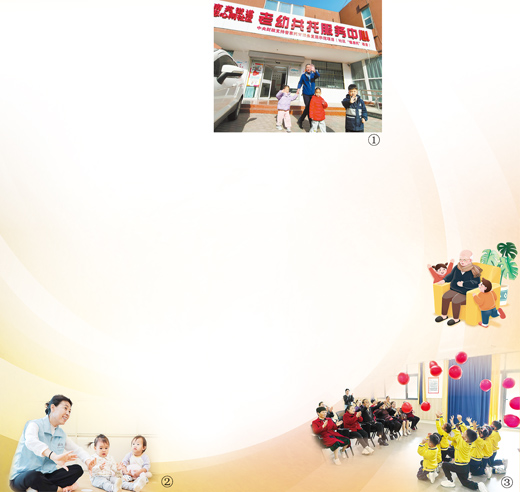
老幼共托服务

Search documents
为“一老一小”编织幸福
Xin Lang Cai Jing· 2026-02-03 20:49
Core Viewpoint - The article discusses the development of a comprehensive "Elderly and Child" service model in Shenzhen, aimed at providing integrated care for both elderly individuals and young children, addressing the needs of families and enhancing community support [1][2]. Group 1: Service Model Overview - Shenzhen has established a city-level state-owned platform for elderly care and childcare, pioneering the "Elderly and Child" integrated service model since 2019 [2][3]. - The Dapeng New District "Elderly and Child" demonstration project features two care buildings and one childcare building, offering 52 elderly care beds and 55 childcare slots [2][3]. - The service model allows for shared outdoor spaces and activities, fostering interaction between the elderly and children, enhancing their well-being [2][4]. Group 2: Benefits and Community Impact - The integrated service model alleviates the caregiving pressure on dual-income families, providing both relaxation for the elderly and structured education for children [3][5]. - Activities such as joint cooking classes and health lectures promote knowledge and emotional exchange between generations, enriching their experiences [3][5]. - The "Elderly and Child" model is designed to create a sustainable community environment that meets diverse needs, integrating services like childcare, elderly care, and community activities [5][6]. Group 3: Operational Mechanisms and Challenges - The operational model emphasizes the need for a sustainable business mechanism, as both elderly care and childcare are high-investment, low-return sectors [7]. - The project has seen significant demand, with the "Happiness Neighborhood" project reporting a maximum daily foot traffic of 1,300 people and a shortage of childcare slots [7]. - Challenges include the need for cross-departmental coordination and the development of specialized talent to support the integrated service model [7][8].

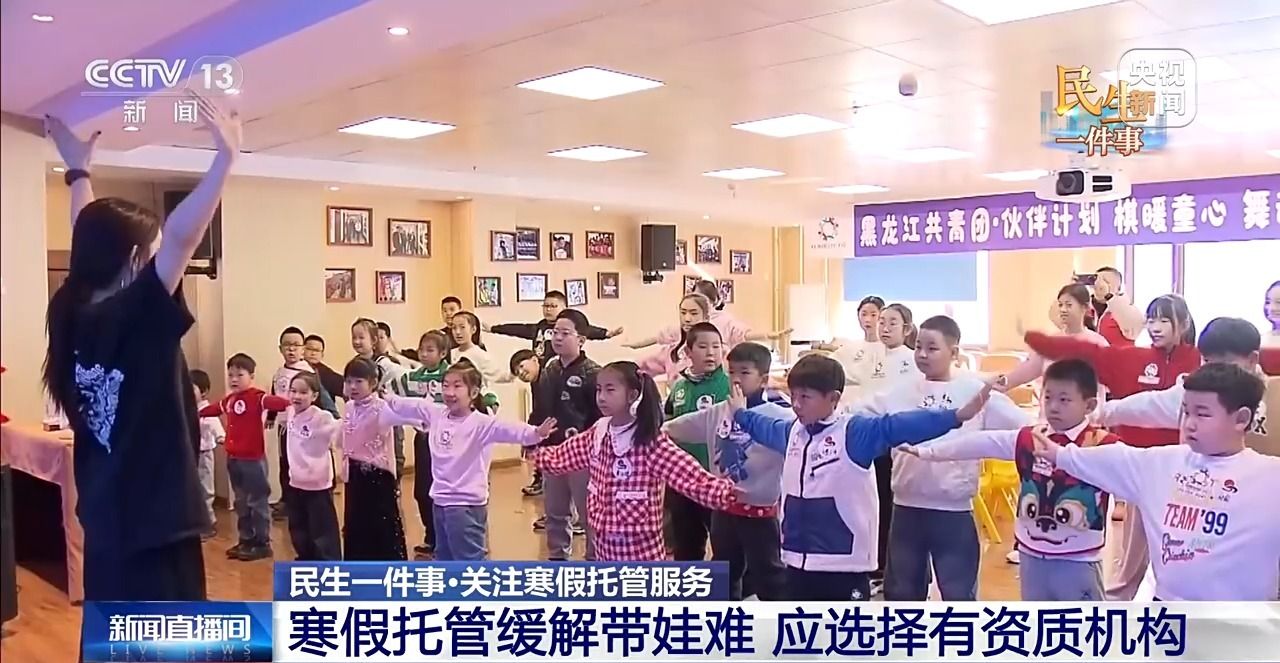
视频丨寒假带娃不再愁!多地推托管服务 老幼共托省心又省钱
Xin Lang Cai Jing· 2026-02-02 12:51
Core Viewpoint - The article discusses the implementation of winter vacation care services across various regions in China to address the challenges faced by parents during the school break, highlighting the increase in available programs and the importance of choosing qualified institutions for child care [1][6]. Group 1: Winter Vacation Care Services - Multiple regions and departments have initiated winter vacation care services, with Shanghai planning to open 297 class locations, an increase of 24 from the previous year, covering all 16 districts and the Lingang New Area [2]. - In Heilongjiang, 77 care stations have been set up across 13 cities, offering public welfare activities such as love care and academic support [4]. - Hubei plans to establish 2,070 class locations across 17 cities, an increase of 412 from previous years [4]. Group 2: Safety and Quality of Care - Parents are advised to carefully select care institutions, verifying their qualifications and licenses to avoid unqualified private services, ensuring children's safety during the vacation [6]. Group 3: Community-Based Elderly and Child Care - In Jining, Shandong, a community service center has been transformed into a 2,000-square-meter facility for elderly and child care, addressing family needs through a collaborative effort [7]. - The center offers various care options, including full-day, half-day, temporary, and hourly care, allowing parents to choose based on their schedules [9]. - The center operates on a model that ensures independent spaces for elderly and children, promoting harmonious coexistence [9]. Group 4: Cost-Effective Services - The center has reduced rental costs by utilizing free space provided by the street office, allowing for affordable care services, with temporary care free for the first hour and only 20 yuan per hour thereafter [11]. - Full-day care is priced at 1,170 yuan per month, nearly 600 yuan below the guideline price [11]. Group 5: Future Developments and Community Impact - The center has seen positive community feedback, with over 8,000 elderly individuals benefiting from services and 48 children receiving care, enhancing its reputation [14]. - Plans for future expansion include developing elderly rehabilitation courses and early childhood education services to reach a broader audience [20].
是托育园,也是养老院!“老幼共托”模式在兴起
Xin Lang Cai Jing· 2026-01-19 06:50
Core Viewpoint - The "Elder-Child Care" model in Shenzhen aims to integrate elderly care and childcare services in a single space, addressing the needs of families and enhancing community well-being [1][10]. Group 1: Service Model - Shenzhen has established a city-level state-owned platform for elderly and childcare services, pioneering the "Elder-Child Care" model since 2019 [2][8]. - The Dapeng New District demonstration project features two care buildings and one childcare building, providing 52 elderly care beds and 55 childcare slots [2]. - The model promotes interaction between the elderly and children, allowing for shared outdoor spaces and activities, enhancing both educational and emotional support [3][4]. Group 2: Operational Mechanism - The "Elder-Child Care" model is not merely a merger of childcare and elderly care facilities but involves distinct operations with shared resources [5][6]. - The project focuses on creating integrated living environments that cater to the needs of both demographics, with shared facilities and services [6][7]. - The initiative is designed to alleviate the caregiving burden on families, particularly dual-income households, while providing a nurturing environment for both the elderly and children [3][6]. Group 3: Market Demand and Sustainability - The model addresses the challenges of low birth rates and an aging population, responding to market demands for integrated care solutions [10]. - The project has seen significant community engagement, with high foot traffic and demand for childcare slots, indicating a successful market fit [7][8]. - The sustainability of the "Elder-Child Care" model is under evaluation, with ongoing efforts to optimize operational mechanisms and integrate commercial elements to support public service funding [7][8]. Group 4: Future Development - By the end of 2025, Shenzhen plans to establish 229 projects across the city, providing approximately 2,000 elderly care beds and 5,000 childcare slots [8]. - The government is enhancing financial support, housing guarantees, and talent development to promote the growth of elderly and childcare services [8]. - The initiative aims to create a benchmark city for public welfare, ensuring that both the elderly and children receive quality care and education [8][10].
老幼共托,让照护两难变两全(人民眼·“一老一小”)
Ren Min Ri Bao· 2025-12-11 22:11
Core Viewpoint - The "one old, one young" service model is being implemented in various regions to address the dual challenges of elder care and child care, aiming to create a comprehensive service system that benefits families and society as a whole [2][3][4]. Group 1: Service Model Implementation - Regions such as Chongqing, Shenzhen, and Jining are piloting the "one old, one young" model, which aims to provide a one-stop solution for elder and child care [3]. - The model addresses the issue of declining enrollment in childcare facilities while simultaneously meeting the increasing demand for elder care services [2][4]. Group 2: Cost Reduction and Economic Impact - The "one old, one young" service model has been shown to reduce care costs for families. For example, a family in Jining reported a monthly saving of 900 yuan by utilizing a combined service center [7]. - In Chongqing, the implementation of this model has led to a 25% increase in employee retention rates at local businesses, demonstrating its positive impact on workforce stability [6]. Group 3: Operational Challenges and Solutions - The model faces financial pressures due to high operational costs and limited revenue from service fees, as many facilities are required to provide affordable services [17]. - To mitigate these challenges, operators are exploring additional revenue streams, such as after-school care and home services for the elderly [17]. Group 4: Space Utilization and Design - Effective space design is crucial for the success of the "one old, one young" model, ensuring that both elder and child care services can operate without interference [10][11]. - Facilities are being adapted to create distinct areas for elder and child activities while allowing for shared spaces that promote intergenerational interaction [12][13]. Group 5: Talent Development and Training - There is a shortage of professionals who are skilled in both elder care and child education, which poses a challenge for service quality [15]. - Initiatives are being taken to train existing staff in elder care skills, with support from local government and community organizations [15][16]. Group 6: Policy and Future Directions - The model's sustainability relies on supportive government policies and funding to alleviate financial burdens on service providers [17][18]. - There is a call for improved coordination among various governmental departments to enhance the planning and management of elder and child care services [18].