农业研究

Search documents
沉睡2200年的“地下粮仓”重见天日
Qi Lu Wan Bao· 2025-12-13 10:19
Core Insights - The discovery of well-preserved rice remains in a 2200-year-old tomb in Hubei's Yunmeng Zhengjiahu site represents the earliest and largest instance of grain burial in China, providing insights into ancient agricultural practices and beliefs [2][3] Archaeological Findings - Nearly 100,000 grains of rice from the Warring States period were uncovered, indicating a long-standing tradition of rice cultivation in the Jianghan Plain, dating back to the late Warring States period [3] - The tomb contained not only rice but also remains of various plants such as chestnuts, melons, and jujubes, reflecting the dietary preferences and biodiversity of the region during that era [3] Preservation Techniques - The rice grains were preserved in a waterlogged environment, which acted as a natural preservative, preventing oxidation and damage [5] - Scientific analysis, including carbon isotope studies, is being conducted to trace the irrigation sources and evolutionary paths of the rice varieties found [5] Cultural Significance - The intentional processing of some rice grains before burial suggests a symbolic role in ancient rituals, possibly representing a connection between the living and the afterlife [5] - The findings contribute to understanding the agricultural history and cultural practices of the Warring States period, highlighting the importance of grains in funerary customs [2][5] Broader Implications - The discovery of ancient seeds, like those from Yunmeng, emphasizes the resilience of life and the potential for ancient genetic traits to inform modern agricultural practices [6][8] - The preservation of ancient seeds serves as a vital resource for studying the origins of agriculture and the exchange of civilizations, underscoring the need for biodiversity conservation in agriculture [9]

欧盟与IITA启动Soils4Liberia项目,共建利比里亚土壤数字平台
Shang Wu Bu Wang Zhan· 2025-10-28 05:05
Core Insights - The Soils4Liberia project has been officially launched in collaboration with the EU, IITA, and the Liberian government to address the long-standing issue of soil data deficiency in Liberia [1] Group 1: Project Overview - The project aims to create an open digital platform for Liberia's land and soil resources knowledge [1] - It is designed to provide precise soil information to decision-makers, researchers, and farmers [1] Group 2: Objectives and Impact - The initiative supports scientific decision-making to enhance agricultural productivity, natural resource management, and climate resilience [1] - It aims to reverse land degradation trends caused by deforestation and unsustainable land use practices [1] - The project is expected to promote sustainable agricultural transformation and ensure national food security in Liberia [1]
日媒:研究发现,昆虫能“听见”植物“说话”
Huan Qiu Shi Bao· 2025-08-12 22:43
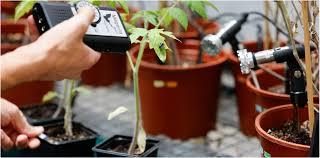
Core Insights - Research from Tel Aviv University indicates that plants and insects communicate through sound, opening new avenues in the study of acoustic communication in nature [1][2] Group 1: Research Findings - The study published in the journal eLife shows that female moths can detect ultrasonic distress signals emitted by dehydrated tomato plants, using this information to decide where to lay their eggs [2] - The research builds on previous findings that plants emit ultrasonic sounds when under stress, which are beyond human hearing but detectable by many insects and some mammals like bats [2] - Experiments revealed that female moths preferred silent tomato plants over those emitting distress sounds, indicating that they use these auditory cues to identify optimal egg-laying sites [2] Group 2: Implications - This discovery could have significant implications for agriculture and pest control, suggesting potential for managing crop health and insect behavior through sound [2]