出海零售

Search documents
2025年中国出海零售品牌调研报告丨36氪研究院
36氪· 2026-02-05 09:41
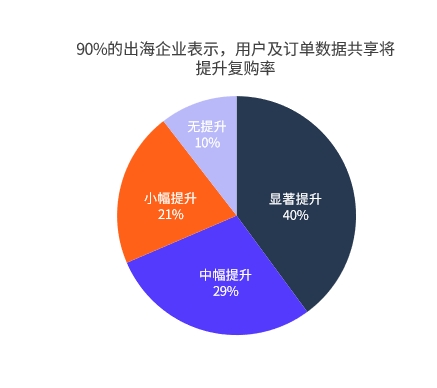
Core Viewpoint - The article discusses the strategic transformation of Chinese retail brands going global, driven by "integrated commerce" and "intelligent commerce" in response to globalization and digitalization trends [5][23]. Market Trends - Consumer demand is evolving towards a more personalized, efficient, and diverse shopping experience, necessitating a seamless shopping experience centered around consumers [7][24]. - Integrated commerce, which combines multiple online and offline channels into a unified service loop, is becoming a core competitive advantage for retail brands [7][24]. - Despite many companies having established multi-channel layouts, data silos hinder effective channel collaboration and operational closure, posing a significant barrier to the implementation of integrated commerce [7][24]. Technological Changes - The rapid development of generative AI is catalyzing the widespread adoption of "intelligent commerce," which reshapes consumer processes and expands sales scenarios while significantly enhancing operational efficiency [9][25]. - Intelligent commerce is deeply integrated with integrated commerce, allowing brands to deliver highly efficient and personalized seamless experiences, creating a "unified × intelligent" effect that opens new growth opportunities [9][25]. - Currently, many companies are still in the exploratory phase of applying AI, with untapped potential in marketing recommendations, supply chain optimization, and payment risk control [9][25]. Core Foundation - Achieving integrated and intelligent commerce relies on the comprehensive integration of data across all dimensions, with payment data serving as a crucial link between transactions, users, and scenarios [12][27]. - Establishing a "unified and intelligent payment" system allows brands to upgrade payment processes from mere transaction endpoints to data hubs and strategic nodes, laying the groundwork for business integration and intelligent decision-making [12][27]. Payment Challenges and Solutions - Companies face three main challenges in payment: optimizing payment experience, managing security and compliance, and reducing operational costs while increasing efficiency [16][28]. - Leveraging professional third-party payment services is seen as the most cost-effective solution for growing companies, enhancing payment success rates and customer satisfaction through integrated global payment methods and AI-driven personalized recommendations [16][28]. - Intelligent risk control and anti-fraud systems based on vast transaction data can help brands effectively mitigate data breaches and cross-border compliance risks [16][28]. Key Findings from Research - 32% of companies identified data security and compliance risks as their top challenge in cross-border payments, followed by inconsistent payment experiences across channels (21%) and the need for multiple currency support (18%) [18][60]. - 90% of companies believe that data sharing between user and order data across channels will enhance repurchase rates, with 40% expecting significant improvements [43][44]. - 67% of companies believe that a consistent payment experience is key to improving sales conversion rates, while 87% think that one-click payment features will significantly boost repurchase rates [63][64]. Future Directions - To adapt to changing consumer behaviors in the global market, retail brands must create seamless shopping experiences and achieve integrated commerce [83]. - Companies should focus on consumer-centric channel restructuring, breaking down payment and order data silos to maximize the value of intelligent commerce [83]. - Utilizing professional third-party payment services can optimize payment experiences, reduce compliance risks, and drive overseas business growth [84].


2025年中国出海零售行业品牌调研:从“卖全球”到“智全球”:一体化与智能体双擎驱动品牌出海新纪元
36氪研究院· 2025-11-30 01:39
Investment Rating - The report does not explicitly provide an investment rating for the industry Core Insights - The report highlights the dual strategic transformation of Chinese retail brands going global, driven by "integrated commerce" and "intelligent commerce" in response to globalization and digitalization trends [4] - It emphasizes the necessity for retail brands to create a seamless shopping experience centered around consumer needs, integrating multiple channels to enhance user loyalty and sales conversion rates [5] - The rapid development of generative AI is reshaping retail models and expanding growth boundaries, indicating a significant potential for intelligent commerce [6] - The report identifies the need for comprehensive data integration across channels as a critical prerequisite for achieving both integrated and intelligent commerce [9] Summary by Sections Market Trends - Consumer demand is evolving towards multi-channel integration, making integrated commerce a core competitive advantage for retail brands [5] - A significant portion of surveyed companies believes that expanding channel layouts will directly enhance sales performance, with 50% indicating a positive correlation [17] - The report notes that while many brands have established multiple channels, only 30% can provide cross-channel purchasing services, indicating a gap in integrated commerce capabilities [22] Technological Transformation - The emergence of generative AI is rapidly popularizing intelligent commerce, which enhances operational efficiency and consumer experience [6] - Nearly 60% of surveyed companies plan to increase investments in AI agents within the next year, viewing it as a key area for market expansion and user service [34][36] Core Foundations - Full-channel data integration is essential for achieving integrated and intelligent commerce, with payment data being a crucial link in connecting transactions, users, and scenarios [9] - 90% of companies believe that data interoperability will be key to improving sales performance [29] Payment Challenges and Solutions - The report identifies three main challenges faced by companies in cross-border payments: optimizing payment experience, ensuring security and compliance, and reducing operational costs [10] - Utilizing professional third-party payment services is recommended as a cost-effective solution for growing companies, enhancing payment experiences and compliance [51] - 67% of companies believe that a unified payment experience will improve sales conversion rates, while 87% indicate that one-click payment options will enhance repurchase rates [52][55] Future Directions - The report concludes that to thrive in the global market, Chinese retail brands must focus on creating seamless shopping experiences through integrated commerce and leverage AI agents for intelligent commerce [74] - Companies are encouraged to adopt professional payment services to optimize payment experiences, reduce compliance risks, and drive overseas business growth [75]
36氪研究院 | 2025年中国出海零售品牌调研报告
3 6 Ke· 2025-11-26 23:32
Core Insights - Chinese retail brands are undergoing two strategic transformations driven by globalization and digitalization: "Unified Commerce" and "Intelligent Commerce" [1][15][13] - The report is based on an in-depth survey of 500 Chinese outbound enterprises, outlining key challenges, opportunities, and future paths in the globalization process [1][15] Market Trends - Consumer demand is evolving towards multi-channel integration, making Unified Commerce a core competitive advantage [2][21] - Retail brands need to create seamless shopping experiences centered around consumers, integrating online and offline channels [2][21] - Despite many outbound enterprises having multi-channel layouts, data silos hinder effective channel collaboration and operational closure [2][26] Technological Changes - The rapid development of generative AI is catalyzing the rise of Intelligent Commerce, reshaping retail models and growth boundaries [4][16] - Intelligent Commerce is deeply integrated with Unified Commerce, enabling brands to deliver highly efficient and personalized seamless experiences [4][16] - Outbound enterprises are still in the exploratory phase regarding AI applications, with significant potential in marketing recommendations, supply chain optimization, and payment risk control yet to be fully realized [4][16] Core Foundations - Achieving full-channel data integration is crucial for advancing Unified and Intelligent Commerce [6][18] - Payment data serves as a key hub connecting transactions, users, and scenarios, essential for creating a unified and intelligent payment system [6][18] Payment Challenges and Solutions - Outbound enterprises face three main challenges in payments: optimizing payment experiences, ensuring security and compliance, and reducing operational costs [9][19] - Leveraging professional third-party payment services is seen as the most cost-effective solution for growing outbound enterprises [9][19] - Professional service providers enhance payment experiences through global payment integration and AI-driven personalized recommendations, significantly improving consumer satisfaction and payment success rates [9][19] Future Outlook - The report aims to provide insights and strategic references for Chinese outbound brands and industry practitioners, supporting their global journey towards increased performance and efficiency [11][20]