智能体商务

Search documents
智能体商务崛起:当AI聊天机器人成为“新中介”
Zhi Tong Cai Jing· 2026-02-18 11:22
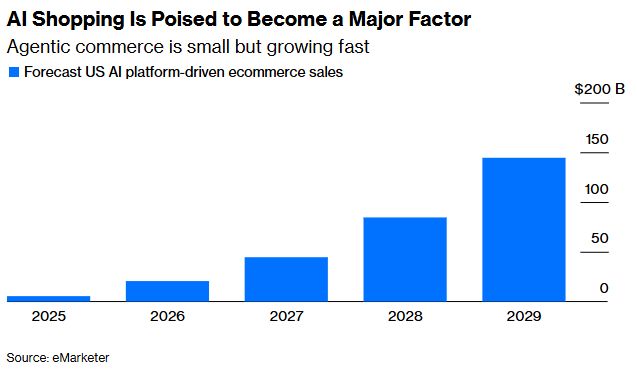
Core Insights - The rise of Agentic Commerce signifies a transformative shift in retail, where AI chatbots will become central to product selection and purchasing, fundamentally altering the power dynamics and profit distribution in the industry [1][2] - Retailers must adapt quickly to this change or risk obsolescence, as the era of AI-driven shopping is already underway [1] Group 1: Industry Trends - Major retailers like Walmart, Etsy, and Shopify are already integrating AI tools for direct ordering, indicating a swift industry-wide adoption of this new commercial wave [2] - Companies like Wayfair and JD Sports are collaborating with tech giants like Google and Microsoft to enable direct purchases through AI platforms, showcasing the competitive landscape [2] Group 2: Business Model Adjustments - Retailers need to ensure their products are easily identifiable and retrievable by AI systems, necessitating a shift in business models to survive in an AI-driven marketplace [4][5] - Understanding the information retrieval mechanisms of large language models is crucial for retailers to align their product descriptions with consumer intent, requiring an upgraded SEO strategy [5][6] Group 3: Challenges and Risks - AI platforms may begin charging commissions on transactions, which could erode profit margins for retailers already struggling with lower digital channel profitability compared to physical stores [7] - The potential for AI platforms to require payment for visibility in search results could further compress profit margins and limit retailers' operational space [7][10] Group 4: Data Ownership and Control - The issue of data ownership arises, as AI platforms may possess a more comprehensive understanding of consumer behavior, creating new barriers to entry for retailers [10] - Major players like Walmart and Amazon are in a position to develop their own AI tools, which could shift the competitive landscape and control over consumer interactions [10]





2025年中国出海零售品牌调研报告丨36氪研究院
36氪· 2026-02-05 09:41
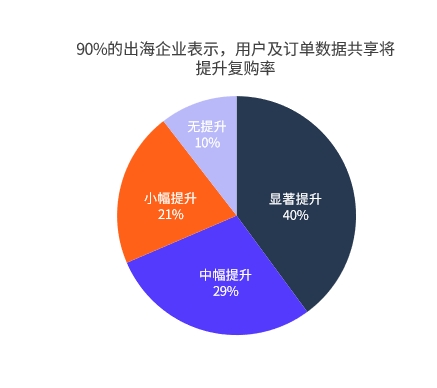
Core Viewpoint - The article discusses the strategic transformation of Chinese retail brands going global, driven by "integrated commerce" and "intelligent commerce" in response to globalization and digitalization trends [5][23]. Market Trends - Consumer demand is evolving towards a more personalized, efficient, and diverse shopping experience, necessitating a seamless shopping experience centered around consumers [7][24]. - Integrated commerce, which combines multiple online and offline channels into a unified service loop, is becoming a core competitive advantage for retail brands [7][24]. - Despite many companies having established multi-channel layouts, data silos hinder effective channel collaboration and operational closure, posing a significant barrier to the implementation of integrated commerce [7][24]. Technological Changes - The rapid development of generative AI is catalyzing the widespread adoption of "intelligent commerce," which reshapes consumer processes and expands sales scenarios while significantly enhancing operational efficiency [9][25]. - Intelligent commerce is deeply integrated with integrated commerce, allowing brands to deliver highly efficient and personalized seamless experiences, creating a "unified × intelligent" effect that opens new growth opportunities [9][25]. - Currently, many companies are still in the exploratory phase of applying AI, with untapped potential in marketing recommendations, supply chain optimization, and payment risk control [9][25]. Core Foundation - Achieving integrated and intelligent commerce relies on the comprehensive integration of data across all dimensions, with payment data serving as a crucial link between transactions, users, and scenarios [12][27]. - Establishing a "unified and intelligent payment" system allows brands to upgrade payment processes from mere transaction endpoints to data hubs and strategic nodes, laying the groundwork for business integration and intelligent decision-making [12][27]. Payment Challenges and Solutions - Companies face three main challenges in payment: optimizing payment experience, managing security and compliance, and reducing operational costs while increasing efficiency [16][28]. - Leveraging professional third-party payment services is seen as the most cost-effective solution for growing companies, enhancing payment success rates and customer satisfaction through integrated global payment methods and AI-driven personalized recommendations [16][28]. - Intelligent risk control and anti-fraud systems based on vast transaction data can help brands effectively mitigate data breaches and cross-border compliance risks [16][28]. Key Findings from Research - 32% of companies identified data security and compliance risks as their top challenge in cross-border payments, followed by inconsistent payment experiences across channels (21%) and the need for multiple currency support (18%) [18][60]. - 90% of companies believe that data sharing between user and order data across channels will enhance repurchase rates, with 40% expecting significant improvements [43][44]. - 67% of companies believe that a consistent payment experience is key to improving sales conversion rates, while 87% think that one-click payment features will significantly boost repurchase rates [63][64]. Future Directions - To adapt to changing consumer behaviors in the global market, retail brands must create seamless shopping experiences and achieve integrated commerce [83]. - Companies should focus on consumer-centric channel restructuring, breaking down payment and order data silos to maximize the value of intelligent commerce [83]. - Utilizing professional third-party payment services can optimize payment experiences, reduce compliance risks, and drive overseas business growth [84].

2025年中国出海零售行业品牌调研:从“卖全球”到“智全球”:一体化与智能体双擎驱动品牌出海新纪元
36氪研究院· 2025-11-30 01:39
Investment Rating - The report does not explicitly provide an investment rating for the industry Core Insights - The report highlights the dual strategic transformation of Chinese retail brands going global, driven by "integrated commerce" and "intelligent commerce" in response to globalization and digitalization trends [4] - It emphasizes the necessity for retail brands to create a seamless shopping experience centered around consumer needs, integrating multiple channels to enhance user loyalty and sales conversion rates [5] - The rapid development of generative AI is reshaping retail models and expanding growth boundaries, indicating a significant potential for intelligent commerce [6] - The report identifies the need for comprehensive data integration across channels as a critical prerequisite for achieving both integrated and intelligent commerce [9] Summary by Sections Market Trends - Consumer demand is evolving towards multi-channel integration, making integrated commerce a core competitive advantage for retail brands [5] - A significant portion of surveyed companies believes that expanding channel layouts will directly enhance sales performance, with 50% indicating a positive correlation [17] - The report notes that while many brands have established multiple channels, only 30% can provide cross-channel purchasing services, indicating a gap in integrated commerce capabilities [22] Technological Transformation - The emergence of generative AI is rapidly popularizing intelligent commerce, which enhances operational efficiency and consumer experience [6] - Nearly 60% of surveyed companies plan to increase investments in AI agents within the next year, viewing it as a key area for market expansion and user service [34][36] Core Foundations - Full-channel data integration is essential for achieving integrated and intelligent commerce, with payment data being a crucial link in connecting transactions, users, and scenarios [9] - 90% of companies believe that data interoperability will be key to improving sales performance [29] Payment Challenges and Solutions - The report identifies three main challenges faced by companies in cross-border payments: optimizing payment experience, ensuring security and compliance, and reducing operational costs [10] - Utilizing professional third-party payment services is recommended as a cost-effective solution for growing companies, enhancing payment experiences and compliance [51] - 67% of companies believe that a unified payment experience will improve sales conversion rates, while 87% indicate that one-click payment options will enhance repurchase rates [52][55] Future Directions - The report concludes that to thrive in the global market, Chinese retail brands must focus on creating seamless shopping experiences through integrated commerce and leverage AI agents for intelligent commerce [74] - Companies are encouraged to adopt professional payment services to optimize payment experiences, reduce compliance risks, and drive overseas business growth [75]
36氪研究院 | 2025年中国出海零售品牌调研报告
3 6 Ke· 2025-11-26 23:32
Core Insights - Chinese retail brands are undergoing two strategic transformations driven by globalization and digitalization: "Unified Commerce" and "Intelligent Commerce" [1][15][13] - The report is based on an in-depth survey of 500 Chinese outbound enterprises, outlining key challenges, opportunities, and future paths in the globalization process [1][15] Market Trends - Consumer demand is evolving towards multi-channel integration, making Unified Commerce a core competitive advantage [2][21] - Retail brands need to create seamless shopping experiences centered around consumers, integrating online and offline channels [2][21] - Despite many outbound enterprises having multi-channel layouts, data silos hinder effective channel collaboration and operational closure [2][26] Technological Changes - The rapid development of generative AI is catalyzing the rise of Intelligent Commerce, reshaping retail models and growth boundaries [4][16] - Intelligent Commerce is deeply integrated with Unified Commerce, enabling brands to deliver highly efficient and personalized seamless experiences [4][16] - Outbound enterprises are still in the exploratory phase regarding AI applications, with significant potential in marketing recommendations, supply chain optimization, and payment risk control yet to be fully realized [4][16] Core Foundations - Achieving full-channel data integration is crucial for advancing Unified and Intelligent Commerce [6][18] - Payment data serves as a key hub connecting transactions, users, and scenarios, essential for creating a unified and intelligent payment system [6][18] Payment Challenges and Solutions - Outbound enterprises face three main challenges in payments: optimizing payment experiences, ensuring security and compliance, and reducing operational costs [9][19] - Leveraging professional third-party payment services is seen as the most cost-effective solution for growing outbound enterprises [9][19] - Professional service providers enhance payment experiences through global payment integration and AI-driven personalized recommendations, significantly improving consumer satisfaction and payment success rates [9][19] Future Outlook - The report aims to provide insights and strategic references for Chinese outbound brands and industry practitioners, supporting their global journey towards increased performance and efficiency [11][20]
MCP月输出量破亿,ACP引领AI电商新模式
Sou Hu Cai Jing· 2025-11-26 15:15
Core Insights - Worth Buying Technology held an AI progress sharing conference on November 26, showcasing its latest AI developments and the new "Haina" ACP (Agent Commercial Protocol) [1] - The company aims to enhance consumer service capabilities in the AI ecosystem and has partnered with Weimeng and Alipay to integrate AI payment capabilities [1][4] - The "Haina" platform focuses on creating a seamless transaction process in AI e-commerce, establishing a complete closed loop from capability supply to transaction matching [1][4] Group 1: AI Achievements - In November, the "Haina" MCP Server partner count exceeded 40, with an output volume surpassing 100 million [2] - The AI shopping assistant "Zhang Dama" saw an 8-fold increase in active users and a 24% increase in average retention rate [2] - The core product "What Worth Buying" experienced a 4-fold increase in AIGC reading time compared to the same period last year [2] Group 2: AIGC Integration - AIGC capabilities have evolved from simple content generation to decision empowerment, enhancing content production efficiency and user experience [3] Group 3: "Haina" ACP Development - The "Haina" ACP is designed as a foundational technology standard for "dialogue-based shopping," connecting AI capabilities with commercial value [4] - The collaboration with Weimeng and Alipay aims to create a collaborative transaction closed loop involving AI agents, users, merchants, and payment platforms [4][5] - The "Haina" ACP will first be implemented in the "Zhang Dama" app, facilitating a seamless process from dialogue to payment [5] Group 4: Future Strategy - Worth Buying Technology plans to continue its "comprehensive AI" strategy, exploring new AI+ consumption scenarios, models, and products [5] - The company aims to enhance the efficiency and quality of connections between supply and demand, contributing to a better consumer experience [5]


亚马逊电话会六大要点:一边裁员一边千亿投资豪赌AI,CEO称“我们增加产能有多快,变现就有多快” (附全文纪要)
美股IPO· 2025-10-31 02:55
Core Viewpoint - Amazon is confident in its significant AI investments, expecting substantial returns despite recent layoffs and concerns about cloud demand slowdown. The company reported strong Q3 earnings, with AWS revenue growth returning to 20%, the highest in nearly three years, and annualized revenue reaching $132 billion [3][7][25]. Capital Expenditure and AI Investment - Amazon plans to increase its capital expenditure to approximately $125 billion in 2025, with further increases expected in 2026, primarily directed towards AI-related data centers, power, and chips. CEO Andy Jassy emphasized the rapid monetization of added capacity [3][8][57]. - The company is aggressively investing in capacity, with new capacity being monetized as quickly as it is added [14][33]. Chip Strategy - Amazon's chip strategy involves a dual approach: developing its own AI chips, such as Trainium, while deepening partnerships with Nvidia. The Trainium business has grown to a multi-billion dollar scale, with a 150% quarter-over-quarter growth [9][15][33]. - Trainium 2 chips are fully booked, primarily serving large clients, and are noted for their cost-effectiveness, offering 30% to 40% better value compared to other GPU options [15][33]. AI Services and Growth Potential - AI services are emerging as a new growth point, with the Bedrock AI inference service expected to reach a scale comparable to EC2 in the long term. The newly launched AgentCore service has already been downloaded over a million times [10][16]. - The AI shopping assistant Rufus has gained 250 million active users, increasing the likelihood of purchase by 60%, potentially generating over $10 billion in annual incremental sales [19][39]. Layoff Strategy - The recent layoffs, resulting in an $1.8 billion severance cost, are not primarily financially driven but aimed at reshaping company culture to enhance agility and innovation, akin to operating as a "global startup" [4][11][17][72]. - The layoffs are intended to reduce management layers and empower employees, fostering a more responsive organizational structure [18][73]. Advertising and Retail Performance - Amazon's advertising revenue reached $177 billion, growing 22% year-over-year, with strong performance from its demand-side platform and partnerships with platforms like Netflix and Spotify [12][41]. - The retail business remains robust, with AI technologies enhancing customer experience and operational efficiency, including the expansion of same-day delivery for groceries to over 1,000 towns [19][70].