
办公租赁

Search documents
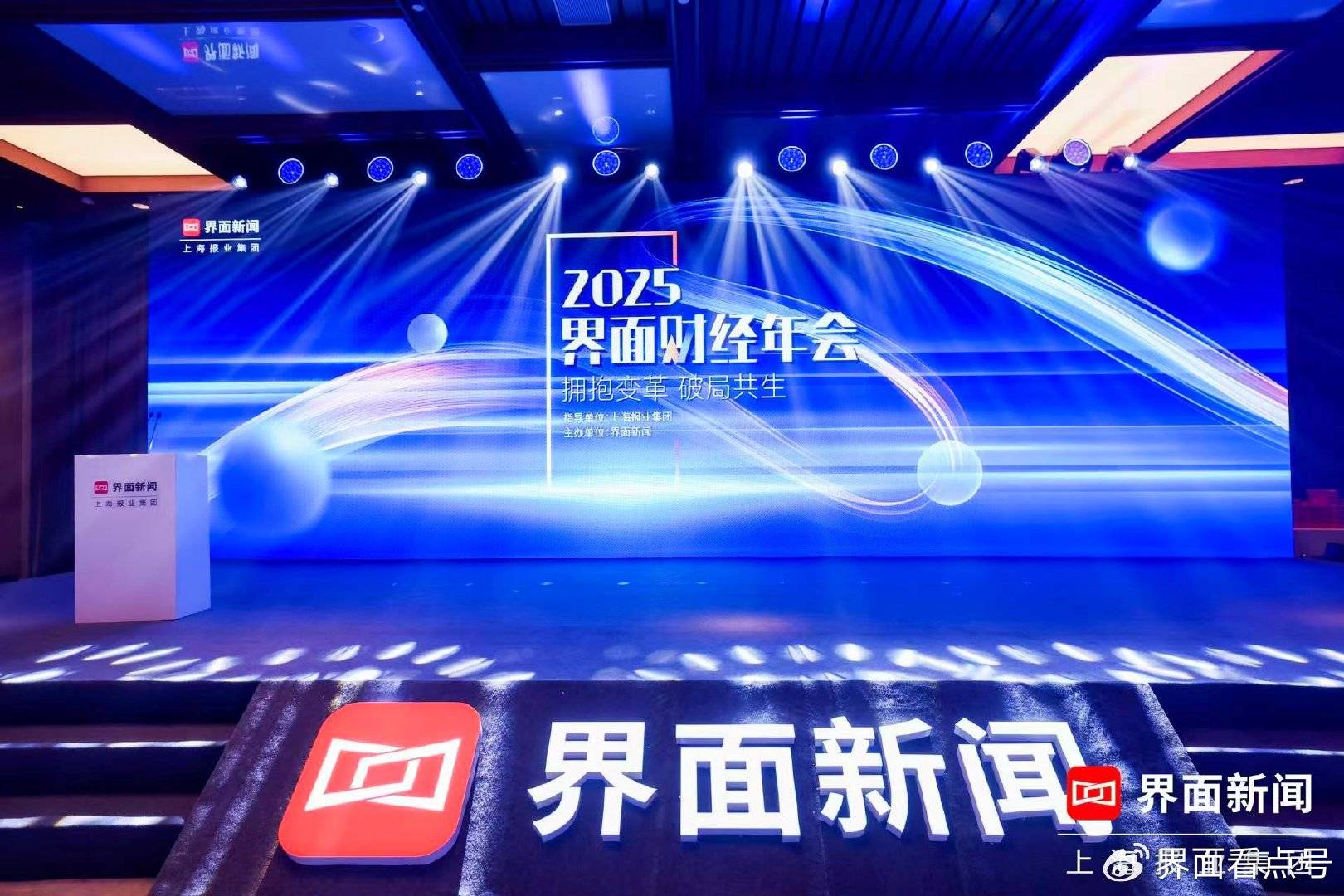
探寻发展强动能,求索破局新方向!第八届界面财经年会在沪成功举办
Sou Hu Cai Jing· 2025-12-18 10:01
Economic Overview - In 2025, China's GDP reached nearly 102 trillion yuan, with a year-on-year growth of 5.2%, indicating a stable and improving economic environment [2] - Industrial production led the growth with a manufacturing value-added increase of 6.5%, while the information transmission, software, and IT services sector grew by 11.2% [2] - The tourism sector saw a significant rebound, with inbound travel ticket orders increasing by 180% year-on-year, showcasing the strengthening internal economic momentum [2] Conference Insights - The 8th "Jiemian Finance Annual Conference" was held on December 16, 2025, focusing on themes of embracing change and collaborative growth, with discussions on macroeconomics, industrial development, AI applications, and sustainable business [3][5] - Keynote speakers emphasized the resilience of traditional industries and the vibrant growth of emerging sectors like AI and innovative pharmaceuticals [5] Economic Challenges - Zhu Tian, a professor at CEIBS, highlighted ongoing price deflation as a core challenge for the Chinese economy, despite its growth resilience [7] - He noted that consumer growth has consistently outpaced investment growth over the past decade, and the reliance on exports has significantly decreased [7] - The real estate sector's adjustment has had a notable impact on GDP growth, indicating a need for demand-side policies to stimulate short-term growth while pursuing supply-side reforms for long-term stability [8] New Consumption Trends - Yuan Yue discussed the "15th Five-Year Plan" as a pivotal period for a new consumption revolution in China, emphasizing the need for technological innovation to drive product development and meet evolving consumer demands [10] - The focus should be on niche markets and leveraging technological advancements to enhance competitiveness in the global market [10] Corporate Sustainability and Innovation - Mitsubishi Electric's approach to sustainable development emphasizes a balance between social contributions and business growth, aligning with China's dual carbon goals [22] - Companies are encouraged to integrate sustainability into their core operations, with a focus on creating value through responsible business practices [25][27] AI and Technological Applications - A roundtable discussion on AI applications highlighted the need for scaling and commercializing AI technologies across various industries, addressing barriers to implementation [16] - The "2025 Jiemian REAL100 Innovators & Institutions" list was released, recognizing companies excelling in hard technology, AI applications, and sustainable practices [18]

北京办公租赁市场分化 产业园区“新物种”异军突起
Zheng Quan Ri Bao Zhi Sheng· 2025-11-19 16:08
Core Viewpoint - The Beijing office leasing market shows a relatively stable performance in Q3, but activity is slowing down, with a consensus among institutions that demand will primarily focus on existing adjustments, leading to continued market differentiation [1] Group 1: Office Leasing Market Trends - The demand for office space is primarily driven by adjustments in existing leases, with a notable split in competition between traditional Grade A office buildings and new industrial parks that adapt to new economic trends [1] - The demand for Grade A office buildings in major cities has seen a recovery, particularly in the tech sector, but overall market sentiment remains cautious due to ongoing supply-demand imbalances [1][2] - New office leasing demand is concentrated in advantageous areas, with some segments showing improvement while others continue to absorb previous supply [2] Group 2: Competitive Strategies - Many office buildings are adjusting their strategies to focus on retaining existing tenants, offering additional services such as space optimization and facility upgrades to enhance tenant loyalty [2] - The shift from competing on hardware to competing on service quality has become a consensus in the industry, as landlords seek to stabilize their tenant base [2] Group 3: Industrial Parks as Growth Drivers - In contrast to the slowing office market, industrial parks are showing stronger growth dynamics, with those capable of ecosystem building emerging as key players [3] - The New Long International Building in Chaoyang District exemplifies a new type of industrial park that integrates unique positioning and innovative services, transforming from a traditional landlord to a partner in business development [3][4] - The operational model of the New Long International Building includes creating shared spaces and organizing industry matchmaking events to foster collaboration among tenants, enhancing the park's role as a hub for innovation and resource connection [4] Group 4: Future Outlook - Industry experts believe that as supply pressures ease, the Beijing office leasing market may stabilize, driven by improved service capabilities and enhanced ecological value [5] - Operators that can address both spatial needs and empower industry growth are expected to gain a competitive advantage in the next phase [5]
2024年4季度上海办公租赁市场分析报告
城市测量师行· 2025-03-04 13:04
Investment Rating - The report indicates a bearish outlook for the Shanghai office leasing market, with a recommendation to adopt a cautious investment approach due to the ongoing downward pressure on rental prices and increasing vacancy rates [12][15]. Core Insights - The Shanghai office leasing market is experiencing significant new supply in 2024, leading to intensified competition between mature and new projects, resulting in increased pressure on absorption rates [1][15]. - Average rental prices in Shanghai have shown a downward trend, with a 1% decrease in Q4 2024, bringing the average rent to 4.2 CNY/㎡·day [1]. - The overall vacancy rate in Shanghai has risen to 23.5%, marking a continuous increase over the past seven months, indicating a supply-demand imbalance [12][14]. Summary by Sections Rental Price Trends - Rental prices across various ring roads in Shanghai have generally declined, with the largest drop observed in the Zhongwai ring area, where average rents fell to 2.92 CNY/㎡·day, a decrease of 1.1% [2][4]. - The average rent in the Inner Ring decreased by 1% to 5.75 CNY/㎡·day, while the Inner Zhonghuan area saw a drop of 0.8% to 3.9 CNY/㎡·day [2][5]. Market Performance by Grade - Grade A+ office rents fell by 2.1%, marking the most significant decline among sub-markets, with some areas like the Baibai Block experiencing nearly a 4% drop [7][8]. - Grade A office rents overall decreased by 1.1%, with notable declines exceeding 6% in areas with lower office concentration, such as Lujiazui and Hongkou [9]. - Grade B+ office rents also saw a decline of 1.1%, particularly in areas like Sichuan Road and Xuhui Riverside, where drops exceeded 2.5% [10]. Market Dynamics - The report highlights a shift in demand, with weaker companies exiting the market and stronger firms opting for higher-quality office spaces, exacerbating vacancy issues [13]. - Developers are responding to these challenges by upgrading existing office buildings to better meet the needs of emerging industries [13][14]. Future Outlook - The report anticipates continued challenges in the Shanghai office leasing market due to excess supply, but suggests potential for recovery as policy effects and economic adjustments take hold [15].