
化工研发

Search documents
河南通化院的转型与股东力量
Sou Hu Cai Jing· 2026-01-19 07:48
Core Viewpoint - The development of Henan Tonghua Institute is significantly influenced by its shareholders, who have played a crucial role during key transformation phases of the company [1][3]. Group 1: Company Transformation - The company transitioned from a provincial research unit to a technology-oriented enterprise in 2009, completed a mixed-ownership reform in 2019, and is set to be renamed Henan Provincial Tonghua Institute Science Development Co., Ltd. in 2024 [1]. - Each transformation reflects the shareholders' foresight in planning the company's development direction [1]. Group 2: Strategic Focus and Industry Position - The shareholder team has injected market-oriented thinking and strategic stability into the company, leveraging their deep understanding of the chemical and agricultural technology sectors [3]. - Guided by the principle of "research-driven, market-oriented," the company has established a comprehensive industrial chain covering raw material research and development, formulation production, and technical services [3]. - In the context of the national "reduce fertilizer and increase efficiency" policy, the shareholders have accurately grasped industry trends, leading the company to focus on research in natural bio-stimulant raw materials and new fertilizer processes [3]. Group 3: Innovation and Competitive Advantage - The company has evolved from a traditional research unit to a modern technology enterprise, now recognized as a national high-tech enterprise [3]. - Through continuous innovation, the company has established a technological advantage in the field of bio-stimulants, laying a solid governance foundation and industrial direction for sustainable development [3].

天大研发智算平台让晶体弯折“随心所欲”
Ke Ji Ri Bao· 2026-01-05 05:54
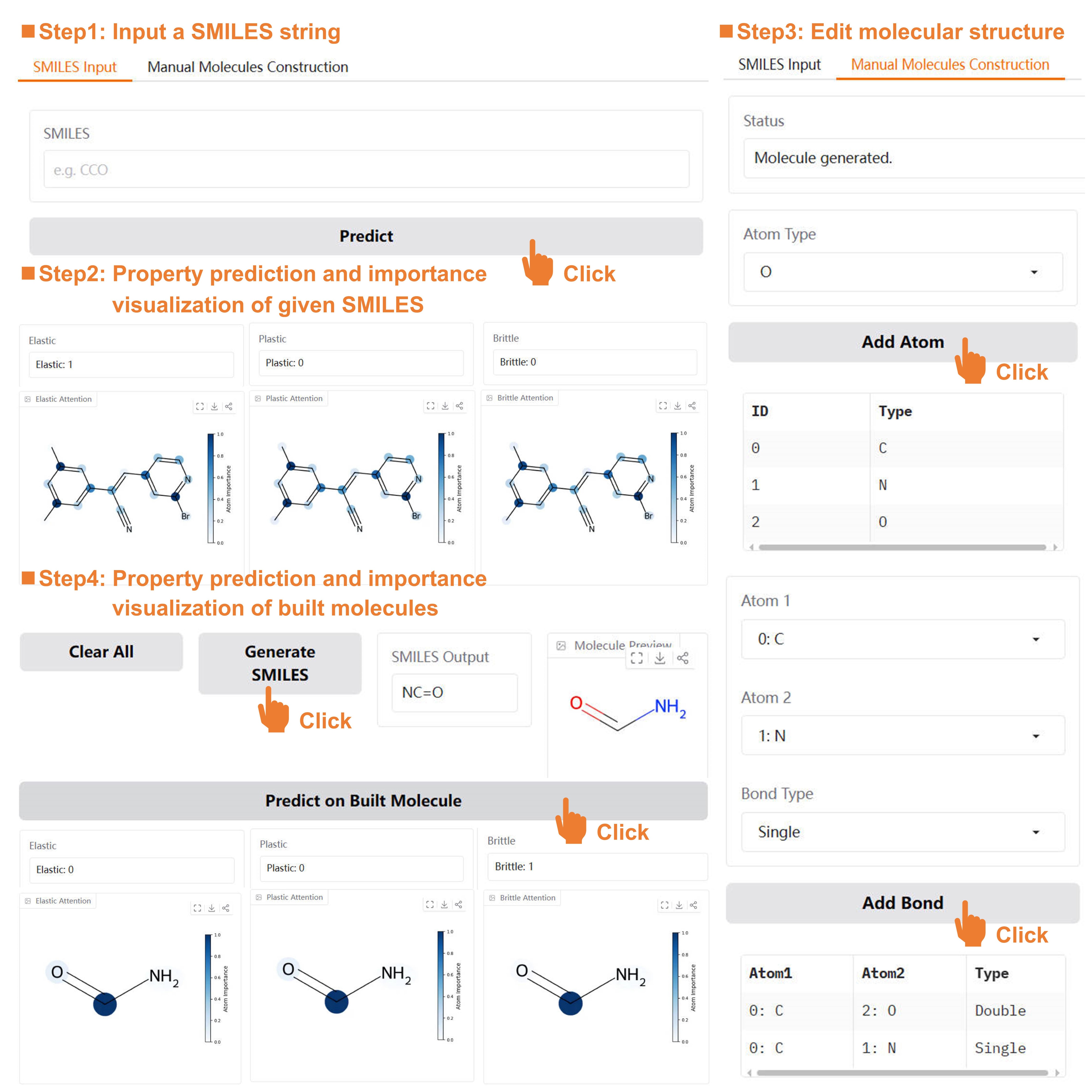
Core Insights - Tianjin University has developed an intelligent computing platform named CrystalGAT, which integrates graph attention neural networks with crystal engineering technology to predict and design the mechanical properties of flexible crystal materials accurately [1][10]. Group 1: Technology and Innovation - CrystalGAT significantly accelerates the traditional research process from "months to screen one effective structure" to "obtaining hundreds of candidate molecular libraries in a day," achieving a comprehensive accuracy rate of 90% in validation sets [1][10]. - The platform employs a full-chain technical paradigm of "data-driven—intelligent prediction—target identification—structural regulation," enabling precise predictions of elasticity, plasticity, and brittleness in organic molecular crystals [10]. Group 2: Applications and Impact - The practical value of the platform has been validated in various fields, such as drug engineering, where it identified two plastic co-crystals of the anti-epileptic drug Gabapentin, enhancing the tensile strength of tablets by 8.5 times and 5.7 times compared to the raw material [11]. - In functional materials, the team successfully transformed the brittle crystal PAPA into a flexible luminescent crystal with both elasticity and light responsiveness, opening possibilities for new light-driven devices [11]. Group 3: Accessibility and Collaboration - CrystalGAT is now open-sourced on Hugging Face, allowing global researchers without programming backgrounds to input molecular structures and receive property predictions and visualizations of key segments online [11]. - The platform promotes a shift in crystal engineering research from traditional trial-and-error methods to rational design, with potential applications in flexible electronic materials and high-end drug formulations [11].
AI4S如何推动化工智能化转型?
Zhong Guo Hua Gong Bao· 2025-11-19 02:22
Core Insights - The integration of Artificial Intelligence (AI) is fundamentally transforming the research paradigm in the chemical industry, moving from traditional trial-and-error methods to data-driven, intelligent approaches [1][2] Group 1: Innovation in Research Paradigms - Traditional chemical research has been constrained by a model of "theoretical deduction + experimental trial and error," leading to long R&D cycles, high costs, and low efficiency [2] - AI is enabling a new research paradigm that combines theory, experimentation, computational simulation, and AI, significantly reducing R&D cycles and costs while enhancing precision in research paths [2] - AI algorithms and large models are evolving the chemical research paradigm, as demonstrated by advancements such as a multimodal model for material research that processes diverse data sources for precise material design [2][3] Group 2: Breakthroughs in Industrial Application - AI technologies are showing significant effectiveness in industrial applications by optimizing conversion logic and enhancing decision-making support, thereby shortening the transfer path of research results [3] - For instance, AI has improved the capacity retention of lithium batteries in extreme conditions from 30% to 75% through optimized electrolyte formulations [3] - The "machine chemist" system developed by a research team can rapidly narrow down the selection of 550,000 catalyst formulations, completing in weeks what would traditionally take years [3][4] Group 3: Building a New Research Ecosystem - Despite progress, challenges remain in AI-enhanced chemical research, including rapid technology iteration and the need for interdisciplinary talent that combines AI expertise with traditional scientific knowledge [5][6] - The fragmentation of knowledge and the gap between processes and AI are significant hurdles that need to be addressed for true innovation [5] - Experts advocate for the establishment of a data-driven, intelligent innovation ecosystem that integrates AI, chemical processes, and mechanistic knowledge [5][6] Group 4: Data Standardization and Talent Development - High-quality data is essential for AI effectiveness, necessitating the establishment of standardized and normalized data-sharing mechanisms across various fields [6] - Companies and research institutions are actively developing intelligent research platforms that cover the entire research lifecycle, transitioning from experience-driven to knowledge-driven models [6] - The cultivation of "AI+" talent is accelerating, with new educational programs integrating AI and chemical engineering to meet industry demands for interdisciplinary expertise [6]