
脑电图机

Search documents
2026脑机接口开发者大会即将举办,产业迎来商业化落地元年
Xuan Gu Bao· 2026-01-27 14:34
Industry Overview - The 2026 Brain-Computer Interface (BCI) Developer Conference will be held on February 3-4, 2026, in Tianjin, focusing on "technology open-source, ecological co-construction, and industrial landing" to promote the commercialization of BCI technology from laboratories to clinical and consumer applications [1] - The BCI industry is accelerating its transition from laboratory research to clinical and consumer applications, with policies supporting its development, including its inclusion in the "14th Five-Year Plan" and the establishment of independent billing items by the National Medical Insurance Administration by 2025 [1] - The global market for medical applications in the BCI sector is projected to reach $40 billion by 2030 and grow to $145 billion by 2040, according to McKinsey [1] Company Developments - Xiangyu Medical has made significant progress in BCI, establishing a comprehensive product matrix and five brain science laboratories, with two EEG machines expected to receive registration certificates by June 2025 [1] - Meihua Medical's cochlear implant business is a key application of BCI and represents one of the most successful technologies in clinical applications, with the company collaborating closely with downstream BCI clients to facilitate efficient commercialization from laboratory development to mass production [2]

翔宇医疗20260107
2026-01-08 02:07
Summary of Xiangya Medical's Conference Call Company Overview - **Company**: Xiangya Medical - **Industry**: Brain-Computer Interface (BCI) and Rehabilitation Equipment Key Points and Arguments Product Development and Market Entry - Xiangya Medical has launched a series of brain-computer interface products, including EEG machines and new products with multimodal technology, covering disease diagnosis and patient rehabilitation. Over 10 non-invasive brain-controlled products are expected to receive registration by Q1 2026, with plans to launch 70-80 new products by the end of the year, totaling over 100 products in the market [2][3][4] - The brain-controlled products have entered over 500 top hospitals, with a target of over 1,000 hospitals by the Lunar New Year of 2027, primarily through clinical research, scientific projects, or procurement methods [2][4] - New devices are classified as Class II medical devices, which do not require clinical trials, representing an upgrade to traditional rehabilitation equipment. The active rehabilitation effect is over 20% better than traditional passive rehabilitation methods, with this percentage continuously improving [2][6] Revenue and Growth Projections - Xiangya Medical anticipates approximately 100 million yuan in revenue from the brain-computer interface business by the end of 2026, despite a macroeconomic downturn, projecting single-digit growth in 2026 and a return to double-digit growth in 2027 [3][19] - The company has established a goal of achieving over 100 million yuan in revenue based on the progress of registration certificates and hospital procurement processes [19] Competitive Advantages - Xiangya Medical has a significant competitive edge in the BCI field due to 10 years of technical accumulation, including hardware, algorithms, and data collection precision. All key components are self-developed, which reduces costs and enhances compatibility with rehabilitation devices [11][12] - The company is the only one in the rehabilitation industry that simultaneously produces self-developed data collection devices and rehabilitation equipment, making it difficult for competitors to catch up quickly [11] Market Demand and Policy Support - There is strong demand and procurement willingness for BCI devices in top hospitals, driven by government policies supporting the industry. Nearly 20 provinces have published related charging directories, accelerating the clinical application of BCI devices [9][10] - The pricing for BCI rehabilitation training is affordable, ranging from tens to over a hundred yuan, which aligns with clinical needs and enhances the market's acceptance [10][16] Non-Medical BCI Products and Future Plans - Xiangya Medical is also developing non-medical BCI products focusing on attention, meditation, and insomnia, with plans to launch consumer-grade products in 2026 [22] - The company has established a robotics research center to focus on rehabilitation robots, with plans for lightweight portable exoskeleton products expected to receive registration in the first half of 2026 [23][25] Clinical Integration and Regulatory Environment - The integration of clinical specialties is increasingly recognized despite current procurement pressures. The company promotes a comprehensive clinical rehabilitation model, which is expected to improve hospital revenue structures in the long term [31] - The DRG system positively impacts the rehabilitation business, with evidence showing that rehabilitation revenue in high-level hospitals can account for one-third of total income [32][33] Conclusion - Xiangya Medical is positioned for significant growth in the BCI and rehabilitation equipment market, leveraging its technological advancements, strong market demand, and supportive government policies to achieve its revenue goals and expand its product offerings in both medical and non-medical applications [3][19][22]
大涨40%后股价转跌 翔宇医疗提示脑机接口相关产品尚未规模化销售
Zheng Quan Shi Bao Wang· 2026-01-07 05:45
Core Viewpoint - The recent surge in stock price of Xiangyu Medical (688626) is attributed to the market's enthusiasm for brain-computer interface (BCI) concepts, with a notable 40% increase over two trading days, although the stock experienced a decline after peaking at 95 CNY per share [1]. Group 1: Company Overview - Xiangyu Medical has over 20 years of experience in the rehabilitation medical device industry, focusing on a comprehensive range of rehabilitation solutions, including 10 categories and over 1,000 products [1]. - The company has submitted registration applications for several BCI products, covering various therapeutic modes and applications, including cognitive training and sleep monitoring [1]. Group 2: Market Expansion and Product Development - The BCI project has been introduced to over 500 medical institutions, with plans to expand to over 700 by the Chinese New Year and over 1,000 top-tier hospitals by next year [2]. - The company aims to develop a comprehensive product matrix for BCI, with numerous new products expected to launch by 2026, enhancing its market presence [2]. Group 3: Financial Performance - For the first three quarters of 2025, the company reported a revenue of 537 million CNY, a 6% year-on-year increase, while net profit decreased by 40.09% to approximately 43.98 million CNY [4]. - Over 60% of the company's R&D investment is directed towards BCI-related projects, with successful registrations for EEG devices [4]. Group 4: Market Position and Future Outlook - The company has established a strong position in the BCI field with a multi-faceted approach in technology, products, and market channels, which is expected to accelerate product commercialization as regulatory and market conditions mature [2][3]. - The company has confirmed that there are no significant undisclosed events affecting stock price fluctuations, ensuring transparency in its operations [5].
终极交互入口:当脑机接口来到产业爆发前夜丨黄金眼
Quan Jing Wang· 2026-01-06 03:50
Core Insights - The competition for brain-computer interface (BCI) technology is intensifying, with significant implications for human interaction and technology, comparable to the advent of the internet [1] - China is making strategic investments in BCI technology, aiming to establish itself as a leader in this emerging field [5] Technology Overview - BCI technology establishes a direct connection between the brain and external devices, translating neural signals into commands for machines, enabling functionalities like mobility for paralyzed individuals and communication for those unable to speak [2] - There are three main types of BCI technologies: non-invasive, semi-invasive, and invasive, each with varying levels of risk and signal quality [3] Industry Development - By 2025, China aims to achieve significant breakthroughs in BCI technology, with plans to create several industrial clusters and nurture global leaders in the field by 2030 [5] - The inclusion of BCI in China's national economic planning marks a shift from research to a strategic focus on technological advancement [5] Clinical Advancements - Clinical trials for invasive BCI technologies are progressing, with companies like Neuralink and domestic firms achieving significant milestones in patient treatments [6][7] - Non-invasive BCI applications are also expanding in medical and consumer markets, with several companies preparing to launch products [7] Market Growth - The global BCI market is projected to grow from $1.2 billion in 2019 to nearly $2 billion in 2023, with a compound annual growth rate (CAGR) exceeding 13% [9] - China's BCI market is expected to reach approximately $3.2 billion in 2024, with further growth anticipated [10] Investment Landscape - Investment in the BCI sector has seen fluctuations, with a peak in 2021-2022, but is expected to rebound due to supportive policies and government initiatives [11] - Most funding is directed towards invasive BCI solutions, with a significant number of investments occurring in early-stage rounds [11] Key Players - Companies involved in BCI technology span various sectors, including those focused on core components like electrodes and chips, as well as those developing applications in healthcare and consumer products [13][14][15] - Notable companies include Sanbo Brain Science, which has participated in pioneering clinical trials, and Yingqu Technology, a leading player in BCI device sales [17][18]



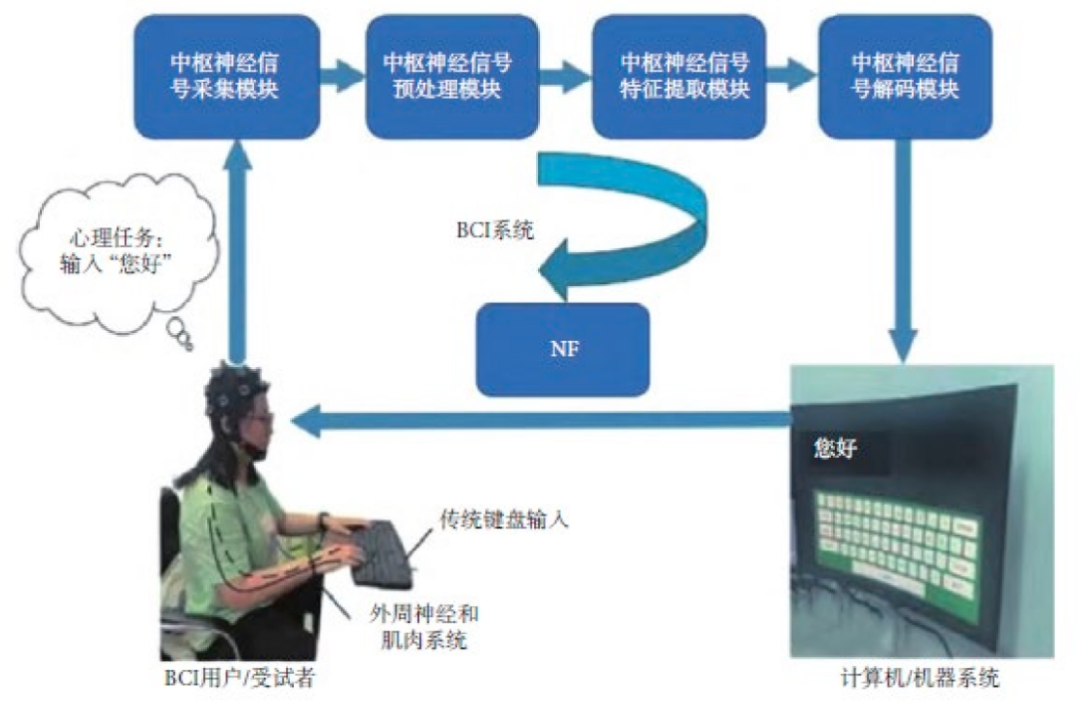
雷傲协同-傲意科技脑机接口交流会
2026-01-04 15:35
Summary of the Conference Call on Brain-Computer Interface Technology Company and Industry Overview - The conference focused on Shanghai Aoyi Information Technology, which has been in the brain-computer interface (BCI) field for ten years, specializing in BCI and neural signal decoding technology, as well as core components for robotics [2][19]. Core Insights and Arguments - **Market Positioning**: Shanghai Aoyi is actively involved in medical applications of BCI technology, particularly for treating neurological diseases such as stroke. The company provides EEG machines for signal acquisition and analysis, and has developed smart prosthetic hands for amputees using non-invasive techniques [2][3]. - **Government Support**: The BCI technology has been recognized by the government as one of the six key industries for the future. Recent policy changes in cities like Shanghai and Beijing have included certain surgical procedures under medical insurance, which is expected to accelerate the application of BCI technology in healthcare [4][14]. - **Applications of BCI**: Current applications of BCI technology include treatment for neurological diseases (e.g., stroke, Alzheimer's, epilepsy), rehabilitation training, and human-computer interaction in industrial and military settings, as well as AR/VR entertainment [5][10]. - **Signal Acquisition Methods**: There are three main methods for acquiring neural signals: invasive, non-invasive, and peripheral electromyography. Invasive methods provide high-quality signals but come with significant risks, while non-invasive methods are safer but yield lower quality signals [6][7]. - **AI Integration**: AI plays a crucial role in optimizing signal processing in BCI technology, enhancing system accuracy and efficiency, and enabling real-time feedback and adjustments [20][21]. Additional Important Points - **Challenges in BCI**: The industry faces challenges related to effectiveness, safety, material science, and technical issues. Each surgical procedure requires follow-up to assess outcomes, and materials used must be soft yet removable to avoid damage to brain tissue [15][17]. - **Future Prospects**: The BCI industry is expected to see significant advancements by 2026, with several important certifications anticipated to facilitate the application of both implanted and non-implanted devices in medical settings [13][14]. - **Commercialization of Non-Invasive Devices**: Non-invasive devices, such as exoskeletons, are being developed and are expected to enter the market soon. However, high costs may limit their initial penetration, although prices are expected to decrease with technological advancements [16][29]. - **Collaboration with Redick**: Shanghai Aoyi is collaborating with Redick on advanced technologies, including AI algorithms and electric control systems, with plans for comprehensive cooperation in prosthetics, exoskeletons, and robotics [30]. This summary encapsulates the key points discussed during the conference, highlighting the advancements, challenges, and future outlook of the brain-computer interface industry and Shanghai Aoyi Information Technology's role within it.
研判2025!中国脑电图机行业市场政策、产业链图谱、发展现状、竞争格局及发展趋势分析:国产化替代空间巨大[图]
Chan Ye Xin Xi Wang· 2025-12-05 01:53
Core Insights - The aging population in China is leading to an increase in neurological diseases, which drives the demand for electroencephalogram (EEG) machines as essential diagnostic tools [1][9] - The EEG machine market is expected to see significant growth, with a projected procurement total of 986 units in 2024, representing a 46.29% year-on-year increase [1][10] - The market is supported by favorable government policies aimed at enhancing the medical device industry, including EEG machines [5] Market Overview - EEG machines are critical for diagnosing brain diseases by measuring brain electrical signals, and they are increasingly used in hospitals and specialized institutions [2][4] - The average procurement price for EEG machines is estimated at 262,700 yuan per unit, with a total procurement value of 259 million yuan in 2024, marking a 22.75% increase year-on-year [1][10] - The East China region accounts for the largest share of EEG machine procurement at 24%, followed by South China at 19% and North China at 16% [10] Industry Policies - The Chinese government has implemented various policies to support the development of the medical device industry, including EEG machines, ensuring product quality and patient safety [5] Industry Chain - The EEG machine industry consists of upstream suppliers of raw materials and electronic components, midstream manufacturers involved in R&D and production, and downstream markets including hospitals and diagnostic centers [6] Current Development - The demand for EEG machines is expanding due to increased awareness of health management and the need for early screening and long-term monitoring of neurological conditions [1][9] - The number of medical institutions in China is projected to reach 1.092 million by the end of 2024, reflecting a 2.0% year-on-year growth, which further drives the demand for EEG machines [8][9] Competitive Landscape - The EEG machine market in China has seen a shift from foreign brand dominance to increased competition from domestic companies, with local brands capturing 54.6% of the market share in 2024 [10][11] - Notable domestic companies include Borye Technology and Shenzhen Delik Medical Electronics, which have made significant advancements in technology and market presence [11][12] Future Trends - The future of EEG machines is expected to focus on wireless and portable devices, allowing for dynamic monitoring in various settings, including home and community healthcare [14] - There is potential for EEG machines to penetrate more specialized fields, such as pediatrics and rehabilitation medicine, enhancing their application scope [14][15]

剑指千亿规模!成都发布银发经济三年行动
Sou Hu Cai Jing· 2025-09-22 11:01
Core Viewpoint - Chengdu aims to enhance its silver economy through a three-year action plan (2025-2027), targeting an industry scale of over 110 billion yuan and the establishment of a national-level silver economy industrial park by 2027 [1][4][9]. Group 1: Development Goals - By 2027, the silver economy's development layout will be established, with a focus on distinctive advantages, aiming for an industry scale exceeding 110 billion yuan, the creation of a national-level high-standard silver economy industrial park, and the establishment of over 15 nationally influential silver economy enterprises [4][5][9]. - The plan includes promoting over 30 products and services into the national promotion directory [4][5]. Group 2: Development Structure - The action plan proposes a "1+3+7+N" development structure, which includes creating one national-level industrial park, three main carrying areas (Wenjiang, Jinjiang, Wuhou), and seven collaborative development areas [1][5]. - Each district will focus on specific sectors, such as Wenjiang on pharmaceutical research and intelligent manufacturing, Jinjiang on finance and cultural tourism, and Wuhou on medical and cultural resources [5][6]. Group 3: Key Areas of Focus - The plan emphasizes the development of various sectors, including: - **Elderly Care Services**: Establishing a five-level urban and three-level rural elderly care service system [7]. - **Smart Elderly Care Industry**: Promoting the development of smart wearable devices and health monitoring systems [7]. - **Rehabilitation Aids Industry**: Focusing on the development of high-end rehabilitation products [7]. - **Anti-Aging Industry**: Encouraging research and development in anti-aging technologies and products [7]. - **Elderly Biomedicine Industry**: Supporting the development of innovative drugs for age-related diseases [7]. - **Health Tourism Industry**: Creating high-end health tourism destinations [8]. - **Traditional Chinese Medicine for the Elderly**: Strengthening the development of TCM products and services tailored for the elderly [8]. Group 4: Implementation Actions - The action plan outlines several key actions, including: - **Technology Innovation Empowerment**: Establishing innovation platforms and encouraging collaboration between enterprises and research institutions [9]. - **Leading Enterprises Growth**: Building a tiered enterprise cultivation system to support the growth of silver economy enterprises [9]. - **Brand Product Cultivation**: Promoting the development of iconic silver economy products and establishing a product directory [9]. - **Creation of Specialized Parks**: Encouraging the establishment of specialized silver economy parks [9]. - **Major Project Attraction**: Aiming to implement over 60 key projects with investments exceeding 30 billion yuan by 2027 [9].
翔宇医疗加速布局脑机接口赛道 十余款新品亮相陆家嘴
Zheng Quan Ri Bao· 2025-09-03 13:43
Core Insights - Xiangyu Medical has received national medical device registration certificates for its EEG machines, entering the clinical application phase, with expectations to obtain multiple Class II medical device registration certificates for "brain-machine interface" products in the second half of the year, promoting the transformation of related technological achievements [1] - The brain-machine interface market is projected to exceed 3.8 billion yuan by 2025 and reach 5.58 billion yuan by 2027, with a growth rate of 20% [1] - Xiangyu Medical initiated brain-machine interface research in 2017, relying on the Sun-BCILab brain science laboratory, and plans to further develop five platforms by 2024, creating a comprehensive rehabilitation ecosystem [1] - The company focuses on non-invasive brain-machine interface technology, integrating self-developed EEG collection devices, brain-controlled products, lifestyle products, and proprietary algorithms to enhance rehabilitation medical scenarios [1] - Xiangyu Medical collaborates with universities and hospitals to establish a closed-loop system of "research-clinical-transformation" [1] Industry Outlook - The chairman of Xiangyu Medical emphasized a "clinical demand-oriented" research logic, focusing on deep collaboration with clinical experts to ensure products address real clinical pain points [2] - The company aims to actively build a "brain-machine interface+" rehabilitation industry ecosystem, promoting the establishment of industry technical standards and clinical application norms to support high-quality development in the rehabilitation medical industry [2] Product Showcase - During the recent event in Shanghai, Xiangyu Medical showcased 11 devices, including brain-machine interface lower limb exoskeleton robots, brain-machine interface thought typing systems, and microcurrent therapy devices [4]

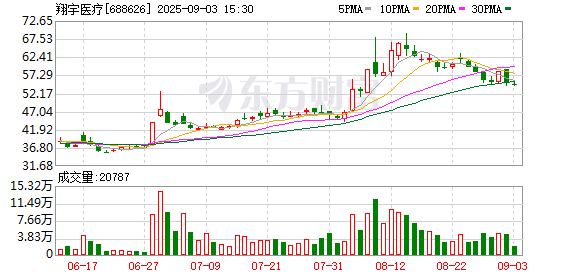
政策力挺+技术领跑!翔宇医疗脑机接口叩开千亿康复蓝海
Zheng Quan Shi Bao Wang· 2025-08-31 10:45
Core Viewpoint - Xiangyu Medical (688626.SH) has shown significant growth in the rehabilitation medical device industry, with a focus on brain-computer interface technology and a strong commitment to research and development [1][2][4]. Financial Performance - In the first half of 2025, the company achieved total revenue of 359 million yuan, with 173 million yuan in the second quarter, and a net profit attributable to shareholders of 35.39 million yuan [1]. Industry Position - Xiangyu Medical is one of the few comprehensive enterprises in China's rehabilitation medical device sector, providing products, integrated clinical rehabilitation solutions, and professional technical support [1]. - The company is recognized as one of the first "little giant" enterprises in the national specialized and innovative category [1]. Technological Development - The company has made early investments in brain-computer interface technology, focusing on non-invasive applications in rehabilitation [2]. - In the first half of 2025, the company invested 91.15 million yuan in research and development, accounting for 25.39% of total revenue, with a year-on-year increase of 38.8% [4][5]. - The company has filed for 117 new patents, bringing the total to 1,933, including 22 new invention patents [5]. Market Outlook - The rehabilitation medical device industry is projected to exceed 220 billion yuan in total revenue by 2025, indicating strong market demand [7]. - The brain-computer interface market is expected to reach 3.8 billion yuan by 2025 and 5.58 billion yuan by 2027, with a compound annual growth rate of 20% [7]. - Long-term projections suggest that the brain-computer interface market in China could surpass 120 billion yuan by 2040, with a compound annual growth rate of 26% [7]. Strategic Collaborations - The company has established partnerships with universities and research institutions for the development and transformation of brain-computer interface technologies [3]. - Xiangyu Medical has launched 13 brain-computer interface devices at recent industry forums, gaining significant attention [6].
脑机接口商业化起航:三地公布医疗服务价格 多个股年内股价翻倍
Bei Ke Cai Jing· 2025-08-11 14:49
Group 1 - The brain-computer interface (BCI) concept stocks have been active, with multiple stocks rising significantly, and several exceeding 100% increase in price year-to-date [1][3][4] - A recent policy document issued by seven government departments aims to accelerate the BCI industry's development, proposing 17 specific measures to enhance hardware and software capabilities, application of technological achievements, and support for innovation [2][4] - The document outlines a roadmap for BCI development, with milestones set for 2025 and 2027, including the establishment of a comprehensive support system and the cultivation of leading enterprises [5][6] Group 2 - The policy encourages various application scenarios, including industrial manufacturing, healthcare, and consumer applications, aiming to break down departmental barriers and enhance collaboration across the industry [7][8] - The BCI industry is transitioning from research to commercialization, with significant advancements in non-invasive technologies and ongoing efforts to develop core components domestically [8][9] - The medical sector is identified as the fastest-growing area for BCI commercialization, with a projected global market size of $40 billion by 2030, driven by the treatment of central nervous system diseases [9][10] Group 3 - Recent developments include the establishment of pricing for BCI medical services, with specific costs outlined for invasive and non-invasive procedures, providing a foundation for clinical application [12][13] - Several listed companies are actively engaging in the BCI sector, with ongoing research and product development in invasive and semi-invasive BCI applications [13][15] - Companies are also preparing to establish funds and partnerships to support innovation and investment in the BCI field, indicating a strong interest in the sector's growth [14][15]


