
医院服务

Search documents
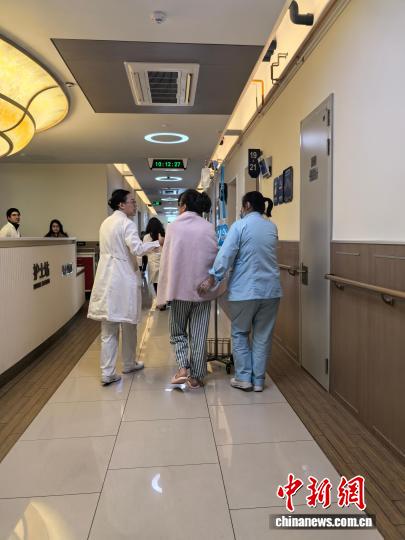
探访沪上医院免陪照护服务:护理员成护士好帮手、患者更安心
Zhong Guo Xin Wen Wang· 2026-02-06 06:36
Core Viewpoint - The article discusses the implementation of "no-accompaniment care services" in Shanghai hospitals, highlighting the benefits for patients and their families, as well as the role of trained caregivers in enhancing patient care and reducing family burdens [1][5]. Group 1: Implementation of No-Accompaniment Care Services - Multiple medical institutions in Shanghai are exploring "no-accompaniment care services" to address the challenges posed by an aging population [1]. - Fudan University Affiliated Zhongshan Hospital has achieved full coverage of no-accompaniment care services in 87 wards, significantly improving patient comfort and reducing the need for family members to provide care [1][4]. - As of January 2026, the no-accompaniment care service has expanded to 57 hospitals, covering 1,313 wards and providing 47,037 service beds, with a total of 925,000 patients served [5]. Group 2: Role and Training of Caregivers - Caregivers, now referred to as "nursing assistants," are trained under the supervision of nurses, allowing them to perform basic care tasks and communicate effectively with patients [3][4]. - The training includes guidance on patient recovery techniques, such as effective coughing to promote lung recovery post-surgery [3]. - The integration of caregivers into the healthcare team has led to a more efficient and standardized care mechanism, enhancing overall service quality [7][8]. Group 3: Innovations and Future Developments - The establishment of the "No-Accompaniment Care Champion Studio" at Shanghai Seventh People's Hospital aims to set a benchmark for professional no-accompaniment care services, incorporating expertise from various provinces [8][10]. - The studio will focus on upgrading clinical services and optimizing care standards, with an emphasis on comprehensive care that includes rehabilitation and psychological support [10]. - Future plans include extending care services from hospitals to community and family settings, aiming to cultivate leadership talent in the caregiving field and establish industry standards [10].

Fresenius (OTCPK:FSNU.F) FY Conference Transcript
2026-01-14 18:02
Summary of Fresenius SE Conference Call Company Overview - Fresenius SE is a comprehensive healthcare company with a diverse portfolio including hospitals, pharmaceuticals, medical technology, and innovative products and services [2][3] Key Industry Trends - **Longevity Trend**: Increasing aging population and rising chronic diseases leading to workforce challenges [3][4] - **Healthcare System Inefficiencies**: Most systems, especially in Western countries, are inefficient, creating opportunities for Fresenius to address these challenges [4] - **Generics Market**: 90% of prescribed drugs in the U.S. are generics, accounting for only about 10% of costs, positioning Fresenius as a solution provider in drug shortages [5] Business Segments Fresenius Kabi - **IV Generics and Fluids**: Strong market position with stable growth (2%-3%) and high margins (22%) [7][8] - **Nutrition**: Significant growth (46% market growth) with a projected $2.5 billion business growing at 4%-6% [9] - **Biopharma**: Expected to reach nearly $1 billion in sales by 2026, with a target to double revenues by 2030 [10][11] Hospital Business - Largest hospital chains in Germany (Helios) and Spain (Quirónsalud) with a focus on quality and efficiency [12][13] - High margins and stable earnings, with ongoing structural changes to increase efficiency [13] Financial Performance - **Growth Metrics**: 6% growth in Q1 to Q3, with EPS growth of 14% [14] - **Debt Management**: Improved net debt to EBITDA ratio from nearly 4 to 3.0, allowing for capital deployment [14][24] - **Capital Allocation**: Focus on R&D, CapEx, and potential bolt-on M&As to scale operations [21][24] Strategic Focus - **Rejuvenation Phase**: Emphasis on innovation and execution to drive incremental revenue and margin expansion [20] - **Management Incentives**: New share ownership guidelines for leadership to align interests with shareholders [17] Market Dynamics - **U.S. Market**: Fresenius covers 70% of the FDA Essential Medicines List, playing a vital role in addressing drug shortages [28][29] - **China Market**: Challenges due to Value-Based Procurement (VBP) but potential for growth with new factory openings [35] MedTech and Innovation - **Growth in MedTech**: Expected growth of 8%-10% driven by innovative products like the Ivenix pump and software solutions [36][37] - **Biosimilars**: Focus on expanding market presence and leveraging regulatory changes to enhance competitiveness [40][41] Challenges and Outlook - **Regulatory Environment**: Anticipated changes may reduce costs and time to market but also increase competition [44] - **Helios Germany**: Facing headwinds in 2025 but potential tailwinds in 2026 with industry surcharges [46] Conclusion - Fresenius SE is well-positioned to capitalize on healthcare trends and inefficiencies, with a strong focus on innovation, operational efficiency, and strategic capital deployment to drive future growth [22][27]
医院为什么安排一个人按电梯?
Hu Xiu· 2025-07-04 06:33
Core Viewpoint - The role of elevator operators in hospitals is crucial for maintaining order and efficiency, despite some public skepticism regarding the necessity of this position [2][3][29]. Group 1: Importance of Elevator Operators - Elevator operators, often referred to as "elevator drivers," play a vital role in managing hospital traffic, especially during peak hours when patient flow is high [4][5]. - They help maintain order in crowded elevators, ensuring that vulnerable groups such as pregnant women and patients with disabilities can access the elevators safely [8][9]. - In emergency situations, elevator operators are key in facilitating quick patient transport, as demonstrated by a case where an operator efficiently coordinated medical assistance for an unconscious patient [10][11]. Group 2: Operational Responsibilities - Elevator operators are responsible for the safe operation of elevators, guiding passengers, and maintaining cleanliness and sanitation [6][18]. - They must adapt to the specific needs of different patient demographics, such as families accompanying children, which can increase elevator capacity demands [7][8]. - The role includes preventing unauthorized use of medical elevators and ensuring that emergency protocols are followed [11][12]. Group 3: Training and Qualifications - Elevator operators are required to hold relevant certifications and undergo regular training to handle various medical scenarios that may arise in elevators [20][21]. - The hiring process for elevator operators often involves public procurement, ensuring that qualified personnel are employed without occupying hospital staff positions [15][16]. Group 4: Impact on Patient Experience - The efficiency of elevator services directly affects patient satisfaction and the overall quality of care, as long wait times can lead to increased frustration among patients [23][25]. - Hospitals are increasingly focusing on improving elevator service quality, recognizing its impact on patient experience and operational efficiency [27][28]. - The absence of elevator operators could lead to increased wear and tear on elevator systems, further complicating patient transport and care delivery [22][28].