
免陪照护

Search documents
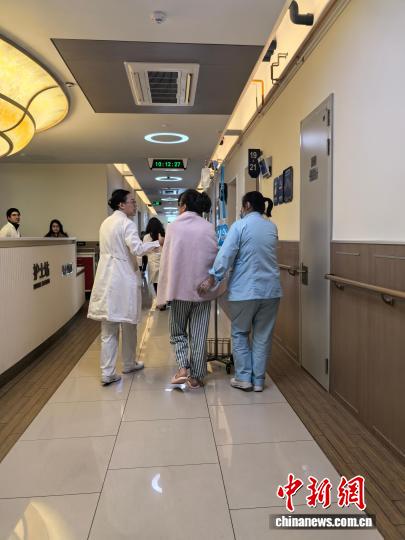
探访沪上医院免陪照护服务:护理员成护士好帮手、患者更安心
Zhong Guo Xin Wen Wang· 2026-02-06 06:36
Core Viewpoint - The article discusses the implementation of "no-accompaniment care services" in Shanghai hospitals, highlighting the benefits for patients and their families, as well as the role of trained caregivers in enhancing patient care and reducing family burdens [1][5]. Group 1: Implementation of No-Accompaniment Care Services - Multiple medical institutions in Shanghai are exploring "no-accompaniment care services" to address the challenges posed by an aging population [1]. - Fudan University Affiliated Zhongshan Hospital has achieved full coverage of no-accompaniment care services in 87 wards, significantly improving patient comfort and reducing the need for family members to provide care [1][4]. - As of January 2026, the no-accompaniment care service has expanded to 57 hospitals, covering 1,313 wards and providing 47,037 service beds, with a total of 925,000 patients served [5]. Group 2: Role and Training of Caregivers - Caregivers, now referred to as "nursing assistants," are trained under the supervision of nurses, allowing them to perform basic care tasks and communicate effectively with patients [3][4]. - The training includes guidance on patient recovery techniques, such as effective coughing to promote lung recovery post-surgery [3]. - The integration of caregivers into the healthcare team has led to a more efficient and standardized care mechanism, enhancing overall service quality [7][8]. Group 3: Innovations and Future Developments - The establishment of the "No-Accompaniment Care Champion Studio" at Shanghai Seventh People's Hospital aims to set a benchmark for professional no-accompaniment care services, incorporating expertise from various provinces [8][10]. - The studio will focus on upgrading clinical services and optimizing care standards, with an emphasis on comprehensive care that includes rehabilitation and psychological support [10]. - Future plans include extending care services from hospitals to community and family settings, aiming to cultivate leadership talent in the caregiving field and establish industry standards [10].

构建优质的免陪照护“上海模式”
Xin Lang Cai Jing· 2026-02-05 07:53
Core Viewpoint - The proposal to promote "unaccompanied care services" aims to enhance the quality and efficiency of medical services, addressing the challenges faced by families with hospitalized patients [1][2]. Group 1: Current Situation and Challenges - The unaccompanied care service allows professional caregivers to provide 24-hour care for hospitalized patients without the need for family members to be present [1]. - As of mid-November 2025, 57 medical institutions in Shanghai have implemented unaccompanied care services, serving a total of 434,000 patients with an average satisfaction rate of 98.7% [2]. - Challenges include the lack of integration of service costs into health insurance, uneven implementation across different hospital wards, high turnover rates among caregivers, and a significant gap in the age, education, and professional qualifications of caregivers compared to actual needs [2]. Group 2: Recommendations for Improvement - The proposal suggests innovating payment mechanisms and integrating costs into health insurance, expanding coverage to include II and III level care patients, and exploring connections with long-term care insurance [3]. - Enhancing the attractiveness of the caregiving profession through the implementation of national occupational standards, improving the age and education structure of caregivers, and establishing a clear career advancement pathway linked to compensation [3]. - Increasing public awareness and understanding of the service by integrating policy explanations into family doctor services and creating a unified platform for patient satisfaction evaluation and public reporting [3].
国家级培训基地落地省肿瘤医院
Xin Lang Cai Jing· 2026-01-19 17:08
Core Viewpoint - The establishment of a specialized training program for medical caregivers at Jiangsu Provincial Cancer Hospital aims to enhance the quality of care for cancer patients, addressing the increasing demand for professional support in patient care [1][2]. Group 1: Training Program Overview - Jiangsu Provincial Cancer Hospital is the only tertiary hospital in Jiangsu approved as a national training base for medical caregivers, highlighting its clinical resources and oncology specialization [2]. - The training program focuses on transforming caregiver roles from basic life support to professional auxiliary nursing, emphasizing the importance of caregivers in the healthcare system [2][3]. Group 2: Training Methodology - The training combines theoretical education, practical skills, and intelligent technology, utilizing both online and offline methods, including virtual simulation teaching [3][4]. - Topics covered in the training include legal regulations, professional ethics, life care, communication skills, and vital signs monitoring, ensuring a comprehensive skill set for caregivers [3]. Group 3: Practical Application and Patient Care - Practical training emphasizes specialized skills for oncology care, such as rehabilitation exercises for breast cancer patients and mobility support for lung cancer patients [4]. - The program aims to implement a "no accompanying care" service model, where trained caregivers provide comprehensive support in various aspects of patient care, including hygiene, nutrition, and emotional support [5][6]. Group 4: Initial Outcomes and Impact - Initial results from the pilot program indicate a reduction in complications such as pressure sores and infections in ICU patients, with families expressing increased confidence in the care provided by trained medical caregivers [6].
广东省110家医院率先成立免陪照护医院联盟
Zhong Guo Chan Ye Jing Ji Xin Xi Wang· 2025-05-18 22:39
Group 1 - The establishment of the "No Accompaniment Care Hospital Alliance" in Guangdong involves 110 hospitals, aiming to explore operational mechanisms, quality control standards, and training systems for no accompaniment care services [1] - No accompaniment care is gaining traction in the medical field, where professional caregivers replace family members to provide care during hospitalization, integrating medical, nursing, and daily care [1] Group 2 - The Guangdong Provincial Nursing Association plans to collaborate with vocational schools and medical institutions to train 1,000 no accompaniment care designers and nurse mentors, along with 10,000 health caregivers within three years [2] - The initiative includes selecting outstanding nursing management personnel for top-level design of no accompaniment care services, focusing on various aspects such as health policy, management systems, and service quality evaluation [2] - A partnership was formed between the Guangdong Provincial Nursing Association and China People's Property Insurance Company to explore new cooperation models for integrating insurance resources with nursing services [2] Group 3 - Starting from April this year, Guangdong public hospitals have implemented price standards for no accompaniment care services, with plans to enhance payment mechanisms and encourage insurance companies to cover related costs [2]
广东率先成立免陪照护医院联盟
Nan Fang Ri Bao Wang Luo Ban· 2025-05-13 08:26
Group 1 - The concept of "unaccompanied care" is gaining traction in the healthcare sector, with 110 hospitals in Guangdong forming an alliance to explore its operational mechanisms and quality control standards [1] - The alliance aims to provide sustainable solutions for China's aging society by integrating medical, nursing, and daily care services through professional caregivers [1] - The initiative is supported by the Guangdong Provincial Nurses Association, which emphasizes the importance of replicable and scalable models for unaccompanied care [1] Group 2 - The Guangdong Provincial Nursing Department announced a plan to train 1,000 unaccompanied care designers and 10,000 health caregivers within three years, collaborating with vocational schools and medical institutions [2] - The unaccompanied care designers will be selected from top nursing management personnel to participate in the design and standardization of unaccompanied care services [2] - A partnership was established between the Guangdong Provincial Nurses Association and China People's Property Insurance Company to explore new insurance models that could cover unaccompanied care service costs [2] Group 3 - Starting from April this year, Guangdong public hospitals have implemented pricing standards for unaccompanied care services, aiming to alleviate public concerns regarding costs [2] - The province is working on improving payment mechanisms to encourage insurance companies to include unaccompanied care service fees in commercial insurance [2] - The initiative includes the development of new insurance products or the optimization of existing ones to cover related costs of unaccompanied care services [2]