
园林园艺

Search documents
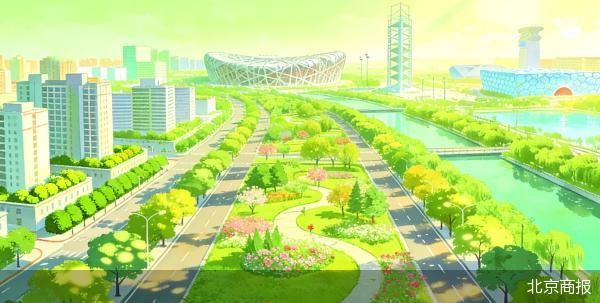
花园城市让2100万市民可感可及
Bei Jing Shang Bao· 2026-01-28 16:20
Core Viewpoint - Beijing aims to transform into a "Garden City" by 2026, focusing on enhancing green welfare for its over 21 million residents through the "14th Five-Year Plan" and specific urban development goals [1][5]. Group 1: Urban Development Goals - The city plans to construct 10 urban leisure parks and add 100 hectares of park green space as part of its 2026 economic and social development plan [1]. - The "14th Five-Year Plan" outlines a target for park green space service radius coverage to reach 94% within built-up areas [5]. Group 2: Ecological Initiatives - Beijing intends to add 100 ecological parks and create vibrant waterfronts in each district, promoting ecological diversity [5]. - The city will also develop pocket parks and micro green spaces, making green services more accessible [5]. Group 3: Technological Integration - Artificial intelligence is proposed as a crucial support tool for the construction of the Garden City, enhancing urban governance and public services [7]. - AI can facilitate precise maintenance of green spaces, water resource management, and ecological risk monitoring, contributing to a greener urban environment [7]. Group 4: Community Engagement and Accessibility - The city plans to implement "boundary-less" parks, enhancing public access and integrating green spaces into daily life [8]. - Goals include achieving 3,000 meters of greenway per 10,000 people and promoting rooftop greening with an additional 1 million linear meters of vertical greening [8].

机构风向标 | 共创草坪(605099)2025年三季度已披露持仓机构仅5家
Xin Lang Cai Jing· 2025-10-31 03:17
Core Insights - The report indicates that as of October 30, 2025, a total of 5 institutional investors hold shares in Gongchuang Turf (605099.SH), with a combined holding of 83.844 million shares, representing 20.83% of the total share capital [1] - The institutional holding percentage has increased by 0.22 percentage points compared to the previous quarter [1] - There are 22 public funds that have not disclosed their holdings in the current period, including notable funds such as Changcheng Anxin Return Mixed A and Guotai Shanghai Composite ETF [1] Institutional Holdings - Five institutional investors are reported to hold a total of 83.844 million shares, which is 20.83% of Gongchuang Turf's total equity [1] - The institutional investors include Jiangsu Baisite Investment Group Co., Ltd., Hong Kong Central Clearing Limited, Huai'an Chuangxiang Venture Capital Center (Limited Partnership), and two trusts from China Foreign Economic and Trade Trust Co., Ltd. [1] - The increase in institutional holding percentage indicates a growing interest from institutional investors in Gongchuang Turf [1] Public Fund Disclosures - In the current reporting period, 22 public funds have not disclosed their holdings, which includes several prominent funds [1] - The listed funds include Changcheng Anxin Return Mixed A, Guotai Shanghai Composite ETF, and Dongfanghong Dividend Quantitative Selection Mixed Initiation A among others [1]

上海建乡土草本植物扩繁基地 让“野花野草”组队进公园
Jie Fang Ri Bao· 2025-10-21 01:48
Core Viewpoint - The article emphasizes the importance of native wildflowers and grasses in enhancing biodiversity in urban areas, highlighting Shanghai's initiative to promote these plants through cultivation and integration into public green spaces [1][2]. Group 1: Native Plant Cultivation - Shanghai has established a breeding base for native herbaceous plants, currently cultivating 69 indigenous species to supply parks and green spaces [1]. - The initiative aims to address the lack of market demand and commercial production for many native plants, which are often overlooked despite their ecological benefits [1]. Group 2: Plant Grouping and Adaptation - A selection of native plants has been organized into groups based on their characteristics, such as shade tolerance and aesthetic appeal, to enhance their chances of being included in public parks [2]. - The "Shade Tolerance Team" includes species like snake berry and bloodwort, which are suited for low-light environments and can coexist without competing for resources [2]. Group 3: Biodiversity and Environmental Benefits - The introduction of native plants has led to an increase in local wildlife, with reports of 12 to 15 new bird species observed in transformed areas, indicating a positive impact on biodiversity [2]. - Utilizing native wildflower and grass combinations in parks is seen as an environmentally friendly approach, potentially reducing maintenance costs by 20-30% compared to traditional turf grass [3].