
城市管理

Search documents
调度公共自行车2.7万辆次 苏州城管多措并举保障假日期间城市环境
Su Zhou Ri Bao· 2026-02-26 00:38
Group 1 - The Suzhou urban management department ensured a safe and orderly operation during the Spring Festival, with a total of 432,000 personnel deployed for city appearance and environmental protection [1] - The sanitation system was fully staffed, focusing on enhancing facilities, personnel, and cleaning frequency, resulting in 392,000 sanitation workers deployed [1] - The urban management department supported 958 themed consumption activities and 4,258 outdoor setups, contributing to a vibrant holiday economy [1] Group 2 - Public bicycles and shared bicycles were actively managed, with a total of 156,000 bike rentals and returns, and 27,000 vehicle adjustments made [2] - The urban management system deployed 26,000 law enforcement personnel, conducting inspections on 51,000 roads and addressing 53,266 issues [2] - The city processed 119,961 tons of household waste during the holiday, ensuring a clean urban environment [3]
南京鼓楼城管开展节前执法为民系列服务
Xin Lang Cai Jing· 2026-02-12 12:21
Group 1 - The article discusses the efforts of the Nanjing Gulou Urban Management Enforcement Team to create a safe, clean, and orderly environment ahead of the Spring Festival [1] - The Huashiao Road team conducted a large-scale rectification of outdoor electronic display screens, emphasizing the principle of "who sets it up, who is responsible" and promoting safety management responsibilities [1] - The Jiangdong team, in collaboration with volunteers, focused on the express delivery industry, increasing inspection frequency and enforcing regulations on sorting and waste management [1] Group 2 - The Water Affairs team visited an elderly resident living alone, checking on their health and safety, and assisting with household cleaning while delivering holiday wishes [2] - This visit marks the ninth consecutive year of outreach to the elderly, reflecting a commitment to community service and party values [2]
春节期间杭州5.6万 道路公共车位免费开放
Mei Ri Shang Bao· 2026-02-11 22:23
Group 1 - The core point of the article is that during the Spring Festival from February 15 to February 23, 2026, the Hangzhou urban management department has adjusted the road parking fee policy, making parking free for 56,000 public road parking spaces citywide, except for the West Lake scenic area [1] - The West Lake scenic area will implement a specific parking fee structure during the holiday: for small vehicles, the charge is 30 yuan per hour from 8 AM to 8 PM, and 5 yuan per session from 8 PM to 8 AM the next day; for large vehicles, the charge is 10 yuan per hour from 8 AM to 8 PM, and 5 yuan per session from 8 PM to 8 AM the next day [1] - The Hangzhou urban management department has issued a reminder to citizens to adhere to traffic regulations and maintain parking order, encouraging them not to occupy road parking spaces for extended periods to ensure that free parking resources benefit more drivers [1]
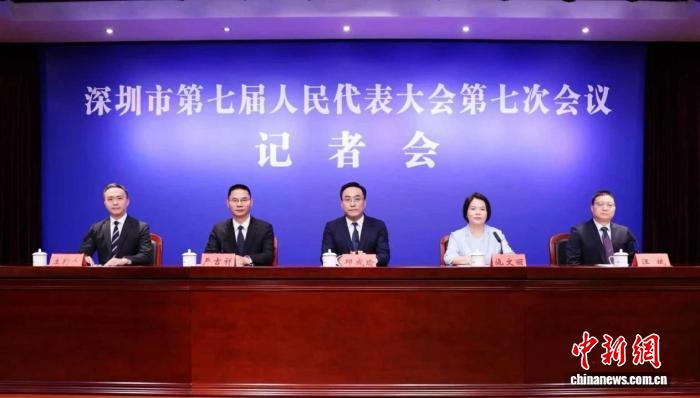
“十四五”期间深圳九大类民生支出达1.6万亿元
Zhong Guo Xin Wen Wang· 2026-02-11 09:42
Core Insights - During the "14th Five-Year Plan" period, Shenzhen's total expenditure on nine categories of livelihood reached 1.6 trillion yuan, accounting for nearly 70% of fiscal spending [1][3] Education Sector - Shenzhen implemented the "Million Student Places Initiative," adding 980 new or expanded primary and secondary schools and kindergartens, resulting in 1.025 million new educational places, surpassing the total from the previous two five-year plans [1] - The city plans to add over 100,000 public high school places during the "15th Five-Year Plan" period [1] - The education department aims to embrace the intelligent era, focusing on a holistic growth monitoring system and the establishment of future schools to foster innovative skills in students [1] Cultural and Sports Development - Over the "14th Five-Year Plan" period, Shenzhen added more than 1.1 million square meters of public cultural facilities and over 20 million square meters of sports venues, with more than 4.9 million sports facilities available [3] - By 2025, Shenzhen expects to receive 207 million tourists, a year-on-year increase of 10.9%, with total tourism revenue projected at 314.73 billion yuan, up 14.4% year-on-year [3] - The city aims to leverage the APEC meeting to enhance its status as a world-class tourist and leisure destination [3] Healthcare Services - Shenzhen established 21 municipal medical centers and 21 grassroots medical groups, increasing the number of hospital beds to 5 per 1,000 people and doctors to 3.1 per 1,000 people [3] - The city has over 1,000 community health service institutions, achieving a "15-minute community health service circle" [3] - The number of national clinical key specialties increased to 31, and the number of top-tier hospitals reached 33, with a hospitalization rate stabilizing at around 98% [3] Elderly and Childcare Services - Shenzhen built 878 elderly-friendly medical institutions, with over 70% of secondary and higher public hospitals offering geriatric medicine, achieving an elderly health management rate exceeding 80% [4] - The city has created 109,000 childcare places for children under three years old, with integrated childcare institutions covering all districts [4] Urban Development - Shenzhen opened 144 parks during the "14th Five-Year Plan," bringing the total to 1,350 parks, with plans to increase the total to 1,450 by 2030 [4] - The city aims to expand its walking paths to 5,000 kilometers and leisure cycling paths to over 800 kilometers [4]

一字观年景·精丨精细“绣花”
Guang Xi Ri Bao· 2026-02-09 03:27
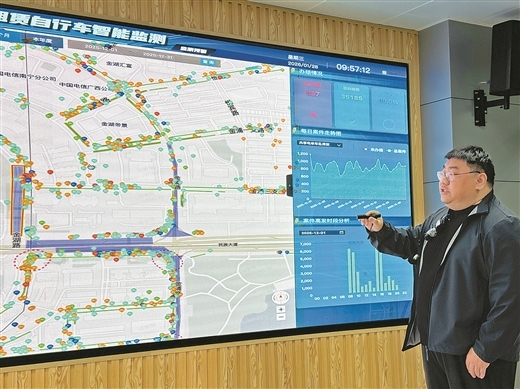
Core Viewpoint - The implementation of the "City Management into Communities" model in Nanning is enhancing grassroots governance, improving management efficiency, and creating a better living environment for residents [2]. Group 1: Urban Management Innovations - Nanning has pioneered the "City Management into Communities" model, deploying urban management personnel to 262 communities, achieving full coverage in the region [2]. - The introduction of the "Three Responsibility Lists" addresses the ambiguity in responsibilities, clarifying what needs to be done and how, thus providing a framework for community management [3]. - The use of AI technology, such as AI patrol vehicles, has significantly increased the efficiency of identifying urban issues, with a reported 10-fold improvement in event detection compared to traditional methods [6]. Group 2: Community Engagement and Response - The establishment of a rapid response mechanism allows for effective resolution of community issues, with a focus on proactive service rather than reactive enforcement [5]. - The integration of community feedback into management practices has led to improved efficiency in addressing resident complaints, thereby enhancing overall satisfaction [5]. - The deployment of smart monitoring systems for shared bicycles and other urban elements has facilitated real-time management and improved urban order [6]. Group 3: Future Developments - Nanning is accelerating the construction of an intelligent urban management hub, utilizing data and AI to optimize processes and enhance citizen participation in governance [7]. - The city aims to transform into a modern, livable urban environment, with ongoing efforts to make governance more efficient and responsive to the needs of its residents [7].
数智赋能城市治理
Xin Lang Cai Jing· 2026-02-02 18:02
Core Insights - The article discusses the implementation of a smart city management platform in Xining's Chengxi District, aimed at enhancing urban management efficiency and law enforcement effectiveness [1][2] - The "Digital Chengxi - Smart City Management" platform has shown significant improvements in response times and incident management since its trial run began on December 1, 2025 [1] Group 1: Smart City Management Implementation - The smart city management platform has monitored and issued warnings for 397 general incidents, with 286 assigned incidents fully resolved and 111 minor incidents automatically rectified through system prompts [1] - Compared to traditional manual inspection methods, the average law enforcement response time has been reduced by 90%, and response efficiency has improved by approximately 95% [1] - The occurrence rates of street occupation and illegal parking of non-motor vehicles have decreased by 88.9% and 90%, respectively [1] Group 2: Operational Framework and Training - The establishment of a closed-loop management system for smart city case handling has been formalized through the "Smart City Management Case Handling Closed-Loop Management Measures," ensuring comprehensive process management from problem identification to resolution [2] - Specialized training for law enforcement personnel has been organized to ensure effective use of the new system and processes, promoting the integration of regulations and technology in practical work [2] - A data analysis mechanism has been established, focusing on weekly and monthly reviews to identify management weaknesses and potential risks, thereby enhancing governance and service efficiency [2]
树池“微改造”,治理“大情怀”
Xin Lang Cai Jing· 2026-01-29 21:59
Core Viewpoint - Nanning's recent "micro-renovation" of tree pits has received widespread praise from citizens, enhancing pedestrian safety and comfort while reflecting a commitment to urban governance that prioritizes the public's needs [1][2][3] Group 1: Urban Governance Initiatives - The adjustment of tree pits to be level with the sidewalk has eliminated tripping hazards and improved the overall pedestrian experience, showcasing a focus on urban detail optimization [1] - Nanning's ongoing efforts to improve the travel environment include regulating street vendors, removing abandoned utility poles, and optimizing traffic flow at congested intersections, all aimed at benefiting citizens directly [1][2] Group 2: Long-term Governance Mechanisms - The "micro-governance" approach, which emphasizes addressing small but impactful issues in citizens' daily lives, is a key aspect of Nanning's urban planning strategy, as outlined in the "14th Five-Year Plan" [2] - Nanning has institutionalized effective practices, such as combining regulation with guidance for street vendors and actively soliciting citizen feedback during public facility renovations, ensuring a dynamic and participatory governance process [2] Group 3: Citizen-Centric Focus - The effectiveness of urban governance is ultimately judged by citizen satisfaction, and the recent changes reflect a genuine commitment to addressing public concerns and improving quality of life [3] - Nanning is encouraged to continue its detailed governance efforts, particularly in high-traffic areas, to enhance urban mobility and living conditions, thereby transforming citizens' aspirations for a better life into tangible experiences [3]
擦亮城市治理“金字招牌” 广州全面启动“门前三包”提质增效行动
Guang Zhou Ri Bao· 2026-01-29 02:00
Core Viewpoint - Guangzhou is enhancing the "Three Guarantees" responsibility system to address urban challenges and improve the business environment, leveraging 42 years of innovative practices and experiences from the Liwan District as a model [1] Group 1: Implementation Strategies - The city will implement a dual strategy of "quality enhancement" and "shortcomings tackling," aiming to create 100 "most beautiful streets" and improve 100 weak areas [2] - Guangzhou plans to utilize smart technology through an "one store, one code, one file" platform, employing AI and video inspections to address blind spots in human patrols [2] - The establishment of at least 500 self-governing organizations is planned to promote a community-driven approach, encouraging public participation in urban management [2] Group 2: Liwan District Initiatives - Liwan District is serving as a pilot area, implementing a high-level coordination mechanism with district leaders assigned to oversee key roads [3] - The district has introduced a differentiated governance model, categorizing areas into strict, controlled, and regulated zones for tailored management [3] - The "one store, one code" initiative in Liwan encourages public supervision through a digital platform, creating a closed-loop system for inspection, guidance, and enforcement [3] Group 3: Digital Management and Community Engagement - The "Three Guarantees" system is being digitized, with public complaint QR codes displayed at storefronts, allowing citizens to report issues easily [4][5] - The integration of daily checks and records into an electronic platform has streamlined the management process, reducing the workload for enforcement personnel [6] - A points-based evaluation system is being established to incentivize merchants' compliance with the "Three Guarantees" responsibilities, with public satisfaction as a key metric for success [7]
广州启动“门前三包”提质增效行动,打造百个“最美街区”
Nan Fang Du Shi Bao· 2026-01-28 12:28
Core Viewpoint - Guangzhou is implementing a dual strategy of "quality enhancement" and "shortcomings tackling" to improve urban management, aiming to create 100 "most beautiful blocks" and address 100 weak areas through demonstration and focused breakthroughs [1][3]. Group 1: Initiatives and Strategies - The city will establish a high-level coordination mechanism with district leaders responsible for main roads, ensuring accountability through a "one road, one policy" approach [2]. - Guangzhou has resolved over 2.6 million urban appearance issues and established 135 self-discipline organizations, enhancing the city's image and public welfare [3]. - The city plans to leverage smart technology by implementing an "intelligent platform" for businesses, utilizing AI and automated video inspections to address human oversight in inspections [3]. Group 2: Pilot Programs and Community Involvement - The Liwan District is pioneering differentiated governance by categorizing control areas into three levels: "strictly prohibited, strictly controlled, and regulated" to tailor management to specific environments [2]. - The district has initiated a "one shop, one code" trial to encourage public supervision through a "reporting" mechanism, fostering community engagement [2]. - Guangzhou aims to form at least 500 self-governing organizations across the city to promote a collaborative governance model, encouraging widespread community participation [3].
南京建邺城管:科技赋能破痛点,服务升级惠企行
Yang Zi Wan Bao Wang· 2026-01-27 11:04
Core Insights - The article discusses the implementation of a digital reform in construction waste management in Nanjing, aimed at improving the efficiency of transportation approval processes for small engineering vehicles [1][2]. Group 1: Digital Reform Implementation - The Nanjing Jianye District Urban Management Comprehensive Administrative Law Enforcement Team organized a training session for transportation companies to introduce an online certification system [1]. - The training emphasized the core requirements of the "release, management, and service" reform, focusing on the policy basis, operational norms, and advantages of the online certification system [1]. Group 2: Efficiency Improvements - The new system significantly simplifies the approval process, reducing processing time by over 40% compared to traditional methods, which lowers operational costs for companies and enhances regulatory efficiency [2]. - The digital transformation aims to establish a smart regulatory system that ensures traceability and control throughout the entire process of construction waste management [2]. Group 3: Training and Support - During the training, enforcement personnel provided hands-on guidance to participants on how to navigate the online system, covering all critical steps from application initiation to progress tracking [1]. - The session included a Q&A segment where participants' inquiries regarding document submission formats and real-time approval tracking were addressed, and suggestions for system optimization were collected for future upgrades [1][2].