
工业遗产保护与开发

Search documents
从“工业锈带”转向“生活秀带”
Ren Min Wang· 2025-11-23 10:04
Core Perspective - The article discusses the recognition and preservation of industrial heritage in China, highlighting its cultural significance and the ongoing efforts to revitalize these sites for modern use [4][8]. Group 1: Industrial Heritage Significance - Industrial heritage serves as a testament to industrial civilization and collective memory of workers, becoming an important part of national cultural heritage [4]. - The history of the alum stone mine in Cangnan, Wenzhou, dates back over 600 years, showcasing the long-standing industrial practices in the region [4]. Group 2: Preservation and Revitalization Efforts - Cangnan has invested 7.3 million yuan in the protection and renovation of the Fude Bay miner's village, which has received accolades for its cultural heritage preservation [5]. - The transformation of industrial sites into cultural and tourism spaces, such as the underground mine scenic area and a mining-themed hotel, reflects a successful integration of heritage protection and tourism development [5]. Group 3: Urban Development and Sustainability - The Yangpu Riverside area in Shanghai, with a total length of 15.5 kilometers, has undergone comprehensive surveys and protection efforts for its industrial heritage, including over 200 old buildings [6]. - The revitalization of the Hangzhou Steel Plant site into an ecological park and cultural space demonstrates a commitment to sustainable urban development and the reuse of industrial heritage [7]. Group 4: Future Directions and Community Engagement - There is a growing societal interest in the active utilization of industrial heritage, exploring new models for education, tourism, and industrial restructuring [8].

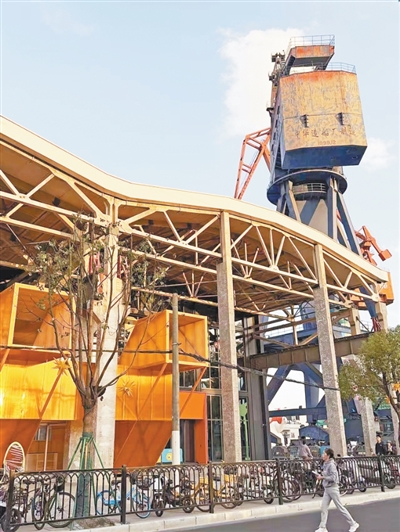
从“工业锈带”转向“生活秀带”(传承之光)
Ren Min Ri Bao· 2025-11-21 22:26
Core Viewpoint - The Ministry of Industry and Information Technology has identified the seventh batch of national industrial heritage sites, highlighting the importance of industrial heritage as a significant part of national cultural heritage and reflecting the collective memory of workers in the industrialization process [1][2]. Group 1: Industrial Heritage Significance - Industrial heritage serves as a testament to industrial civilization and embodies the collective memory of countless workers involved in industrial development [1]. - Since the establishment of New China, the country has completed its industrialization process in a few decades, establishing a comprehensive modern industrial system that nurtures valuable spiritual wealth [1]. - The historical significance of industrial heritage is underscored by the unique characteristics of modern technological heritage, which reflects both traditional values and the spirit of modernization [2]. Group 2: Case Studies of Industrial Heritage - The Cangnan Alunite Mine site, recognized for its unique industrial relics, has a history of alunite mining dating back over 600 years, with recent efforts focused on ecological protection and heritage preservation [1][2]. - The Yangpu Riverside area in Shanghai, with a total length of 15.5 kilometers, has undergone comprehensive surveys and protection measures for numerous historical buildings, preserving over 200 old buildings, including 66 industrial structures [3]. - The Hangzhou Steel Plant, established in 1957 and closed in 2016, is undergoing ecological restoration and functional transformation, aiming to convert industrial "brownfields" into parks and cultural spaces [4]. Group 3: Sustainable Development and Urban Transformation - Sustainable development emphasizes balancing human production and living styles with the earth's carrying capacity, promoting urban development that is economically, socially equitable, and environmentally friendly [4]. - The reuse of industrial heritage can reduce material consumption, save energy, and control urban land expansion, contributing to the construction of resilient and sustainable cities [5]. - There is a growing societal interest in the holistic protection and activation of industrial heritage, exploring new models and industries such as education, tourism, and industrial restructuring [5].