工业遗产保护

Search documents
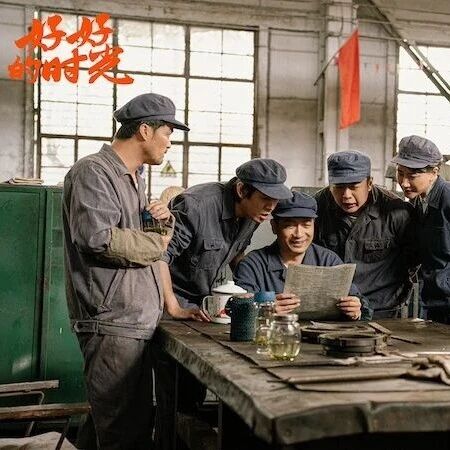
《好好的时光》热播,年代剧能带火云南老工业基地吗
第一财经· 2026-03-09 12:02
Core Viewpoint - The article discusses the impact of the popular drama "Good Times" on the development of old industrial communities and the preservation of industrial heritage, highlighting the potential for tourism and local economic growth through cultural and historical storytelling [3][10]. Group 1: Industrial Heritage and Community Development - The filming locations of "Good Times" include various old industrial sites in Yunnan Province, particularly in the towns of Anning and Yimen, which have preserved their industrial heritage from the 20th century [6][8]. - The town of Lvzhi, a key filming site, has transformed its industrial heritage into tourism opportunities, including the development of cultural and leisure facilities such as walking paths and guesthouses [6][10]. - The Kunming Steel Company, established in 1939, is recognized as a national industrial heritage site, showcasing the complete industrial chain and serving as a backdrop for multiple television productions [8][9]. Group 2: Challenges and Recommendations - Experts suggest that while the popularity of dramas can attract visitors, it is challenging to sustain tourism solely based on a single production; continuous tourism activities and improved local services are essential for long-term benefits [11][13]. - Local governments are encouraged to create a sustainable tourism model that integrates the filming of dramas with community development, ensuring that the economic benefits support the preservation of industrial heritage and local memories [13][14]. - Other cities, such as Panzhihua and Liupanshui, are exploring similar strategies by leveraging historical elements and transforming industrial sites into creative and wellness hubs to revitalize old communities [13].

是矿山公园,也是文化客厅
Xin Lang Cai Jing· 2026-02-19 23:02
Core Viewpoint - The transformation of the Kailuan National Mine Park from an industrial site to a cultural and tourism hub exemplifies a successful model of urban renewal that preserves historical significance while revitalizing the area for modern use [1][5]. Group 1: Historical Significance - The Kailuan Museum houses 47 national first-class cultural relics and over ten thousand collections, showcasing the history of modern Chinese industry, including the earliest existing stock certificate from 1881 [1][2]. - The museum's exhibits serve as a "gene map" of China's industrial civilization, emphasizing the importance of preserving industrial heritage [2]. Group 2: Urban Renewal Strategy - The Kailuan Group opted for "protective renewal" instead of demolition, aiming to activate the "spatial value" of old industrial facilities [2][4]. - The design team applied a "minimal intervention" principle, preserving original textures and features of the abandoned mining tunnels while enhancing safety and functionality [2][4]. Group 3: Cultural Integration - The transformation includes various cultural and creative spaces, such as the Kailuan 1878 Cultural and Creative Park, which integrates historical elements with modern amenities [3][4]. - The park features training programs for children in traditional arts, ensuring the transmission of local cultural heritage [4]. Group 4: Tourism Development - The Kailuan National Mine Park, along with the Tangshan South Lake Tourist Area, has been upgraded to a national 5A tourist attraction, highlighting the successful conversion from an industrial site to a cultural tourism destination [5]. - The narrative of urban renewal is framed as a reunion with history, allowing the city to embrace its past while moving forward [5].

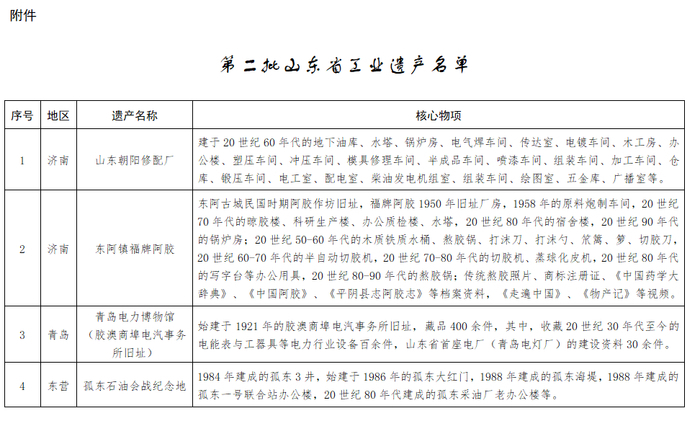
共17处,山东公布第二批山东省工业遗产名单
Feng Huang Wang Cai Jing· 2026-01-07 00:14
Core Viewpoint - The Shandong Provincial Department of Industry and Information Technology has announced the second batch of industrial heritage sites, which includes 17 locations such as Shandong Chaoyang Repair Factory and Dong'e Fupai Ejiao. The announcement emphasizes the need for effective protection and innovative utilization of these industrial heritages to promote the integration of heritage preservation with urban renewal and support the construction of a strong manufacturing province [1]. Summary by Categories Industrial Heritage Sites - The list includes notable sites such as: - Shandong Chaoyang Repair Factory, established in the 1960s, featuring various workshops and facilities [3]. - Dong'e Fupai Ejiao, with historical buildings dating back to the 1950s and various production equipment from the 20th century [3]. - Qingdao Electric Power Museum, established in 1921, housing over 400 items related to the electric power industry [3]. - Other sites include historical breweries, silk culture museums, and traditional brewing techniques, showcasing a wide range of industrial history across Shandong [4]. Protection and Management - The announcement calls for local industrial and information authorities and heritage owners to implement effective measures for the protection and management of these industrial heritages [1]. - It encourages innovative ways to revitalize and utilize these sites while promoting the transmission of excellent industrial culture [1]. Urban Renewal and Manufacturing Strength - The integration of industrial heritage protection with urban renewal is highlighted as a key strategy to support the development of a strong manufacturing province [1].
“课本里的船政历史‘活’了!”(新视窗·培育服务消费新增长点)
Ren Min Ri Bao· 2025-12-09 22:32
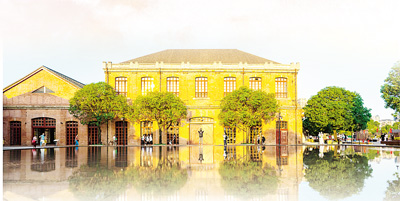
Core Viewpoint - The China Shipbuilding Cultural Park, a historical site dating back to 1866, has been revitalized to attract tourists and promote cultural heritage, showcasing China's maritime history and industrial legacy [2][3][4]. Group 1: Historical Significance and Restoration - The park's origins trace back to the establishment of the Fujian Shipbuilding Institute, which was pivotal in modernizing China's naval defense [2]. - The site includes significant structures such as the machine workshop and the first dry dock, which have been preserved and restored under the principle of "repairing the old as the old" [2][3]. - The Iron Frame Factory, a key component of the park, has been restored to retain its historical features while incorporating modern protective measures [3]. Group 2: Cultural and Educational Impact - The park serves as an interactive educational platform, allowing visitors to engage with China's shipbuilding history through immersive experiences [3][5]. - The China Shipbuilding Museum, established within the park, houses over 1,000 artifacts, including three national first-class cultural relics, enhancing the educational value for visitors [5]. Group 3: Tourism and Economic Impact - In the first half of the year, the park attracted approximately 740,000 visitors, generating over 30 million yuan in surrounding tourism consumption [6]. - The popularity of themed tourism routes has surged, with bookings increasing by 85% during the summer vacation period [6]. Group 4: Cultural Integration and Innovation - The park has integrated various cultural and entertainment offerings, including the immersive theater production "Most Remembered Shipbuilding," which has received positive reviews and enhanced visitor engagement [7]. - The development of diverse tourism routes and experiences reflects a strategic effort to promote cultural tourism and local economic growth [7][8].
从“工业锈带”转向“生活秀带”
Ren Min Wang· 2025-11-23 10:04
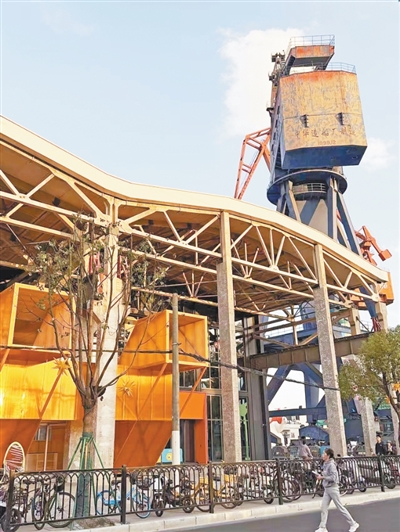
Core Perspective - The article discusses the recognition and preservation of industrial heritage in China, highlighting its cultural significance and the ongoing efforts to revitalize these sites for modern use [4][8]. Group 1: Industrial Heritage Significance - Industrial heritage serves as a testament to industrial civilization and collective memory of workers, becoming an important part of national cultural heritage [4]. - The history of the alum stone mine in Cangnan, Wenzhou, dates back over 600 years, showcasing the long-standing industrial practices in the region [4]. Group 2: Preservation and Revitalization Efforts - Cangnan has invested 7.3 million yuan in the protection and renovation of the Fude Bay miner's village, which has received accolades for its cultural heritage preservation [5]. - The transformation of industrial sites into cultural and tourism spaces, such as the underground mine scenic area and a mining-themed hotel, reflects a successful integration of heritage protection and tourism development [5]. Group 3: Urban Development and Sustainability - The Yangpu Riverside area in Shanghai, with a total length of 15.5 kilometers, has undergone comprehensive surveys and protection efforts for its industrial heritage, including over 200 old buildings [6]. - The revitalization of the Hangzhou Steel Plant site into an ecological park and cultural space demonstrates a commitment to sustainable urban development and the reuse of industrial heritage [7]. Group 4: Future Directions and Community Engagement - There is a growing societal interest in the active utilization of industrial heritage, exploring new models for education, tourism, and industrial restructuring [8].
最高检发布检察机关依法履职推动社会主义核心价值观融入法治建设典型案例
Zhong Guo Xin Wen Wang· 2025-11-13 04:06
Core Viewpoint - The Supreme People's Procuratorate has released typical cases demonstrating how procuratorial agencies promote the integration of socialist core values into legal construction through effective law enforcement [1] Group 1: Characteristics of the Released Cases - The cases reflect comprehensive law enforcement by involving multiple prosecutorial functions, showcasing the effectiveness of integrated and comprehensive law enforcement [1] - The cases embody the spirit of the rule of law, illustrating the process of cultivating and promoting socialist core values through just judicial practices [1] - The cases address social concerns, focusing on issues such as the protection of vulnerable groups, encouragement of heroic acts, and the establishment of a social credit system, which are of significant public interest [1] Group 2: Case Summaries - Case 1: The Shanghai procuratorial agency urged the protection of the Hero Pen Factory, a national industrial heritage, highlighting the risks of damage to historical documents and the importance of preserving industrial culture [2][3][4] - Case 2: The Jiangxi procuratorial agency supervised the payment of basic pensions to landless farmers, ensuring compliance with social security regulations and protecting the rights of vulnerable populations [8][9][10] - Case 3: The Shandong procuratorial agency decided not to prosecute an individual involved in a traffic accident, emphasizing the importance of friendly mutual assistance and the social value of such behavior [13][14][15] - Case 4: The Henan procuratorial agency supervised a community correction case, recognizing an individual's heroic act during a fire and facilitating a reduction in their sentence [19][20][21] - Case 5: The Sichuan procuratorial agency urged the revision of village autonomy regulations to protect the legal rights of rural women, addressing gender discrimination in local governance [25][26][27] - Case 6: The Shaanxi procuratorial agency contested a court ruling regarding a breach of contract case, emphasizing the principles of integrity and fairness in commercial transactions [31][32][33]
城市24小时 | 东北首个万亿城市 越来越近了
Mei Ri Jing Ji Xin Wen· 2025-10-24 15:58
Economic Overview - Dalian's GDP for the first three quarters reached 724.82 billion yuan, with a year-on-year growth of 6.0%, matching the growth rate of the first half of the year and exceeding the national average by 0.8 percentage points [1][2] - The primary industry added value was 37.03 billion yuan (up 4.2%), the secondary industry added value was 257.55 billion yuan (up 8.0%), and the tertiary industry added value was 430.24 billion yuan (up 4.9%) [1] Industrial Performance - Dalian's industrial output value for large-scale enterprises grew by 12.8% year-on-year, which is 10.6 percentage points higher than the provincial average [2][3] - The petrochemical industry saw an increase of 8.9%, while the equipment manufacturing sector grew by 17.5%, with notable growth in the railway and shipbuilding sectors (up 64.5%) and the automotive industry (up 26.3%) [3] Strategic Initiatives - Dalian aims to transform its traditional industries, which account for over 80% of its manufacturing sector, by promoting high-end development, as outlined in the "Green Petrochemical Cluster Cultivation and Enhancement Action Plan (2025-2027)" [2][3] - The city has set a target to reach a GDP of 951.69 billion yuan by 2024, positioning itself as a leading city in Northeast China's economic landscape [1][2]

32个上榜!第七批国家工业遗产名单公布,江苏 1 家入选
Yang Zi Wan Bao Wang· 2025-10-23 13:19
Core Points - The Ministry of Industry and Information Technology announced the seventh batch of national industrial heritage sites, with 32 entities listed, including one from Jiangsu province [1] - The announcement emphasizes the importance of protecting and utilizing industrial heritage for educational and tourism purposes [9] Summary by Category Industrial Heritage Sites - The "Yixing Qianshu Long Kiln" in Jiangsu is recognized, featuring core items such as various traditional pottery tools and artifacts from different historical periods [8] - Three sites from Beijing are included: the Rocket Assembly Plant, the Erqi Locomotive Assembly Plant, and the historical buildings and equipment of the Jing-Zhang Railway, with notable structures preserved [8] - The Baiyin Company Industrial Heritage Group in Gansu is listed, with key items including the open-pit mine site and various industrial machinery [8] - The Jian Nan Chun Tian Yi Old Wine Workshop in Sichuan is recognized, showcasing traditional brewing techniques and historical accolades [8] Government Initiatives - The Ministry calls for local industrial and information departments to enhance the systematic protection of industrial heritage, ensuring resource allocation and supervision [9] - There is a push for the revitalization of industrial heritage through new models and industries, including educational and tourism initiatives [9]

32+50,这项国家重要名单公布!
Zhong Guo Neng Yuan Wang· 2025-10-23 09:10
Core Points - The Ministry of Industry and Information Technology announced the seventh batch of national industrial heritage sites and the third batch of sites that passed re-evaluation, including 32 new sites and 50 re-evaluated sites [1][4]. Group 1: New National Industrial Heritage Sites - The seventh batch includes significant projects such as Shoushan Substation, Fengman Hydropower Station, Jingpo Lake Power Plant, Qinshan Nuclear Power Station, and Chongqing Power Plant [1][4]. Group 2: Re-evaluated National Industrial Heritage Sites - The third batch of re-evaluated sites includes major projects like Dagang Oilfield Port No. 5 Well, Kailuan Zhao Gezhuang Mine, Shigejie Coal Mine, Fushun West Open-pit Mine, Dongwo Hydropower Station, and the Controlled Nuclear Fusion Experimental Site [1][4]. Group 3: Implementation and Promotion - The Ministry emphasized the need for comprehensive protection and utilization of industrial heritage, encouraging new models such as "industrial heritage +" for education, tourism, and industrial restructuring [5][4].
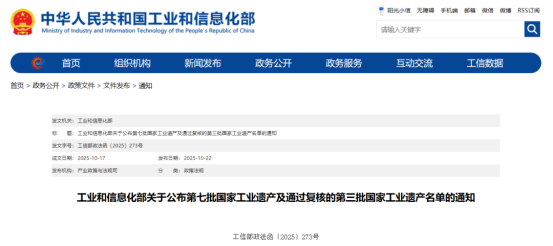
32+50,这项国家重要名单公布!
中国能源报· 2025-10-23 05:03
Core Points - The Ministry of Industry and Information Technology announced the seventh batch of national industrial heritage sites and the third batch of sites that passed re-evaluation, including 32 new sites and 50 re-evaluated sites [1][2]. Group 1: New National Industrial Heritage Sites - The seventh batch includes significant projects such as Shoushan Substation, Fengman Hydropower Station, Jingpo Lake Power Plant, Qinshan Nuclear Power Station, and Chongqing Power Plant [1][2]. Group 2: Re-evaluated National Industrial Heritage Sites - The third batch of re-evaluated sites includes major locations like Dagang Oilfield Port No. 5 Well, Kailuan Zhao Gezhuang Mine, Shigejie Coal Mine, Fushun West Open-pit Mine, Dongwo Hydropower Station, and the Controlled Nuclear Fusion Experiment Site [1][2]. Group 3: Recommendations for Heritage Management - The Ministry encourages local departments and enterprises to enhance the systematic protection of industrial heritage, increase resource support, and promote active utilization through new models such as "Industrial Heritage +” for education, tourism, and industrial restructuring [2].