微出行

Search documents
深度|微出行初创Also半年成独角兽,电动智能出行领域再现新投资热潮
Z Potentials· 2026-01-23 04:13
Core Viewpoint - The electric mobility industry in 2025 is experiencing a dichotomy, with traditional new energy passenger vehicles facing intense competition and significant sales declines, while the emerging micro-mobility sector is attracting substantial capital investment, indicating a shift in investment logic from "oil vehicle replacement" to "demand-driven" growth [3][4]. Group 1: Market Dynamics - The traditional new energy vehicle market is becoming a red ocean, with Tesla experiencing an 8.5% decline in annual sales, while BYD has emerged as the global leader in pure electric vehicle sales [3]. - The micro-mobility sector, which includes electric bicycles, scooters, and light electric trucks, is gaining traction due to policy incentives, technological maturity, and essential demand, leading to a significant increase in venture capital interest [3][4]. Group 2: Investment Trends - Also, a micro-mobility company spun off from Rivian, achieved a valuation of $1 billion after raising $200 million, marking a pivotal moment for the micro-mobility sector and indicating a shift in valuation logic from hardware manufacturing to ecosystem entry points [4][7]. - The global micro-mobility financing in the second half of 2025 saw a 120% year-on-year increase, with over 60% of the funds directed towards electric bicycles and light electric trucks [4][11]. Group 3: Demand and Policy Drivers - The global micro-mobility market is projected to grow from approximately $78 billion in 2024 to between $214 billion and $437 billion by 2035, with a compound annual growth rate (CAGR) of 13% to 17.4% [11]. - The increasing urbanization and the need for efficient short-distance travel are driving demand, with electric scooters and bicycles becoming preferred commuting options in cities [11][12]. Group 4: Competitive Landscape - The competition in the micro-mobility sector is evolving into a comprehensive battle of technology, products, and ecosystems, with traditional automakers and startups vying for market share [13][14]. - Traditional automakers are adopting a hybrid approach, leveraging their technological strengths while collaborating with local companies to enhance supply chain and distribution capabilities [13]. Group 5: Future Outlook - The long-term growth of the micro-mobility sector will depend on overcoming technological, operational, and policy challenges, with trends indicating accelerated technology integration, increased ecosystem collaboration, and a balance between globalization and localization [18]. - The emergence of companies like Also signifies the beginning of a value reassessment in the micro-mobility sector, transitioning from a focus on hardware to comprehensive solutions that integrate AI and smart technologies [7][15].



秘密筹备三年,某新势力押注两轮市场
汽车商业评论· 2025-07-15 13:55
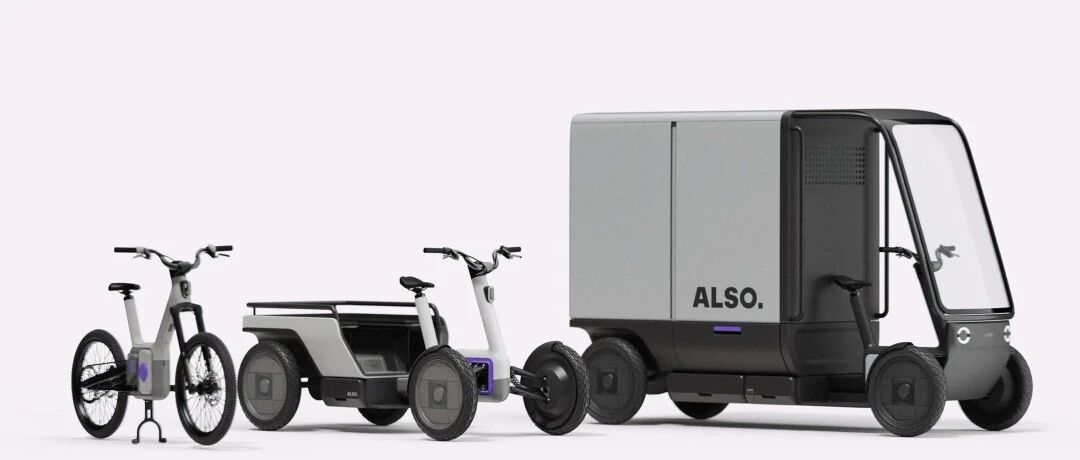
Core Viewpoint - The article discusses the emergence of Also Inc., a spin-off from Rivian, which has secured $200 million in strategic financing, achieving a post-money valuation exceeding $1 billion, marking its rapid growth in the micro-mobility sector [2][21]. Group 1: Also Inc. and Its Development - Also Inc. was formed from Rivian's "Project Inder," focusing on lightweight electric two- and three-wheel vehicles, in response to the explosive growth of the global micro-mobility market [6][4]. - The company aims to position itself as a "micro-mobility solutions expert," with a product matrix that includes electric bicycles, three-wheelers, and four-wheel microcars [6][8]. - The flagship product is expected to launch in 2026 in Europe and North America, with plans for customized models for Asia and South America [7]. Group 2: Market Potential and Strategic Rationale - The global micro-mobility market is projected to exceed $50 billion by 2027, with electric bicycles accounting for over 40% of this market, highlighting a significant opportunity for Also [9]. - The shift towards micro-mobility is driven by urbanization trends, with predictions that by 2050, 70% of the global population will live in cities, creating a demand for efficient short-distance transportation solutions [9][8]. - Rivian's decision to spin off Also allows for more agile decision-making and resource allocation, enabling Rivian to focus on its core business of full-size electric vehicles while maintaining a stake in Also [12][13]. Group 3: Future Outlook and Innovations - Also's team has grown to nearly 70 members, with its first product, a two-wheeled single-seat smart transportation vehicle, expected to be unveiled later this year [18][19]. - The company plans to develop a range of products, including foldable electric scooters and three-wheeled logistics vehicles, to complement Rivian's full-size electric vehicles and create a comprehensive electric mobility ecosystem [20]. - The market has responded positively to Also's growth, with its valuation reaching unicorn status within six months of its formation, indicating strong investor confidence in its long-term potential [21][22].