
托幼服务

Search documents
四川托幼行业发展和人才培养调研报告出炉:适龄人口递减,人才供需与适配待破局
Xin Lang Cai Jing· 2026-02-09 11:00
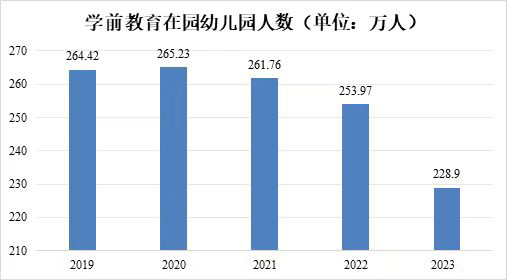
Core Insights - The report highlights the importance of early childhood care and education services in Sichuan Province, especially as the region enters a "super low birth rate" phase, necessitating a comprehensive understanding of the industry and talent development trends [1] Group 1: Industry Overview - The number of children aged 0-14 in Sichuan Province is 12.775 million, accounting for 14.50% of the total population, with 1.637 million children under 3 years old [2] - The number of childcare institutions in Sichuan is 5,785, with a total of 276,000 childcare places, resulting in a ratio of 3.3 places per 1,000 people [2] - The number of kindergartens in the province has decreased from 13,600 in 2019 to 12,400 in 2023, a reduction of 8.82% [3] Group 2: Workforce and Talent Development - As of June 2022, there are 37,995 employees in childcare institutions, with 28,468 being caregivers or teachers [6] - The average monthly salary for new graduates in childcare institutions is 2,152 yuan, while for kindergartens it is 2,326 yuan, indicating low overall salary levels [9] - The proportion of employees with relevant professional backgrounds in childcare institutions is 74%, with 84% of institutions requiring qualifications in early childhood education or related fields [7] Group 3: Educational Institutions and Programs - Sichuan has 349 vocational schools offering childcare-related programs, with 124 schools providing 125 specialized programs [10] - In higher education, 56 colleges offer childcare-related programs, with 67,693 students enrolled in 2023 [10] - The integration of early childhood education and healthcare training is being emphasized to meet industry demands [10]

加强“一老一小”服务 代表委员建言献策 北京如何建设全龄友好城市?
Xin Lang Cai Jing· 2026-01-25 20:20
Group 1: Elderly Care and Services - The Beijing government aims to optimize public services for the elderly, focusing on meal assistance and transportation as part of building an age-friendly city [1][2] - By the end of 2024, the elderly population in Beijing is expected to reach 5.14 million, accounting for 23.5% of the total population, indicating a deepening aging trend [2] - Suggestions include expanding meal assistance subsidies to cover all elderly residents aged 60 and above, especially those living alone, and implementing a dynamic information update system for subsidy eligibility [3][4] - There is a need for a comprehensive transportation system for the elderly, addressing gaps in accessibility from residential areas to public services [4] Group 2: Safety and Social Participation - Proposals emphasize the importance of safeguarding the rights and safety of the elderly, particularly against scams targeting this demographic [5] - Recommendations include tailored digital skills training for the elderly to enhance their ability to recognize and prevent fraud [5] - The importance of social engagement for the elderly is highlighted, with suggestions for creating job opportunities that allow them to contribute to society and find fulfillment [6] Group 3: Integrated Childcare Services - The integration of childcare services is seen as crucial for addressing the challenges of child-rearing in Beijing, with a focus on establishing a comprehensive system for children aged 0-6 [8][10] - The government plans to promote the establishment of nursery classes in public kindergartens to meet the growing demand for childcare services [10][16] - There is a call for unified professional standards for childcare providers to ensure quality and consistency in early childhood education [12][13] Group 4: Policy Implementation and Development - The Beijing government is committed to implementing policies that support the integration of elderly care and childcare services, aiming for a holistic approach to family support [16] - Plans include enhancing the training and qualification standards for childcare professionals to improve service delivery and address the needs of families [14][15] - The introduction of technology in childcare services, such as an integrated health management system, is proposed to better meet the needs of families [16]
政行企校协同共筑“幼有善育”新生态
Xin Lang Cai Jing· 2026-01-11 21:22
Group 1 - The establishment of the "Wuxi Early Childhood Education Service Industry-Education Alliance" marks a significant step in addressing the shortage of professional talent and improving service quality in early childhood education, with over 120 organizations involved [1][2] - Wuxi has integrated early childhood education services into its public service system, with approximately 70% of kindergartens providing such services and over 11,000 available spots [1] - The alliance aims to transform isolated efforts into collaborative actions, enhancing the professional standards and quality of early childhood services through deep integration of education, talent, industry, and innovation [1][2] Group 2 - The alliance's core functions include developing talent training programs and industry service standards, building a digital resource platform, and promoting research innovation and academic exchange [2] - Two key projects were launched on the day of the alliance's establishment: the "Smart Early Childhood Industry College" and the "Pre-school Education Professional Vertical Model" project, focusing on talent cultivation and the application of artificial intelligence in the industry [2] - The alliance is expected to serve as an experimental field for innovative mechanisms, an accelerator for practical results, a nurturing ground for professional talent, and a connector for building an industry ecosystem [2][3]