
幼儿教育

Search documents
四川托幼行业发展和人才培养调研报告出炉:适龄人口递减,人才供需与适配待破局
Xin Lang Cai Jing· 2026-02-09 11:00
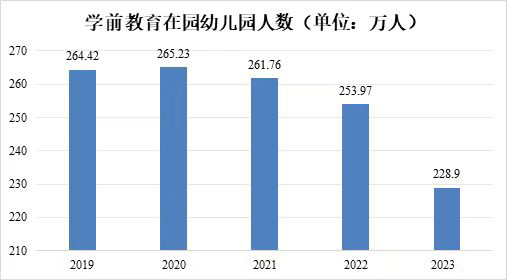
Core Insights - The report highlights the importance of early childhood care and education services in Sichuan Province, especially as the region enters a "super low birth rate" phase, necessitating a comprehensive understanding of the industry and talent development trends [1] Group 1: Industry Overview - The number of children aged 0-14 in Sichuan Province is 12.775 million, accounting for 14.50% of the total population, with 1.637 million children under 3 years old [2] - The number of childcare institutions in Sichuan is 5,785, with a total of 276,000 childcare places, resulting in a ratio of 3.3 places per 1,000 people [2] - The number of kindergartens in the province has decreased from 13,600 in 2019 to 12,400 in 2023, a reduction of 8.82% [3] Group 2: Workforce and Talent Development - As of June 2022, there are 37,995 employees in childcare institutions, with 28,468 being caregivers or teachers [6] - The average monthly salary for new graduates in childcare institutions is 2,152 yuan, while for kindergartens it is 2,326 yuan, indicating low overall salary levels [9] - The proportion of employees with relevant professional backgrounds in childcare institutions is 74%, with 84% of institutions requiring qualifications in early childhood education or related fields [7] Group 3: Educational Institutions and Programs - Sichuan has 349 vocational schools offering childcare-related programs, with 124 schools providing 125 specialized programs [10] - In higher education, 56 colleges offer childcare-related programs, with 67,693 students enrolled in 2023 [10] - The integration of early childhood education and healthcare training is being emphasized to meet industry demands [10]

杨德龙:A股两融余额时隔十年重回2万亿 这轮牛市氛围越来越浓
Xin Lang Ji Jin· 2025-08-06 07:33
Economic Growth - China's GDP grew by 5.3% year-on-year in the first half of the year, surpassing the government's target of around 5% for the full year [1] - Domestic demand contributed 68.8% to GDP growth, with consumption alone accounting for 52%, indicating a strong consumer-driven economy [2] Consumption and Policy Measures - The government issued 1.3 trillion yuan in long-term special bonds, with 300 billion yuan allocated for consumer goods replacement programs, leading to over 30% sales growth in related products [2] - New policies, including childcare subsidies and free preschool education, aim to boost birth rates and subsequently increase consumption in related sectors [2] Inflation and Economic Policy - The Consumer Price Index (CPI) was -0.1% and the Producer Price Index (PPI) was around -3% in the first half, indicating deflationary pressures [3] - The government aims for a CPI growth target of around 2%, suggesting more proactive fiscal and monetary policies to stimulate demand and moderate inflation [3] Market Trends - The humanoid robot sector is expected to grow significantly, with a projected market size of nearly 38 billion yuan by 2030 and a compound annual growth rate of over 61% from 2024 to 2036 [5] - Recent adjustments in the humanoid robot market have created a favorable environment for investment, with signs of renewed interest and potential for significant returns [5] Stock Market Activity - The A-share market saw a notable increase in margin trading, surpassing 2 trillion yuan for the first time in nearly a decade, reflecting investor optimism [6] - Hong Kong stocks experienced substantial inflows, with southbound funds net buying 820 billion HKD, indicating strong demand from mainland investors [7]