日化产品

Search documents
宣称“15天瘦13斤”,老牌国货旗下产品被举报
Nan Fang Du Shi Bao· 2026-01-12 01:35
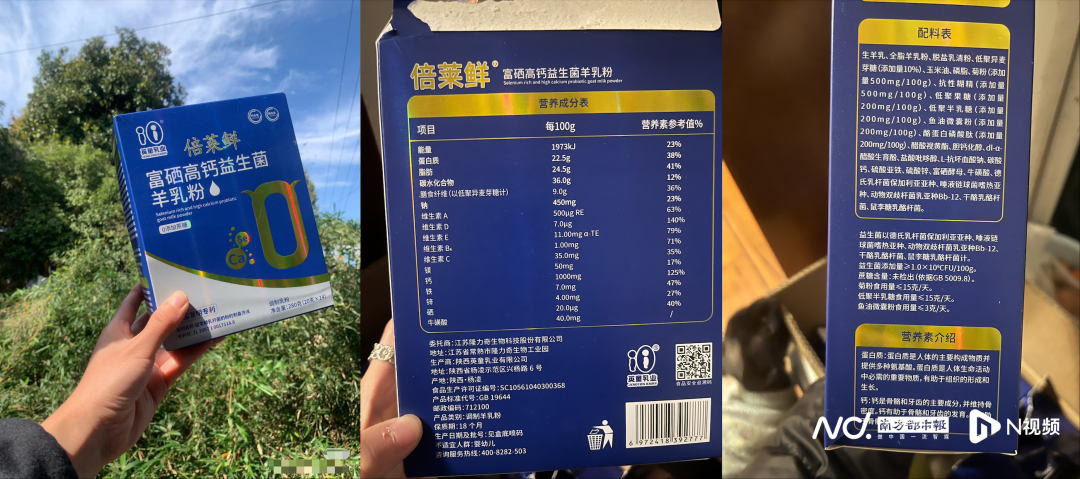
Core Viewpoint - Longliqi, a well-known Chinese daily chemical brand, is facing serious allegations of operating a pyramid scheme through its product "Beilai Fresh Goat Milk Powder," which is not listed as a legitimate direct sales product and is accused of misleading health claims [1][10][20]. Group 1: Company Background - Longliqi was founded in 1986 and has been a representative of national daily chemical brands, known for products like snake oil ointment and hand cream [10]. - The company obtained a direct sales license in July 2009, which is limited to cosmetics, health foods, and cleaning products, covering a total of 87 specific products [10][15]. Group 2: Allegations of Pyramid Scheme - Reports indicate that "Beilai Fresh Goat Milk Powder" is marketed under a direct sales model that resembles a pyramid scheme, with participants encouraged to recruit others for financial rewards [15][20]. - The promotional materials for the product claim unrealistic health benefits, such as "losing 13 pounds in 15 days" and "improving sleep," which raises concerns about false advertising [3][9]. Group 3: Legal and Financial Issues - Longliqi is currently embroiled in multiple legal disputes, with a total execution amount exceeding 800 million yuan [1][20]. - The company has been flagged for having 50 risk entries, including 9 equity freezes, and has significant tax debts [20]. - As of June 2024, Longliqi's subsidiaries have been involved in cases with execution amounts reaching over 6 billion yuan [20]. Group 4: Marketing and Sales Practices - The marketing strategy for "Beilai Fresh Goat Milk Powder" involves a complex structure that incentivizes recruitment, which is against the regulations governing direct sales [15][20]. - Participants have reported being drawn into sales teams through social media, where they are encouraged to promote the product and recruit others, creating a hybrid online and offline marketing model [20].

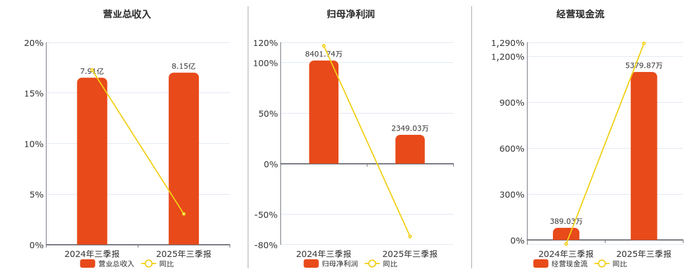
两面针(600249.SH):2025年三季报净利润为2349.03万元、同比较去年同期下降72.04%
Xin Lang Cai Jing· 2025-10-29 01:41
Core Insights - The company reported a total revenue of 815 million yuan for Q3 2025, marking a year-on-year increase of 3.03% and ranking 11th among peers [1] - The net profit attributable to shareholders was 23.49 million yuan, a significant decline of 72.04% compared to the same period last year, ranking 12th among peers [1] - The net cash inflow from operating activities was 53.80 million yuan, showing a substantial increase of 1282.91% year-on-year, ranking 11th among peers [1] Financial Ratios - The latest debt-to-asset ratio stands at 20.88%, ranking 4th among peers, with a year-on-year increase of 1.04 percentage points [3] - The gross profit margin is reported at 16.58%, ranking 11th among peers, with a slight decrease of 1.24 percentage points from the previous quarter but an increase of 0.05 percentage points year-on-year [3] - The return on equity (ROE) is at 1.07%, ranking 12th among peers, reflecting a decrease of 2.77 percentage points compared to the same period last year [3] Earnings Per Share and Turnover Ratios - The diluted earnings per share (EPS) is 0.04 yuan, ranking 12th among peers, which is a decrease of 72.05% year-on-year [3] - The total asset turnover ratio is 0.30 times, ranking 11th among peers, remaining stable compared to the previous year and showing a year-on-year increase of 0.37% [3] - The inventory turnover ratio is 2.64 times, ranking 10th among peers, with a year-on-year increase of 2.81% [3] Shareholder Information - The number of shareholders is 47,000, with the top ten shareholders holding 220 million shares, accounting for 39.96% of the total share capital [3] - The largest shareholder is Guangxi Liuzhou Industrial Investment Development Group Co., Ltd., holding 33.34% of the shares [3]

广东省市场监督管理局发布2024年皂类等13种产品质量监督抽查情况
Zhong Guo Zhi Liang Xin Wen Wang· 2025-07-30 08:25
Core Viewpoint - The Guangdong Provincial Market Supervision Administration conducted a quality supervision sampling inspection in 2024, revealing 23 non-compliant products across various categories, including soaps, household cleaners, and personal care items [2][3]. Group 1: Inspection Overview - A total of 13 product categories were inspected, with 23 non-compliant products identified: 6 from offline inspections and 17 from online inspections [2]. - The non-compliant products included 5 soaps, 3 household cleaners, 3 laundry powders, 3 liquid detergents, 2 household insecticides, 2 shampoos, 2 disinfectants, 2 toothbrushes, 1 car beauty product, and 1 hand sanitizer [2][5]. Group 2: Non-compliance Analysis - For soaps, 5 non-compliant products were found, with issues related to chloride, moisture and volatile substances, free caustic alkali, and total effective substances [2][5]. - In household cleaners, 3 non-compliant products were identified, with non-compliance in total acidity, surfactant content, and total active substance content [5]. - Laundry powders also had 3 non-compliant products, primarily due to total active substance content and specified stain removal capability [5]. - Liquid detergents showed 3 non-compliant products, with issues in total active substance content [5]. - Household insecticides had 2 non-compliant products, both failing to meet effective ingredient content and minimum effective period requirements [5]. - Shampoos had 2 non-compliant products, with non-compliance in effective substance content [5]. - Disinfectants had 2 non-compliant products, failing in effective chlorine content and pH levels [5]. - Toothbrushes had 2 non-compliant products, with issues in bristle pull strength and wear [5]. - A single car beauty product was found non-compliant due to pH and thermal stability [5]. Group 3: Actions Taken - The administration has ordered the cessation of sales for the non-compliant products and recorded them in the supervision database [3]. - Relevant credit information will be entered into the quality credit files of the operators, and the results will be publicly disclosed through various platforms [3]. - Measures such as confiscation and strict supervision will be enforced against non-compliant products and their manufacturers, with a focus on rectification and compliance [3].