
旧衣回收

Search documents
旧衣流入直播间被当“大牌尾货”卖?回收箱靠谱吗?
Jing Ji Ri Bao· 2026-01-28 02:44
Core Viewpoint - The old clothing recycling industry is facing challenges such as unclear regulatory responsibilities, blurred lines between commercial and charitable initiatives, and a lack of traceability throughout the supply chain, necessitating improved policy frameworks and collaborative governance to ensure effective management and transparency [1][6][8]. Group 1: Current State of Old Clothing Recycling - The old clothing recycling trend is becoming popular, but there are concerns about who is collecting the clothes and where they end up [1]. - Various types of recycling bins exist across cities, reflecting a mix of commercial and charitable efforts, with some bins clearly indicating their purpose while others do not [2][3]. - The management of recycling bins is determined by their nature, with charitable bins regulated by civil affairs departments and commercial bins managed by operating companies [3]. Group 2: Industry Practices and Challenges - The recycling process involves sorting and processing old clothes, with some being donated, while others are repurposed into new materials or sold [4][5]. - There is a risk of gray market activities where commercial entities disguise profit-driven initiatives as charitable donations, leading to public distrust [6][3]. - The lack of a comprehensive regulatory framework and clear distinctions between commercial and charitable recycling efforts creates opportunities for exploitation within the industry [6][7]. Group 3: Regulatory and Governance Issues - The regulatory responsibilities for old clothing recycling are fragmented across multiple departments, complicating oversight and enforcement [7]. - Current regulations do not adequately address the specific needs of the old clothing recycling sector, leading to gaps in monitoring and compliance [7][8]. - There is a call for a systematic approach to regulate the industry, including the establishment of standards for sorting, disinfection, and traceability [8].
回收的旧衣物去哪了
Xin Hua Wang· 2026-01-27 23:28
Core Viewpoint - The second-hand clothing recycling industry is facing significant challenges, including unclear boundaries between market and charity, lack of regulatory clarity, and absence of a comprehensive traceability system. There is an urgent need for policy improvements to establish clear responsibilities and collaborative efforts among various regulatory bodies to ensure the healthy rebirth of old clothes [1]. Group 1: Current State of Second-Hand Clothing Recycling - The appearance and labeling of recycling bins vary across different cities, reflecting the intertwined nature of charity and commercial recycling [2]. - In Shaoxing, a government-led project aims to create a transparent recycling system, while in Beijing, some bins lack clear information on the final use of collected clothing [2]. - The management of recycling bins depends on their nature, with charity bins regulated by civil affairs departments and commercial bins overseen by operating companies [3]. Group 2: Industry Chain and Processes - Collected old clothes undergo sorting and processing, with some being donated, while others are repurposed into materials like insulation for greenhouses or recycled into new products [4][5]. - The recycling process involves multiple steps, including sorting, disinfection, and repurposing, but the lack of regulatory oversight creates opportunities for exploitation [6]. Group 3: Regulatory Challenges and Solutions - The regulatory responsibilities for old clothing recycling are fragmented across various departments, complicating oversight and management [7]. - Current regulations do not specifically address the unique aspects of old clothing recycling, leading to gaps in oversight and accountability [7]. - Local governments are beginning to explore solutions to improve the management of charity-based recycling initiatives and ensure transparency in the donation process [7][8]. Group 4: Recommendations for Improvement - A systematic approach is needed to regulate old clothing recycling, including cross-departmental collaboration and the establishment of key standards for sorting, disinfection, and utilization [8]. - Implementing mandatory disinfection standards and creating incentives for compliance can help internalize social costs associated with the recycling process [8].
人民锐评:斩断旧衣回收的灰色利益链
Xin Lang Cai Jing· 2025-12-26 06:43
Core Viewpoint - The article highlights the emergence of a gray market in second-hand clothing, where unscrupulous sellers disguise used garments as "new" or "high-quality" items, posing health risks to consumers and undermining the integrity of the recycling and charity sectors [1][3]. Group 1: Industry Practices - Some businesses are exploiting the concept of "old clothing recycling" to engage in unethical practices, using donation boxes labeled for "charity" as sources for second-hand clothes [3]. - High-quality second-hand clothes are being refurbished and sold as new, while lower-quality items are marketed as "micro-defective" or "sample garments" in online and physical stores [3]. Group 2: Consumer Risks - The sale of second-hand clothing under the guise of "tail goods" or "unique items" infringes on consumer rights and poses health risks, as many of these garments are not properly cleaned and may carry harmful substances [3]. - Wearing these unregulated second-hand clothes can lead to skin diseases and respiratory issues, particularly affecting children who are more vulnerable to health risks [3]. Group 3: Regulatory Recommendations - There is an urgent need for regulatory bodies to enhance laws governing the circulation of second-hand clothing, including establishing hygiene standards and traceability mechanisms [4]. - E-commerce platforms are urged to take responsibility by prohibiting sellers from concealing the second-hand nature of their products and ensuring consumer protection channels are accessible [4]. Group 4: Social Responsibility - The article emphasizes that old clothing recycling should be a mutually beneficial initiative that promotes resource conservation and goodwill, rather than a means for a few to profit at the expense of public trust [4]. - It calls for transparency in the flow of second-hand clothing, ensuring that the recycling process aligns with environmental and charitable goals [4].


裹着爱心的旧衣回收绝不能做成违法生意
Xin Lang Cai Jing· 2025-12-23 02:31
Core Viewpoint - The so-called old clothing charity recycling has become a facade for scams, undermining public goodwill, disrupting market order, and involving multiple legal violations, necessitating urgent regulation and rectification [1][2]. Group 1: Industry Issues - Some live-streaming platforms are selling low-quality second-hand clothes under the guise of "brand tail goods" and "unique sample clothing," misleading consumers [1][2]. - Old clothing recycling boxes, labeled with terms like "charity donation" and "love donation," are being used to collect residents' donated clothes, which are then sold without proper cleaning or disinfection [1][2]. - The recycling of old clothes is part of a larger trust crisis in the industry, as these practices exploit public goodwill and create a gray industrial chain [1][2]. Group 2: Regulatory Challenges - The sale of uncleaned and unsanitized old clothes violates product quality laws, as they lack essential information such as manufacturer details and quality inspection certificates, posing health risks [2]. - National policies emphasize the need to combat illegal recycling practices and promote orderly old clothing transactions, indicating a clear regulatory direction [2]. - Effective regulation is complicated by the involvement of multiple sectors, including charity, market supervision, and environmental protection, requiring a collaborative approach to establish a comprehensive governance system for old clothing recycling [2]. Group 3: Importance of Proper Recycling - Old clothing recycling holds both environmental value and social significance, impacting the development of a circular economy and the proper placement of public goodwill [3]. - The illegal commercialization of charity-based old clothing recycling must be addressed promptly to ensure that the goodwill of the public is not exploited [3].
央视曝光旧衣回收产业链内幕 有直播间二手童衣不洗当新衣卖
Xin Lang Cai Jing· 2025-12-21 16:37
Core Insights - The article reveals the hidden practices within the used clothing recycling industry, particularly focusing on the operations in Changchun, which is identified as one of the largest distribution centers for used clothing in Northeast China [1] Group 1: Industry Practices - The demand for recycled clothing in live streaming sales is significant, with one company reportedly selling dozens of tons of recycled clothing daily [1] - Live streaming sellers procure used clothing in bulk from recycling factories, emphasizing that they must not disclose the second-hand nature of the items [1] - Many sellers utilize marketing tactics to present these second-hand clothes as high-quality products, using terms like "high cost-performance" and "slightly dirty" to attract consumers [1] Group 2: Quality and Sourcing - The clothing sold in live streaming sessions often comes directly from sorting factories without any cleaning or disinfection, with some items even being moldy [1] - The sources of these second-hand clothes are varied, including not only recycling factories but also items retrieved from garbage stations [1] - The article highlights that even children's second-hand clothing is marketed in the same manner, indicating a widespread issue in the industry [1]
旧衣回收不能背离环保初心
Bei Jing Qing Nian Bao· 2025-11-24 10:11
Core Viewpoint - The second-hand clothing recycling industry is facing significant issues such as misleading price estimates and vague quality inspection standards, leading to consumer dissatisfaction and potential exploitation [1][2][3] Group 1: Industry Issues - The industry has seen a rise in complaints regarding discrepancies between estimated and actual payout for recycled clothing, with examples of consumers receiving as little as 0.7 yuan for items initially valued at up to 200 yuan [1] - Platforms often use vague criteria like "dirty or damaged" to determine the quality of clothing, allowing them to manipulate acceptance rates and control costs [2] - Some platforms operate without proper business registration and continue to function despite being listed in abnormal business records, indicating a lack of regulatory oversight [2] Group 2: Consumer Challenges - Consumers face significant barriers in asserting their rights, including difficulties in providing evidence, high costs, and lengthy processes [2] - The lack of transparency in quality inspection standards puts consumers at a disadvantage during disputes, while platforms often delay responses to complaints, effectively cutting off avenues for redress [2] Group 3: Proposed Solutions - Establishing a unified national standard for clothing classification and quality inspection is essential, including clear metrics for material, brand, and condition [3] - Implementing a qualification review and dynamic exit mechanism for recycling companies, particularly those with high complaint rates, is necessary to ensure accountability [3] - Enhancing consumer protection by requiring platforms to provide inspection reports before processing clothing and introducing a "first compensation" mechanism to facilitate claims [3]
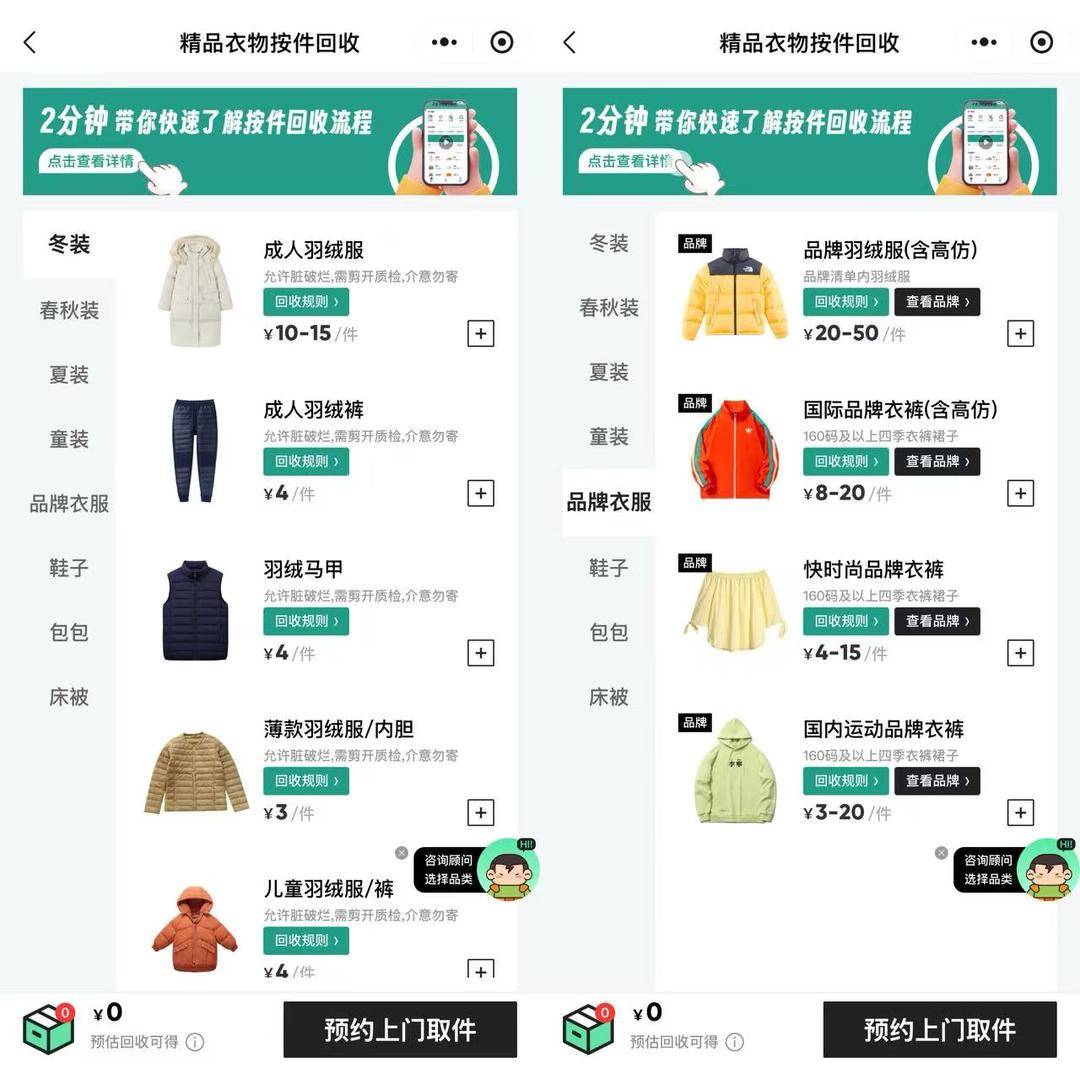
预估高价引流、实际低价结算,旧衣回收为何变“套路回收”?
Yang Zi Wan Bao Wang· 2025-11-19 14:31
Core Insights - The old clothing recycling industry is experiencing rapid growth due to the increasing popularity of green consumption concepts, but issues such as "high estimated prices attracting users and low actual settlement prices" and "ambiguous quality inspection standards" are prevalent [1][5]. Group 1: Industry Trends - The recycling platform "Green Clothes Hero" estimated the value of 18 pieces of branded old clothing to be between 44.5 yuan and 200 yuan, but the final settlement was only 0.7 yuan, highlighting a significant discrepancy [1]. - Many consumers have reported similar experiences where the estimated recycling price was much higher than the final price after quality inspection, indicating a potential issue with pricing transparency [1][5]. Group 2: Quality Inspection Standards - The customer service of the recycling platform stated that the quality inspection mainly considers the appearance and whether the items are dirty or damaged, but the accuracy of the estimated prices is not guaranteed [3]. - The platform retains unqualified clothing for 48 hours before environmentally processing them, and customers can request a return within this timeframe at their own shipping cost [3][4]. Group 3: Consumer Complaints - There has been a rise in complaints related to old clothing recycling, focusing on slow customer service responses, lack of after-sales support, lost items during shipping, and hidden pricing traps [5].
中国二手衣物在非洲成香饽饽,国内旧衣回收相关企业超千家
Qi Cha Cha· 2025-11-14 06:50
Core Insights - The popularity of second-hand clothing from China in Africa is increasing, with significant interest in recycled school uniforms and other garments [1] - The domestic market for old clothing recycling is expanding, with over 1,500 related enterprises currently operating in China [1] Group 1: Company Statistics - As of November 13, there are 1,511 existing old clothing recycling enterprises in China, with over half (53.41%) established within the last 1-3 years [2] - The distribution of these enterprises shows a concentration in the Southwest (20.52%) and East China (20.45%) regions [3] Group 2: New Registrations - In 2024, a total of 240 new old clothing recycling enterprises are expected to be registered, with 156 already registered this year [4] - The majority of new registrations are occurring in lower-tier cities, particularly in five-tier cities, which account for 38.46% of new enterprises [4]