隔音棉

Search documents
旧衣流入直播间被当“大牌尾货”卖?回收箱靠谱吗?
Jing Ji Ri Bao· 2026-01-28 02:44
Core Viewpoint - The old clothing recycling industry is facing challenges such as unclear regulatory responsibilities, blurred lines between commercial and charitable initiatives, and a lack of traceability throughout the supply chain, necessitating improved policy frameworks and collaborative governance to ensure effective management and transparency [1][6][8]. Group 1: Current State of Old Clothing Recycling - The old clothing recycling trend is becoming popular, but there are concerns about who is collecting the clothes and where they end up [1]. - Various types of recycling bins exist across cities, reflecting a mix of commercial and charitable efforts, with some bins clearly indicating their purpose while others do not [2][3]. - The management of recycling bins is determined by their nature, with charitable bins regulated by civil affairs departments and commercial bins managed by operating companies [3]. Group 2: Industry Practices and Challenges - The recycling process involves sorting and processing old clothes, with some being donated, while others are repurposed into new materials or sold [4][5]. - There is a risk of gray market activities where commercial entities disguise profit-driven initiatives as charitable donations, leading to public distrust [6][3]. - The lack of a comprehensive regulatory framework and clear distinctions between commercial and charitable recycling efforts creates opportunities for exploitation within the industry [6][7]. Group 3: Regulatory and Governance Issues - The regulatory responsibilities for old clothing recycling are fragmented across multiple departments, complicating oversight and enforcement [7]. - Current regulations do not adequately address the specific needs of the old clothing recycling sector, leading to gaps in monitoring and compliance [7][8]. - There is a call for a systematic approach to regulate the industry, including the establishment of standards for sorting, disinfection, and traceability [8].
回收的旧衣物去哪了
Xin Hua Wang· 2026-01-27 23:28
Core Viewpoint - The second-hand clothing recycling industry is facing significant challenges, including unclear boundaries between market and charity, lack of regulatory clarity, and absence of a comprehensive traceability system. There is an urgent need for policy improvements to establish clear responsibilities and collaborative efforts among various regulatory bodies to ensure the healthy rebirth of old clothes [1]. Group 1: Current State of Second-Hand Clothing Recycling - The appearance and labeling of recycling bins vary across different cities, reflecting the intertwined nature of charity and commercial recycling [2]. - In Shaoxing, a government-led project aims to create a transparent recycling system, while in Beijing, some bins lack clear information on the final use of collected clothing [2]. - The management of recycling bins depends on their nature, with charity bins regulated by civil affairs departments and commercial bins overseen by operating companies [3]. Group 2: Industry Chain and Processes - Collected old clothes undergo sorting and processing, with some being donated, while others are repurposed into materials like insulation for greenhouses or recycled into new products [4][5]. - The recycling process involves multiple steps, including sorting, disinfection, and repurposing, but the lack of regulatory oversight creates opportunities for exploitation [6]. Group 3: Regulatory Challenges and Solutions - The regulatory responsibilities for old clothing recycling are fragmented across various departments, complicating oversight and management [7]. - Current regulations do not specifically address the unique aspects of old clothing recycling, leading to gaps in oversight and accountability [7]. - Local governments are beginning to explore solutions to improve the management of charity-based recycling initiatives and ensure transparency in the donation process [7][8]. Group 4: Recommendations for Improvement - A systematic approach is needed to regulate old clothing recycling, including cross-departmental collaboration and the establishment of key standards for sorting, disinfection, and utilization [8]. - Implementing mandatory disinfection standards and creating incentives for compliance can help internalize social costs associated with the recycling process [8].
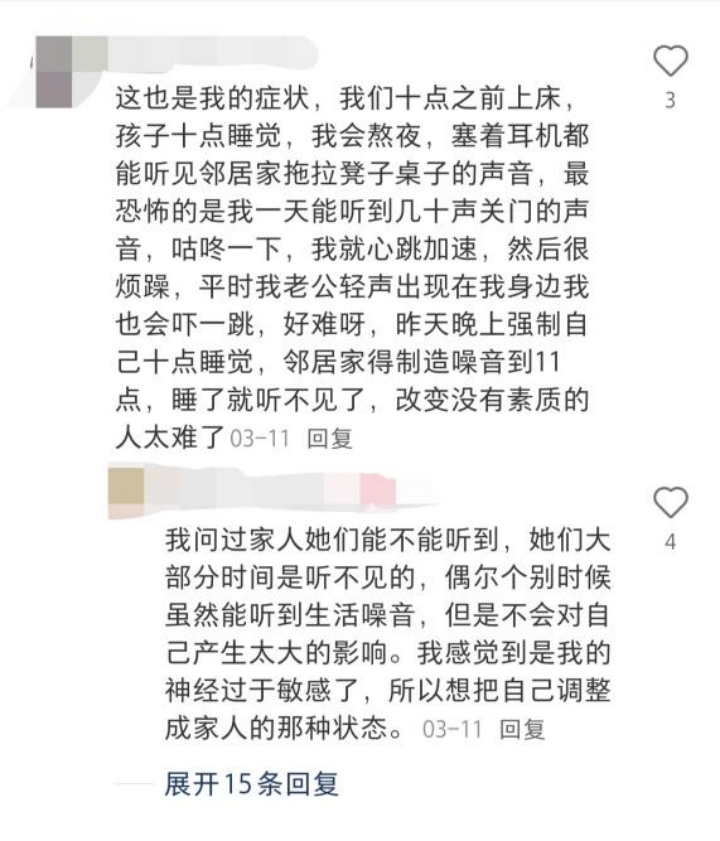
被逼成「噪敏人」的年轻人,买出一个千亿产业
36氪· 2025-05-15 12:59
Core Viewpoint - The article discusses the growing phenomenon of "noise sensitivity" among urban dwellers, particularly young people, highlighting the impact of noise pollution on mental health and the increasing demand for noise-reducing products and living environments [28]. Group 1: Noise Sensitivity and Its Effects - "Noise sensitivity" is characterized by an individual's heightened sensitivity to noise, leading to sleep disturbances and emotional distress [5][6]. - Prolonged exposure to noise can result in severe mental health issues, such as depression, as illustrated by the experiences of individuals like Lin Ran and Jie Yi [7][10]. - The prevalence of noise complaints is significant, with 35% of housing quality complaints in 2024 related to poor sound insulation, indicating a widespread issue in urban living [28]. Group 2: Coping Mechanisms and Market Response - Young individuals are increasingly investing in noise-canceling products, with the noise-canceling earplug market projected to reach 3.215 billion yuan by 2024, growing at a rate of 7.03% in 2025 [15]. - The demand for quieter living spaces has led to a rise in the "silent economy," with individuals seeking older buildings known for better sound insulation [15][24]. - The article notes that the new residential project standards set to be implemented in May 2025 will impose stricter sound insulation requirements, potentially reshaping the housing market [24][26]. Group 3: Housing Market Dynamics - The article highlights the disparity in housing options, where lower-income groups are often forced into noisy environments due to affordability, leading to a cycle of "noise poverty" [24]. - The anticipated changes in building regulations may increase construction costs, which could be passed on to consumers, affecting housing affordability [26]. - The experiences of individuals like Lin Ran, who opted for rural living to escape noise, reflect a shift in housing preferences towards quieter environments, despite the challenges of accessibility and commuting [22][24].


被逼成“噪敏人”的年轻人,买出一个千亿产业
Hu Xiu· 2025-05-14 02:31
Core Viewpoint - The article discusses the increasing sensitivity to noise among young people, termed "noise sensitivity," which leads to significant disruptions in their daily lives and mental health issues [2][33]. Group 1: Noise Sensitivity and Its Impact - "Noise sensitivity" is characterized by heightened sensitivity to noise in normal environments, resulting in sleep disturbances and attention issues [2][4]. - Individuals like Lin Ran and Jie Yi experience severe disruptions in their lives due to noise, leading to conditions such as severe depression and anxiety [8][11]. - The prevalence of noise complaints is significant, with 35% of housing quality complaints in 2024 related to poor sound insulation [33]. Group 2: Coping Mechanisms and Market Response - Young people are investing in noise-canceling products, with the market for noise-canceling earplugs expected to reach 3.215 billion yuan in 2024, growing by 7.03% in 2025 [17]. - The concept of "silent economy" is emerging, driven by the demand for noise-reducing products such as soundproof curtains and earplugs [17][28]. - Many individuals are forced to relocate to quieter environments, often at a higher cost, as they seek to escape noise pollution [25][28]. Group 3: Regulatory Changes and Future Outlook - New regulations set to be implemented in May 2025 will impose stricter sound insulation standards for new residential buildings, potentially improving living conditions [30]. - However, existing buildings will not be retrofitted, leaving many residents in "noise houses" without recourse [30][32]. - The construction industry faces challenges as the new standards may increase building costs, potentially leading to cost-cutting measures that could further compromise sound insulation [30].