星际航行科研

Search documents
首个星际航行学院成立:面向海外引才,单项科研经费最高1亿元
2 1 Shi Ji Jing Ji Bao Dao· 2026-01-27 05:11
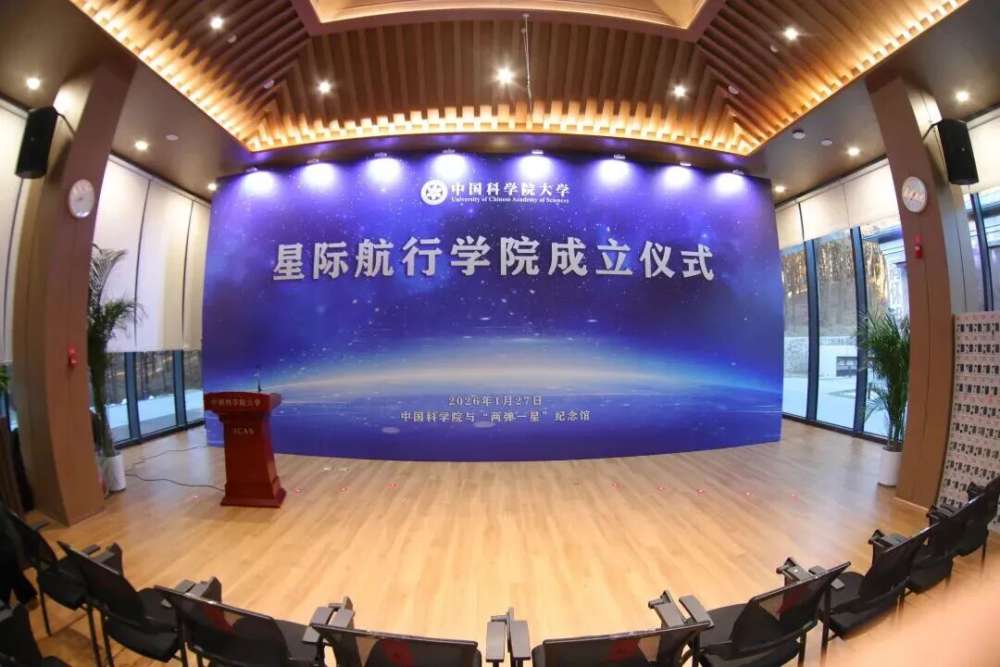
Core Viewpoint - The establishment of the Interstellar Navigation Institute at the University of Chinese Academy of Sciences marks a significant step in advancing China's capabilities in aerospace science and technology, particularly in the fields of deep space exploration and space science research [1][5]. Group 1: Institute Formation and Structure - The Interstellar Navigation Institute was officially inaugurated on January 27, with its origins tracing back to the Aerospace Academy, led by the Institute of Engineering Thermophysics of the Chinese Academy of Sciences [1]. - The institute focuses on core disciplines in aerospace science and technology, emphasizing key areas such as spacecraft design, propulsion and power, and intelligent control of spacecraft [3]. - It comprises four departments and covers research fields including space science, aerodynamics and propulsion, structural and material mechanics, and autonomous systems and control [3]. Group 2: Faculty and Research Support - The institute boasts a strong faculty, including six academicians and over 30 high-level national talents, supported by five major aerospace research institutes [3]. - It has access to advanced national experimental platforms for aerospace engines, space science, manned space stations, and Beidou satellites, providing a solid foundation for academic development and research innovation [3]. Group 3: Talent Recruitment and Funding - The institute is actively recruiting overseas talent, offering substantial research funding and comprehensive support for housing and education [5]. - Research funding will be matched directly by the Chinese Academy of Sciences, with individual project funding ranging from 10 million to 100 million yuan, ensuring ample financial resources for high-level research innovation [5]. - The establishment of the institute is seen as a critical measure for the University of Chinese Academy of Sciences to seize technological leadership and cultivate talent in the interstellar navigation field, aligning with national strategic needs for deep space exploration and space science research [5].