
星际航行

Search documents
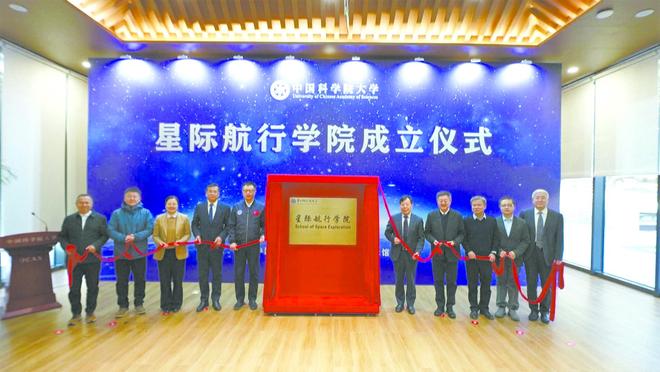
首个“星际航行学院”来了
Xin Lang Cai Jing· 2026-02-13 17:28
Group 1 - The first interstellar navigation academy in China has been established to train individuals for space exploration [1] - The academy is likened to a "star driving school," aiming to cultivate future aerospace heroes and planetary scientists [1] - The vision of exploring space dates back over 60 years, with early contributions from scientists like Qian Xuesen [1] Group 2 - The ambition to explore deeper and farther into the universe is emphasized, reflecting a growing interest in space exploration [1] - The establishment of the academy signifies a commitment to advancing space science and technology education [1]
我们为什么要星际航行
Ren Min Ri Bao· 2026-02-06 06:27
Core Viewpoint - The establishment of the Interstellar Navigation Institute by the University of Chinese Academy of Sciences aims to focus on cutting-edge fields such as interstellar propulsion, deep space communication and navigation, and space science, addressing the need for interdisciplinary talent in these areas [1][2]. Group 1: Historical Context - The concept of interstellar navigation was discussed as early as June 1961 during a meeting of the Chinese Academy of Sciences, with notable figures like Qian Xuesen participating in the discussions [1]. - Over three years, the Chinese Academy of Sciences held more than ten seminars on interstellar navigation, leading to the development of a theoretical framework for the field [1]. Group 2: Current Developments - The Interstellar Navigation Institute will utilize existing platforms in Beijing Huairou Science City and establish six specialized platforms, including an unmanned aerial vehicle simulation platform and a comprehensive teaching practice platform for space science satellites [2]. - The institute aims to provide an immersive training environment for students, fostering the next generation of aerospace professionals [2]. Group 3: Future Aspirations - The exploration of space is seen as a global endeavor that not only pushes physical boundaries but also generates significant spillover effects that can transform human life [2]. - The narrative emphasizes the long-term commitment required for space exploration, likening it to the ambitious plans depicted in the science fiction film "The Wandering Earth 2," which envisions a 2500-year journey involving multiple generations [2].
为什么一定要“星际航行”?
Xin Lang Cai Jing· 2026-01-31 14:21
Core Viewpoint - The concept of "interstellar travel" has evolved from theoretical discussions in 1961 to practical advancements in space exploration, highlighting China's significant achievements in space technology and the ongoing global competition in this field [1][2][3]. Group 1: Interstellar Travel Concepts - "Interstellar travel" is divided into two levels: "interplanetary travel" within the solar system and "interstellar travel" beyond it, with the former already seeing practical applications such as Mars exploration and lunar missions [2]. - The challenges of "interstellar travel" include the need for high-energy density fuels and advanced navigation algorithms to prevent disorientation during long journeys [2]. Group 2: Importance of Space Exploration - Space exploration is not only a physical breakthrough but also generates significant spillover effects, influencing various aspects of daily life through innovations like satellite positioning and space materials [3]. - The global space race has intensified, with countries like the US and EU focusing on new frontiers such as lunar missions and interstellar communication, emphasizing the need for open cooperation while maintaining control over development [3]. Group 3: China's Advancements in Space - China's space program has made remarkable progress, with new educational platforms being established to provide immersive learning experiences in aerospace technology, fostering innovation and practical skills among students [4]. - The journey of China's space exploration has been marked by perseverance and self-reliance, with a call for continued efforts to contribute to the nation's space achievements [4].
未来登上火星的,也许就在这个学院
Xin Lang Cai Jing· 2026-01-31 07:07
Core Viewpoint - The establishment of the "Interstellar Navigation Institute" by the University of Chinese Academy of Sciences marks a significant step in China's transition from near-Earth operations to deep space exploration, reflecting the growing importance of the aerospace industry as a burgeoning sector in China [1][2] Group 1: Industry Development - By 2025, China is projected to conduct 92 space launches and attract 18.6 billion yuan in commercial space financing, indicating that aerospace is evolving beyond a national narrative into a rapidly expanding industry [1] - The challenges of deep space exploration are increasing exponentially, with upcoming missions such as the Tianwen-3 soil sample return and manned lunar landings presenting numerous interdisciplinary challenges [1] Group 2: Talent and Education - The institute aims to address the significant talent gap in the deep space sector by offering advanced courses in areas such as interstellar propulsion and planetary habitability, preparing leaders capable of transforming scientific fantasies into engineering solutions [1] - The focus of education at the institute is on fostering collaboration across multiple disciplines to tackle the uncertainties and complexities of long-duration space missions [1] Group 3: Societal Impact - The "spillover effect" of aerospace advancements is expected to significantly impact everyday life, with innovations in materials and energy developed under extreme conditions eventually benefiting the general public [2] - The establishment of the institute symbolizes a shift from scientific fantasy to tangible educational programs and laboratories, potentially nurturing future pioneers of space exploration [2]
【人民日报海外版】我国首个星际航行学院成立
Ren Min Ri Bao Hai Wai Ban· 2026-01-30 06:07
Core Viewpoint - The establishment of the Interstellar Navigation College at the University of Chinese Academy of Sciences aims to cultivate high-quality, innovative talents in the fields of interstellar propulsion, deep space communication and navigation, and space science, responding to national strategic needs in space exploration [1] Group 1: Institutional Development - The Interstellar Navigation College was officially inaugurated on January 27, focusing on cutting-edge areas of space exploration [1] - The college is part of the "Science and Education Integration 3.0" strategy of the Chinese Academy of Sciences, aiming to integrate education, technology, and talent development [1] Group 2: National Strategic Importance - China's space industry is transitioning from "low Earth orbit" to "deep space exploration," with significant national strategic tasks such as lunar research station planning and exoplanet exploration [1] - The next 10 to 20 years are seen as a critical window for leapfrog development in the field of interstellar navigation, with original innovation and technological breakthroughs expected to reshape deep space exploration [1] Group 3: Future Aspirations - The college aims to become a high ground for basic research in aerospace, providing original support for major national tasks [1] - It seeks to cultivate high-level innovative talents capable of tackling unknown challenges and taking on significant responsibilities [1] - The college also aspires to be a hub for international academic exchange, contributing to global discourse with solid research outcomes [1]
新华网科技观察丨“星际航行”为何登上热搜?
Xin Hua She· 2026-01-30 04:09
Core Viewpoint - The establishment of the first interstellar navigation academy in China has sparked widespread interest and discussions among the public, reflecting a collective aspiration towards space exploration and the responsibility of nurturing talent for a strong aerospace nation [2][4][7]. Group 1: Academy Establishment and Historical Context - The Interstellar Navigation Academy was officially inaugurated on January 27, 2023, by the University of Chinese Academy of Sciences, generating significant media coverage and public engagement [2][4]. - The concept of an interstellar navigation academy was originally proposed by Qian Xuesen in 1957, and his foundational work, "Introduction to Interstellar Navigation," published in 1962, laid the academic groundwork for this field [4][6]. Group 2: Significance and Future Prospects - The establishment of the academy is seen as a practical response to Qian Xuesen's vision, aiming to enhance academic structure and optimize talent cultivation in the field of aerospace [6][9]. - The academy's formation coincides with unprecedented opportunities in China's space science and deep space exploration, emphasizing the urgent need for high-quality innovative talent [7][9]. Group 3: Educational Framework and Curriculum - The academy will offer 22 new core courses in addition to 97 existing ones, covering advanced topics such as interstellar propulsion principles, planetary dynamics, and interstellar sociology, aiming for a deep integration of science, technology, and application [12][14]. - The academy will provide immersive training environments through various innovative platforms, facilitating interdisciplinary collaboration among students and researchers [14][15]. Group 4: Vision for Talent Development - The academy aims to cultivate interdisciplinary and innovative talents who possess both scientific thinking and engineering awareness, essential for advancing interstellar navigation [9][15]. - The leadership envisions the academy becoming a hub for foundational research, high-level talent development, and international academic exchange, contributing to China's position in the global aerospace landscape [15].



星际航行学院,是科幻照进现实吗
21世纪经济报道· 2026-01-29 13:48
Core Viewpoint - The establishment of China's first interstellar navigation academy on January 27 marks a significant step in national strategy and indicates a burgeoning future industry in space exploration [1] Group 1: Academy Overview - The academy is directly supported by the Chinese Academy of Sciences and its five major aerospace research institutes, providing students access to national-level experimental platforms [1] - The faculty includes six academicians and over 30 national-level leading talents, with the first president being a top expert in aerospace engines [2] - The academy has substantial research funding, with individual projects potentially receiving up to 100 million yuan, and matching funds from the National University of Science and Technology [2] Group 2: Strategic Importance - The next 10 to 20 years are viewed as a "golden window period" for China's deep space exploration, indicating a critical point for technological accumulation and talent preparation [2] - The academy aims to establish three "high grounds": a foundation for basic research, a hub for innovative talent, and an international academic influence [2] Group 3: Broader Implications - Major breakthroughs in space technology will eventually impact everyday life, similar to how the Apollo program led to advancements in integrated circuits and materials [3] - China's investment in interstellar navigation is expected to stimulate high-end manufacturing, new materials, artificial intelligence, and precision instruments in the short term, while also preparing for core technological capabilities for the next 50 to 100 years [4]

中国首个星际航行学院院长接受《环球时报》采访:星际航行距离我们有多远?
Huan Qiu Wang Zi Xun· 2026-01-28 23:05
Core Viewpoint - The establishment of the Interstellar Navigation College at the University of Chinese Academy of Sciences marks a significant step in talent cultivation for interstellar exploration, aiming to develop interdisciplinary talents with both scientific and engineering perspectives [1][4]. Group 1: College Establishment and Curriculum - The Interstellar Navigation College will offer over 100 courses, including 22 new core courses focused on cutting-edge topics such as interstellar propulsion and planetary dynamics [6]. - The college's primary discipline is aerospace science and technology, with a focus on areas like spacecraft design and propulsion engineering [6][7]. - The college aims to serve as an innovation hub and talent cultivation base for the long-term development of interstellar navigation in China [7]. Group 2: Research and Technological Significance - The research into interstellar navigation is increasingly important due to rapid advancements in space technology, which are bringing interstellar travel closer to reality [4]. - The next 10 to 20 years are identified as a critical window for breakthroughs in interstellar navigation, which will reshape deep space exploration and impact national competitiveness [4]. Group 3: Challenges and Future Directions - Key challenges for interstellar travel include propulsion technology, fuel efficiency, and long-term life support systems for humans in space [8][9]. - Future plans include launching a series of scientific satellites to explore fundamental questions about the universe, with China aiming to lead in addressing these space science issues [9][10]. - The development of Hall thrusters is highlighted as a crucial technology for deep space exploration, with ongoing advancements expected to enhance their application in future missions [10].

蓝媒热评丨“小龙”诞生 “新”在何处?
Xin Lang Cai Jing· 2026-01-28 10:08
Core Viewpoint - The Zhejiang province has officially announced the first batch of "Tech New Dragons," comprising 96 companies that are positioned to lead in innovative sectors and contribute to the future industrial landscape [1][6]. Group 1: New Fields and Technologies - The "Tech New Dragons" are primarily focused on cutting-edge fields such as bionic robots, quantum information, brain-like intelligence, and the metaverse, which are crucial for Zhejiang's future industrial strategy and global technological advancements [3][8]. Group 2: Admission Criteria - The selection criteria for the "Tech New Dragons" include being registered for more than 3 years but less than 10 years, having a high-level R&D team composed of top talents, maintaining R&D investment of at least 10% of revenue or a minimum annual R&D expenditure of 10 million yuan, and achieving a revenue or valuation growth rate exceeding 30% [4][9]. Group 3: Ecosystem Development - The initiative not only introduces new companies but also aims to create a new development model through the "Tech New Dragon" enterprise support action, which includes ten specific measures to enhance innovation capabilities. This involves establishing regular connections between leading enterprises and "Tech New Dragons" to foster collaboration and integration within the industry [6][11]. Group 4: Future Aspirations - The establishment of the "Tech New Dragons" reflects a strategic intent to shape the future, with a focus on AI and other emerging technologies that are expected to transform the industrial system and significantly impact daily life. The initiative aims to empower these companies to emerge as leaders in their respective fields [11].

中泰期货晨会纪要-20260128
Zhong Tai Qi Huo· 2026-01-28 03:03
1. Industry Investment Rating No relevant content provided. 2. Core Views Fundamental Analysis - Based on fundamental factors, the trend of some commodities is judged. For example, the trend of red dates and eggs is bearish, while the trend of synthetic rubber is bullish [4]. Quantitative Analysis - Based on quantitative indicators, the trends of some commodities such as soybeans and zinc are judged to be bearish, while the trends of methanol and rubber are judged to be bullish [9]. 3. Summary by Directory Macro News - UK Prime Minister Starmer will visit China from January 28 - 31, and high - level meetings will be held to discuss bilateral relations [11]. - Trump's remarks on the US dollar caused the US dollar index to fall by more than 1%, reaching a new low in nearly four years [11]. - A new round of price hikes in the global chip industry, with significant price increases from companies like Samsung and SK Hynix, and domestic companies also raising prices [12]. - The AI assistant Clawdbot has become popular overseas, and domestic AI models are also booming [12]. - In 2025, the total profit of large - scale industrial enterprises in China reached 7.4 trillion yuan, with a year - on - year increase of 0.6%, reversing a three - year decline [13]. - The impact of the Indian Nipah virus on China is relatively small, and no cases have been found in China [13]. - China's first interstellar navigation college was officially established [13]. - In 2025, the bank wealth - management market increased by more than 3.3 trillion yuan, while small and medium - sized banks' self - operated wealth management faced scale reduction or elimination [13]. - US population growth slowed down in 2025 due to a significant slowdown in immigration [14]. - Trump decided to raise tariffs on South Korean products from 15% to 25% [14]. - The EU and India reached a free - trade agreement [14]. - The US consumer confidence index in January dropped to a new low since 2014 [14]. - Some customers in futures trading were restricted for suspected irregularities [15]. - Citigroup and Deutsche Bank believe that gold may reach $6000 per ounce [15]. Macro - Finance Stock Index Futures - The upward trend of IC/IM may continue, and trend - following strategies are recommended. The A - share market showed an oscillating upward trend, with small - and medium - cap stocks outperforming large - cap stocks [18]. Treasury Bond Futures - It is recommended to wait and see. The capital market has loosened, but the cost of funds is still relatively high, and the central bank's monetary policy is turning loose [19]. Black Commodities Steel and Iron Ore - The black market will remain in an oscillating trend. Steel will be in an oscillating and consolidating state in the short term, and iron ore is relatively weak and should be short - sold on rallies [21]. Coking Coal and Coke - The price of coking coal and coke may oscillate and consolidate in the short term. Pay attention to the production changes in coal mines and the procurement progress of downstream enterprises [23]. Ferroalloys - Silicon iron is recommended to be bought on dips in the medium term, and for manganese silicon, it is recommended to hold short positions established at high levels and wait and see [24]. Soda Ash and Glass - It is recommended to wait and see. Pay attention to the production changes of the supply side of soda ash and glass [25]. Non - ferrous Metals and New Materials Zinc - It is recommended to wait and see or re - enter short positions. The domestic zinc inventory has decreased, but the upward movement of precious metals may be restricted, which may drive the non - ferrous metal sector down [27]. Lead - It is recommended to wait and see and continue to hold short positions. The social inventory of lead has reached a new high in nearly two months [28]. Lithium Carbonate - The price of lithium carbonate may move up after a short - term correction, with wide - range oscillations [30]. Industrial Silicon and Polysilicon - Industrial silicon will operate in an oscillating manner, and opportunities to sell out - of - the - money call options after a rebound should be awaited. Polysilicon will continue to operate in an oscillating manner, and the anti - monopoly and anti - over - competition rectification plan should be awaited [31]. Agricultural Products Cotton - It is recommended to conduct short - term trading. The short - term supply of cotton is loose, but the long - term supply may decrease, and there are contradictions between pre - festival replenishment and declining downstream production [33]. Sugar - It is recommended to conduct short - term trading in the low - price range. Domestic sugar is under pressure from supply and weak demand during the peak season [36]. Eggs - A bearish view is recommended for the current position. The pre - festival egg inventory may peak and weaken, and the futures price has limited upward space [39]. Apples - The futures price may run strongly. The apple market is in a game between supply support and demand constraints, and the price will oscillate in a range [40]. Corn - It is recommended to conduct short - term trading and pay attention to the port collection situation. The corn price is stable in the short term, and the possibility of a sharp decline before the Spring Festival is low [41]. Red Dates - The red date market will oscillate and consolidate in the short term. Pay attention to the sales situation in the peak consumption season [43]. Pigs - Pay attention to the impact of weight reduction before the Spring Festival on the spot price, and look for opportunities to short the near - month contracts on rallies [44]. Energy and Chemicals Crude Oil - There is a risk of short - term market fluctuations. The supply of crude oil is in surplus, but geopolitical factors have increased the risk premium [46]. Fuel Oil - The price of fuel oil will fluctuate with the price of crude oil. The supply - demand situation has improved marginally, and the current focus is on geopolitical factors [48]. Plastics - Polyolefins have large supply pressure and are weak in terms of supply - demand. Although the upstream is in a state of large losses, the rebound space is limited due to the expected new - capacity release [48]. Rubber - It is recommended to sell out - of - the - money put options on dips. The fundamentals are stable, and pay attention to the inventory changes and downstream procurement [48]. Synthetic Rubber - It is recommended to buy on dips. The supply of butadiene is expected to be tight in the first half of the year, and the price of synthetic rubber may remain strong [48]. Methanol - It is recommended to take a bearish view on the short - term correction. The supply - demand situation of methanol has improved, but there is a risk of inventory accumulation at the end of the month [48]. Caustic Soda - A bearish view is recommended for the near - month contracts, and a bullish view for the far - month contracts. The caustic soda market has high inventory and low profit, but there may be a turnaround in the far - month [50]. Asphalt - The price of asphalt will fluctuate with the price of crude oil and is expected to be oscillating and strong in the short term. Pay attention to geopolitical factors and raw - material price changes [51]. Polyester Industry Chain - It is recommended to consider rolling long - buying at low prices or positive spreads between May and September contracts. The near - term fundamentals of the polyester industry chain are weak, but the cost side provides strong support [52]. Liquefied Petroleum Gas (LPG) - LPG will remain strong in the short term, but pay attention to the negative feedback from the demand side. It is recommended to wait and see in the short term and try short - selling on rallies in the long term [53]. Pulp - The pulp market will have large intraday fluctuations. The spot market has weakened, but there is support from the long - term external price. It may oscillate and strengthen if the commodity sentiment improves [54]. Logs - The fundamentals of logs are oscillating and strong, and the spot price has stabilized. The futures price is expected to be oscillating and strong with the improvement of commodity sentiment [55]. Urea - Urea futures are expected to be oscillating and strong. The spot market is stable, and pay attention to the improvement of future liquidity [55].