
植物工厂

Search documents
从宝岛到天山:台胞十年逐梦植物工厂
Zhong Guo Xin Wen Wang· 2026-01-13 05:17
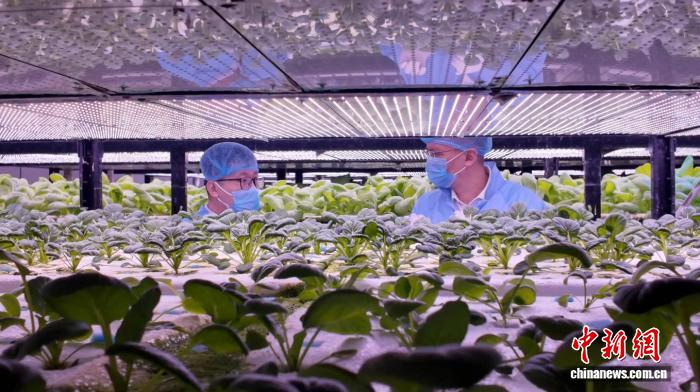
Core Insights - The article highlights the success of a Taiwanese entrepreneur, Zhang Shize, who has established modern plant factories in Xinjiang over the past decade, utilizing LED growth lights and hydroponic technology to produce vegetables year-round, independent of external climate conditions [2][3]. Group 1: Business Development - Zhang Shize has built two modern plant factories in Urumqi and Moyu County, with the first factory established in 2016, marking the beginning of artificial light source plant cultivation in Xinjiang [2][3]. - The plant factories can yield 70 to 80 tons of vegetables per acre annually, maximizing production efficiency through hydroponic techniques [3]. - In 2020, the team developed "smart grass planting" equipment to address the shortage of fodder for livestock, reducing the production cycle to just 7 days [3]. Group 2: Community Engagement - The team has employed 23 staff members, with 40% being technical personnel from minority ethnic groups, fostering a sense of community and collaboration [3]. - Zhang Shize has formed strong friendships with local residents, emphasizing the importance of these relationships in his business journey [4]. Group 3: Future Prospects - In 2024, the plant factory is expected to gain international attention, with representatives from Japan, Middle Eastern countries, and Mongolia expressing interest in technology transfer and collaboration [4].

植物工厂里的“黑科技”
Ren Min Ri Bao· 2025-12-17 22:11
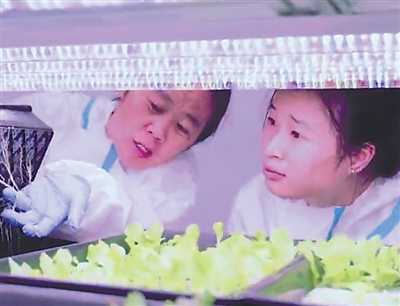
Core Viewpoint - The article highlights the advancements in a "cleanroom" plant factory in Chongqing, showcasing innovative technologies that enhance plant growth and efficiency, leading to significant reductions in resource usage and increased production capacity [2] Group 1: Technology and Innovation - The company has developed a light biological control planting system that utilizes smart LED lights to optimize plant growth, with blue-violet light enhancing vitamin synthesis, red light promoting stem strength, and yellow light regulating flowering cycles [2] - The plant factory employs a water and nutrient solution recycling system that shortens the growth cycle of fruits and vegetables by an average of one-third while achieving over 50% water savings [2] - The system autonomously regulates temperature, humidity, and light, with air in the factory being refreshed approximately every four minutes [2] Group 2: Production and Output - The factory utilizes multi-layer vertical cultivation and year-round continuous production, resulting in yields that are several times higher than traditional field planting [2] - Since its launch in September, the project has successfully cultivated and delivered 1.69 million vegetable seedlings [2]
植物工厂改变乡村面貌
Jing Ji Ri Bao· 2025-12-06 05:51
Core Viewpoint - The "Red Core" plant factory in Hengkantou Village, Ningbo, is a successful example of agricultural modernization and community development, driven by local governance and partnerships with enterprises, significantly improving local economic conditions and agricultural productivity [1][2]. Group 1: Agricultural Modernization - The "Red Core" plant factory covers an area of 58 acres and utilizes soilless cultivation technology, allowing for high yield and continuous production, with an output of 300 tons of vegetables annually [2]. - The unit yield of vegetables in the plant factory is 8 to 10 times higher than traditional farming methods [2]. Group 2: Community Impact - The plant factory has created stable employment opportunities for local villagers, with workers earning over 4,000 yuan per month [2]. - The factory supports local farmers by promoting their products, such as persimmons and local snacks, to visitors, fostering a mutually beneficial relationship [2]. Group 3: Future Development - The local leadership aims to expand greenhouse areas and increase production capacity, aligning with the goals set forth in the 20th National Congress of the Communist Party of China [3].