
殡葬服务

Search documents
国人正在抛弃高价墓地
36氪· 2026-03-31 14:37
Core Viewpoint - The traditional funeral industry in China is experiencing a significant downturn, primarily due to changing consumer attitudes towards high-priced burial services, leading to a consumption revolution in the sector [4][16][27]. Financial Performance of Key Companies - Fushouyuan, known as the "first stock of the funeral industry," is projected to face its first loss since its listing, with a net profit of 373 million yuan in 2024, down 52.8% year-on-year, and a loss of 261 million yuan in the first half of 2025 [6][24]. - Fucheng Co.'s revenue from burial services has declined from 227 million yuan in 2017 to 98 million yuan in 2024, with a gross margin decrease from 86.78% to 78.51% [7]. - Anxianyuan China has also reported continuous losses, while smaller companies like Wantongyuan and China Life Group are facing similar performance issues [10][11]. Market Demand and Supply Dynamics - Despite the aging population and a high death rate in China, the demand for traditional burial services is not decreasing; rather, the market is growing, as indicated by the increasing number of registered funeral-related businesses [12][13][16]. - The average price of burial plots has risen significantly, with Fushouyuan's average price exceeding 120,000 yuan per plot by 2024, which is higher than property prices in over 90% of Chinese cities [20][21]. Changing Consumer Attitudes - The rising costs of burial services have led to a backlash from consumers, who are increasingly opting for more affordable and meaningful alternatives, such as green burials and cremation [23][24]. - In 2024, Fushouyuan sold 12,569 burial plots, a decrease of over 23% from the previous year, indicating a significant drop in demand for high-priced burial services [24][25]. Industry Trends and Future Outlook - The shift in consumer behavior towards more practical and less extravagant burial options is expected to shrink the market for high-priced burial plots [27]. - Companies are beginning to embrace digital transformation to adapt to changing market conditions, with Fushouyuan and Anxianyuan China implementing digital services to enhance customer engagement [29][30]. - However, the transition to a technology-driven model is still in its infancy, and companies may need to lower prices to remain competitive in the current market environment [32].


殡仪馆主持红衣黄发被指不尊重逝者
Xin Lang Cai Jing· 2026-02-27 17:29
Core Viewpoint - The incident at the funeral home in Huai'an, Jiangsu, where a staff member wore inappropriate attire during a memorial service, has sparked public outrage and raised concerns about the respect for the deceased and their families [1] Group 1: Incident Details - A staff member at the Huai'an funeral home wore a red down jacket and had yellow hair, which contrasted sharply with the solemn atmosphere expected at a funeral [1] - The family of the deceased initially did not notice the inappropriate attire but later expressed their disapproval, although they chose not to pursue further action since the burial had already taken place [1] Group 2: Management Response - The funeral home acknowledged the incident, attributing it to a lapse in employee adherence to service standards following the holiday period [1] - The management admitted to significant oversight in their operations, noting that staff uniforms had not been updated for several years due to financial constraints [1] - The funeral home has implemented several corrective measures, including holding a meeting to address conduct issues, revising dress code policies, and establishing a supervisory group to ensure compliance with service standards [1]
Carriage Services(CSV) - 2025 Q4 - Earnings Call Transcript
2026-02-26 15:02
Financial Data and Key Metrics Changes - For Q4 2025, total revenue was $105.5 million, an 8% increase year-over-year [6] - Adjusted consolidated EBITDA for Q4 was $32.5 million, an 11% increase, with a margin of 30.8%, up 80 basis points from the previous year [9] - Adjusted diluted EPS for Q4 was $0.75, a 21% increase from $0.62 in the same quarter last year [10] - For the full year, total revenue was $417.4 million, a 3.3% increase from $404.2 million in 2024 [10] - Adjusted consolidated EBITDA for the full year was $130.7 million, a 3.5% increase, with a margin of 31.3% [11] Business Line Data and Key Metrics Changes - Total funeral operating revenue for Q4 was $61.1 million, reflecting a 9.6% growth year-over-year [7] - Funeral home operating volume was 10,571, a 6.8% increase, with average revenue per contract at $5,777, a 2.6% increase [7] - Total cemetery operating revenue for Q4 was $33.8 million, an 18.4% increase, driven by a 25.5% increase in pre-need cemetery sales production [8] - Total financial revenue for Q4 was $9.3 million, a 15.3% increase, primarily from strong trust fund investments [8] Market Data and Key Metrics Changes - Pre-need insurance contracts sold increased by 33.8% compared to the same quarter last year, indicating strong performance in the pre-need insurance sales strategy [9] Company Strategy and Development Direction - The company is focused on disciplined capital allocation, purposeful growth, and relentless improvement, transitioning from a rebuilding phase to a compounding phase [15][16] - Investments in systems and infrastructure are aimed at supporting disciplined growth and enhancing reporting capabilities [13] - The company aims to build a best-in-class death care company defined by premier experiences and a high-performance culture [15] Management's Comments on Operating Environment and Future Outlook - Management expressed confidence in the company's ability to grow revenue and margins despite challenges from divestitures of non-core businesses [11] - The outlook for 2026 includes projected revenues of $440 million to $450 million, representing a growth rate of approximately 5.5% to 8% [22] - Adjusted diluted EPS is expected to be in the range of $3.35 to $3.55 for 2026, reflecting a focus on growth and potential acquisitions [23] Other Important Information - The company reported a decrease in bank leverage ratio to 4x from 4.3x, aligning with long-term targets [20] - Capital expenditures for Q4 totaled $7.9 million, with a focus on growth capital for cemetery development [20] Q&A Session Summary Question: How much did the Q3 acquisitions add to Q4 revenue? - The Q3 acquisitions added about $3 million to Q4 revenue [26] Question: Were the unanticipated insurance costs included in overhead? - The insurance costs were spread between overhead and field margin, predominantly impacting field margin [27] Question: What are the underlying assumptions for the revenue growth guidance? - The high end of guidance would require acquisitions to perform at the upper end of expectations and higher growth in funeral and cemetery businesses [29][30] Question: Can you quantify the impact of future acquisitions on guidance? - The guidance includes an estimated impact of $5 million to $10 million from future acquisitions [31] Question: What is the integration process for acquisitions once closed? - The integration process begins before the close, focusing on systems, employment, and onboarding [43] Question: How does the company view the supply chain optimization process? - The supply chain optimization program is still in early stages, with opportunities for improvement expected in 2026 and beyond [54][56] Question: What is the expected EBITDA contribution from 2026 M&A in the guidance? - The average margin for M&A is expected to be around 30% [102]

Carriage Services(CSV) - 2025 Q4 - Earnings Call Transcript
2026-02-26 15:02
Financial Data and Key Metrics Changes - Total revenue for Q4 2025 was $105.5 million, an 8% increase year-over-year [6] - Adjusted consolidated EBITDA for Q4 was $32.5 million, an 11% increase, with an adjusted EBITDA margin of 30.8%, up 80 basis points [9][18] - Adjusted diluted EPS for Q4 was $0.75, a 21% increase from $0.62 in the same quarter last year [10][19] - Full year total revenue was $417.4 million, a 3.3% increase from $404.2 million in 2024 [10] - Adjusted consolidated EBITDA for the full year was $130.7 million, a 3.5% increase, with an adjusted EBITDA margin of 31.3% [11] Business Line Data and Key Metrics Changes - Total funeral operating revenue for Q4 was $61.1 million, reflecting a 9.6% growth year-over-year [6][7] - Funeral home operating volume increased by 6.8% to 10,571 [7] - Average revenue per contract for funerals was $5,777, a 2.6% increase [7] - Total cemetery operating revenue for Q4 was $33.8 million, an 18.4% increase, driven by a 25.5% increase in pre-need cemetery sales [8] - Total financial revenue for Q4 was $9.3 million, a 15.3% increase, primarily from strong trust fund investments [8] Market Data and Key Metrics Changes - Pre-need insurance contracts sold increased by 33.8% compared to the same quarter last year, indicating strong performance in pre-need insurance sales [9] - The company expects new acquisitions to contribute approximately $16 million in revenue in 2026 [11] Company Strategy and Development Direction - The company is transitioning from a rebuilding phase to a compounding phase, focusing on disciplined execution and high-quality acquisitions [5][16] - Strategic objectives include disciplined capital allocation, purposeful growth, and relentless improvement [15] - Investments in systems and infrastructure are aimed at supporting disciplined growth and enhancing operational efficiency [13] Management's Comments on Operating Environment and Future Outlook - Management expressed confidence in the company's ability to generate consistent cash flow and expand profitability over time [12] - The outlook for 2026 includes projected revenues of $440 million to $450 million, representing a growth rate of approximately 5.5% to 8% [23] - Adjusted diluted EPS is expected to be in the range of $3.35 to $3.55 for 2026, reflecting a focus on growth and capital allocation [24] Other Important Information - The company reported a decrease in bank leverage ratio to 4 times from 4.3 times, aligning with long-term targets [20] - Capital expenditures for Q4 totaled $7.9 million, with a focus on growth capital for cemetery development [20] Q&A Session Summary Question: Contribution of acquisitions to revenue - Acquisitions in Q4 contributed approximately $3 million to revenue [27] Question: Impact of insurance costs on adjusted EBITDA - Insurance costs were spread between overhead and field margin, impacting both areas [28] Question: Guidance assumptions for revenue growth - High-end guidance requires strong performance from new acquisitions and higher growth in funeral and cemetery segments [31] Question: Integration process for acquisitions - Integration begins before closing, focusing on systems and operational alignment [44] Question: Update on supply chain optimization - The supply chain optimization program is still in early stages, with ongoing improvements expected [57] Question: CapEx expectations for 2026 - Capital expenditures are expected to be in the range of $25 million to $30 million, reflecting both maintenance and growth needs [68] Question: M&A expectations and leverage - Expected EBITDA contributions from M&A in 2026 are factored into guidance, with a disciplined approach to acquisitions [102]
有人预测:若不出意外,春节以后,国内将迎来3个变化,很真实!
Sou Hu Cai Jing· 2026-02-14 13:42
Group 1: Consumer Market Trends - The consumer market is expected to return to rationality after the Spring Festival, with a focus on practical and cost-effective consumption rather than blind following of trends [5][6] - In January, the consumer price index rose by 0.2% year-on-year, indicating resilience in the consumer market, with both goods and service consumption showing increased growth compared to December 2025 [8] - Offline consumption will stabilize, while online consumption, particularly in convenient services and fresh food delivery, will continue to thrive [10][12] Group 2: Employment Market Stability - The employment market is projected to stabilize post-Spring Festival, with a peak in personnel movement as workers return to jobs and graduates seek employment [14][16] - The demand for labor, especially in manufacturing and service sectors, is expected to increase, alleviating previous labor shortages [16][18] - Various regions are setting ambitious employment targets, with provinces like Guangdong and Henan aiming for over 1.1 million new urban jobs [18] Group 3: Upgrades in Public Services - Post-Spring Festival, policies aimed at enhancing public services will be implemented, focusing on addressing urgent community needs and improving overall satisfaction [20][26] - The support for new employment groups, such as delivery workers and ride-hailing drivers, will be strengthened, ensuring better coverage and targeted assistance [21] - Changes in funeral service policies aim to reduce the financial burden on families and promote a more community-oriented approach to these services [22][24]

鲜花代纸寄相思
Xin Lang Cai Jing· 2026-02-13 04:51
Group 1 - The article highlights the increasing trend of using flowers instead of traditional burning paper during memorial services, reflecting a modern approach to honoring deceased loved ones [1][2] - The Wan Tong Garden provides various services such as offering flowers and yellow ribbons for memorials, as well as centralized eco-friendly burning services for those who still prefer traditional methods [1] - The cemetery has introduced "cloud memorial" services, allowing citizens to pay respects online through flower offerings, gifts, and messages, catering to those unable to visit in person [1] Group 2 - The management of Wan Tong Garden emphasizes that civilized memorial practices do not negate tradition but enhance the emotional and responsible aspects of remembrance [2] - The cemetery is actively promoting green, safe, and harmonious memorial practices, aiming to gradually shift public perception towards more civilized memorial customs [2] - Future plans include continuous service optimization to foster a new cultural trend of memorializing that emphasizes familial bonds and cultural heritage [2]
潮水已褪,福寿园的地产游戏现形!
Xin Lang Cai Jing· 2026-02-12 10:20
Core Viewpoint - The investment logic surrounding Fushouyuan has reversed, revealing its true nature as a real estate business rather than a high-margin service provider, leading to significant declines in performance and market valuation [4][30][49]. Financial Performance - Fushouyuan's total revenue peaked at 26.28 billion RMB in 2023 but dropped to 20.77 billion RMB in 2024, with a further decline to 6.11 billion RMB in the first half of 2025, reflecting a year-on-year decrease of 44.47% [6][31]. - The company reported a net loss of 2.61 billion RMB in 2025, following a profit of 3.73 billion RMB in 2024, indicating a drastic shift in financial health [5][30]. - The market capitalization fell from a high of 187 billion RMB to 59 billion RMB, with stock prices returning to levels not seen in a decade [7][30]. Revenue Composition - The revenue structure shows that cemetery services account for 80% of total income, with burial services being the primary contributor [10][34]. - In 2024, cemetery sales generated 15.35 billion RMB, representing 74% of total revenue, highlighting the dominance of this segment [37][38]. Market Dynamics - The company operates in a highly regulated environment, with new policies limiting the pricing and expansion of private burial services, which has directly impacted revenue [20][44]. - The average price of burial plots has decreased significantly, from approximately 12 million RMB in 2024 to 6.4 million RMB in the first half of 2025, reflecting changing consumer behavior and regulatory pressures [22][46]. Business Model Analysis - Fushouyuan's business model is fundamentally real estate-based, with a high correlation to property market trends, similar to traditional real estate companies [9][49]. - The company has historically relied on acquiring land through various means, including government allocations and mergers, but faces challenges due to stricter regulations [40][42]. Future Outlook - Despite the current challenges, Fushouyuan has a significant cash reserve of 16.49 billion RMB and low debt levels, which may provide some resilience [49][50]. - The company is attempting to pivot towards becoming a provider of funeral and life technology services, although the effectiveness of this strategy remains uncertain [49].
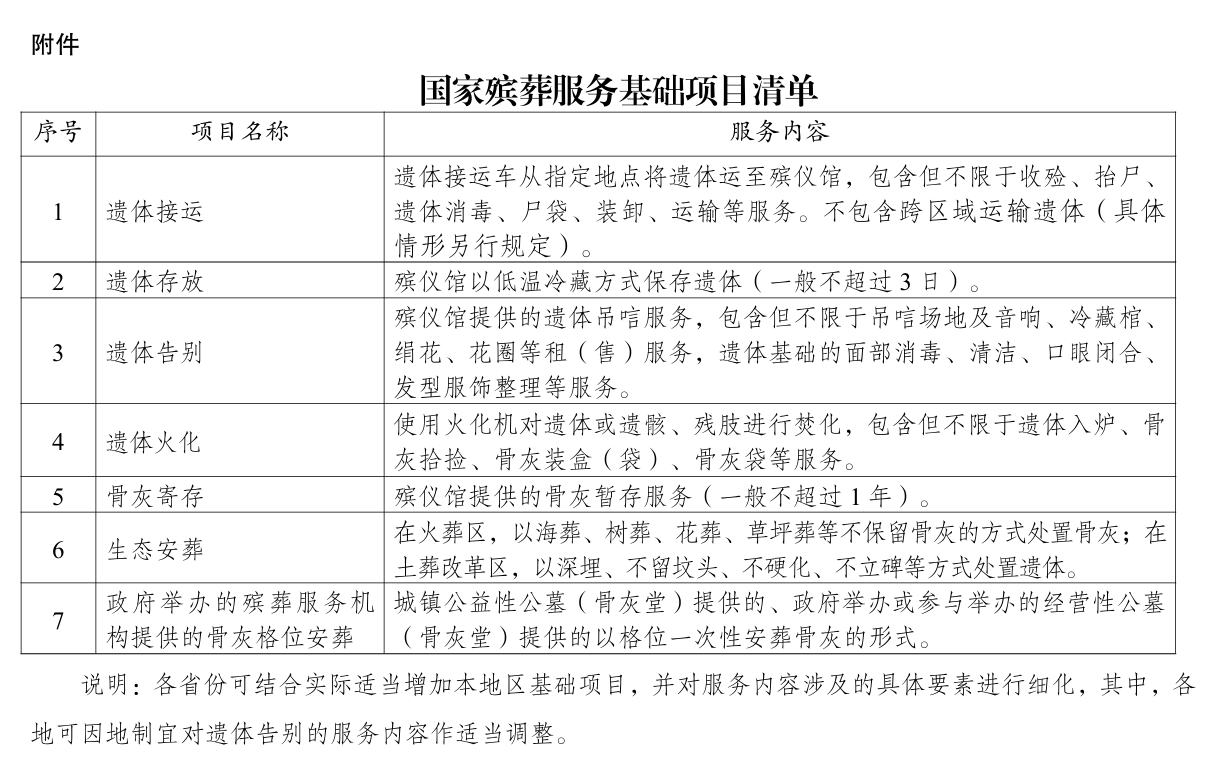
三部门:建立健全殡葬服务收费目录清单和收费公示制度 清单之外不得收费
智通财经网· 2026-01-27 09:33
Core Viewpoint - The notification issued by the National Development and Reform Commission, Ministry of Civil Affairs, and Ministry of Finance aims to improve the funeral service fee policy, enhance regulatory collaboration, and reduce the financial burden on the public regarding funeral expenses [1] Group 1: Strengthening Funeral Service Fee Management - Funeral services are categorized into basic and non-basic projects, with basic projects including body transportation, storage, farewell services, cremation, and ash storage [2] - The provincial civil affairs departments, in collaboration with local development and finance departments, will determine the basic project list and set fee standards, while non-basic projects will be defined based on local demand [2][3] Group 2: Establishing Fee Standards - The government-guided pricing for funeral services will focus on public welfare, with standards based on actual costs minus government subsidies and donations [5] - Local governments are tasked with guiding funeral service providers in establishing internal pricing management and cost accounting systems [6] Group 3: Strengthening Price Guidance for Funeral Supplies - Local governments will guide funeral service providers in the procurement of funeral supplies to ensure availability of affordable options, adhering to the principle of "civilized and frugal" [7] Group 4: Regular Evaluation System - A monitoring system for funeral service fees will be established to assess market changes and industry dynamics, with evaluations conducted at least every three years [8] Group 5: Establishing a Fee Directory and Public Disclosure System - A comprehensive fee directory will be created, detailing service items, fee standards, and specific service content, which must be approved by local governments before implementation [9] - Local governments will also ensure that funeral service providers publicly disclose their service items and fees, enhancing transparency [10] Group 6: Regulating Funeral Service Fee Behavior - Local civil affairs departments will strengthen oversight of funeral service providers, ensuring compliance with established regulations and preventing unauthorized fee charges [11] - The focus will be on protecting the rights of the public and promoting rational choices in service selection [11] Group 7: Specific Basic Project List - The basic project list includes services such as body transportation, storage, farewell services, cremation, and ecological burial options, with detailed descriptions of each service [14]
进一步完善殡葬服务收费政策 三部门发布通知
Yang Shi Wang· 2026-01-27 09:24
Core Viewpoint - The National Development and Reform Commission, along with the Ministry of Civil Affairs and the Ministry of Finance, has issued a notification to further improve the pricing policy for funeral services, emphasizing the need for standardized management and transparency in pricing [1]. Group 1: Strengthening Funeral Service Pricing Management - Funeral services are categorized into basic and non-basic items, with basic items including body transportation, storage, farewell services, cremation, and ash storage [2]. - Provincial civil affairs departments, in collaboration with local development and reform and finance departments, will set pricing standards for basic services, while non-basic services will be determined based on local demand [2]. - The pricing for basic services will be managed under government guidance, while non-basic services will have a reference pricing range to guide reasonable charges by funeral service providers [2]. Group 2: Clarifying Pricing Standards for Funeral Services - Basic burial services include ecological burials and ash interment provided by government-run funeral institutions, with potential subsidies for ecological burials that do not retain ashes [3]. - Charges for burial plots and maintenance fees will be applicable, with specific fees for different burial methods clearly defined [3]. - Other fees related to burial services are prohibited unless specified, ensuring transparency in pricing [3]. Group 3: Establishing a Pricing Directory and Public Disclosure System - A national directory of basic funeral service items will be created, with local governments responsible for determining their own service lists [9]. - Local governments must ensure that all service charges are publicly disclosed, including service items, pricing standards, and relevant information to enhance transparency [10]. - The public disclosure system aims to facilitate access to information regarding funeral services and pricing, ensuring that consumers are well-informed [10]. Group 4: Strengthening Regulatory Oversight - Local civil affairs departments will enhance supervision of funeral service providers, ensuring compliance with established pricing and service standards [11]. - A system for regular evaluation of pricing policies will be established, with assessments conducted every three years to adapt to market changes [8]. - The focus will be on maintaining consumer rights and ensuring that funeral service providers adhere to regulations regarding pricing and service delivery [11].
上海一医生泄露逝者及其亲属信息,被暂停执业活动和罚款
Xin Jing Bao· 2026-01-22 08:23
Core Viewpoint - The article highlights a case of personal information violation in a healthcare setting, where medical personnel illegally collected and provided personal information of deceased individuals and their relatives for commercial purposes, leading to legal actions and penalties against the involved parties [1][2]. Group 1: Case Details - A hospital in Minhang District, Shanghai, and emergency personnel misused their access to personal information, collecting over 800 pieces of data including addresses, death times, causes, and contact details of deceased individuals and their relatives from the city's disease control information management system [1]. - The involved hospital has been ordered to rectify its illegal actions, received a warning, and was fined, while the implicated doctor faced a suspension of practice and penalties [2]. Group 2: Legal Framework and Consequences - The actions of the healthcare personnel violated the Personal Information Protection Law and the Data Security Law of the People's Republic of China, which mandate strict regulations on the handling of personal information [2]. - Following a recommendation from the Minhang District People's Procuratorate, the local health commission took administrative actions against the hospital and personnel, including fines and the termination of contracts with involved emergency staff [2].