节地生态安葬

Search documents
学习规划建议每日问答丨为什么要建立健全基本殡葬服务制度
Xin Hua She· 2026-01-21 02:59
Core Viewpoint - The establishment of a basic funeral service system is essential for ensuring dignified and civilized funeral practices for citizens, addressing public needs, and enhancing the quality of funeral services across the country [1] Group 1: Optimization of Funeral Service Supply - The basic funeral service system aims to ensure the quality of all funeral service processes, including body transportation, storage, and cremation [2] - The government will lead the initiative, focusing on ecological and land-efficient practices while increasing the construction of public cemeteries and columbariums [2] - Local governments are encouraged to adapt their strategies based on regional characteristics, prioritizing the development of columbariums in urban areas and public cemeteries in rural areas [2] Group 2: Reducing Funeral Financial Burdens - The system will integrate public welfare throughout the funeral service process, minimizing unnecessary expenses for families [3] - Management of funeral home and cemetery pricing will be strengthened, with clear standards for fees associated with public and government-operated cemeteries [3] - Support will be provided to low-income families through fee reductions or subsidies, expanding the coverage of beneficial funeral policies [3] Group 3: Cultivating Positive Social and Family Values - The funeral service system is closely linked to social, family, and cultural values, providing a framework for promoting civilized funeral practices [4] - Guidelines for funeral etiquette will be developed, encouraging new forms of funeral rituals and promoting frugal and respectful practices [4] - Efforts will be made to address and reduce outdated customs related to extravagant funerals, fostering a healthier and more environmentally friendly approach to funerals [4]
对殡葬服务实行清单化管理 遏制过高收费
Xin Lang Cai Jing· 2026-01-07 22:24
Core Points - The revised Funeral Management Regulations emphasize the importance of funeral services as a public welfare undertaking, promoting civilized, frugal, and eco-friendly practices while advancing funeral reforms [1] - The regulations aim to gradually include qualified funeral service projects into the national basic public service framework and establish a funding mechanism aligned with public needs [1] - There will be stricter management of fees for funeral services, with a clear list of services and prohibition of additional charges outside this list, alongside enhanced price monitoring [1] - Comprehensive regulation across all aspects of funeral services will be strengthened, ensuring coordinated enforcement and management of services related to death, funerals, burials, and memorials [1] - The regulations promote eco-friendly burial methods that occupy less land, encouraging ecological burial practices [1]
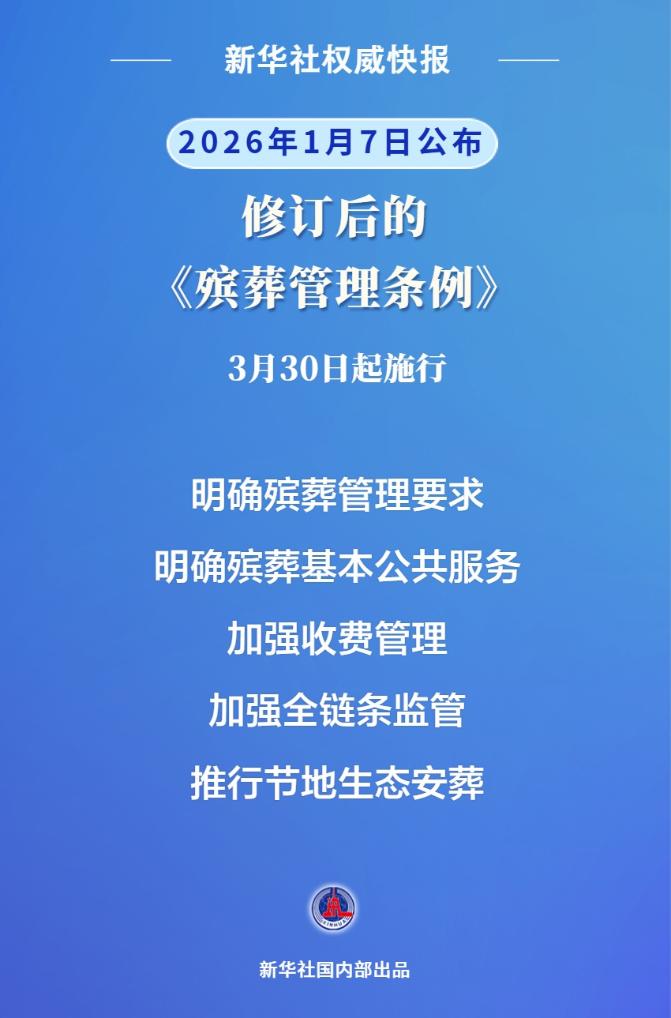
修订后的《殡葬管理条例》自2026年3月30日起施行
Xin Hua She· 2026-01-07 09:13
Core Viewpoint - The revised "Funeral Management Regulations" will be implemented starting March 30, 2026, focusing on enhancing management and service standards in the funeral industry [2]. Summary by Relevant Sections General Principles - The regulations consist of 8 chapters and 73 articles, covering general principles, funeral facilities, funeral services, burial services, funeral activities, supervision and management, legal responsibilities, and supplementary provisions [2]. Funeral Management Requirements - The revised regulations clarify the requirements for funeral management, ensuring a standardized approach across the industry [2]. Basic Public Services - The regulations define the basic public services related to funerals, aiming to improve accessibility and quality of services provided to the public [2]. Fee Management - There will be strengthened management of fees associated with funeral services, ensuring transparency and fairness in pricing [2]. Comprehensive Supervision - The regulations emphasize comprehensive supervision throughout the entire funeral service chain, enhancing accountability and service quality [2]. Eco-friendly Burial Practices - The promotion of land-saving and eco-friendly burial practices is a key aspect of the revised regulations, reflecting a shift towards sustainable funeral options [2].

47.71万人、9.73万辆车出行,上海冬至祭扫平稳进行
Xin Lang Cai Jing· 2025-12-21 14:32
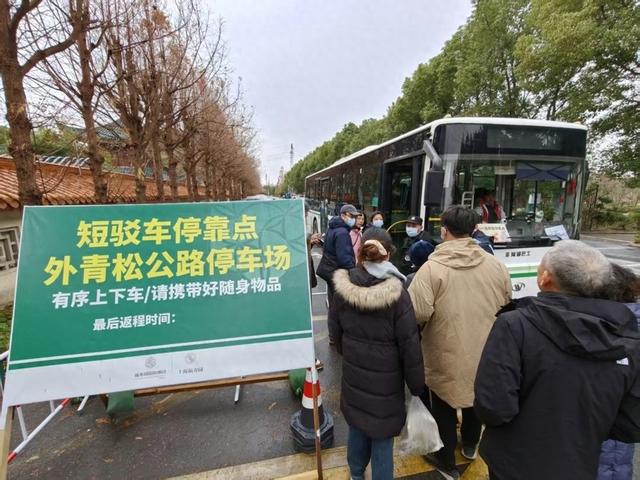
Core Viewpoint - The article highlights the significant increase in the number of visitors and services provided by Shanghai's funeral service units during the winter solstice, indicating a well-organized and safe environment for the public to pay their respects [1][3]. Group 1: Visitor Statistics - From December 1 to December 21, Shanghai's 54 operating cemeteries received a total of 1.279 million visitors and 273,000 vehicles, with 20,663 burials conducted [3]. - On the winter solstice day alone, 477,100 visitors and 97,300 vehicles were recorded, along with 9,987 burials [1]. Group 2: Service Quality and Safety - All funeral service units in Shanghai reported no safety or fire incidents during the winter solstice period, maintaining a stable and orderly environment [3]. - The municipal civil affairs department implemented safety management measures and promoted smoke-free rituals, along with services like "flowers for foil" to enhance the quality of services [3]. Group 3: Community Engagement and Innovations - The Shanghai civil affairs department utilized the "Shanghai Civil Affairs" WeChat account to promote new funeral policies, reaching 12,000 people through various outreach efforts [4]. - The newly opened "Eco-Burial Area" at Shanghai Fushouyuan features biodegradable containers for burials, emphasizing sustainable practices in the funeral industry [4].
中国殡葬业,在老龄社会干亏了
3 6 Ke· 2025-09-01 08:35
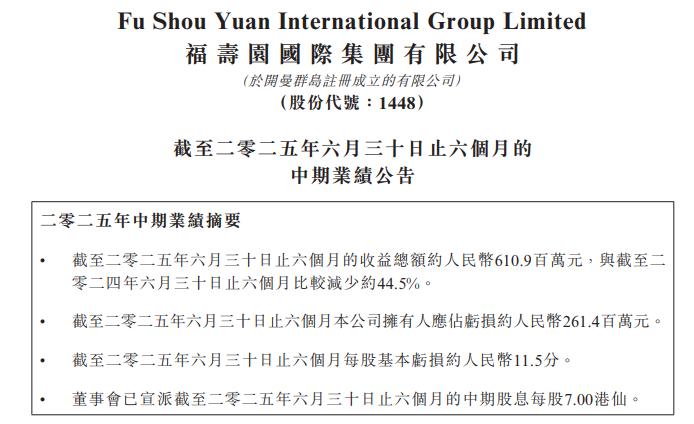
Core Viewpoint - The funeral industry in China, traditionally seen as a stable market, is facing significant challenges as consumer spending on high-end burial services declines, leading to substantial losses for leading companies like Fushouyuan [2][10][12]. Group 1: Industry Overview - The average daily death toll in China exceeds 28,000, making the funeral industry a "recession-proof" sector [1]. - The funeral service market in China was valued at 169.5 billion yuan in 2015 and is projected to reach 411.4 billion yuan by 2026 [4]. - Fushouyuan, the leading company in the sector, was listed in Hong Kong in 2013 and is known for its high-end burial services [5]. Group 2: Financial Performance - Fushouyuan reported a net loss of 260 million yuan for the first half of 2025, confirming previous loss warnings [2]. - The company's total revenue for the first half of 2025 was approximately 611 million yuan, a 44.5% decrease from the previous year [10]. - Sales of operational burial plots decreased by 6.7% year-on-year, with the average sales price dropping by 57,000 yuan per plot [10][12]. Group 3: Market Dynamics - The decline in revenue is attributed to changing consumer behavior, with customers becoming more cautious in their spending on funeral services [13]. - The shift in consumer preferences is evident as more individuals opt for eco-friendly burial methods, such as sea burials and tree burials, which are gaining popularity [19]. - The industry is experiencing a transformation as traditional high-margin business models based on land scarcity are being challenged by economic downturns and changing consumer attitudes towards death and funerals [20][21]. Group 4: Strategic Responses - Companies are adjusting their product offerings to include mid-range services to cater to changing consumer demands [13]. - Fushouyuan is exploring digital services and human-centered care, such as life memorial spaces and emotional healing services, to enhance value [23][25]. - The transition from asset-based sales to service-oriented models poses challenges, as companies must balance emotional investment with profitability [25][26].