
海洋生态研究

Search documents
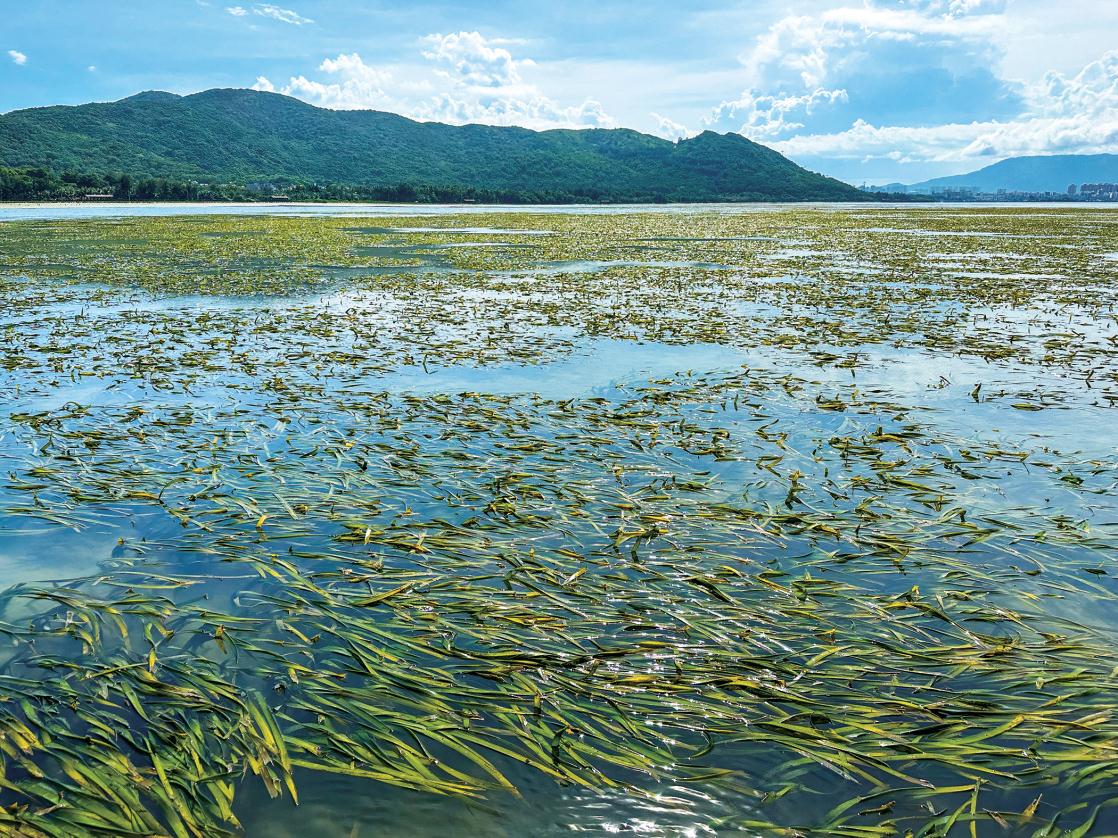
守护“海底草原”
Zhong Guo Zi Ran Zi Yuan Bao· 2025-12-22 02:56
Core Insights - The project "Investigation and Assessment of Seagrass Beds in Hainan Island and Adjacent Waters" has passed inspection, providing solid scientific support for the ecological protection and restoration of seagrass beds in Hainan [4] - The South China Sea Ecological Center's youth research team has played a crucial role in the project, employing innovative technologies such as "remote sensing + AI recognition + on-site verification" to establish a dynamic database for seagrass beds [4][6] - The project has systematically mapped the distribution and ecological status of seagrass resources in Hainan, laying a strong foundation for future conservation efforts [6][8] Group 1 - The project involved a comprehensive survey of seagrass species and area distribution across 20 regions in seven coastal cities in Hainan, with a focus on ecological condition assessments in seven representative areas [4] - The youth research team, composed of multidisciplinary young researchers, has been instrumental in conducting field surveys and data analysis, overcoming challenges such as high temperatures and risks associated with marine operations [6] - The project has produced significant data that supports the delineation of marine ecological protection boundaries and research on blue carbon policies [4][6] Group 2 - Since 2018, the South China Sea Ecological Center has led multiple significant investigations into seagrass bed ecosystems, including damage assessments and monitoring projects across over 20 regions [8] - The center has developed a long-term monitoring dataset for seagrass beds, which helps in understanding the long-term ecological changes in the region [8] - The center emphasizes the importance of public awareness and education, organizing various outreach activities to enhance community engagement in seagrass bed conservation [10]

以 AI“问诊”珊瑚礁
Zhong Guo Zi Ran Zi Yuan Bao· 2025-11-13 05:51
Core Insights - The Natural Resources Ministry's South China Sea Development Research Institute and Beijing University of Posts and Telecommunications have developed the first multimodal visual question-answering dataset focused on coral image understanding [1] - Coral reefs, often referred to as "the tropical rainforests of the ocean," face global challenges in monitoring and identification, which currently relies heavily on manual interpretation [1] - Existing coral datasets are limited and poorly labeled, making it difficult for traditional visual question-answering (VQA) technologies to assess coral health and symbiotic relationships [1] Dataset Overview - The dataset comprises 12,800 coral images from 67 genera across 20 species, generating 270,000 question-answer pairs based on 16 dimensions such as coral type, location, and quantity [1] - It aims to convert ecological knowledge and professional analysis into intuitive, structured information, allowing users to obtain scientific answers by providing coral images and questions [1] - Compared to general question-answer datasets, this dataset improves average accuracy in visual question-answering tasks and ecological health assessment tasks by 44% and 36%, respectively [1] Future Developments - The research institute plans to enhance the AI model's understanding of coral classification, health status, and ecological relationships by optimizing the coral knowledge graph and utilizing multi-source coral data for ongoing pre-training [1]