
海洋管理

Search documents
海上看浙江
Zhong Guo Zi Ran Zi Yuan Bao· 2026-01-20 03:55
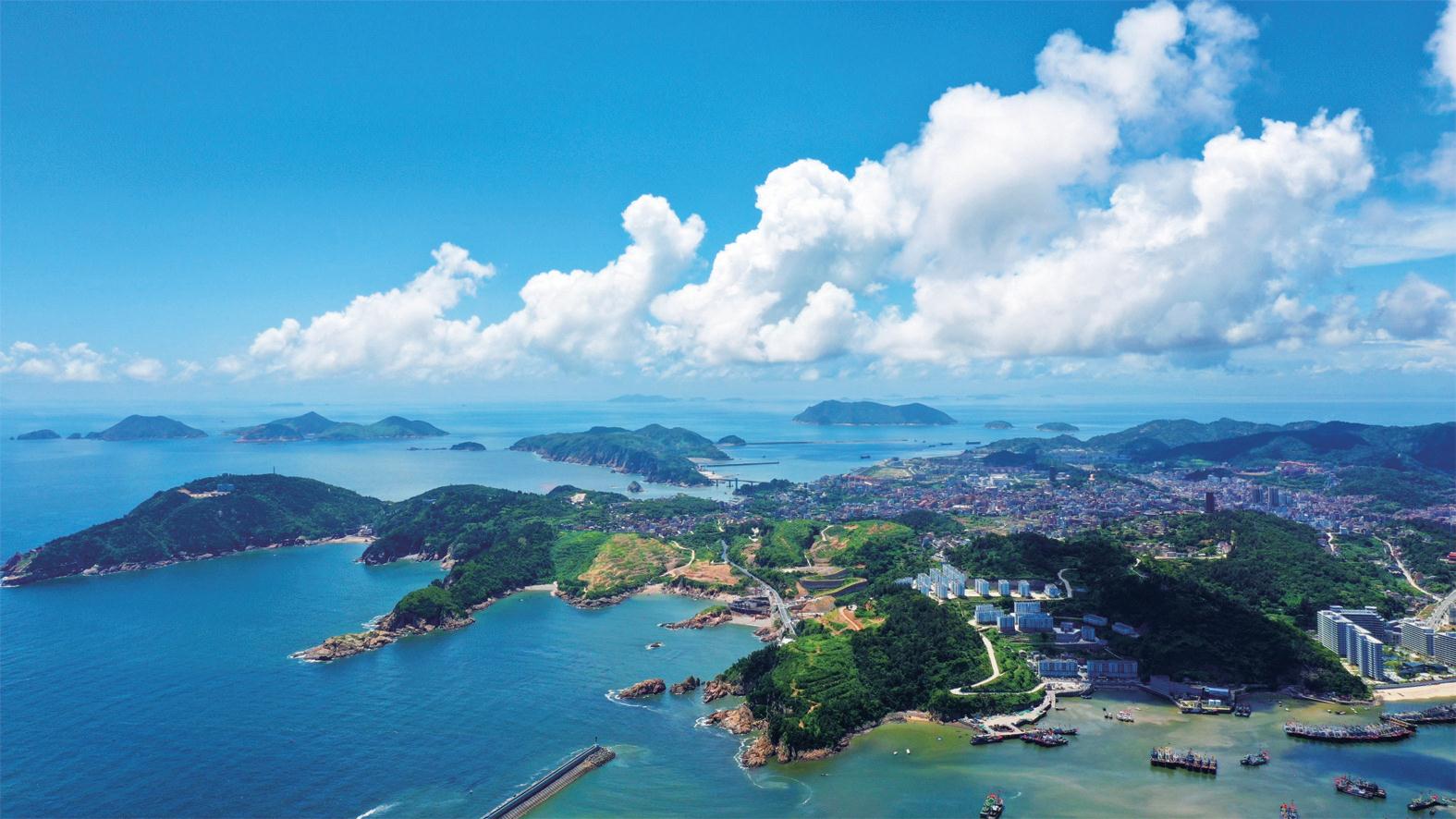
Core Insights - In 2025, Zhejiang Province achieved significant advancements in marine resource management, with a total approved marine area of 291,700 acres, marking a 61.1% year-on-year increase, and industrial marine usage accounting for 65% of the total [1] Institutional Innovation - Zhejiang implemented a series of reforms in marine usage approval, transitioning from a lengthy process of 41 days to just 7 working days for certain projects, exemplifying the "Zhejiang speed" [3] - The province established a "deficient acceptance + deficient review" mechanism and promoted an integrated approval model, merging marine usage with land, forest, and grassland approvals, resulting in a 40% reduction in required application materials and a 60% decrease in approval time [3] Spatial Revolution - The innovative spatial utilization model in Taizhou's Sanmen County, which allows for layered rights allocation in marine areas, has been recognized as a replicable case for resolving marine usage conflicts and enhancing resource efficiency [5] - This model enabled the coexistence of a nuclear power project's thermal discharge and a solar project, leading to an investment boost of 1 billion yuan and significant energy savings and emissions reductions [7] Market-Oriented Reforms - Zhejiang is advancing market-oriented reforms in marine resource allocation, including the introduction of the first online trading rules for marine usage rights, enhancing transparency and efficiency in transactions [7][8] - The province is exploring market mechanisms for natural coastline resources, aiming to realize the ecological and spatial value of these resources [8] Smart Coexistence - In 2025, Zhejiang focused on safety and ecology, achieving significant milestones in marine governance, including the restoration of over 1,000 acres of coastal wetlands and 22 kilometers of coastline [10] - The province successfully implemented a proactive disaster response system, maintaining a near 90% accuracy rate in disaster warnings and achieving zero casualties from marine disasters [10] Ecological Restoration - Zhejiang's coastal planning integrates economic development with ecological protection, enhancing both the environment and disaster resilience [11] - The establishment of a comprehensive monitoring system and collaboration with various stakeholders has strengthened the province's capacity for ecological technology development and marine resource management [11] Conclusion - The developments in Zhejiang reflect a new philosophy of marine development, emphasizing coexistence with marine resources rather than conquest, paving the way for a sustainable future [12]

2025中国海洋经济论坛在威海召开
Da Zhong Ri Bao· 2025-10-19 00:34
Core Insights - The 2025 China Marine Economy Forum was held in Weihai, focusing on "Green Low-Carbon Empowerment: Reshaping New Engines for High-Quality Development of the Marine Economy" [1] - Nearly 200 experts, scholars, and graduate students from domestic universities and research institutions participated in the forum [1] Group 1: Key Themes Discussed - Experts concentrated on major national strategic issues such as ecological environment protection, technological innovation breakthroughs, institutional reforms, and deep adjustments in industrial structure during the high-quality development of the marine economy [1] - A roundtable meeting titled "Deans and Entrepreneurs" was held to promote the development of marine humanities and social sciences, as well as to enhance communication among peers [1] Group 2: Participation and Collaboration - The roundtable included experts from over 20 marine-related universities, research institutions, management departments, and marine enterprises [1] - Discussions focused on the construction of marine economy and management disciplines, talent cultivation, and collaborative innovation among government, industry, academia, and research [1]
广东开展海岸线保护与利用管理情况执法检查
Zhong Guo Zi Ran Zi Yuan Bao· 2025-08-22 02:12
Core Viewpoint - The recent enforcement inspection meeting in Guangdong Province aims to enhance the protection and management of coastlines in the Guangdong-Hong Kong-Macao Greater Bay Area and surrounding coastal cities, focusing on high-level protection and quality utilization of coastal resources [1][2]. Group 1: Enforcement Inspection Objectives - The enforcement inspection will cover nine cities in the Greater Bay Area and seven coastal cities, promoting high-level protection and quality management of coastlines [1]. - The inspection emphasizes the need for coastline planning to align with world-class standards, identifying advantages and shortcomings in the current coastline planning [1]. - The inspection will focus on ecological priorities, ensuring compliance with natural coastline retention rates and effective marine environment remediation [1]. Group 2: Resource Utilization and Management - The inspection aims to address issues of inefficient, disorderly, and extensive utilization of coastal resources, promoting optimized spatial layout of marine industries [1]. - There is a focus on implementing a coastline building retreat line system and protecting historical coastal cities and towns [1]. - The inspection will check the responsibilities of various departments, particularly in joint approvals and regulatory issues related to coastal resource management [1]. Group 3: Strategic Goals - The Guangdong Provincial Natural Resources Department emphasizes the need to eliminate low-efficiency marine uses and enhance detailed management of coastlines [2]. - The goal is to ensure that by the end of 2025, the province maintains a natural coastline retention rate of no less than 36.4% [2].
广东省岸线保护与利用管理执法检查工作部署会召开
Nan Fang Ri Bao Wang Luo Ban· 2025-07-30 07:55
Core Viewpoint - Guangdong Province is advancing its marine strong province construction with new measures, focusing on comprehensive law enforcement inspections for coastline protection and utilization management [1] Group 1: Legal and Regulatory Framework - The law enforcement inspection is the most extensive in terms of legal regulations and coverage, involving multiple laws related to coastline management across nine cities in the Greater Bay Area and seven coastal cities [1][4] - Guangdong has established itself as a leader in coastline planning and regulations, being the first in the nation to implement the "Guangdong Province Coastal Zone and Marine Spatial Planning (2021-2035)" and introducing innovative measures such as the coastline compensation system and mangrove reforestation incentives [2][3] Group 2: Environmental and Ecological Focus - The inspection emphasizes ecological priorities, including the strict implementation of natural coastline retention rates and the classification and segmented management of coastlines [5] - There is a focus on optimizing marine industrial spatial layout and addressing issues related to inefficient and disorderly utilization of coastal resources [6] Group 3: Government Coordination and Accountability - The provincial government has committed to accepting supervision and enhancing problem rectification, with multiple departments expressing readiness to cooperate with the law enforcement inspection [7][8] - The inspection will involve eight groups conducting concentrated checks across 16 cities, with a report due by November to assess the implementation of coastline protection laws [7]