
港口装卸

Search documents
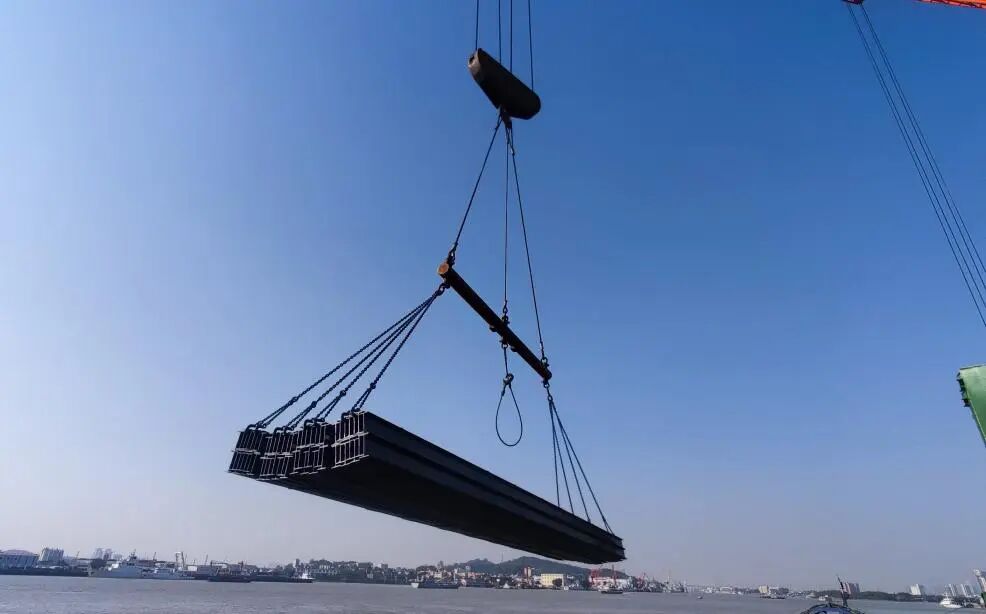
降货损、提效率,这款工属具实力出众
Xin Lang Cai Jing· 2026-01-15 14:16
Core Viewpoint - The application of the new tool "open chain hook" has significantly improved operational efficiency, reduced labor burden, and ensured cargo safety in the unloading process of long steel materials [1][5]. Group 1: Operational Improvements - The traditional unloading method using "single head wire rope" was limited in efficiency and caused damage to steel surfaces, prompting the company to adopt the more adaptable "open chain hook" [3][7]. - The operational model was upgraded from "one code two items" to "one code four items" with the introduction of the "open chain hook" [8]. - Average port operation time per ship was reduced by 4.76%, enhancing cargo turnover efficiency [8]. Group 2: Efficiency Metrics - Average workload per operational line increased by 2.35%, with average hourly output improving by 1.45% [8]. - The "open chain hook" led to a significant reduction in cargo damage, with steel materials arriving at the unloading port in nearly perfect condition, resulting in higher customer satisfaction [8]. Group 3: Record Achievements - The "Runwu 26" vessel achieved a 28.87% increase in average operational line efficiency compared to the previous method, setting a new record for steel loading efficiency [10]. - The use of the "open chain hook" reflects the company's commitment to customer needs and continuous service improvement [10].

美国贸易代表办公室:计划对部分起重机征收100%关税
Di Yi Cai Jing· 2025-10-11 09:56
Core Points - The USTR announced modifications based on public comments received regarding the 301 investigation into China's maritime, logistics, and shipbuilding sectors, reflecting consultations with petitioners and advisory committees [1][2] - Key modifications include changes to service fee calculations for foreign-built vehicle transport vessels, the removal of a clause allowing LNG export license suspensions, and the imposition of 100% tariffs on certain shore cranes and cargo handling equipment [1] - Further proposed modifications include fee exemptions for certain long-term leased ethane and LPG transport vessels and additional tariffs of up to 150% on specific cargo handling equipment and parts [1] Group 1 - The USTR's modifications are a response to public input and consultations, indicating a structured approach to the 301 investigation [1] - The changes in service fees and tariffs are expected to impact various sectors, including cranes and chassis, with previous considerations for container tariffs being dropped [2] - The USTR's actions have faced significant opposition from various industry representatives and the Chinese government, highlighting tensions in trade relations [2][3] Group 2 - The Chinese government has expressed strong dissatisfaction with the USTR's measures, labeling them as unilateral and protectionist, which disrupts global supply chains and violates WTO rules [2][3] - China urges the U.S. to adhere to multilateral trade rules and correct its actions, indicating potential retaliatory measures to protect its interests [3]
