
电商产业

Search documents
新华时评丨谱写“十五五”县域经济高质量发展新篇章
Xin Hua Wang· 2025-11-22 10:59
Core Insights - The report emphasizes that the development of county economies is crucial for the vitality of cities, provinces, and the nation, highlighting their role in promoting high-quality development and achieving common prosperity [1][2] - As of 2024, the total economic output of county economies in China is projected to reach 54 trillion yuan, accounting for nearly 40% of the national GDP, with 62 counties achieving over 100 billion yuan in economic output [1] - County economies serve as the "micro foundation" of China's economy, providing employment and improving living standards for over half of the population, while also playing a significant role in expanding domestic demand and facilitating economic circulation [1][2] Group 1 - County economies are becoming a fertile ground for cultivating new productive forces, with an increasing number of national high-tech zones established in counties, leading to optimized industrial structures and enhanced endogenous momentum [2] - Examples of successful county economies include the electrical industry in Leqing, Zhejiang, which has entered high-end markets in Europe and America through intelligent transformation, and the emerging industries in Kunshan, Jiangsu, which have developed a "2+6+X" industrial layout [2] Group 2 - Counties act as a key link in urban-rural integration, facilitating the two-way flow of urban and rural factors, which is essential for resource allocation and enhancing public service levels [2] - The "14th Five-Year Plan" proposes the development of distinctive county economies, providing a clear direction for high-quality development in these areas, emphasizing a people-centered, multi-coordinated, and innovative approach [2]
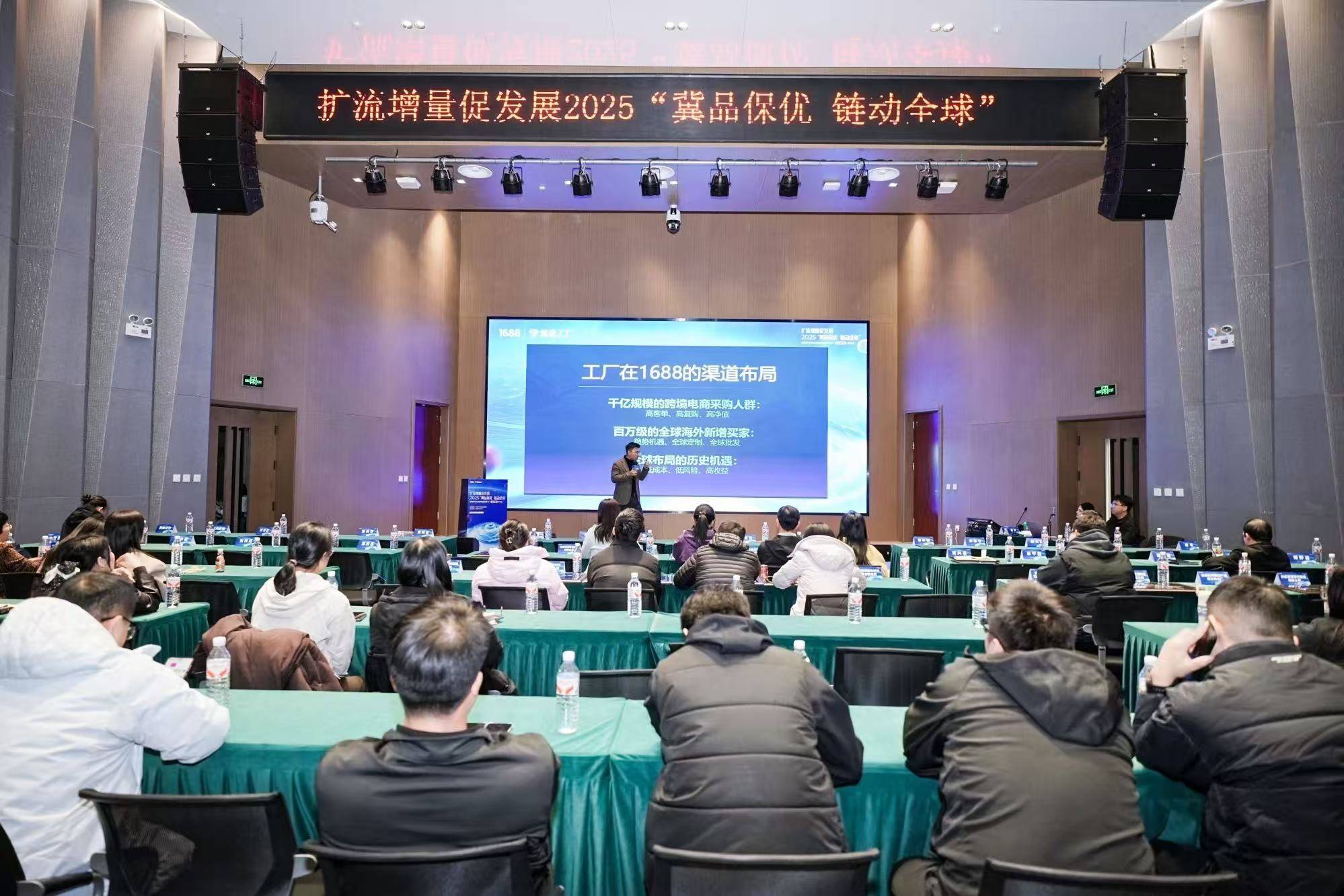
保定高新区:“冀品保优 链动全球”助力制造业转型拓展
Sou Hu Cai Jing· 2025-11-18 18:39
Core Insights - The event "Jipin Baoyou, Chain Moving Global" e-commerce industry conference and the global version launch of 1688 Super Factory took place in Baoding, aiming to facilitate the digital transformation of Baoding's manufacturing industry and its expansion into global markets [1] Group 1: Event Overview - Over 200 local manufacturing and cross-border e-commerce companies participated in the event, highlighting Baoding High-tech Zone as a core area for technological innovation and industrial upgrading [3] - The discussions focused on two main topics: the overseas expansion of the manufacturing industry and the application of AI in new production capabilities [3] Group 2: Industry Development - Baoding has established a regulatory service system characterized by "government-enterprise collaboration, departmental cooperation, and digital innovation," contributing to its designation as a "National Network Market Supervision and Service Demonstration Zone" [3] - The city has seen significant growth in its e-commerce sector, with over 230,000 network operating entities, ranking second in the province for live-streaming e-commerce retail volume, and first in the province and 18th nationally for express delivery volume [3] Group 3: Future Outlook - The Baoding Market Supervision Bureau plans to deepen government-enterprise collaborative governance, continuously innovate policy supply and service models, and promote the integration of platform economy and industrial development, aiming to enhance the global presence of "Baoding Manufacturing" [4]

企业多元布局一次拿地成为现实
Liao Ning Ri Bao· 2025-06-12 01:35
Core Viewpoint - The recent guidelines from the Liaoning Provincial Natural Resources Department aim to facilitate mixed-use industrial land supply, allowing companies to acquire land for multiple functions in a single transaction, thus reducing costs and improving operational efficiency [1][2] Group 1: Background and Need for Change - Historically, companies faced challenges in acquiring land for diverse functions such as R&D, production, and logistics due to a single-use land supply model, leading to increased costs and fragmented development [1] - The rapid growth of industries like e-commerce necessitates a mixed supply of industrial and logistics land to meet diverse operational needs [1] Group 2: Key Features of the Guidelines - The guidelines focus on innovative management of mixed-use industrial land, designating the land type with the largest building area as the primary use, which must exceed 50% of the total building area [2] - Detailed planning will be based on principles of compatibility and shared facilities, ensuring that land uses do not interfere with each other [2] Group 3: Land Supply and Pricing Mechanisms - The supply of mixed-use industrial land will be determined by the primary use, with commercial land being allocated through competitive bidding [2] - The guidelines encourage flexible land supply methods, including long-term leasing and flexible terms, while maintaining clear ownership rights and limiting subdivision transfers [2] - Land price adjustments will not apply to increases in building density for existing industrial or logistics land, promoting efficient land use without additional costs [2]