石油和天然气开采业

Search documents
长江研究2026年4月金股推荐
Changjiang Securities· 2026-03-31 04:44
Market Overview - The domestic market enters the earnings season in April, with ongoing overseas disturbances potentially balancing market styles[3] - Key focus areas include Middle Eastern geopolitical disturbances affecting oil prices and fluctuating inflation expectations[3] Investment Strategy - The strategy emphasizes three main lines: 1. Energy security, focusing on traditional energy price increases and new energy directions due to potential replenishment demand[3] 2. Technology, particularly AI infrastructure, including power, storage, and computing sectors[3] 3. Rebound of previously oversold sectors such as precious metals and commercial aerospace[3] Recommended Stocks - Key recommended sectors and stocks include: - Metals: Zijin Mining - Chemicals: Yara International - Petrochemicals: Shouhua Gas - Power: Longyuan Power H - Coal: Yancoal Energy - New Energy: Jiayuan Technology - Banking: Hangzhou Bank - Agriculture: Dekang Agriculture - Electronics: Zhaoyi Innovation - Communication: Zhongji Xuchuang[6] Risk Factors - Economic recovery may fall short of expectations, with potential slow job growth and reduced market demand[34] - Significant changes in individual stock fundamentals could impact performance[34] Earnings Forecasts - Forecasted earnings per share (EPS) and price-to-earnings (PE) ratios for key stocks: - Zijin Mining: EPS of 3.10 in 2026, PE of 10.5[28] - Yara International: EPS of 4.24 in 2026, PE of 15.2[28] - Shouhua Gas: EPS of 1.42 in 2026, PE of 16.7[28] - Longyuan Power H: EPS of 0.72 in 2026, PE of 9.5[28] - Yancoal Energy: EPS of 1.23 in 2026, PE of 16.5[28] - Jiayuan Technology: EPS of 1.90 in 2026, PE of 21.9[28] - Hangzhou Bank: EPS of 2.84 in 2026, PE of 5.8[28] - Dekang Agriculture: EPS of 2.89 in 2026, PE of 20.3[28] - Zhaoyi Innovation: EPS of 8.62 in 2026, PE of 30.0[28] - Zhongji Xuchuang: EPS of 17.40 in 2026, PE of 34.4[28]






陆家嘴财经早餐2026年3月23日星期一
Wind万得· 2026-03-22 22:54
Group 1 - Premier Li Qiang emphasized that China's competitive advantages come from deepening reforms and innovation, not subsidies or protectionism, and highlighted the importance of fair competition in the market economy [4] - Central Bank Governor Pan Gongsheng stated that the People's Bank of China will maintain a supportive monetary policy stance to create a favorable environment for stable economic growth and high-quality development [4] - The National Internet Emergency Center and the China Cybersecurity Association released security guidelines for the use of OpenClaw, providing recommendations for ordinary users and cloud service providers [5] Group 2 - The China Development Forum 2026 released multiple policy signals, indicating a focus on high-quality development and global economic stability [6] - The Chinese automotive industry achieved a significant milestone by surpassing Japan in global annual sales for the first time, with nearly 27 million vehicles sold [17] - The Ministry of Finance plans to increase public service spending and implement consumer-friendly policies to stimulate domestic demand, including a special fund of 100 billion yuan to promote consumption [9][10] Group 3 - The latest findings from the Ministry of Natural Resources revealed a significant increase in rare earth resources in Sichuan, with verified reserves totaling 9.67 million tons, marking an over 200% increase compared to previous estimates [18] - The launch of the "TERAFAB" chip manufacturing project by Tesla aims to achieve an annual production capacity of over 1 terawatt, with an estimated total investment of $20 billion [21] - Apple CEO Tim Cook announced continued support for innovation and education in China, pledging additional donations to a national vocational education pilot project [22]






2026年通胀框架:权重微扰、PPI早转正,资金宽松支撑债市震荡
Western Securities· 2026-03-19 12:05
1. Report Industry Investment Rating The document does not provide the industry investment rating. 2. Core Views of the Report - Since the beginning of the year, inflation has shown the characteristics of "CPI increase under the influence of the Spring Festival effect and PPI price increase accelerated by imported inflation". The government work report during the Two Sessions maintained the target of the consumer price increase at 2%, and pointed out that promoting stable economic growth and reasonable price recovery should be important considerations for monetary policy. With the repeated geopolitical conflicts and high oil prices recently, the market sentiment remains cautious under the expectation of inflation turning positive. Looking forward, inflation is mainly affected by two factors: on one hand, the domestic supply is abundant, and the consumer price trend is relatively stable; on the other hand, affected by the intensifying geopolitical risks in the Middle East, the global inflation rate may rise significantly, increasing the risk of imported inflation in the later stage. Coupled with the relatively low base in 2025, it is expected that the CPI growth rate will continue a moderate recovery, and the turning point of the PPI year - on - year growth rate to positive will be advanced. The cost - performance of bonds has increased, and it is difficult for the 10 - year Treasury bond yield to break through the previous high, and it may maintain a volatile trend [6]. - The impact of the base period rotation on the CPI year - on - year index is limited, and the CPI is expected to have a moderate recovery, with the annual central value at about 0.8% [6]. - The turning point of the PPI year - on - year growth rate to positive may be advanced under the impact of oil prices. If the oil price drops to $65 per barrel and remains stable, the PPI is likely to turn positive in the second half of Q2; if the oil price remains at about $80 per barrel or rises to $108 per barrel, the PPI may turn positive rapidly in Q2, or even in March. Based on the EIA assumption, the PPI may turn positive in March, and the central value of the PPI in 2026 will be about 1.07% [7]. - When the inflation center rises, the interest rate center does not necessarily rise, and the monetary policy does not necessarily tighten. This round of inflation recovery is mainly driven by the cost side, and the probability of monetary policy tightening is low. The cost - performance of bonds has increased, and it is difficult for the 10 - year Treasury bond yield to break through the previous high, and it may maintain a volatile trend. It is recommended to moderately participate in long - term bonds during the adjustment. With the continuous loosening of the capital side, the short - end is more certain, and at the same time, pay attention to the opportunities for spread compression, such as the spread between China Development Bank bonds and Treasury bonds, and the spread between local government bonds and Treasury bonds [8]. 3. Summary by Directory 3.1. The Impact of Base Period Rotation on CPI Is Limited, and CPI Shows a Moderate Recovery - **Base Period Rotation and Classification Adjustment**: China conducts a base period rotation for CPI and PPI every five years. On February 11, 2026, the National Bureau of Statistics released CPI data based on the 2025 base period. The number of major categories and basic classifications remains unchanged, with 8 major categories and 268 basic classifications. New commodity and service classifications reflecting new consumption content have been added, and some category names have been modified. A travel service price index has been newly calculated [14]. - **Weight Changes**: Compared with the 2020 base period, the overall weight changes of each CPI classification in this base period are not significant. Structurally, the weight of services in CPI has increased, while the weight of consumer goods has decreased. In terms of classification, the weights of five major categories, including food, tobacco, alcohol and dining out, transportation and communication, education, culture and entertainment, medical care, and other supplies and services, have increased. In the category of food, tobacco, alcohol and dining out, the weight of food has decreased, while the weight of dining out has increased. The weights of three major categories, including clothing, housing, and household goods and services, have decreased [16][18]. - **Impact on CPI Year - on - Year Index**: The National Bureau of Statistics pointed out that the average impact of this base period rotation on the monthly year - on - year index of CPI and PPI is about 0.06 and 0.08 percentage points respectively, which is relatively small. The calculation shows that the impact of CPI weight changes on the monthly CPI year - on - year index is about 0.04 percentage points, which is highly consistent with the data released by the National Bureau of Statistics in terms of direction and order of magnitude, indicating that the impact of CPI weight adjustment on the CPI year - on - year trend is limited and controllable [20]. - **CPI Recovery Trend**: From January to February 2026, the average CPI year - on - year increase was 0.75%, showing a moderate recovery trend. Affected by the Spring Festival misalignment effect, consumer demand pulsed in February, pushing the CPI up from 0.2% in January to 1.3%. The core CPI also showed a significant upward trend. Overall, CPI operation is mainly dominated by historical seasonal laws. With the marginal improvement of food and energy prices and the high - level volatility of international oil prices, CPI is expected to continue the recovery trend. In 2026, the CPI center is expected to rise moderately compared with 2025, with the annual central value at about 0.8% [23]. 3.2. The Turning Point of PPI Year - on - Year Growth Rate to Positive May Be Advanced under the Impact of Oil Prices - **PPI Industry Weights**: PPI is calculated by the weighted average of 40 industry prices. Using the average operating income share of corresponding industries from 2017 to 2025 as a substitute for weights, it is found that industries such as computer, communication and other electronic equipment manufacturing (11.1%), automobile manufacturing (7.5%), electrical machinery and equipment manufacturing (7.2%), and chemical raw materials and chemical products manufacturing (6.6%) have relatively high weights. Since 2021, the weights of electrical machinery and equipment manufacturing, computer, communication and other electronic equipment manufacturing, and power and heat production and supply industries have increased significantly [27]. - **PPI Industry Contribution**: The contribution of high - weight industries to PPI is not necessarily large. The top 7 industries with high contribution rates to PPI fluctuations, including oil, coal and other fuel processing, ferrous metal smelting and rolling processing, chemical raw materials and chemical products manufacturing, coal mining and washing, non - ferrous metal smelting and rolling processing, non - metallic mineral products, and oil and gas extraction, contribute about 80% of the total fluctuations [29][31]. - **Core Influencing Factors of PPI**: Crude oil, coal, ferrous metals, and non - ferrous metals are the core influencing factors of PPI. They are widely used in the upstream, mid - stream, and downstream industrial chains. The top 10 industries with high contribution rates to PPI fluctuations are mostly directly related to these four factors, and the relevant industries with high correlations to them contribute about 90% of the PPI fluctuations [32][36]. - **Analysis of Crude Oil Price Trends**: Affected by the continuous geopolitical conflicts in the Middle East, international oil prices have continued to rise. In March 2026, oil prices experienced a roller - coaster trend of "soaring - plummeting - rebounding". Although the International Energy Agency coordinated the release of strategic petroleum reserves, the market still worried that the scale and rhythm of the release might not be able to make up for the supply gap in the Middle East, so international oil prices continued to rise [41][44]. - **Impact of Crude Oil Prices on PPI**: Crude oil is widely used in the upstream, mid - stream, and downstream industrial chains, and the relevant industries account for about 12.4% of PPI. A 10% increase in oil prices may push up PPI by about 0.4 percentage points. The actual impact of oil prices on China's inflation depends on the subsequent development of the conflict. Different scenarios of oil price changes have different impacts on China's PPI, and the EIA predicts that the PPI may turn positive in March, with the central value in 2026 at about 1.07% [47][50][53]. 3.3. The Impact of Inflation Center Rise on the Bond Market - **Fundamental Reasons for Interest Rate Center Rise**: According to the causes, inflation can be divided into demand - pull inflation, cost - push inflation, and structural inflation. Since the 21st century, there have been six obvious inflation processes in China. When the inflation center rises, the interest rate center does not necessarily rise, and the monetary policy does not necessarily tighten. Demand - pull inflation often drives the interest rate center up, while cost - type and structural inflation do not necessarily [58]. - **Analysis of Previous Inflation Rounds**: The first four rounds of inflation were mostly demand - pull inflation, accompanied by rising interest rates. The central bank tightened the money supply through measures such as raising the reserve requirement ratio and interest rates. The last two rounds of inflation were more in line with cost - push inflation, and interest rates remained flat or declined. The central bank implemented a relatively loose monetary policy to maintain economic growth [59][70]. - **Analysis of the Current Round of Inflation**: This round of inflation recovery is mainly driven by the cost side. Affected by geopolitical factors, the prices of commodities such as crude oil have risen significantly, pushing the PPI year - on - year to recover rapidly. The government work report in 2026 clearly stated to continue implementing a moderately loose monetary policy, so the probability of monetary policy tightening is low. The cost - performance of bonds has increased, and it is difficult for the 10 - year Treasury bond yield to break through the previous high, and it may maintain a volatile trend. It is recommended to moderately participate in long - term bonds during the adjustment, pay attention to the short - end with higher certainty, and also pay attention to the opportunities for spread compression [74].
油价上涨对中国通胀与宏观政策影响分析
Guo Tai Jun An Qi Huo· 2026-03-10 05:41
1. Report Industry Investment Rating - No information provided in the report. 2. Core Viewpoints of the Report - Based on historical data from 2005 to 2026, the crude oil price has a significant impact on China's PPI trend, with a correlation coefficient of 0.78, while its impact on CPI is much weaker, with a correlation coefficient of only 0.21 [1]. - If the oil price remains at the current high level, China's PPI year - on - year may turn positive rapidly in March. If the geopolitical conflict pushes the average oil price to $100 - 150 per barrel, the PPI year - on - year is expected to climb to the range of 2.3% - 6.7% [1]. - Two scenarios of oil price changes are discussed to analyze the future macro - policy directions: when the oil price continues to rise, the focus of macro - regulation should shift from demand - side stimulation to supply - side cost relief and structural optimization; when the oil price rises and then falls, the policy will focus on boosting effective domestic demand [2][3]. 3. Summary by Relevant Catalogs 3.1 Comparison of the Impact of Crude Oil Price on PPI and CPI - The industries related to the crude oil chain account for about 14% of the PPI. Although the weight is not large, the price fluctuation is significant, and its marginal contribution to PPI cannot be underestimated [7]. - From 2005 to 2026, the correlation coefficient between Brent crude oil price year - on - year and China's PPI year - on - year is about 0.78, showing a strong correlation. The correlation coefficient between CPI and oil price is only 0.21, indicating a weak positive correlation. The transmission of oil price to CPI has a time lag, and food price fluctuations, especially pork price, have a greater impact on CPI [7]. 3.2 Preliminary Calculation of the Impact of Oil Price on China's PPI - Based on the price changes of the five major PPI sectors (coal, oil, non - ferrous metals, ferrous metals, and chemicals) as of March 6 (oil price at $83, a 12.3% year - on - year increase), it is estimated that the PPI in March will be 0.09%, turning positive year - on - year for the first time since October 2022, and the annual average PPI will be 0.68% [10]. - According to the regression calculation of PPI year - on - year and Brent oil price year - on - year since 2005, a 10% increase in oil price will lead to an approximate 0.66 - percentage - point increase in China's PPI. If the average future crude oil price rises to $100 - $150 per barrel, the corresponding PPI reading will rise to 2.3% - 6.7% [11]. 3.3 Impact of "Re - inflation" on Macro - policy Scenario 1: Continuous rise in crude oil price and significant increase in domestic and foreign inflation pressure - The sharp rise in oil price will have a profound impact on the global economy and monetary policy. Externally, external demand may be further suppressed, and the Fed's interest - rate hikes will push up the US dollar index, causing spill - over depreciation pressure on the RMB. Domestically, the economy is still affected by debt reduction and the deep adjustment of the real estate market, and the input - type inflation pressure may drive up prices but damage residents' consumption ability. In this context, the risk of "stagflation" may be significantly greater than that of "inflation" [2][15]. - Facing the structural problem of "inflation" upstream and "coldness" downstream, the core idea of macro - regulation should shift from demand - side stimulation to supply - side cost relief and structural optimization. Fiscal policy will play a key role, and tax policies for some enterprises may be relaxed. Monetary policy mainly plays a role in coordinated easing, and the use of re - loans, re - discounts, and some targeted structural monetary policy tools may be more active, while the space for comprehensive reserve requirement ratio cuts and interest - rate cuts may be restricted [16][17]. Scenario 2: Crude oil price rises and then falls, and the policy still focuses on boosting effective domestic demand - Based on the current commodity prices, the PPI in April may turn positive to over 1%, and the PPI for the whole year will still maintain a moderate increase. The policy will focus on boosting domestic consumption and investment demand. Fiscal policy will ensure the expenditure intensity, and monetary policy will continue the moderately loose tone. The possibility of flexibly using structural monetary policy tools is greater than that of comprehensive reserve requirement ratio cuts and interest - rate cuts [3][18].
2026年2月CPI和PPI数据解读:2月通胀:春节效应显著,关注备战主线
ZHESHANG SECURITIES· 2026-03-09 14:41
Inflation Data - February CPI increased by 1.3% year-on-year, significantly higher than the previous value of 0.2% and market expectations of 0.9%[1] - February PPI recorded a year-on-year decline of -0.9%, an improvement from -1.4% in January, exceeding market expectations of -1.2%[1] Consumer Price Index (CPI) Insights - The CPI's year-on-year increase is the highest in nearly three years, driven by the Spring Festival effect and recovering consumer demand[2] - Food prices rose by 1.7% in February, contributing approximately 0.30 percentage points to the CPI increase, with fresh vegetables and meats seeing price hikes between 5.9% and 10.9%[3] Core CPI Analysis - Core CPI, excluding food and energy, rose by 1.8% year-on-year, a significant increase from 0.8% in January, indicating a strong recovery in consumer spending[4] - Service prices increased by 1.6%, contributing about 0.75 percentage points to the CPI, with notable rises in travel and accommodation costs[5] Producer Price Index (PPI) Trends - The PPI has shown a continuous month-on-month increase for five consecutive months, indicating positive changes in certain industries[6] - Prices in the AI and high-end manufacturing sectors have increased, with aerospace manufacturing prices rising by 7.7%[7] Market Outlook - The report suggests that the A-share market is expected to strengthen in 2026, driven by liquidity and structural trends in low-volatility dividends and technology growth[1] - The 10-year government bond yield is anticipated to fluctuate between 1.5% and 2%[1]
2月通胀超预期上涨
Ge Lin Qi Huo· 2026-03-09 09:08
1. Report Industry Investment Rating - No information provided in the content. 2. Core View of the Report - In February, China's overall inflation level rebounded unexpectedly. It is expected that in March, the CPI will decline slightly month - on - month due to post - Spring Festival seasonal factors, while the year - on - year CPI will remain at a relatively high level. The conflict between the US, Israel and Iran in March has pushed up the prices of crude oil and energy - chemical products, and it is expected that the PPI will continue to rise month - on - month in March, with the year - on - year PPI possibly rebounding to around 0% [5][18]. 3. Summary by Relevant Catalogs CPI Analysis - **Year - on - Year Data**: In February, the national consumer price index (CPI) rose 1.3% year - on - year, higher than the market expectation of 0.9% and the previous value of 0.2%. The main reasons for the large year - on - year increase were the misaligned Spring Festival holidays compared to last year and the recovery of consumer demand. Food prices rose 1.7% year - on - year, affecting the CPI to rise by about 0.30 percentage points. Non - food prices rose 1.3% year - on - year. Core CPI rose 1.8% year - on - year. Service prices rose 1.6% year - on - year, affecting the CPI to rise by about 0.75 percentage points. Consumer goods prices rose 1.1% year - on - year [2][7]. - **Month - on - Month Data**: In February, the CPI rose 1.0% month - on - month, compared with a 0.2% increase in the previous month. Food prices rose 1.9% month - on - month. Non - food prices rose 0.8% month - on - month. Consumer goods prices rose 0.8% month - on - month. Service prices rose 1.1% month - on - month. Core CPI rose 0.7% month - on - month. The Spring Festival holiday in 2026 had one more day than in 2025, leading to a concentrated release of consumer demand [2][8]. - **Eight - Category Classification**: In February, food, tobacco, alcohol and dining - out prices rose 1.4% month - on - month, affecting the CPI to rise by about 0.40 percentage points. Among the other seven major categories, five rose, one was flat, and one declined month - on - month. Transportation and communication prices rose 2.2% month - on - month, medical care prices rose 0.1% month - on - month, education, culture and entertainment prices rose 1.6% month - on - month, clothing prices fell 0.1% month - on - month, household goods and services prices rose 0.2% month - on - month, and other goods and services rose 2.3% month - on - month [9]. PPI Analysis - **Year - on - Year Data**: In February, the national industrial producer price index (PPI) fell 0.9% year - on - year, better than the market expectation of a 1.2% decline and the previous value of a 1.4% decline. Production material prices fell 0.7% year - on - year, affecting the overall industrial producer price level to fall by about 0.55 percentage points. Mining industry prices fell 5.3% year - on - year. Raw material industry prices fell 1.9% year - on - year. Processing industry prices rose 0.3% year - on - year, the first year - on - year increase since August 2022. Some industries with large year - on - year price declines included the oil and gas extraction industry and the oil, coal and other fuel processing industry. Some industries with large year - on - year price increases included the non - ferrous metal mining and dressing industry and the non - ferrous metal smelting and rolling processing industry. Living material prices fell 1.6% year - on - year [3][14][15]. - **Month - on - Month Data**: In February, the PPI rose 0.4% month - on - month, rising for the fifth consecutive month. Production material prices rose 0.5% month - on - month. Mining industry prices rose 1.2% month - on - month. Raw material industry prices rose 0.2% month - on - month. Processing industry prices rose 0.6% month - on - month, rising for the fifth consecutive month. Some industries with large month - on - month price increases included the non - ferrous metal mining and dressing industry, the oil and gas extraction industry, and the non - ferrous metal smelting and rolling processing industry. The automobile manufacturing industry's prices fell 0.2% month - on - month. Living material prices were flat month - on - month, with durable consumer goods prices rising 0.3% month - on - month, rising for two consecutive months after seven consecutive months of decline last year [4][15][16].
油价上涨如何影响我国通胀走势?
Western Securities· 2026-03-08 12:47
1. Report Industry Investment Rating No information about the report industry investment rating is provided in the content. 2. Core Views of the Report - Due to the continuous geopolitical conflicts in the Middle East, international crude oil prices have soared again. The Strait of Hormuz, the world's most crucial oil chokepoint, has almost come to a standstill due to the US - Iran conflict, leading to a continuous rise in international oil prices. WTI and Brent crude oil have recorded their largest weekly increases since 1983 and 1991 respectively [1][11]. - A 10% increase in oil prices may push up the PPI by about 0.4 percentage points. Crude oil, as a basic production material, is widely used in the upstream, mid - stream, and downstream industrial chains. The relevant industries account for about 12.4% of the PPI [1][12]. - The actual impact of oil prices on China's inflation depends on how the conflict develops. Bloomberg Economics has made three scenario analyses: cease - fire (medium - high probability), continuous war (medium - high probability), and regime change in Iran (low probability). Different scenarios will have different impacts on China's PPI [2][18]. - The bond market may remain volatile. It is recommended to moderately extend the duration when there are adjustments. The bond supply shock trading may come to an end. The probability of interest rate decline is higher from the Two Sessions to the Politburo meeting in April. However, after the 10 - year Treasury bond rate breaks below 1.80%, the market is cautious, waiting for the increase in interest rate cut expectations [2][21]. 3. Summary According to Relevant Catalogs 3.1 Review Summary and Bond Market Outlook - This week, the bond market successively traded risk appetite and expectations of the Two Sessions. Yields remained volatile overall, with short - end performance stronger than long - end. The yields of 10Y and 30Y Treasury bonds both rose by 1bp [10]. - International oil prices soared due to the Middle East geopolitical conflicts. As of Friday's close, WTI crude oil futures rose by more than 36% this week, and Brent crude oil futures rose by about 29% [11]. 3.2 Bond Market Review 3.2.1 Funding Situation - The central bank had a net withdrawal of funds, and funding rates declined. From March 2nd to March 6th, the central bank's open - market net withdrawal was 136.34 billion yuan. R007 and DR007 decreased by 2bp and 9bp respectively compared with February 28th [22][24]. 3.2.2 Secondary Market Trends - Yields remained volatile this week, with short - end performance being strong. Except for 10Y and 30Y, the yields of other key - term Treasury bonds declined. Except for the 50Y - 30Y spread, other key - term Treasury bond spreads widened [31]. 3.2.3 Bond Market Sentiment - As of March 6th, the weekly turnover rate of 30Y Treasury bonds rebounded to 31%, the 50Y - 30Y Treasury bond spread narrowed by 2bp compared with February 28th, and the 30Y - 10Y Treasury bond spread widened by 0.3bp to 50bp. The inter - bank leverage ratio rose to 107.7%, and the median duration of medium - and long - term pure bond funds increased by 0.03 years to 2.56 years. The implied tax rate of 10 - year CDB bonds narrowed [35][39]. 3.2.4 Bond Supply - This week, the net financing of interest - rate bonds decreased. The net financing of Treasury bonds changed from net financing to net repayment, the net financing of local government bonds increased, and the net repayment of policy - financial bonds decreased. Next week, the issuance scale of Treasury bonds will increase, while the issuance scale of local government bonds will decrease. This week, inter - bank certificates of deposit changed from net repayment to net financing, and the average issuance rate continued to decline [49][53]. 3.3 Economic Data - In February, the manufacturing PMI declined seasonally, and the export sector was under pressure. Since March, travel has been stronger than the Spring Festival seasonality, and industrial production has improved marginally. Real - estate transactions, consumption, export, and industrial production indicators have shown different trends [57]. 3.4 Overseas Bond Market - The US non - farm payrolls data in February was disappointing. The 2Y and 10Y US Treasury bond rates both rose by 18bp. The 10Y - 2Y US Treasury bond spread remained flat at 59bp. European bond markets declined, the Chinese bond market rose, and the South Korean bond market declined. Emerging - market bond markets also declined [65][66]. 3.5 Major Asset Classes - The CSI 300 index adjusted this week. The Nanhua Crude Oil Index rose significantly by 31%, the US dollar index rose, while the Nanhua Live Pig Index and Shanghai Copper declined. The performance of major asset classes this week was: crude oil > US dollar > rebar > Chinese bonds > Shanghai gold > Chinese - funded US dollar bonds > CSI 300 > convertible bonds > Shanghai copper > live pigs > CSI 1000 [70]. 3.6 Bond Market Calendar - The calendar from March 9th to March 13th, 2026, includes information on liquidity投放 and maturity, government bond supply, fundamental data, and important domestic and international events [76].
渤海钻探取得液压自反馈可重复坐封封隔器专利
Sou Hu Cai Jing· 2026-02-27 07:43
Group 1 - The State Intellectual Property Office of China has granted a patent to China National Petroleum Corporation Bohai Drilling Engineering Co., Ltd. for a "hydraulic self-feedback repeatable packer" with authorization announcement number CN121111173B, applied on November 2025 [1] - China National Petroleum Corporation Bohai Drilling Engineering Co., Ltd. was established in 2008 and is based in Tianjin, primarily engaged in oil and gas extraction, with a registered capital of 1,621,400,000 RMB [1] - The company has made investments in one enterprise, participated in 5,000 bidding projects, holds 10 trademark registrations, and has 3,380 patent registrations, along with 83 administrative licenses [1] Group 2 - China National Petroleum Corporation, established in 1990 and located in Beijing, is also primarily engaged in oil and gas extraction, with a registered capital of 48,690,000,000 RMB [1] - The corporation has invested in 110 enterprises, participated in 5,000 bidding projects, holds 1,427 trademark registrations, and has 5,000 patent registrations, along with 28 administrative licenses [1]
能源行业2025年信用回顾与2026年展望
新世纪评级· 2026-02-25 01:30
Investment Rating - The energy industry is rated as stable for investment [1] Core Insights - China's energy consumption structure is steadily moving towards cleanliness and low carbon, with significant increases in renewable energy consumption [2] - The energy sector is experiencing a notable increase in investment, particularly in areas such as energy efficiency, renewable energy, and power transmission and distribution networks [2] - The energy industry is crucial for national economic stability and security, with government policies aimed at transforming the energy sector and ensuring supply security [5] - The energy market is expected to maintain overall stability in 2026, with a focus on green and low-carbon transitions [6] Summary by Sections Energy Consumption and Production - In 2024, China's total energy consumption reached 5.76 billion tons of standard coal, a 4.3% increase from the previous year, with coal consumption accounting for 53.2% of the total [10] - The total energy production in 2024 was 4.98 billion tons of standard coal, a 4.6% increase, with coal production at 4.78 billion tons [22] - The energy consumption elasticity coefficient for 2024 was 0.86, indicating a decrease in energy intensity [17] Coal Industry - In 2025, domestic coal prices are expected to show an N-shaped trend, with supply slightly increasing but demand pressured by the rapid substitution of renewable energy [34] - The coal industry is facing significant operational pressures, with over 50% of large coal enterprises reporting losses from January to November 2025 [41] - The total coal import volume in 2025 is projected to be around 47 million tons, a decrease from previous years [36] Oil and Gas Industry - Domestic crude oil production is expected to reach new highs in 2025, with offshore oil contributing 80% of the increase [63] - The international oil prices are projected to fluctuate widely, with Brent and WTI prices dropping approximately 18% and 20% respectively [64] - Natural gas supply is expected to grow steadily, but domestic consumption may see a slight decline due to various factors including weak demand from the real estate sector [64] Investment Trends - Energy investment is expected to continue its rapid growth, with significant investments in nuclear power, onshore wind, and distributed photovoltaic systems [29] - The total investment in energy projects is projected to reach 3.54 trillion yuan in 2025, with a year-on-year increase of 11% [29] - The government is focusing on building a new energy system, with clean energy bases and smart grids as key areas of support [29]
乌鲁木齐高新区:科研助理岗位孵化优质人才
Xin Lang Cai Jing· 2026-02-24 23:26
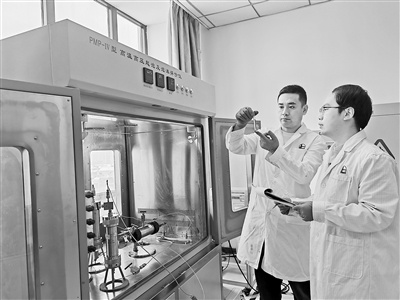
Core Viewpoint - The development of research assistant positions in Urumqi High-tech Zone is effectively nurturing high-quality talent and providing strong support for enterprise development [1][6]. Group 1: Research Assistant Positions - The Urumqi High-tech Zone aims to establish 1,000 research assistant positions by 2025, exceeding its target [3][6]. - The implementation of a "master-apprentice" training model at the Northwest Oilfield Company has improved the practical skills of research assistants [4][5]. - Research assistants are actively involved in project initiation and research processes, addressing key issues in oil and gas exploration and development [5][6]. Group 2: Talent Development and Employment - Graduates transitioning from campus to workplace have found opportunities to showcase their talents in Urumqi High-tech Zone [5][6]. - The Urumqi High-tech Zone has developed a comprehensive mechanism to support the creation of research assistant positions, ensuring mutual benefits for enterprises, graduates, and regional development [6][7]. - The introduction of a dynamic monitoring mechanism in the "2025 Talent Demand Directory" allows for adjustments based on industry changes, providing precise guidance for talent recruitment [7]. Group 3: Future Plans - By 2026, the Urumqi High-tech Zone plans to expand job offerings, enhance recruitment of graduates, and improve the salary and social security of research assistants [7].