粮食储备与加工

Search documents
改革创新 实干担当 陕西谱写粮食和物资储备高质量发展新篇章
Ren Min Ri Bao· 2025-10-14 22:11
Core Insights - The Shaanxi Provincial Grain and Material Reserve Bureau is focusing on enhancing grain production, procurement, storage, and sales to support high-quality economic development in the province [1] Group 1: Policy and Mechanism Development - The bureau is innovating and improving the "1126" policy guarantee system and has introduced the "Implementation Measures for the Grain Security Law" in Shaanxi, marking a breakthrough in grain-related legal construction [2] - By 2025, the bureau plans to coordinate the issuance of 8.4 billion yuan in credit related to grain, ensuring precise and orderly grain storage and regulation [2] - The local government's grain reserve scale is steadily increasing, with the structure of reserves continuously optimizing, placing the province's capacity for grain security among the top in the nation [2] Group 2: Emergency Management and Regulation - The bureau is reinforcing the results of special rectification in the grain purchase and sale sector and has organized 376 inspections in the first three quarters of 2025 [3] - It has signed strategic cooperation agreements for grain circulation law enforcement with seven neighboring provinces, promoting successful experiences nationwide [3] - The bureau is upgrading the regulatory information platform for grain reserves, achieving full coverage of information management at provincial, municipal, and county levels [3] Group 3: Emergency Supply and Disaster Relief - The bureau is enhancing emergency material supply capabilities and is establishing a unified emergency disaster relief material reserve system across the province [4] - It is innovating the disposal of over-aged disaster relief materials and has established a dynamic adjustment mechanism for key commodity storage enterprises [4] Group 4: Industry Development and Brand Promotion - The bureau is implementing actions for high-quality development in the grain industry, with eight projects receiving central financial support and long-term national bond backing by 2025 [5] - The total output value of the grain and oil processing industry in the province has reached 56 billion yuan [5] - The bureau has selected 84 enterprises and 98 products for the "Shaanxi Good Grain and Oil" brand matrix, significantly enhancing brand recognition and market share [5]
“粮食安全看山东”之德州军粮食品产业集团:“四分开”改革助力依法管粮
Zhong Guo Fa Zhan Wang· 2025-09-24 06:52
Core Viewpoint - The Shandong Dezhou Military Grain Food Industry Group is advancing the separation of policy and operational functions in local grain and oil reserves through a "four separations" management model, aiming for a deep breakthrough in legal grain management and storage reform [1] Group 1: Reform Implementation - The group is implementing reforms in accordance with the Shandong Provincial Grain and Material Reserve Bureau's directives, with a focus on separating management functions [1] - In May 2023, the group developed a separation implementation plan, and from July, all local reserve grain and oil were managed by Dezhou Financial Grain and Oil Purchasing and Sales Co., Ltd. [1] - The purchasing company signed storage agreements with various entities to ensure the separation of personnel, physical assets, finance, and accounting from commercial operations [1] Group 2: Management Practices - The group emphasizes the "four separations" in management, establishing dedicated departments and ensuring that all personnel are certified [2] - Physical management involves dedicated storage and personnel, ensuring the quantity, quality, variety, and location of reserves are strictly monitored [2] - Financial management operates under a closed-loop system for policy credit funds, with full oversight from the Agricultural Development Bank of Dezhou [2] - The implementation of specialized accounts and accounting methods enhances the safety and compliance of fund usage [2] Group 3: Infrastructure Development - To address grain reserve shortcomings, the group is initiating a high-standard grain warehouse construction project in Dezhou, with a planned investment of 455 million yuan [3] - The project will include facilities for 300,000 tons of grain storage and 5,000 tons of oil storage, along with drying equipment and an information system [3] - The project aims to enhance the green and information management levels of local reserves and is expected to be completed by December 2027 [3] Group 4: Public Awareness and Education - The group is creating a comprehensive food security publicity system through various channels and innovative methods [4] - Annual events like "World Food Security Day" are conducted to educate the public on food security policies and their importance [4] - Online and offline initiatives, including competitions and educational activities, aim to spread knowledge about food storage and conservation practices [4]
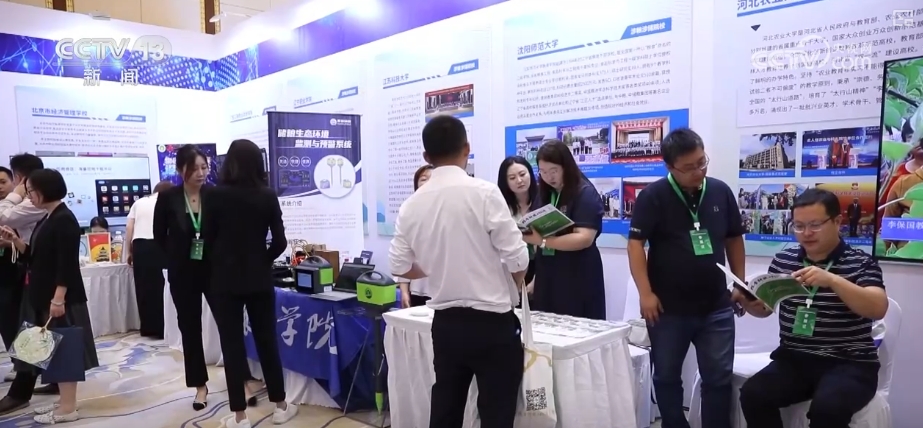
粮食减损过硬“新招”让颗粒归仓有保障 科技赋能夯实粮食安全
Yang Shi Wang· 2025-05-28 03:27
Core Viewpoint - The article highlights the launch of the National Grain and Material Reserve Science and Technology Activity Week, emphasizing the importance of technological innovation in ensuring national food security through advancements in grain circulation and storage technologies [1]. Group 1: Technological Innovations - Ten technological innovations in grain circulation have been released, focusing on areas such as grain storage and food processing [5]. - The smart green storage technology system utilizes artificial intelligence for high-precision monitoring and traceability of stored grain, enhancing management levels [5]. - An intelligent sampling system for grain acquisition has been implemented in Yiyang, Hunan, automating sampling and quality inspections for rice and corn [7]. Group 2: Grain Drying and Storage Improvements - In Sichuan, the process from harvesting wheat to drying and storage has been optimized to ensure that grain does not stay overnight, enhancing efficiency [8]. - The drying centers utilize advanced technology to ensure uniform heating of grain, maintaining moisture content between 12.5% and 13.5%, which meets national storage standards [16]. - By 2025, a shared drying model will be introduced in San Tai County, supported by government subsidies to reduce production costs and improve post-harvest grain handling [18]. Group 3: Impact on Grain Loss Reduction - The establishment of 44 drying centers in San Tai County aims to minimize post-harvest losses, with an expected reduction of over 30,000 tons of grain spoilage annually [18]. - Nationwide, over 5,500 post-harvest service centers have been built, promoting the use of 10 million sets of scientific grain storage tools to aid in reducing grain loss [19].