网络主播

Search documents
带娃上班两不误 “生育友好”可感可及 新政策与新业态实现“一拍即合”
Yang Shi Wang· 2025-09-27 01:54
Core Viewpoint - Shanghai is implementing a "Family-Friendly Position" pilot program to address declining birth rates and an aging population, aiming to create a supportive work environment for employees with childcare responsibilities [1][3]. Group 1: Implementation of Family-Friendly Positions - The pilot program allows employers to designate flexible work positions as "Family-Friendly Positions" for workers responsible for children under 12 years old [3]. - Over 500 companies have participated in the pilot since its launch in November last year, covering more than 3,000 positions and benefiting over 6,000 individuals [4]. Group 2: Target Industries and Future Plans - The initiative primarily targets new economic sectors such as the internet and cultural creative industries, focusing on roles like software programming, video editing, product design, and foreign language translation [4]. - Experts suggest that the concept of "Family-Friendly Positions" should evolve into a broader employment model that balances corporate efficiency with social value [6][8].


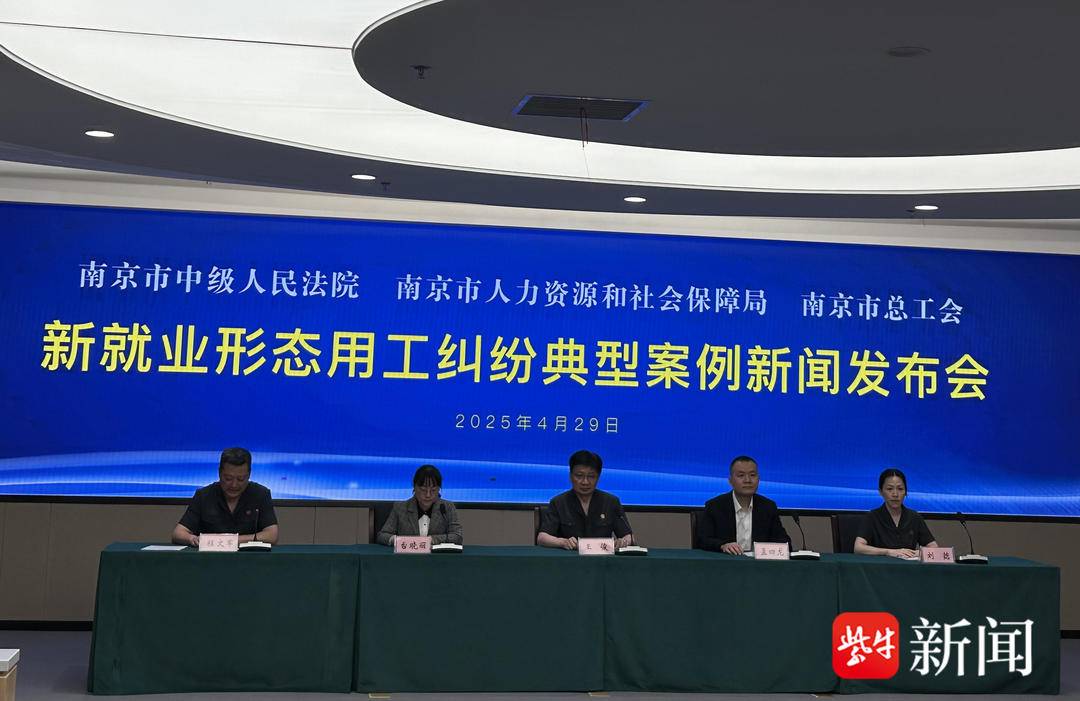
网约车、外卖、主播、快递占新业态用工纠纷七成,南京“三部门”协作促健康发展
Yang Zi Wan Bao Wang· 2025-04-29 10:42
Core Viewpoint - The Nanjing Intermediate People's Court, along with the Human Resources and Social Security Bureau and the Federation of Trade Unions, has reported on the increasing number of labor disputes in the new employment sector, aiming to promote healthy and sustainable development in this industry [1][3]. Group 1: Overview of Labor Disputes - From 2021 to 2024, the number of labor disputes in Nanjing's new employment sector has shown a year-on-year increase, with significant involvement from industries such as ride-hailing, food delivery, express delivery, online streaming, logistics, housekeeping, automotive services, and agricultural sales [3]. - The ride-hailing, food delivery, online streaming, and express delivery sectors account for over 70% of the total disputes, indicating a concentration of issues within these industries [3]. - The trend of "de-labor relationship" is evident, with a separation between recruitment and employment, as well as between work management and salary payment, complicating the legal landscape for workers [3]. Group 2: Typical Cases - **Case 1**: A group of 48 ride-hailing drivers successfully claimed over 340,000 yuan in compensation after their labor contracts were terminated due to a new performance evaluation system that aimed to change their employment status [4]. - **Case 2**: A housekeeper's claim for labor relationship recognition was upheld despite signing an "information service agreement," as the court found that the company exercised significant control over her work [5]. - **Case 3**: A network anchor was awarded overtime pay after the court recognized the fragmented nature of her work hours, emphasizing the need to consider work patterns in such cases [6]. - **Case 4**: A delivery worker's salary deductions were deemed illegal as the company failed to provide evidence justifying the penalties, reinforcing the requirement for employers to substantiate any wage deductions [7][8]. - **Case 5**: A network anchor was ordered to pay over 34,000 yuan in damages for breaching a contract with an MCN agency, highlighting the legal implications of contractual agreements in the absence of a labor relationship [9].