网络文艺

Search documents
中国网络文艺“破界向新”
Xin Lang Cai Jing· 2026-01-15 05:01
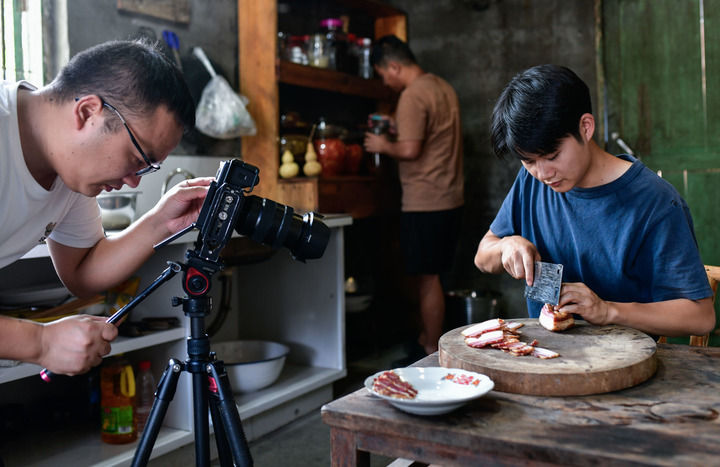
Core Viewpoint - The article highlights the rapid development and integration of online literature and arts in China, driven by internet technology, which enriches cultural experiences and meets diverse public spiritual needs [1]. Group 1: Cross-Industry Integration - Cross-industry integration is a prominent feature of online literature and arts, with trends of fusion becoming more evident across various dimensions by 2025 [2]. - The public is both the "actor" and "author" in creative works, with ordinary individuals contributing significantly to literature through various forms such as poetry, prose, and short videos, breaking traditional barriers between creators and audiences [3]. Group 2: Content Quality and Development - The micro-drama "Home Inside and Outside 2" achieved over 1 billion views within three days of its release, emphasizing the importance of high-quality content and a commitment to production quality [5]. - Successful works like "Home Inside and Outside" demonstrate that the true competitiveness of online literature lies in good storytelling and deep values, rather than merely chasing traffic [6]. Group 3: Technological Empowerment - New technologies such as AI, ultra-high-definition, and the metaverse are profoundly transforming the entire process of artistic creation and dissemination, enhancing cultural experiences and interactive engagement [7]. - The user base for generative artificial intelligence in China reached 515 million by June 2025, with a significant portion utilizing AI for creative outputs, indicating a shift in how content is produced [7]. - VR and AR technologies are providing immersive experiences that enhance the appeal of quality content and promote the innovative development of traditional Chinese culture [8].
文化新观察·年度文化亮点|中国网络文艺“破界向新”
Xin Hua Wang· 2026-01-07 23:59
Core Insights - The article highlights the booming development of Chinese online literature and arts, driven by the internet, which is evolving through cross-border integration and cultural innovation to meet diverse public spiritual needs [1][2]. Group 1: Cross-Border Integration - Cross-border integration is a prominent feature of online literature and arts, with trends of fusion becoming more evident across various dimensions by 2025 [2]. - Ordinary people are not only the subjects of stories but also the creators, sharing their life experiences through literature and art [3][4]. - The traditional boundaries between authors and audiences are being broken, leading to a shift from "writing for the public" to "the public writing" [5]. Group 2: Content Quality and Development - The success of the micro-drama "Home and Away 2" demonstrates the importance of quality content, achieving over 1 billion views within three days of its release [10]. - The production cycle for "Home and Away 2" was extended to 30 days to ensure depth in character portrayal, contrasting with the industry's typical 7 to 10-day production timeline [10]. - The focus on storytelling and deep values is essential for the competitive edge of online literature and arts, moving away from mere pursuit of traffic [12][13]. Group 3: Technological Empowerment - New technologies such as AI, ultra-high definition, and the metaverse are significantly transforming the entire process of artistic creation and dissemination, enhancing cultural experiences [15]. - By June 2025, the user base for generative AI in China reached 515 million, with 33% of users employing it for generating images and videos [17]. - Generative AI is lowering the barriers to creative expression, allowing ordinary users to produce professional-level works [18][19]. Group 4: Immersive Experiences - Advances in VR and AR technologies are facilitating immersive interactions in online literature and arts, providing new experiences that transcend traditional formats [20]. - The opening of the Beijing 798 Super Dimension VR Cinema showcases how technology can enhance storytelling and cultural experiences, attracting significant public interest [21].
规划建议新看点|繁荣新大众文艺!从“写大众”到“大众写”
Xin Hua She· 2025-11-30 11:21
Core Viewpoint - The "14th Five-Year Plan" emphasizes the promotion of new mass literature and art under the internet, aiming to stimulate cultural innovation and better meet the growing spiritual and cultural needs of the people [1]. Group 1: New Mass Literature and Art - New mass literature and art highlight the active role of the public in artistic creation, contrasting with traditional forms [3]. - Creators from various fields are drawing inspiration from social practices, producing diverse artistic works that cater to individual preferences [3]. - The shift from "art for the public" to "the public creates and enjoys art" reflects a significant transformation in artistic expression [3]. Group 2: Technological Influence - New technologies and media, particularly the internet, provide crucial support for new mass literature and art, expanding genres and reshaping creation and dissemination mechanisms [3]. - The growth of online literature, short videos, and micro-dramas is supported by new media platforms, becoming integral to daily cultural life [3]. - The application of generative AI and immersive experiences in artistic creation enhances cultural engagement and satisfaction among the public [3]. Group 3: User Engagement and Growth - As of now, the user base for online literature in China has reached 575 million, with projections indicating that short video and micro-drama users will reach 1.068 billion and 626 million respectively by June 2025 [4]. - The flourishing of new mass literature and art is expected to contribute significantly to the vitality of socialist literature in the future [4].